

Five Elements Of Employee Relations Management Employee Relations Management To Develop Positive




Try Before you Buy Download Free Sample Product
 Impress Your
 Audience
 100%
100% Editable
 Save Hours
 of Time


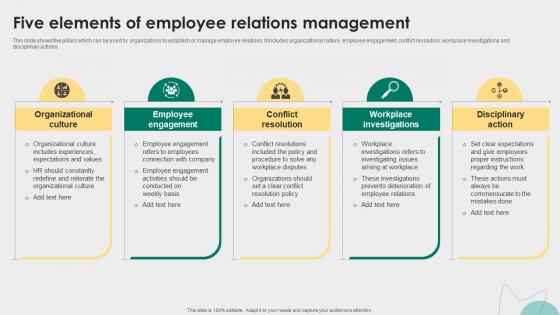
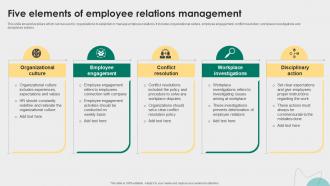
This slide shows five pillars which can be used by organizations to establish or manage employee relations. It includes organizational culture, employee engagement, conflict resolution, workplace investigations and disciplinary actions.
People who downloaded this PowerPoint presentation also viewed the following :
Five Elements Of Employee Relations Management Employee Relations Management To Develop Positive with all 9 slides:
Use our Five Elements Of Employee Relations Management Employee Relations Management To Develop Positive to effectively help you save your valuable time. They are readymade to fit into any presentation structure.








FAQs for Five Elements Of Employee Relations Management Employee Relations Management
Build trust first - that's honestly everything. Get clear policies people can actually understand, not corporate gibberish. Set up feedback systems that work (and that people will use instead of avoiding). Train your managers before they screw things up with drama. Oh, and make sure recognition feels real, not like some generic "employee of the month" nonsense. People need to know where they stand and feel heard. I'd start by checking if your current feedback stuff actually works or if everyone's just working around it because it sucks.
Track turnover rates, sick days, and internal promotions first - that's your baseline data. Surveys are honestly more valuable though, since they show how people actually feel about their managers and company culture. Do them quarterly instead of once a year because things change fast. Exit interviews are pure gold for catching patterns you'd never notice otherwise. Oh, and this might sound obvious but actually DO something with the feedback you get. I've seen so many companies just collect data and then... nothing. Total waste of everyone's time.
Look, good communication is literally everything when it comes to managing people. Your team needs to feel heard and know what you expect from them - otherwise you're just setting everyone up to fail. I've seen so many workplace disasters that could've been avoided with regular check-ins and being transparent about changes. The trick is actually listening when they talk to you, not just waiting for your turn to speak. Create space where people can give honest feedback without worrying about getting in trouble. Two-way conversations build way more trust than just barking orders all the time.
Honestly, start with just one good feedback method - maybe regular one-on-ones or quick pulse surveys. Don't go crazy building five different channels right away. The real trick isn't collecting feedback though, it's actually doing something with it. I've watched so many managers ask for input then... crickets. Nothing changes. That's worse than not asking at all! Always circle back and tell people what you're changing based on their suggestions. Look for patterns too - if three people mention the same issue, there's probably something there. Skip the annual survey thing and do shorter check-ins instead.
Oh man, you're gonna deal with communication breakdowns constantly - that's like half your job right there. Then workplace drama and people just feeling crappy about work in general. For communication stuff, set up regular one-on-ones and make feedback actually flow both ways. Drama? Jump on it fast and write everything down (trust me on this). Low morale usually means people feel invisible, so recognition programs help tons. Career development opportunities too. Honestly though, pulse surveys are your best friend. Catch problems while they're still small instead of waiting for everything to blow up. Way easier that way.
Your company's culture literally dictates how you handle employee stuff. Like, if everyone's super formal and hierarchical, you can't just roll in with casual peer mediation - it won't work. I've watched this backfire so many times. Collaborative workplaces need different approaches than rigid corporate environments. Think about it - your feedback style, how conflicts get resolved, even grievance processes all have to match what people are used to. You can't force a square peg into a round hole, you know? Before rolling out any new employee programs, take a hard look at your actual culture first.
Honestly, tech is a game-changer for this stuff. Start with pulse surveys - they'll catch problems before they explode into drama. Anonymous feedback systems work great too since people actually tell the truth when they're not worried about getting in trouble. HR chatbots handle the boring repetitive questions (though they're kinda awkward sometimes). Slack or Teams keeps everyone talking instead of bottling things up. You can track patterns in turnover with analytics, plus case management systems help you stay organized when issues pop up. Pick whatever fixes your biggest headache first.
Dude, employment law is a maze but here's what you can't mess up: anti-discrimination stuff (Title VII, ADA), wage rules under FLSA, and basic OSHA safety requirements. At-will employment isn't as simple as it sounds either - there's limits. Document everything if you're disciplining someone. Union stuff too if that applies to you. Laws change constantly which is honestly exhausting to keep up with. Don't try handling messy situations alone though. Loop in HR or legal counsel right away when things get weird - trust me on this one.
Honestly, hands-on practice beats theory every time with this stuff. Get your managers into workshops for the basics - active listening, conflict resolution, feedback techniques. Role-playing is huge because most people are terrible at difficult conversations initially (I was definitely one of them). Pair newer managers with seasoned ones who actually know what they're doing. Skip the one-and-done training sessions though. Ongoing coaching works way better since they can practice in a safe environment first. You don't want them learning on real employees who might quit over bad management.
Okay so conflict resolution seriously changes everything with your team. When you handle disputes well, people actually feel heard and trust builds up naturally. I've literally watched teams flip from being completely toxic to actually enjoying work together - it's wild how much difference it makes. But mess it up? You'll get that awful workplace tension where nobody wants to collaborate and good people start leaving. The key is training your managers on active listening and basic mediation stuff. Most fights just get worse because people feel ignored, honestly. Short conflicts stay short when handled right. Let them drag on and productivity tanks while resentment grows.
Honestly, recognition programs work because they make people feel like their work actually matters. Trust builds when managers regularly call out good work - not just the big wins but the everyday stuff too. Teams start feeding off that positive energy. Quick example from my experience: even dropping someone's name in a team meeting for handling a tough client can totally change the vibe. People get so burned out feeling invisible at work. The trick is being specific about what they did well, and don't wait three weeks to say something. Start small and watch how fast things shift.
Honestly, just be straight with people - don't sugarcoat the bad stuff or promise things you can't deliver. Those one-on-ones actually matter, but you gotta really listen instead of just checking a box. Follow through on everything, even tiny commitments. People see right through fake stuff. When you screw up (and you will), own it instead of pointing fingers everywhere else. Let your team weigh in on decisions that hit them directly. Oh, and pick one thing this week where you can be more open - maybe explain why you made that weird policy change or actually ask what they think about the new project. Small steps work.
Look, they're totally connected - can't have good engagement without solid employee relations. Fair policies and open communication make people actually want to be there. Plus engaged employees don't bottle stuff up, so they'll bring problems to you before they explode. I always think transparent communication is where you should start. Trust builds from there. Happy employees solve their own drama half the time anyway. Focus on treating people fairly first - the engagement part usually sorts itself out once that foundation's there. Way easier than trying to force enthusiasm.
Keep it short - like 10-15 questions tops or people will bail halfway through. Focus on stuff that actually matters: management, workload, growth opportunities. Skip the generic "rate your happiness" questions - they're useless anyway. Definitely go anonymous so people can be brutally honest without worrying about consequences. Timing matters too. Don't send these out during crunch time or right after someone got fired. But here's the thing - you HAVE to actually do something with the results. Share what you found and make real changes, otherwise it's just corporate theater and nobody'll trust you next time.
Look, good employee relationships are basically your secret weapon for better performance. People work harder when they feel valued and heard - it's that simple. You'll see way less turnover and honestly, way fewer headaches too. Happy employees tell their friends about working there, which is huge for recruiting (I swear word-of-mouth beats any job posting). The trick is staying ahead of problems before they blow up. Check in with people regularly, be transparent about what's happening, and actually follow through on what you say. Oh, and those one-on-one meetings? Total game changer for building trust.
-
Amazing variety of PowerPoint slides. Really helpful in designing professional presentations.
-
Their templates are super easy to edit and use even for the one like me who is not familiar with PowerPoint. Great customer support.