Fixed Asset Management Activity Dashboard With Book Value
Try Before you Buy Download Free Sample Product
Audience
Editable
of Time
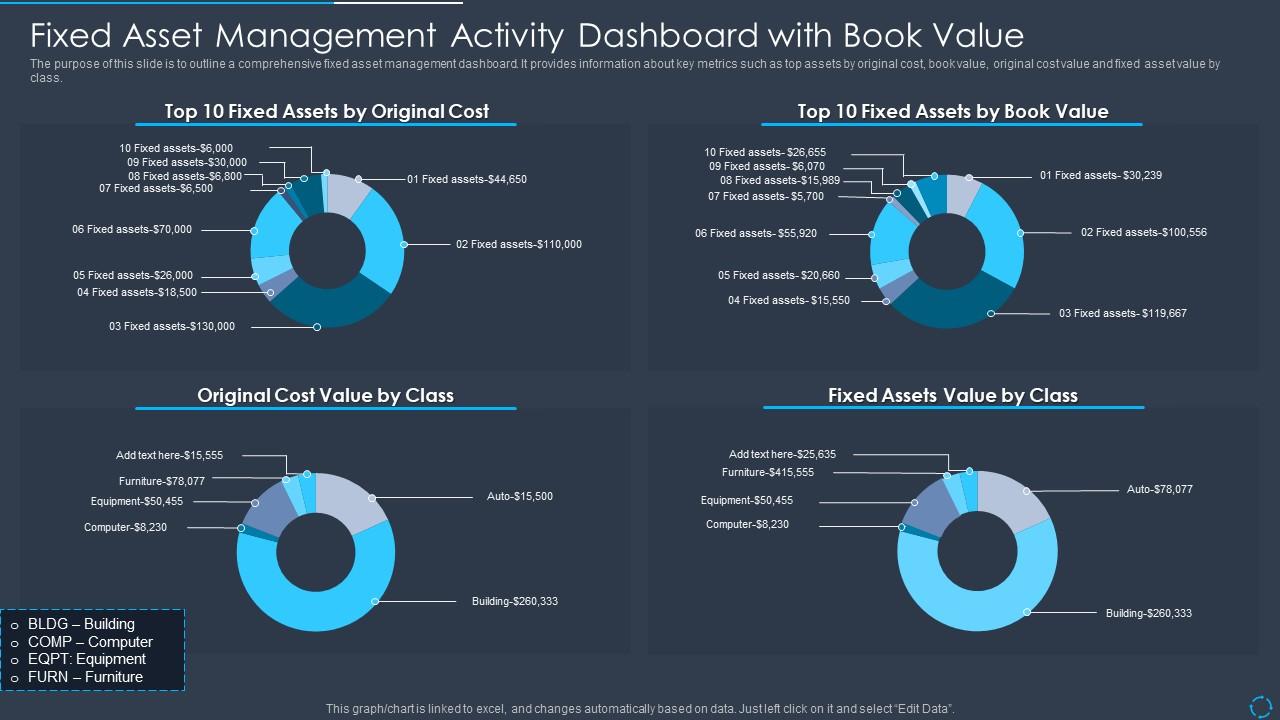
The purpose of this slide is to outline a comprehensive fixed asset management dashboard. It provides information about key metrics such as top assets by original cost, book value, original cost value and fixed asset value by class.
People who downloaded this PowerPoint presentation also viewed the following :
Fixed Asset Management Activity Dashboard With Book Value with all 7 slides:
Use our Fixed Asset Management Activity Dashboard With Book Value to effectively help you save your valuable time. They are readymade to fit into any presentation structure.
FAQs for Fixed Asset Management Activity Dashboard
Key components include asset identification and tagging, comprehensive lifecycle tracking, regular physical audits, depreciation management, and disposal planning. These elements work together by ensuring accurate financial reporting, optimizing asset utilization, and minimizing losses, with many organizations finding that strategic asset management delivers improved compliance, reduced costs, and enhanced operational efficiency across their entire portfolio.
Organizations can utilize RFID tags, barcode scanning systems, IoT sensors, GPS tracking, and cloud-based asset management platforms to enhance fixed asset tracking processes. These technologies streamline inventory audits, provide real-time location data, and automate depreciation calculations, with many manufacturing and healthcare organizations finding that automated tracking reduces manual errors by up to 90% while significantly improving compliance reporting.
Common challenges in fixed asset management include inaccurate asset tracking, manual record-keeping errors, compliance failures, depreciation miscalculations, and poor maintenance scheduling. These issues can be mitigated through automated asset tracking systems, regular audits, integrated software solutions, and standardized procedures, with many organizations finding that digital transformation streamlines operations while reducing costs and enhancing regulatory compliance.
Depreciation reduces fixed asset book values on balance sheets while creating systematic expense recognition on income statements, ensuring accurate financial reporting over asset lifecycles. This accounting method enables organizations to match asset costs with revenue generation periods, ultimately delivering more transparent financial statements and better resource allocation decisions for stakeholders and regulatory compliance.
Compliance in fixed asset management ensures accurate financial reporting, proper depreciation calculations, tax compliance, and regulatory adherence across accounting standards like GAAP, IFRS, and Sarbanes-Oxley requirements. Organizations must consider tax regulations, industry-specific compliance mandates, and audit requirements, with many finding that automated asset tracking systems streamline regulatory reporting while minimizing compliance risks and enhancing financial transparency.
Businesses ensure accurate fixed asset valuation through regular professional appraisals, systematic depreciation tracking, market-based assessments, and comprehensive asset condition monitoring. These methods enable organizations to maintain realistic book values, support informed investment decisions, and ensure regulatory compliance, with many companies finding that accurate valuations ultimately enhance financial transparency and strategic asset planning.
Fixed asset management optimization strategies include predictive maintenance scheduling, strategic replacement planning, comprehensive performance tracking, automated depreciation calculations, and lifecycle cost analysis. Through advanced monitoring systems and data analytics, organizations streamline maintenance costs, extend asset lifespans, and improve operational efficiency, with many manufacturing and healthcare facilities finding that proactive lifecycle management delivers significant cost savings and enhanced productivity.
Fixed asset management enhances operational efficiency by automating asset tracking, streamlining maintenance schedules, and optimizing resource allocation across departments. Through comprehensive asset visibility and predictive maintenance capabilities, organizations minimize unexpected downtime, reduce repair costs, and extend equipment lifecycles, with many manufacturing and healthcare facilities finding that strategic asset management delivers significant cost reductions while improving operational performance.
Tangible fixed assets involve physical tracking, maintenance schedules, depreciation calculations, location management, and condition assessments, while intangible assets require valuation monitoring, legal protection, renewal tracking, and amortization management. These distinct approaches enable organizations to optimize asset utilization, ensure compliance, and maintain accurate financial reporting, with many companies finding that integrated management systems streamline both categories effectively.
Regular audits enhance fixed asset management performance by identifying discrepancies between recorded and actual assets, ensuring accurate depreciation calculations, and uncovering underutilized or obsolete equipment. Through systematic verification processes, organizations streamline compliance reporting, optimize asset utilization, and reduce unnecessary capital expenditures, with many companies finding that quarterly audits ultimately deliver improved financial accuracy and strategic resource allocation.
Small businesses can leverage cloud-based asset management software, mobile scanning apps, RFID tracking systems, barcode generators, and integrated accounting platforms to manage fixed assets effectively. These tools streamline asset tracking, automate depreciation calculations, and enable real-time inventory monitoring, with many small retailers and service companies finding significantly reduced administrative overhead and improved compliance accuracy.
Fixed asset management improves sustainability by optimizing asset lifecycles, reducing waste through predictive maintenance, and enabling energy-efficient resource allocation across operations. Organizations implementing comprehensive tracking systems can minimize unnecessary purchases, extend equipment lifespan, and reduce carbon footprints, with many manufacturing and healthcare facilities finding that strategic asset optimization delivers both cost savings and environmental compliance.
Companies should track asset utilization rates, maintenance costs per asset, asset lifecycle performance, return on asset investment, and compliance audit scores to measure fixed asset management success. These metrics enable organizations to optimize resource allocation, minimize downtime, and enhance operational efficiency, with many manufacturing and healthcare institutions finding that comprehensive tracking ultimately delivers significant cost reductions and improved strategic decision-making.
IoT integration transforms fixed asset management by enabling real-time monitoring, predictive maintenance scheduling, and automated data collection, replacing manual inspections and reactive repair approaches. Through connected sensors and smart devices, organizations streamline asset tracking, minimize unexpected downtime, and enhance operational efficiency, with manufacturing and healthcare facilities finding that automated monitoring delivers significant cost reductions and improved asset performance.
Organizations should implement comprehensive disposal policies, conduct thorough asset evaluations, ensure regulatory compliance, maintain detailed documentation, and explore resale or recycling opportunities. Through strategic partnerships with certified disposal vendors, companies streamline retirement processes while maximizing asset recovery value, with many finding that proper disposal procedures reduce environmental liability and deliver significant cost savings.
-
I am so thankful for all of the templates I've found on your site. They have saved me hours every week and helped make my presentations come alive. Keep up with these amazing product releases!Â
-
Thank you for offering such fantastic custom design services. The team is really helpful and innovative. In a very short time, I received my personalized template.