

Food And Beverage Company Capital Fund Raising Pitch Deck Ppt Template





Try Before you Buy Download Free Sample Product
 Impress Your
Audience
 100%
Editable
 Save Hours
of Time


Check out our professionally designed Food and Beverage Company Capital Fund Raising Pitch Deck, a company that offers food and beverages to its customers. This Food and Beverage Firm Pitch Deck addresses issues such as lack of product information, complex supply chain, and increased operational cost. Moreover, this Beverage Company pitch deck provides an overview of the problems addressed by the company and their solutions. Further, this Revenue Streams for Investor Funding Pitch Deck showcases the companys value proposition, achievements, positive customer reviews, global market size, competitors, business model, and subscription plan. Lastly, the Financial Projections of Capital Fundraising Pitch Deck include investment ask, fund allocation, funding history, core team, exit strategy, and shareholding pattern. Get access to this powerful template now.
People who downloaded this PowerPoint presentation also viewed the following :
Content of this Powerpoint Presentation
Slide 1: The slide represents Food and Beverage Company Capital Fund Raising Pitch Deck.
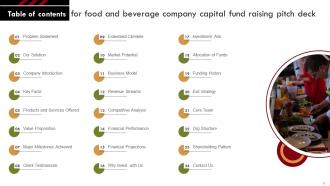
Slide 2: The slide displays Table of contents for presentation.
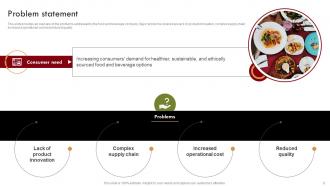
Slide 3: This slide provides an overview of the problems addressed by the food and beverage company.
Slide 4: This slide highlights an overview of the solutions for the problems faced.
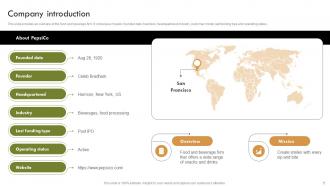
Slide 5: This slide gives an overview of the food and beverage firm.
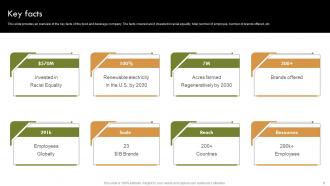
Slide 6: This slide highlights an overview of the key facts of the food and beverage company.
Slide 7: This slide demonstrates an overview of the products offered by the company.
Slide 8: This slide presents an overview of the food and beverage company’s value proposition.
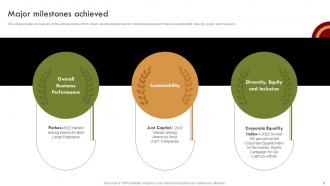
Slide 9: This slide provides an overview of the achievements of firm.
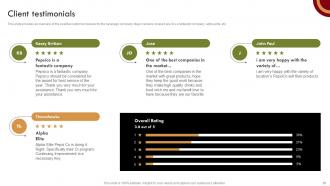
Slide 10: This slide represents an overview of the positive customer reviews for the beverage company.
Slide 11: This slide renders an overview of the company’s customers by segment.
Slide 12: This slide provides an overview of the food and beverage market analysis.
Slide 13: This slide provides an overview of the business model canvas of the company.
Slide 14: This slide presents an overview of the sources of revenue.
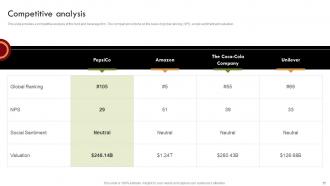
Slide 15: This slide covers a competitive analysis of the food and beverage firm.
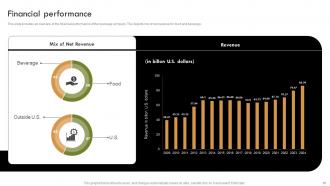
Slide 16: This slide contains an overview of the financial performance of the beverage company.
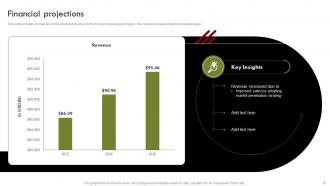
Slide 17: This slide displays an overview of the predicted revenue for the food and beverage company.
Slide 18: This slide demonstrates an overview of the reasons to invest with the company.
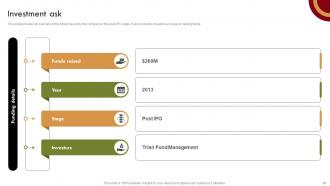
Slide 19: This slide provides an overview of the funds raised by the company in the post-IPO stage.
Slide 20: This slide highlights an overview of the funds allocated to maximize profit.
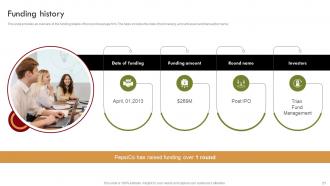
Slide 21: This slide depicts an overview of the funding details of food and beverage firm.
Slide 22: This slide displays an overview of the exit options considered by the company.
Slide 23: This slide gives an overview of the core team member of a food and beverage company.
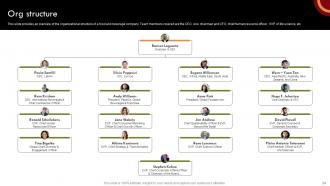
Slide 24: This slide renders an overview of the organizational structure of a food and beverage company.
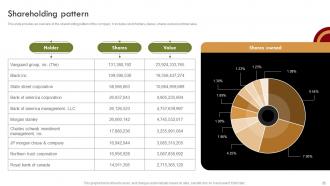
Slide 25: This slide presents an overview of the shareholding pattern of the company.
Slide 26: This is a Thank You slide with address, contact numbers and email address.
Slide 27: This slide shows all the icons included in the presentation.
Slide 28: This slide is titled as Additional Slides for moving forward.
Slide 29: This slide contains Puzzle with related icons and text.
Slide 30: This slide provides 30 60 90 Days Plan with text boxes.
Slide 31: This is a Timeline slide. Show data related to time intervals here.
Slide 32: This is a Financial slide. Show your finance related stuff here.
Slide 33: This is Our Goal slide. State your firm's goals here.
Food And Beverage Company Capital Fund Raising Pitch Deck Ppt Template with all 40 slides:
Use our Food And Beverage Company Capital Fund Raising Pitch Deck Ppt Template to effectively help you save your valuable time. They are readymade to fit into any presentation structure.
























FAQs for Food And Beverage Company Capital Fund Raising Pitch
Investors evaluate food and beverage startups based on market differentiation, scalable business models, experienced management teams, strong brand potential, and clear paths to profitability. These factors work together to demonstrate viability, with many venture capitalists finding that startups combining innovative products with proven distribution strategies and sustainable unit economics ultimately deliver the strongest investment returns.
Emerging food and beverage brands can effectively communicate their unique value proposition by clearly articulating their market differentiation, target demographics, scalability potential, and competitive advantages through compelling financial projections and brand storytelling. Successful brands like plant-based alternatives and artisanal beverage companies demonstrate measurable market traction, sustainable sourcing practices, and distribution partnerships, ultimately delivering investor confidence through proven consumer demand and clear paths to profitability.
Market research provides critical insights into consumer preferences, market size, competitive landscape, growth trends, and pricing strategies that investors evaluate when assessing food and beverage opportunities. Through comprehensive market analysis, companies demonstrate product-market fit, identify target demographics, and validate demand projections, with many investors finding that robust research significantly strengthens investment proposals and reduces perceived risk.
Food and beverage brands can leverage social media to enhance fundraising through compelling storytelling, behind-the-scenes content, influencer partnerships, customer testimonials, and interactive campaigns that showcase their mission and growth potential. These platforms enable direct investor engagement, brand authenticity demonstration, and market validation, with many food startups finding that strong social presence significantly increases investor confidence and accelerates funding rounds.
**INPUT**: What are some successful case studies of food and beverage capital fundraising that can serve as inspiration? **OUTPUT**: Successful food and beverage fundraising cases include Beyond Meat's IPO raising $240 million, Oatly's $200 million Series D, Blue Apron's meal kit expansion funding, and craft brewery acquisitions by major beverage companies. These cases demonstrate how companies leverage sustainability trends, innovative product positioning, and scalable distribution models to attract investors, with many finding that emphasizing health consciousness and environmental impact significantly enhances fundraising success.
Common pitfalls include underestimating production scaling costs, lacking clear differentiation strategies, presenting unrealistic market projections, insufficient regulatory compliance planning, and weak supply chain documentation. Many food entrepreneurs also struggle with demonstrating sustainable unit economics and failing to address seasonal demand fluctuations, ultimately weakening investor confidence in long-term profitability and operational viability.
A strong brand story significantly enhances fundraising potential by creating emotional investor connection, differentiating from competitors, demonstrating market understanding, and showcasing scalability vision. Through compelling narratives that highlight origin, mission, and growth trajectory, food and beverage companies attract investors who resonate with their values, ultimately securing higher valuations and more strategic partnerships.
Key financial metrics include gross margins, unit economics, customer acquisition costs, inventory turnover rates, and revenue growth trajectories. Food and beverage investors particularly scrutinize margin sustainability and scalability potential, with successful companies demonstrating strong unit profitability, efficient supply chain management, and clear paths to market expansion, ultimately delivering sustainable competitive advantages in an increasingly crowded marketplace.
Food and beverage startups can effectively utilize crowdfunding platforms by crafting compelling storytelling around their product's unique value proposition, offering attractive rewards like early product access or exclusive flavors, and building pre-launch communities through social media engagement. These strategies enable startups to validate market demand, generate initial revenue, and create brand ambassadors, with many food ventures finding that successful campaigns provide both capital and valuable customer feedback for product refinement.
VC funding typically involves larger investment amounts, institutional decision-making processes, and board representation, while angel investing features smaller personal investments from individual entrepreneurs with more flexible terms. In food and beverage fundraising, VCs often target scalable brands with proven market traction for Series A rounds, whereas angels frequently support early-stage concepts and regional specialty products, ultimately delivering different strategic value and growth trajectories.
Sustainability and ethical sourcing have become critical factors for food and beverage investors, with many venture capital firms now prioritizing environmental, social, and governance criteria in their investment decisions. These practices enhance brand reputation, reduce supply chain risks, and meet growing consumer demand for responsible products, while ultimately delivering competitive advantages and stronger market positioning in an increasingly conscious marketplace.
Successful food and beverage businesses are leveraging crowdfunding platforms, revenue-based financing, strategic partnerships with suppliers, direct-to-consumer pre-sales, and social impact investing to secure capital. These innovative approaches enable companies to maintain greater control while building customer loyalty, with many craft breweries, plant-based startups, and specialty food producers finding that community-driven funding strategies ultimately deliver faster market validation and sustainable growth advantages.
Strategic partnerships enhance fundraising by providing credibility, market access, distribution networks, operational expertise, and shared resources that reduce investor risk. Food and beverage companies partnering with established retailers, suppliers, or complementary brands demonstrate market validation and scalability potential, with many investors finding that these alliances significantly strengthen business cases, accelerate growth trajectories, and ultimately deliver higher returns through reduced execution risk.
Product sampling serves as tangible proof of concept, allowing investors to directly experience taste, quality, packaging, and market positioning while demonstrating production capabilities and consumer appeal. Through strategic sampling sessions, food and beverage companies enable investors to assess product differentiation, scalability potential, and competitive advantages firsthand, with many venture capitalists finding that sensory experience significantly influences funding decisions and validates market viability claims.
Food and beverage companies can prepare for due diligence by organizing comprehensive financial records, supply chain documentation, regulatory compliance certificates, intellectual property portfolios, and market analysis reports. These materials streamline investor evaluation by demonstrating operational transparency, risk management capabilities, and growth potential, with many food businesses finding that thorough preparation accelerates funding timelines and enhances valuation outcomes.
-
A library of engaging, customizable and content-ready templates.
-
Their templates are super easy to edit and use even for the one like me who is not familiar with PowerPoint. Great customer support.