

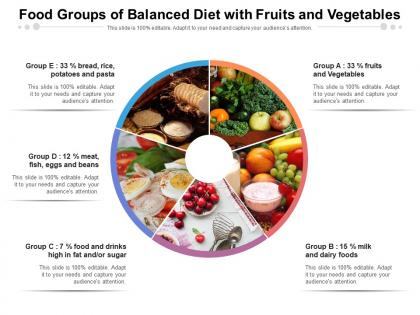
Food groups of balanced diet with fruits and vegetables




Try Before you Buy Download Free Sample Product
 Impress Your
 Audience
 100%
100% Editable
 Save Hours
 of Time


Our Food Groups Of Balanced Diet With Fruits And Vegetables are topically designed to provide an attractive backdrop to any subject. Use them to look like a presentation pro.
People who downloaded this PowerPoint presentation also viewed the following :
Food groups of balanced diet with fruits and vegetables with all 2 slides:
Use our Food Groups Of Balanced Diet With Fruits And Vegetables to effectively help you save your valuable time. They are readymade to fit into any presentation structure.
FAQs for Food groups of balanced diet with
A balanced diet includes fruits and vegetables, whole grains, lean proteins, dairy or dairy alternatives, and healthy fats like nuts and oils. These groups work together by providing essential nutrients, supporting immune function, and maintaining energy levels throughout the day, with many nutritionists finding that this combination delivers optimal health outcomes and sustained wellness.
Macronutrients include carbohydrates, proteins, and fats that provide energy and structural components, while micronutrients encompass vitamins and minerals needed in smaller amounts for metabolic processes. These nutritional categories work together by delivering sustained energy, supporting cellular function, and maintaining immune health, with nutritionists increasingly finding that balancing both macronutrients and micronutrients enhances overall wellness and long-term health outcomes.
Carbohydrates serve as the body's primary energy source, providing immediate fuel for daily activities, brain function, and physical performance through glucose conversion. Complex carbohydrates from whole grains, fruits, and vegetables deliver sustained energy release while supporting metabolic processes, with many nutritionists finding that balanced carbohydrate intake enhances overall vitality and prevents energy crashes.
Adequate protein intake in a balanced diet involves incorporating diverse sources like lean meats, fish, legumes, dairy products, nuts, and plant-based options such as quinoa and tofu. By strategically combining these protein sources throughout meals, individuals can maintain optimal amino acid profiles while supporting muscle health, metabolic function, and sustained energy levels, ultimately delivering comprehensive nutritional benefits.
Incorporating fruits and vegetables delivers essential vitamins, minerals, fiber, and antioxidants that enhance immune function, support digestive health, and reduce chronic disease risks. These nutrient-dense foods streamline cellular repair processes, boost energy levels, and promote cardiovascular wellness, with healthcare professionals and nutritionists increasingly finding that diverse produce consumption ultimately strengthens overall metabolic efficiency and long-term vitality.
A balanced diet contributes to mental health by stabilizing blood sugar levels, supporting neurotransmitter production, and reducing inflammation that affects brain function. Through consistent intake of omega-3 fatty acids, complex carbohydrates, and essential vitamins, individuals experience improved mood regulation, enhanced cognitive performance, and reduced anxiety symptoms, ultimately delivering sustained mental clarity and emotional resilience.
Common misconceptions about fats include believing all fats are unhealthy, avoiding them completely for weight loss, and thinking low-fat always means healthier. However, healthy fats from sources like avocados, nuts, olive oil, and fatty fish are essential for hormone production, nutrient absorption, and brain function, ultimately supporting overall wellness when consumed strategically within balanced nutritional frameworks.
Portion control assists in achieving a balanced diet by ensuring appropriate caloric intake, preventing overeating of any single food group, and maintaining optimal nutrient distribution across meals. Through measured servings, individuals can better incorporate vegetables, proteins, whole grains, and healthy fats proportionally, ultimately delivering sustained energy levels and improved metabolic health while avoiding nutritional imbalances.
Athletes require increased protein for muscle recovery, higher carbohydrate intake for energy demands, enhanced hydration protocols, and strategic nutrient timing around training sessions. Pregnant women need elevated folate, iron, and calcium consumption, controlled portion management, and careful food safety practices, with many healthcare providers finding that personalized nutrition plans ultimately deliver optimal performance outcomes and healthier pregnancies.
Dietary guidelines vary culturally through different food combinations and preparation methods, yet consistently emphasize whole grains, proteins, vegetables, and healthy fats across global frameworks. While Mediterranean diets prioritize olive oil and seafood, Asian guidelines feature rice and soy-based proteins, with many nutritionists finding that diverse cultural approaches ultimately deliver similar health outcomes.
Neglecting any food group can lead to nutrient deficiencies, weakened immunity, poor energy levels, compromised bone health, and increased disease risk. While short-term elimination might show quick results, long-term imbalances ultimately affect metabolism, cognitive function, and overall wellness, with many nutritionists finding that sustainable health requires strategic inclusion of all groups.
Reading food labels effectively involves examining serving sizes, ingredient lists, nutritional facts, added sugars, and sodium content to make informed dietary choices. By prioritizing whole foods with shorter ingredient lists, checking for hidden sugars, and comparing similar products, individuals can streamline their grocery shopping while maintaining nutritional balance, ultimately delivering better health outcomes and more strategic meal planning.
Hydration enhances nutrient absorption, supports metabolic processes, aids digestion, and helps transport vitamins and minerals throughout the body when combined with balanced nutrition. Proper water intake enables optimal processing of proteins, carbohydrates, and fats, while supporting cellular function and waste elimination, ultimately delivering improved energy levels and enhanced overall health outcomes.
Meal planning facilitates balanced diet adherence by eliminating impulsive food choices, ensuring nutritional variety across all food groups, and streamlining grocery shopping with structured lists. This strategic approach enables individuals and families to maintain consistent protein, vegetable, and whole grain intake while reducing food waste, ultimately delivering better nutritional outcomes and long-term healthy eating habits.
Focus on shopping the grocery store's perimeter where fresh produce, lean proteins, and dairy are located, read ingredient lists and choose items with five or fewer recognizable ingredients. Prioritize foods in their natural state like fresh fruits, vegetables, whole grains, and unprocessed meats, while avoiding items with added sugars, artificial preservatives, and lengthy chemical names, ultimately delivering better nutrition and sustained energy levels.
-
Excellent products for quick understanding.
-
Great quality product.
-
Nice and innovative design.
-
Great product with effective design. Helped a lot in our corporate presentations. Easy to edit and stunning visuals.
-
Unique and attractive product design.