

Footwear Product Development Process Diagram




Try Before you Buy Download Free Sample Product
 Impress Your
Audience
 100%
Editable
 Save Hours
of Time


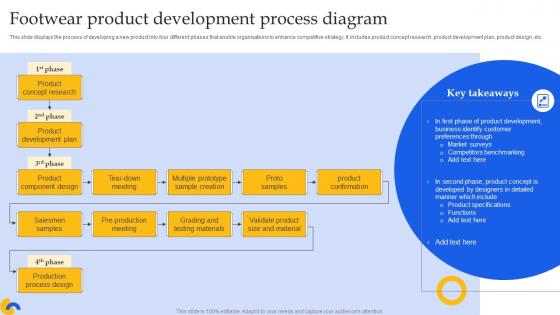
This slide displays the process of developing a new product into four different phases that enable organisations to enhance competitive strategy. It includes product concept research, product development plan, product design, etc.
People who downloaded this PowerPoint presentation also viewed the following :
Footwear Product Development Process Diagram with all 6 slides:
Use our Footwear Product Development Process Diagram to effectively help you save your valuable time. They are readymade to fit into any presentation structure.






FAQs for Footwear Product
Key phases include concept development, design and prototyping, material sourcing, sample creation, testing and refinement, and production planning. These phases streamline development by ensuring market alignment, technical feasibility, and quality standards, with many footwear brands finding that systematic progression reduces time-to-market while enhancing product performance and consumer appeal.
Market research influences footwear design by identifying consumer preferences, emerging trends, material innovations, comfort requirements, and price sensitivity across different demographics. Through comprehensive market analysis, footwear companies can develop targeted products that meet specific needs, whether athletic performance, fashion-forward styles, or sustainable materials, ultimately delivering products that resonate with consumers and drive competitive advantage.
Trending sustainable footwear materials include recycled ocean plastics, organic hemp, cork, mushroom leather, and bio-based foam alternatives. These innovative materials enable brands to reduce environmental impact while maintaining durability and performance standards, with companies like Adidas and Allbirds finding that sustainable options increasingly appeal to environmentally conscious consumers seeking stylish, responsible footwear choices.
Consumer behavior and preferences fundamentally drive footwear product development by influencing design aesthetics, functionality requirements, material choices, and sustainability considerations. Through market research, social media analytics, and sales data analysis, footwear companies identify emerging trends like athleisure demand or eco-conscious materials, ultimately enabling brands to create products that resonate with target demographics while maintaining competitive advantage.
Technology revolutionizes modern footwear manufacturing through 3D printing, automated cutting systems, computer-aided design software, robotic assembly lines, and smart material integration. These innovations streamline production by reducing waste, accelerating prototyping, and enabling mass customization, with athletic brands and luxury manufacturers finding significantly faster time-to-market and enhanced product precision.
Prototyping and 3D printing accelerate footwear design by enabling rapid iteration, reducing development timelines from months to weeks, and allowing real-time testing of fit, comfort, and performance features. These technologies streamline the process by eliminating traditional tooling delays, facilitating immediate design modifications, and enabling direct consumer feedback integration, with many athletic and fashion brands finding that faster prototyping cycles deliver competitive advantages and reduced time-to-market pressures.
Balancing style and functionality in footwear involves navigating material constraints, manufacturing costs, consumer preferences, comfort requirements, and durability standards. Fashion-forward athletic brands and luxury comfort shoe manufacturers increasingly find that strategic design integration, advanced material technologies, and targeted market positioning enable them to deliver both aesthetic appeal and performance benefits while maintaining competitive pricing.
Brands ensure footwear quality control through rigorous material testing, prototype evaluation, fit assessments, durability testing, and manufacturing process audits. These comprehensive quality measures enable companies to identify potential issues early, reduce production costs, and maintain brand reputation, with many footwear manufacturers finding that systematic quality control ultimately delivers superior products and enhanced customer satisfaction.
Successful footwear brand identity strategies include defining target demographics, developing distinctive design aesthetics, establishing quality standards, creating compelling brand narratives, and building consistent visual elements across packaging and marketing. These approaches work by differentiating products in competitive markets, building customer loyalty through emotional connections, and communicating value propositions effectively, with many footwear companies finding that authentic storytelling combined with consistent quality ultimately delivers sustained market presence and customer retention.
Collaboration between designers, marketers, and manufacturers is essential in footwear development, ensuring products meet aesthetic vision, market demands, and production feasibility simultaneously. This strategic integration streamlines development cycles, reduces costly redesigns, and enhances product-market fit, with many footwear companies finding that cross-functional teams deliver more innovative designs while maintaining competitive pricing and faster time-to-market.
Inclusive footwear design considerations include diverse foot shapes, sizes beyond standard ranges, accessibility features for disabilities, cultural preferences, and gender-neutral options. These approaches enhance market reach by accommodating wider demographics, improving comfort through adaptive closures and materials, and ultimately delivering broader customer satisfaction, with many footwear brands finding that inclusive design significantly expands their competitive advantage.
Seasonal forecasting significantly compresses footwear development timelines by requiring brands to finalize designs, materials, and production schedules 12-18 months ahead of retail seasons. This strategic planning enables manufacturers to coordinate with suppliers, optimize inventory levels, and align marketing campaigns, while retailers like Nike and Adidas leverage these extended timelines to minimize stockouts and maximize seasonal sales opportunities.
Post-launch footwear success metrics include sales velocity, return rates, customer satisfaction scores, market share growth, and profit margins per SKU. These indicators enable brands to assess product performance, identify design improvements, and optimize future collections, with many footwear companies finding that tracking wear-test feedback and repeat purchase rates ultimately delivers stronger customer loyalty and competitive advantage.
Footwear companies incorporate consumer feedback through digital surveys, focus groups, wear-testing programs, social media monitoring, and prototype evaluation sessions. These methods enable designers to refine comfort features, adjust sizing, optimize materials, and enhance aesthetic appeal, with many brands finding that systematic feedback integration reduces development costs while accelerating time-to-market for successful products.
Future footwear trends include sustainable materials, smart technology integration, personalized customization, direct-to-consumer models, and enhanced comfort innovations. These developments enable brands to meet evolving consumer expectations through eco-friendly production, data-driven insights, and streamlined manufacturing processes, with many companies finding that early adoption delivers competitive advantage and stronger customer loyalty.
-
SlideTeam makes creating presentations easy. Unlimited products, premium quality designs and affordable.
-
The designs by SlideTeam are honestly the best I have seen so far. Will be definitely coming back for more.