

Forex Broker Financial Analyzing Business Currency Performance Process





Try Before you Buy Download Free Sample Product
 Impress Your
 Audience
 100%
100% Editable
 Save Hours
 of Time


Our Forex Broker Financial Analyzing Business Currency Performance Process are topically designed to provide an attractive backdrop to any subject. Use them to look like a presentation pro.
People who downloaded this PowerPoint presentation also viewed the following :
Forex Broker Financial Analyzing Business Currency Performance Process with all 12 slides:
Use our Forex Broker Financial Analyzing Business Currency Performance Process to effectively help you save your valuable time. They are readymade to fit into any presentation structure.

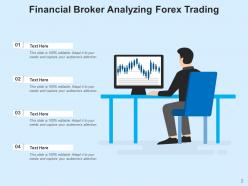
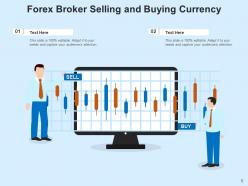
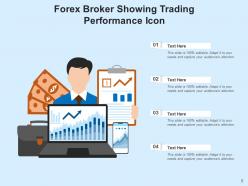
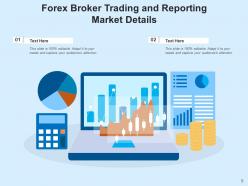

FAQs for Forex Broker Financial Analyzing Business
Key factors include regulatory compliance, trading costs, platform reliability, currency pair selection, and customer support quality. These elements determine trading success by ensuring account security, minimizing transaction expenses, and providing seamless execution, with many traders finding that brokers offering competitive spreads, robust technology, and responsive service ultimately deliver better trading outcomes and strategic advantages.
Different Forex account types significantly influence trading strategies through varying spreads, leverage ratios, minimum deposits, and commission structures. Micro accounts enable conservative strategies with smaller position sizes, while VIP accounts offer tighter spreads for high-frequency trading, and Islamic accounts accommodate Sharia-compliant strategies, ultimately allowing traders to align account features with their risk tolerance and trading frequency.
Regulatory compliance serves as the foundation for broker selection, ensuring client fund protection, transparent trading practices, fair dispute resolution, and adherence to capital requirements. Brokers regulated by authorities like FCA, ASIC, or CySEC provide segregated accounts and compensation schemes, with many traders finding that compliant brokers deliver enhanced security and professional standards.
Traders can assess platform usability through demo accounts, evaluating navigation ease, order execution speed, charting tools, technical indicators, and mobile accessibility. Many successful traders test platforms across different market conditions, comparing features like one-click trading, automated strategies, and real-time data feeds, ultimately choosing brokers whose platforms enhance their trading efficiency and decision-making capabilities.
Spreads and commissions directly impact trading profitability by reducing net gains, with tight spreads favoring high-frequency traders while commission-based models often benefit larger position traders. Different broker structures create varying cost implications across trading styles, with scalpers finding that even 0.1 pip differences significantly affect returns, while swing traders may prioritize execution quality over minimal spread advantages, ultimately requiring strategic broker selection aligned with individual trading approaches.
Trading leverage options vary significantly between Forex brokers, ranging from conservative 10:1 ratios to aggressive 500:1 or higher, with regulatory jurisdictions like the EU capping retail leverage at 30:1 while offshore brokers offer much higher ratios. While higher leverage amplifies potential profits and enables smaller account holders to access larger market positions, it also magnifies losses exponentially, with many traders finding that excessive leverage leads to rapid account depletion and margin calls during volatile market conditions.
Market makers provide fixed spreads, guaranteed execution, and simplified pricing, while ECN brokers offer variable spreads, direct market access, and transparent pricing through electronic networks. Market makers can present conflicts of interest since they trade against clients, whereas ECN brokers charge commissions but eliminate dealing desk interference, with many traders finding that ECN models deliver faster execution and better pricing during volatile market conditions, ultimately enhancing trading performance.
Customer support is crucial for evaluating Forex broker reliability, as it directly impacts trade execution assistance, technical issue resolution, and account management during critical market moments. Quality support through multiple channels, rapid response times, and knowledgeable representatives enables seamless trading operations, minimizes downtime costs, and builds trader confidence, with many institutional clients finding that superior support significantly enhances their overall trading performance and risk management capabilities.
Forex brokers typically offer bank transfers, credit/debit cards, e-wallets like PayPal and Skrill, cryptocurrency options, and digital payment platforms, each with varying processing times and fees. These diverse payment methods enhance accessibility by accommodating different regional preferences and financial infrastructures, with many traders finding that brokers offering multiple withdrawal options deliver faster transactions and improved user experiences across global markets.
Traders can assess Forex broker reputation through independent review platforms, regulatory compliance records, client testimonials, and industry ratings from established financial publications. These sources reveal crucial insights about execution quality, customer service responsiveness, and withdrawal processes, with many experienced traders finding that consistent patterns across multiple review platforms provide the most reliable indicators of broker trustworthiness and operational integrity.
A good Forex broker should provide comprehensive market analysis, trading webinars, educational courses, demo accounts, and real-time economic calendars. These resources enhance trader knowledge by delivering technical analysis training, risk management guidance, and platform tutorials, with many retail traders finding that brokers offering extensive educational support significantly improve their trading outcomes and long-term profitability.
Execution speed varies significantly among Forex brokers, with top-tier brokers delivering trades in 10-50 milliseconds while others may take several hundred milliseconds due to differences in technology infrastructure, server locations, and liquidity partnerships. This speed difference proves critical for scalping strategies and high-frequency trading, where millisecond delays can mean lost profits, with many professional traders finding that faster execution ultimately delivers better fill prices and enhanced competitive advantage in volatile markets.
A comprehensive Forex broker should offer major currency pairs like EUR/USD and GBP/USD, minor pairs, exotic currencies, commodities, indices, cryptocurrencies, and CFDs on stocks. This diverse instrument portfolio enables traders to implement varied strategies, hedge positions across multiple markets, and capitalize on global opportunities, with many brokers finding that broader offerings significantly enhance client retention and trading volumes.
Forex brokers handle slippage through advanced order execution systems, liquidity aggregation from multiple providers, and sophisticated algorithms that minimize price disparities during volatile market conditions. While slippage can reduce profitability on individual trades, reputable brokers increasingly offer negative slippage protection and transparent execution policies, with many traders finding that choosing brokers with deep liquidity pools significantly improves trade outcomes and reduces unexpected costs.
Demo accounts enable new traders to practice currency trading with virtual funds, test broker platforms, develop strategies, and understand market dynamics without financial risk. These simulated environments help traders evaluate execution speeds, spreads, and broker reliability, while building confidence and skills, ultimately delivering better preparation for live trading and reducing costly beginner mistakes.
-
Attractive design and informative presentation.
-
Very well designed and informative templates.
-
Wonderful templates design to use in business meetings.
-
Content of slide is easy to understand and edit.
-
Editable templates with innovative design and color combination.
-
Unique and attractive product design.
-
Great quality product.