Four ethical challenges in business

Four ethical challenges in business
Slide 1 of 5
Favourites Favourites

Try Before you Buy Download Free Sample Product

Audience Impress Your
Audience
Editable 100%
Editable
Time Save Hours
of Time
The Biggest Sale is ending soon in
0
0
:
0
0
:
0
0
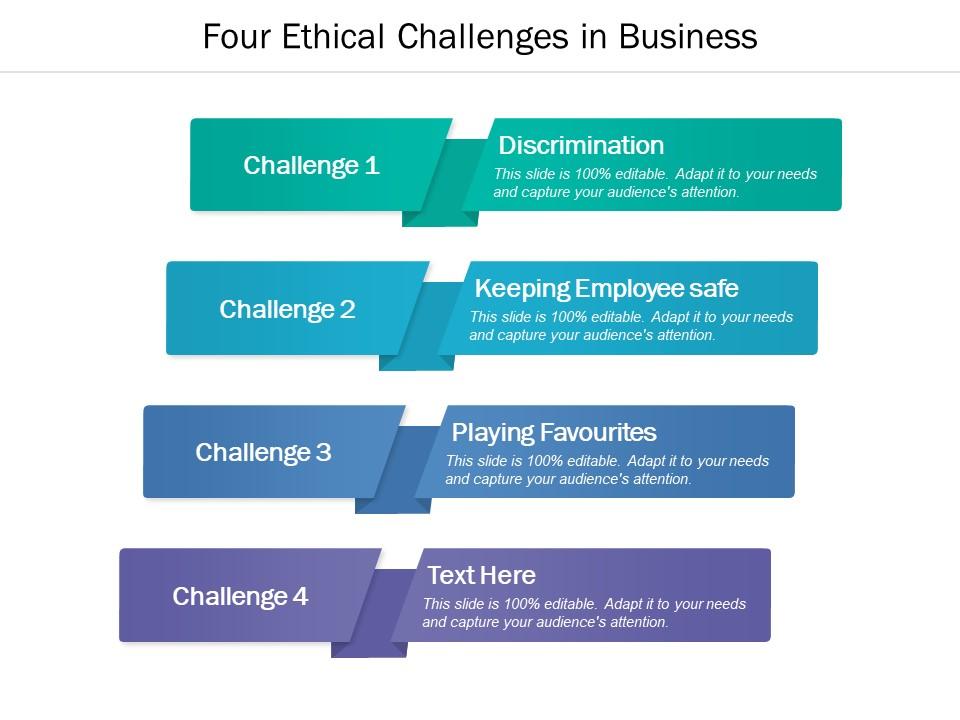
Presenting this set of slides with name Four Ethical Challenges In Business. This is a four stage process. The stages in this process are Challenge Of Diversity, Challenge Of Globalisation, Challenge In Business. This is a completely editable PowerPoint presentation and is available for immediate download. Download now and impress your audience.

People who downloaded this PowerPoint presentation also viewed the following :

FAQs for Four ethical

Businesses commonly face ethical dilemmas including conflicts of interest, fair labor practices, environmental responsibility, data privacy protection, and transparency in financial reporting. These challenges present both risks and opportunities, with many organizations finding that proactive ethical frameworks streamline decision-making, enhance stakeholder trust, and ultimately deliver competitive advantage in increasingly conscious markets.

Companies balance profit-making with social responsibility by integrating sustainable practices into core operations, implementing transparent stakeholder engagement strategies, and adopting long-term value creation models that consider environmental and social impacts. This strategic combination enables enhanced brand reputation, improved customer loyalty, and access to conscious consumers, while reducing regulatory risks and operational costs, ultimately delivering competitive advantage in an increasingly values-driven marketplace.

Corporate governance establishes frameworks for ethical decision-making through board oversight, transparent reporting, accountability mechanisms, and compliance systems that guide organizational behavior. These structures enable companies to proactively address ethical dilemmas, manage stakeholder expectations, and maintain regulatory compliance, with many organizations finding that strong governance ultimately delivers enhanced reputation, reduced legal risks, and sustainable competitive advantage.

Businesses effectively implement a code of ethics by establishing clear guidelines, providing comprehensive employee training, integrating ethical considerations into decision-making processes, and creating accountability mechanisms through regular monitoring and enforcement. Through transparent communication, leadership modeling, and consistent application across all organizational levels, companies enhance workplace culture, reduce compliance risks, and build stakeholder trust, ultimately delivering sustainable competitive advantage and stronger brand reputation.

Transparency improves ethical standards by establishing clear accountability mechanisms, enabling stakeholder oversight, reducing opportunities for misconduct, fostering trust-based relationships, and creating documented decision-making processes. Through open reporting systems and accessible communication channels, organizations streamline compliance monitoring while enhancing customer confidence, ultimately delivering competitive advantage in an increasingly values-driven marketplace.

Unethical behavior severely damages company reputation through lost customer trust, decreased investor confidence, negative media coverage, and potential legal consequences. These reputational impacts translate into reduced sales, higher employee turnover, difficulty attracting talent, and declining market value, with many organizations finding that rebuilding trust requires years of consistent ethical practices and transparent communication.

Cultural differences significantly influence ethical decision-making through varying values regarding hierarchy, individual versus collective priorities, transparency expectations, and relationship-building approaches. Global businesses navigate these variations by implementing flexible ethical frameworks, conducting cross-cultural training, and establishing regional advisory boards, with many multinational corporations finding that culturally-adaptive policies enhance stakeholder trust and operational effectiveness across diverse markets.

Whistleblowers significantly enhance organizational ethics by exposing misconduct, promoting transparency, and driving policy reforms that strengthen compliance frameworks. While they often face retaliation and career challenges, their revelations ultimately deliver improved accountability, reduced corruption, and enhanced stakeholder trust, with many organizations finding that robust whistleblower protections create more ethical workplace cultures.

Businesses can encourage ethical behavior through comprehensive training programs, clear code of conduct policies, transparent communication channels, regular ethics discussions, and consistent leadership modeling. These approaches work by establishing expectations, providing guidance for complex situations, and creating accountability systems, with many organizations finding that reward structures tied to ethical performance and open-door reporting policies ultimately deliver stronger compliance and employee trust.

Ethical marketing considerations include truthfulness in claims, data privacy protection, targeting vulnerable populations responsibly, avoiding manipulative tactics, and ensuring transparent pricing practices. These challenges require balancing persuasive messaging with honest representation, with many companies finding that ethical advertising ultimately builds stronger customer trust, enhances brand reputation, and delivers sustainable competitive advantage.

Companies should handle leadership conflicts of interest through transparent disclosure policies, independent oversight committees, and mandatory recusal from affected decisions. These governance mechanisms streamline decision-making by establishing clear protocols, ensuring accountability, and maintaining stakeholder trust, with many organizations finding that proactive conflict management ultimately delivers enhanced credibility and operational integrity.

Businesses have responsibilities including ensuring fair labor practices, environmental sustainability, transparency in sourcing, anti-corruption measures, and supplier code compliance throughout their supply chain. Through regular audits, partnerships with ethical suppliers, and sustainable procurement policies, companies can minimize reputational risks, enhance brand trust, and meet increasingly demanding consumer expectations, while many organizations finding that ethical supply chains ultimately deliver competitive advantage and operational resilience.

Technology simultaneously enhances ethical business practices through transparency tools, automated compliance monitoring, bias detection algorithms, and audit trails, while creating new challenges around data privacy, algorithmic discrimination, and decision-making accountability. Organizations increasingly find that strategic implementation of ethical AI frameworks and robust governance structures enables competitive advantage through consumer trust and regulatory compliance.

Organizations can adopt transparent compensation frameworks, inclusive hiring practices, regular bias training, clear promotion criteria, and accessible grievance mechanisms to ensure fair employee treatment. These practices streamline workplace equity by eliminating discriminatory barriers, enhancing trust, and fostering diversity, with many companies finding that fair treatment policies ultimately deliver higher retention rates, improved performance, and significant competitive advantage.

Businesses can navigate AI ethical challenges by establishing clear governance frameworks, implementing bias detection systems, ensuring data privacy compliance, and maintaining human oversight in decision-making processes. Through regular algorithm audits and stakeholder engagement, organizations in healthcare, finance, and retail streamline ethical AI deployment while enhancing customer trust, ultimately delivering competitive advantage in an increasingly regulated landscape.

Ratings and Reviews

0% of 100
Write a review
Most Relevant Reviews

No Reviews