

Four important types of crowdfunding powerpoint slides




Try Before you Buy Download Free Sample Product
 Impress Your
Audience
 100%
Editable
 Save Hours
of Time


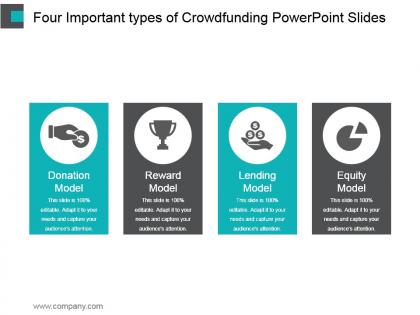
Our Four Important Types Of Crowdfunding Powerpoint Slides enable achievement of dreams. You will find them empowering contributors.
People who downloaded this PowerPoint presentation also viewed the following :
Four important types of crowdfunding powerpoint slides with all 5 slides:
Facilitate generation of employment with our Four Important Types Of Crowdfunding Powerpoint Slides. Address the demand for jobs.


FAQs for Four important types of
Crowdfunding offers startups market validation, reduced financial risk, creative control retention, and direct customer engagement, unlike traditional funding methods that often require equity dilution or debt obligations. Through platforms like Kickstarter and Indiegogo, entrepreneurs can test product viability while building communities, with many tech and consumer product startups finding this approach delivers faster market entry and preserved ownership stakes.
Creators should set realistic funding goals based on actual production costs, marketing expenses, and platform fees, while ensuring the target amount doesn't intimidate potential backers. Successful campaigns often start with lower initial goals to build momentum and social proof, with many creators finding that achieving 30-40% funding quickly attracts additional backers who want to support proven projects.
Popular crowdfunding platforms include Kickstarter for creative projects, Indiegogo for flexible funding, GoFundMe for personal causes, Seedrs for equity investment, and Patreon for ongoing creator support. These platforms streamline fundraising by offering different funding models, audience targeting, and fee structures, with many entrepreneurs finding that platform selection significantly impacts campaign success and market reach.
Entrepreneurs should understand securities regulations, intellectual property protection, tax obligations, platform compliance requirements, and international laws if accepting global funding. These legal frameworks vary significantly across jurisdictions, with many startups finding that early consultation with securities attorneys helps navigate disclosure requirements, investor limits, and campaign structures, ultimately preventing costly compliance issues.
Video content enhances crowdfunding campaigns by building emotional connections, demonstrating product functionality, and establishing creator credibility through authentic storytelling. Campaigns with compelling videos typically achieve 114% higher funding rates than text-only presentations, with backers increasingly preferring visual proof of concept before committing, ultimately delivering greater transparency and trust that converts viewers into supporters.
Building a strong crowdfunding community requires authentic storytelling, consistent social media engagement, early supporter outreach, influencer partnerships, and regular project updates throughout the campaign. These strategies work by fostering genuine connections, maintaining transparency, and creating shared ownership in the project's success, with many successful campaigns finding that early community building significantly increases funding rates and long-term customer loyalty.
Marketing serves as the foundation for crowdfunding success, driving awareness, building community engagement, creating compelling storytelling, and establishing trust with potential backers. Through strategic social media campaigns, email outreach, and influencer partnerships, successful campaigns like those on Kickstarter and Indiegogo generate momentum and credibility, ultimately converting interest into funding commitments.
Rewarding backers effectively influences contribution levels by offering tiered incentives, exclusive access, and meaningful engagement throughout the campaign journey. Strategic reward structures create psychological investment and community belonging, with successful campaigns in technology, publishing, and creative sectors finding that personalized recognition, early-bird pricing, and limited-edition offerings significantly increase both initial contributions and repeat backing behavior.
Common crowdfunding pitfalls include unrealistic funding goals, inadequate marketing preparation, poor reward structuring, insufficient prototype development, and unclear communication strategies. These challenges can derail campaigns by creating credibility gaps, limiting audience reach, and failing to demonstrate viability, with many entrepreneurs finding that thorough pre-launch planning and realistic timeline setting ultimately deliver higher success rates and stronger investor confidence.
Crowdfunding trends vary significantly by industry, with technology and creative projects dominating reward-based platforms, while equity crowdfunding thrives in fintech and healthcare sectors. Creative industries like film and gaming leverage community engagement, whereas startups in manufacturing and consumer goods focus on pre-sales validation, with many companies finding that industry-specific approaches ultimately deliver higher success rates and stronger investor alignment.
Project creators should track funding progress, backer acquisition rates, social media engagement, conversion rates from views to pledges, and average pledge amounts. These metrics enable creators to adjust marketing strategies, identify successful promotional channels, and optimize reward tiers in real-time, with many campaigns finding that daily monitoring ultimately delivers higher success rates and stronger community engagement.
Project owners can maintain transparency by providing regular updates on milestones, budget allocation, timeline adjustments, production challenges, and shipping schedules through dedicated platform messaging and social media channels. These communication strategies enable backers to track progress while building trust, with many successful campaigns finding that consistent transparency reduces refund requests, enhances backer loyalty, and ultimately delivers stronger community engagement throughout the project lifecycle.
Crowdfunding revolutionized film and creative industries by democratizing funding access, enabling independent creators to bypass traditional gatekeepers, and allowing direct audience engagement before production begins. Through platforms like Kickstarter and Indiegogo, filmmakers and artists now secure financing while building dedicated fan bases, ultimately delivering more diverse content and innovative projects that might never have received traditional studio backing.
Crowdfunding has evolved through enhanced mobile platforms, blockchain integration, AI-powered campaign optimization, social media amplification, and sophisticated analytics tools. These technological advancements streamline campaign creation, expand global reach, and improve investor matching, with platforms like Kickstarter and Indiegogo delivering faster funding cycles, reduced operational costs, and enhanced transparency for entrepreneurs seeking capital.
Maintaining crowdfunding momentum requires consistent social media engagement, regular campaign updates, influencer partnerships, email marketing, and community building activities. These strategies work by keeping backers informed, attracting new supporters through authentic testimonials, and creating urgency through milestone celebrations, with many successful campaigns finding that sustained communication and transparent progress sharing ultimately delivers higher funding totals and stronger backer relationships.
-
Thanks for all your great templates they have saved me lots of time and accelerate my presentations. Great product, keep them up!
-
Innovative and Colorful designs.