

Functional Areas Of Medical Administration Powerpoint Presentation Slides




Try Before you Buy Download Free Sample Product
 Impress Your
 Audience
 100%
100% Editable
 Save Hours
 of Time


Healthcare management is the administration of core functional areas of a hospital, such as operations, financial management, human resource HR management, information technology IT, and marketing. With our professionally designed Functional Areas of Medical Administration PowerPoint presentation, medical administrators can develop policies for each department to increase operational efficiency. The hospital administration deck starts with current trends and statistics related to medical administration, the roles and responsibilities of various stakeholders involved in the healthcare system, and multiple objectives for healthcare companies. It also includes administrative areas of the hospital, such as operations management, financial management, human resource management, information technology, and marketing. Further, the module caters to a section that covers different challenges faced by health service managers and solutions to mitigate them. Lastly, through key performance indicator KPI dashboards, the health services manager can evaluate the effectiveness of departmental strategies and healthcare facilities in a medical institute. Download our 100 percentage editable and customizable template, which is also compatible with Google Slides.
People who downloaded this PowerPoint presentation also viewed the following :
Content of this Powerpoint Presentation
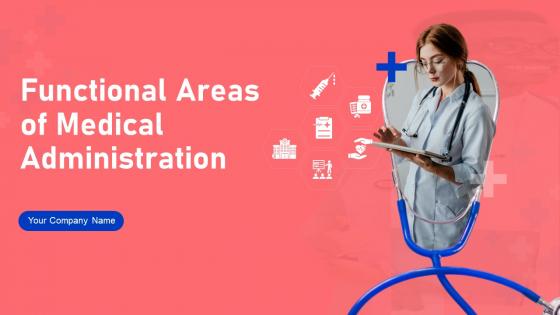
Slide 1: This slide displays the title Functional Areas of Medical Administration.
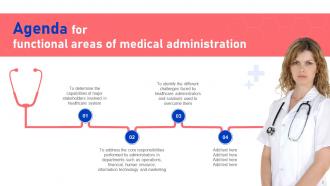
Slide 2: This slide displays the title Agenda for functional areas of medical administration.
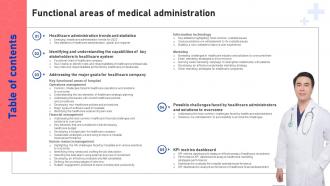
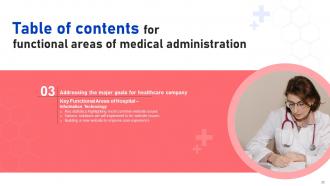
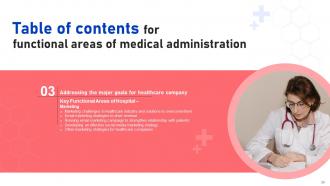
Slide 3: This slide exhibit table of content.
Slide 4: This slide exhibit table of content.
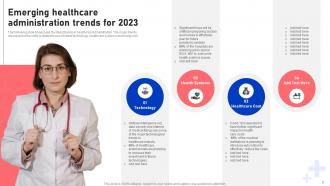
Slide 5: The following slide showcases the latest trends in healthcare administration.
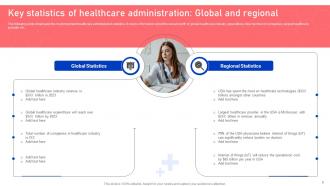
Slide 6: The following slide showcases the most important healthcare administration statistics.
Slide 7: This slide exhibit table of content that is to be discuss further.
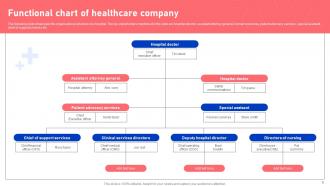
Slide 8: The following slide showcases the organizational structure of a hospital.
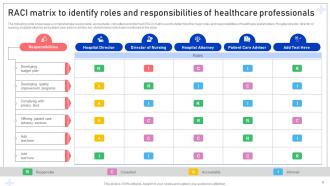
Slide 9: This slide showcases a comprehensive responsible, accountable consulted and informed (RACI) matrix used to determine the roles and responsibilities.
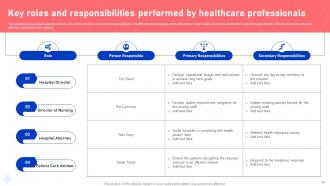
Slide 10: This slide showcases the various roles and primary & secondary responsibilities of healthcare professionals along with person responsible.
Slide 11: This slide exhibit table of content that is to be discuss further.
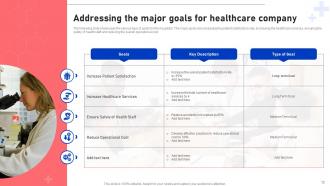
Slide 12: The following slide showcases the various type of goals for the hospitals. This slide exhibit table of content that is to be discuss further.
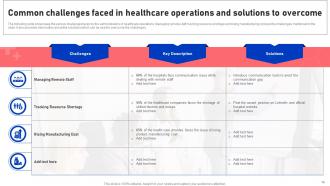
Slide 14: The following slide showcases the various challenges faced by the administrators in healthcare operations.
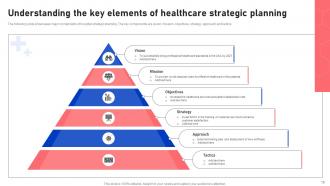
Slide 15: The following slide showcases major components of hospital strategic planning.
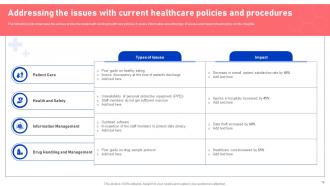
Slide 16: The following slide showcases the various problems related with existing healthcare policies.
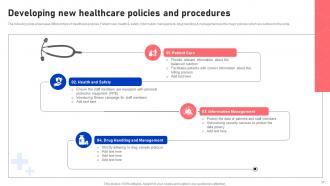
Slide 17: This slide showcases different type of healthcare policies.
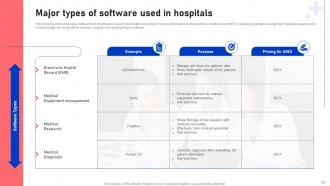
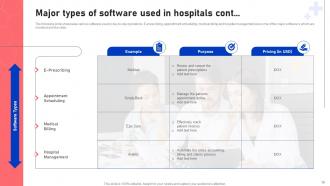
Slide 18: This following slide showcases different kind of software's used in the healthcare system.
Slide 19: This slide showcases various software used in day-to-day operations.
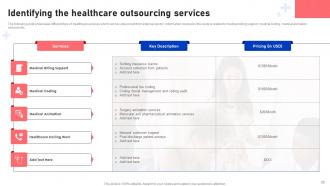
Slide 20: The following slide showcases different type of healthcare services which can be outsourced from external vendor.
Slide 21: This slide exhibit table of content that is to be discuss further.
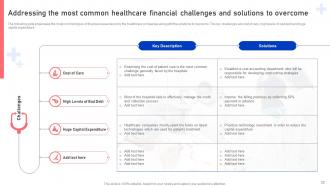
Slide 22: This slide showcases the most common types of financial issues faced by the healthcare companies along with the solutions to overcome.
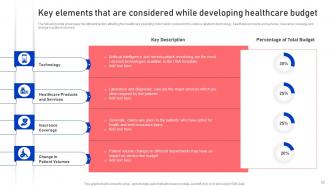
Slide 23: The following slide showcases the different factors affecting the healthcare spending.
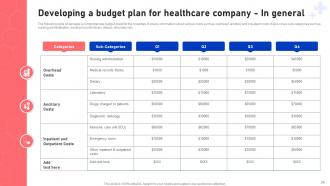
Slide 24: The following slide showcases a comprehensive budget sheet for the hospitals.
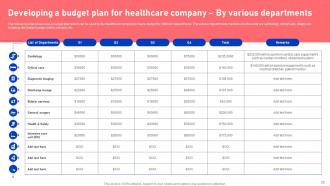
Slide 25: The following slide showcases a budget plan which can be used by the healthcare company to frame budget for different departments.
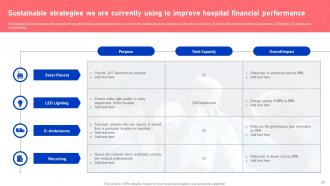
Slide 26: This slide showcases the overview of green initiatives strategy which can be used by the healthcare professionals to reduce the overall cost.
Slide 27: This slide exhibit table of content that is to be discuss further.
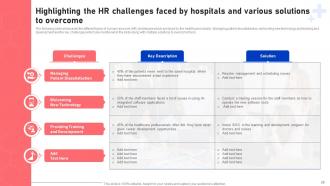
Slide 28: The following slide showcases the different types of human resource (HR) challenges which are faced by the healthcare industry.
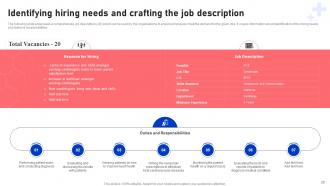
Slide 29: This slide shows a comprehensive job description (JD) which can be used by the organizations to ensure employees meet the demand for the given role.
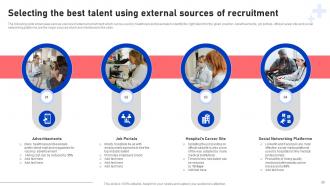
Slide 30: This slide showcases various sources of external recruitment which can be used by healthcare professionals to identify the right talent.
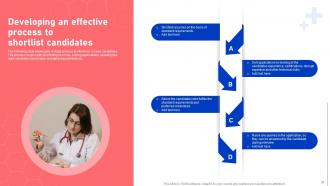
Slide 31: This slide showcases 4 stage process to effectively screen candidates.
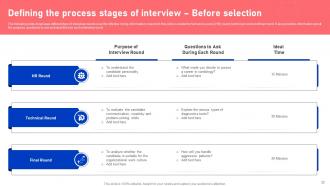
Slide 32: The following slide showcases different type of interview rounds used for effective hiring.
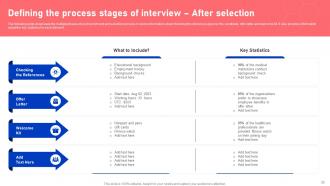
Slide 33: The following slide showcases the multiple phases of post recruitment and selection process.
Slide 34: This slide showcases different employee engagement practices which can be used to improve employees productivity and lower absenteeism level.
Slide 35: This slide exhibit table of content that is to be discuss further.
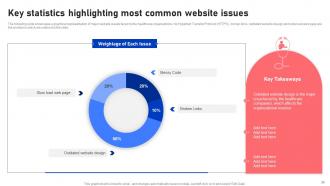
Slide 36: The following slide showcases a graphical representation of major website issues faced by the healthcare organizations.
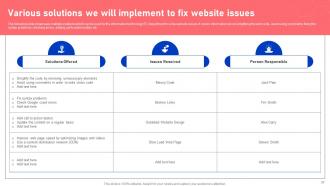
Slide 37: The following slide showcases multiple solutions which can be used by the information technology (IT) department to solve website issues.
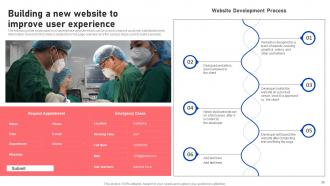
Slide 38: The following slide showcases a comprehensive website which can be used to improve customer satisfaction level.
Slide 39: This slide exhibit table of content that is to be discuss further.
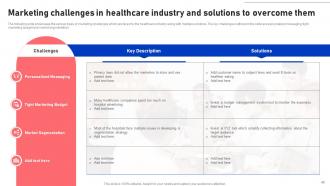
Slide 40: The following slide showcases the various types of marketing challenges which are faced by the healthcare industry along with multiple solutions.
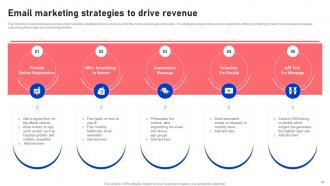
Slide 41: The following slide showcases various email marketing strategies which can be used by the businesses to generate sales.
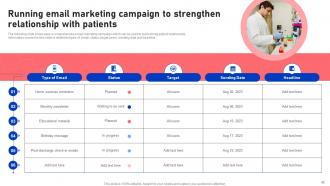
Slide 42: The following slide showcases a comprehensive email marketing campaign which can be used to build strong patient relationship.
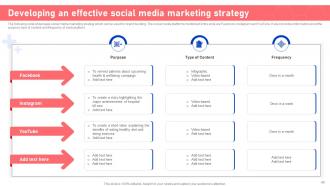
Slide 43: The following slide showcases social media marketing strategy which can be used for brand building.
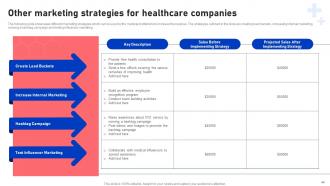
Slide 44: The following slide showcases different marketing strategies which can be used by the medical institutions to increase the revenue.
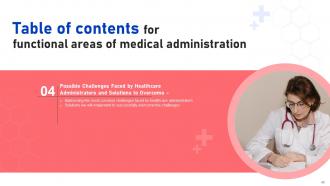
Slide 45: This slide exhibit table of content that is to be discuss further.
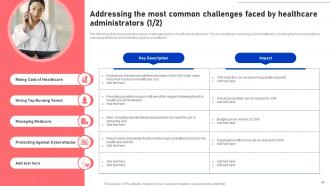
Slide 46: This slide showcases the various challenges faced by healthcare professions.
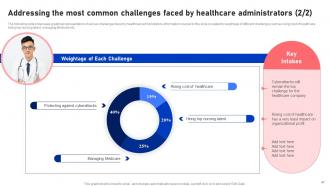
Slide 47: The following slide showcases graphical representation of various challenges faced by healthcare administrators.
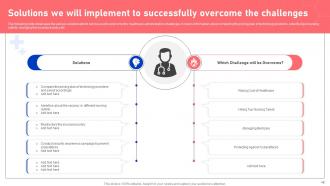
Slide 48: The following slide showcases the various solutions which can be used to overcome the healthcare administration challenges.
Slide 49: This slide exhibit table of content that is to be discuss further.
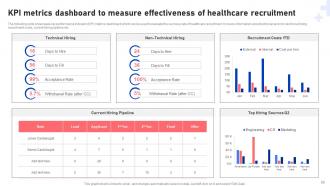
Slide 50: This slide showcases key performance indicator (KPI) metrics dashboard which can be used to evaluate the success rate of healthcare recruitment.
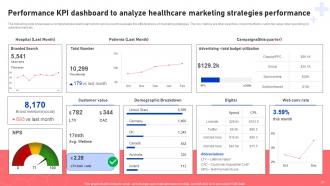
Slide 51: The following slide showcases a comprehensive dashboard which can be used to evaluate the effectiveness of marketing strategies.
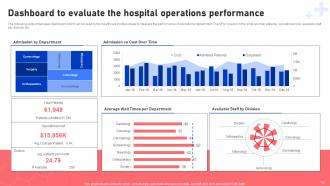
Slide 52: The following slide showcases dashboard which can be used by the healthcare professionals to measure the performance of operational department.
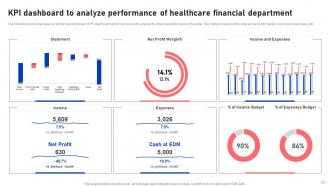
Slide 53: The following slide showcases key performance indicator (KPI) dashboard which can be used to analyze the financial performance of hospital.
Slide 54: This is the icons slide.
Slide 55: This slide presents title for additional slides.
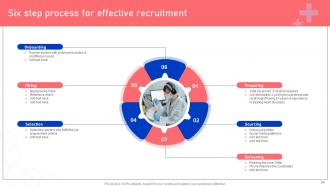
Slide 56: This slide showcase Six step process for effective recruitment.
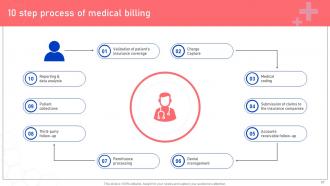
Slide 57: This slide showcase 10 step process of medical billing.
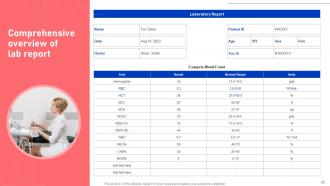
Slide 58: This slide showcase Comprehensive overview of lab report Laboratory Report.
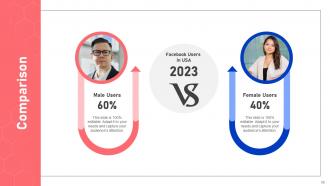
Slide 59: This slide showcases a Comparison of male and female users.
Slide 60: This slide display SWOT analysis.
Slide 61: This slide exhibit Timeline.
Slide 62: This slide display Target.
Slide 63: This slide display Venn diagram.
Slide 64: This slide exhibits ideas generated.
Slide 65: This slide display about Our team.
Slide 66: This is thank you slide & contains contact details of company like office address, phone no., etc.
Functional Areas Of Medical Administration Powerpoint Presentation Slides with all 71 slides:
Use our Functional Areas Of Medical Administration Powerpoint Presentation Slides to effectively help you save your valuable time. They are readymade to fit into any presentation structure.








FAQs for Functional Areas Of Medical Administration
Medical administrators oversee operational efficiency, financial management, staff coordination, regulatory compliance, and patient service quality in healthcare facilities. These professionals streamline daily operations by managing budgets, ensuring regulatory adherence, and coordinating between departments, with many hospitals and clinics finding that effective administration ultimately delivers improved patient experiences and enhanced organizational performance.
Effective medical administration improves patient outcomes by streamlining care coordination, reducing medical errors through systematic protocols, and ensuring timely access to treatments and specialists. Through enhanced scheduling systems, electronic health records, and resource allocation, hospitals and clinics deliver faster diagnoses, minimize wait times, and maintain continuity of care, ultimately reducing complications and improving recovery rates.
Technology streamlines medical administration through electronic health records, automated billing systems, AI-powered scheduling, telemedicine platforms, and digital patient management tools. These systems enhance operational efficiency by reducing paperwork, minimizing errors, and accelerating patient processing, with hospitals and clinics finding that automated workflows ultimately deliver faster services, lower administrative costs, and improved patient experiences.
Common challenges in medical administration include regulatory compliance burdens, patient data management complexities, insurance claim processing delays, staff scheduling inefficiencies, and rising operational costs. These obstacles can be addressed through integrated healthcare management systems, automated billing processes, and digital patient records, with many hospitals and clinics finding that strategic technology adoption streamlines workflows while reducing administrative overhead and improving patient care delivery.
Regulatory changes significantly reshape medical administration practices by requiring updated compliance protocols, revised documentation standards, and enhanced staff training programs. Healthcare organizations must streamline their administrative workflows, implement new technology systems, and modify patient data management procedures, with many hospitals and clinics finding that proactive adaptation ultimately delivers improved operational efficiency and better regulatory compliance outcomes.
Essential skills for successful medical administrators include healthcare regulations knowledge, financial management, staff leadership, technology proficiency, and patient care coordination. These competencies enable administrators to streamline hospital operations, ensure regulatory compliance, and optimize resource allocation, with many healthcare institutions finding that strong administrative leadership ultimately delivers improved patient outcomes and operational efficiency.
Medical administrators can effectively manage healthcare staff and resources through strategic workforce planning, performance monitoring systems, resource allocation optimization, and implementing technology-driven scheduling solutions. These approaches enhance operational efficiency by reducing costs, improving patient care delivery, and maximizing staff productivity, with many healthcare institutions finding that integrated management systems ultimately deliver better patient outcomes while maintaining competitive advantage in an increasingly complex healthcare landscape.
Best practices for maintaining patient confidentiality include implementing robust data encryption, conducting regular staff training, establishing strict access controls, using secure communication channels, and maintaining comprehensive audit trails. These measures streamline compliance by minimizing unauthorized access, enhancing data security, and ensuring regulatory adherence, with many healthcare organizations finding that systematic confidentiality protocols ultimately deliver improved patient trust and reduced liability risks.
Billing and coding serve as the financial backbone of medical administration, translating clinical services into standardized codes for insurance claims, revenue cycle management, and regulatory compliance. These processes enable healthcare organizations to streamline reimbursements, maintain accurate patient records, and optimize operational efficiency, with many hospitals and clinics finding that proper coding practices significantly reduce claim denials while accelerating payment cycles.
Medical administrators can improve healthcare team communication through structured daily huddles, standardized handoff protocols, collaborative technology platforms, regular interdisciplinary meetings, and clear escalation procedures. These strategies streamline information flow by reducing miscommunication errors, enhancing care coordination, and fostering accountability, with many hospitals finding that systematic communication approaches ultimately deliver better patient outcomes and increased operational efficiency.
Data analytics enhances medical administration decision-making by providing real-time insights into patient flow, resource utilization, operational efficiency, and cost management patterns. Through predictive modeling and performance dashboards, hospitals and healthcare systems streamline staffing decisions, optimize bed allocation, and reduce wait times, ultimately delivering improved patient outcomes and significant cost savings.
Medical administrators must consider patient privacy and confidentiality, informed consent protocols, equitable resource allocation, conflict of interest management, and maintaining professional boundaries. These ethical frameworks guide decision-making by ensuring HIPAA compliance, transparent treatment options, and fair access to care, with many healthcare institutions finding that strong ethical governance ultimately enhances patient trust and organizational reputation.
Medical administrators contribute to healthcare policy and reform by analyzing operational data, identifying system inefficiencies, and advocating for evidence-based improvements at institutional and governmental levels. Through their frontline experience with regulatory compliance, resource allocation, and patient flow optimization, administrators provide crucial insights that shape policy decisions, ultimately delivering more effective healthcare delivery systems and improved patient outcomes across diverse medical organizations.
Medical administration can adapt to telemedicine through digital infrastructure upgrades, remote patient monitoring systems, virtual consultation platforms, electronic health record integration, and streamlined billing processes. These adaptations enable healthcare organizations to deliver faster patient services, reduce operational costs, and enhance accessibility, with many hospitals and clinics finding that strategic telemedicine integration ultimately provides competitive advantage in an increasingly digital healthcare environment.
Continuous education and training benefit medical administrators by enhancing regulatory compliance, improving operational efficiency, and strengthening leadership capabilities in healthcare's evolving landscape. Through updated certifications and professional development programs, administrators streamline patient care processes, navigate complex healthcare policies, and deliver cost-effective services, ultimately gaining competitive advantage in increasingly demanding healthcare environments.
-
SlideTeam was so customer-centric and quick service-provider that I doubted the amount I was paying and literally re-checked the transaction.
-
Spacious slides, just right to include text. SlideTeam has also helped us focus on the most important points that need to be highlighted for our clients.