


Germany country powerpoint flags




Try Before you Buy Download Free Sample Product
 Impress Your
 Audience
 100%
100% Editable
 Save Hours
 of Time


Our Germany Country Powerpoint Flags are more colourful than a rainbow. They will lead you to the proverbial pot of gold.
People who downloaded this PowerPoint presentation also viewed the following :
Germany country powerpoint flags with all 11 slides:
Dictate terms with your thoughts. Our Germany Country Powerpoint Flags get conditions in your favour.
FAQs for Germany
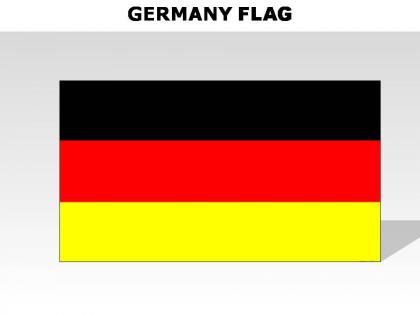
The German flag's black, red, and gold colors originated from the Holy Roman Empire's heraldic traditions and were adopted by democratic movements during the 1848 revolutions. These colors became symbols of German unity and democratic ideals, representing the nation's journey from fragmented states to modern democracy, with the current flag officially adopted in 1949, ultimately symbolizing Germany's commitment to democratic values and European integration.
Germany's flag design has evolved from the Holy Roman Empire's black eagle banner through various iterations including Prussia's black-white-red stripes and the Weimar Republic's introduction of black-red-gold colors. These transformations reflect major political transitions, territorial changes, and national identity shifts, with the current tricolor ultimately representing democratic values, unity, and Germany's position in modern Europe.
The German flag's black, red, and gold colors symbolize unity, democracy, and freedom, representing Germany's journey toward democratic ideals and national sovereignty. These colors originated from 19th-century democratic movements and were officially adopted to reflect the nation's commitment to parliamentary democracy, with many European institutions recognizing them as symbols of modern German constitutional values.
Germany's flag differs through its unique horizontal tricolor arrangement of black, red, and gold, which represents its specific historical journey toward democracy and unity. While Belgium uses black, yellow, and red in vertical stripes, and other nations incorporate these colors differently, Germany's particular shade of gold and its symbolic representation of democratic values, dating from the 1848 revolution, creates distinctive national identity that reflects its path from division to reunification.
The German flag serves as a central symbol of unity and national identity during holidays like German Unity Day, Constitution Day, and state ceremonies, displayed prominently on government buildings, public spaces, and private homes. These displays foster collective celebration and democratic pride, with many institutions finding that flag ceremonies and official protocols enhance civic engagement, strengthen national cohesion, and ultimately deliver meaningful connections between citizens and their constitutional values.
After World War II, Germany's flag perception shifted from wartime associations to representing democratic values, European integration, and economic prosperity. Through decades of peaceful development, international cooperation, and successful reunification, the current black-red-gold flag has become increasingly associated with democratic institutions, cultural achievements, and Germany's role as a European leader, ultimately transforming from historical burden to national pride symbol.
Common misconceptions about the German flag include believing the colors represent specific meanings like blood and gold, that it's always been Germany's flag, or that it's identical to Belgium's flag. While these colors have deep historical roots in German democratic movements, the flag was adopted in 1949 for West Germany, with Belgium's flag displaying different proportions and arrangements, ultimately representing Germany's post-war democratic transformation.
The German flag appears prominently in films depicting historical events, international sports broadcasts, diplomatic ceremonies, and contemporary media celebrating German achievements. Through cinema, television coverage of World Cup celebrations, and cultural documentaries, the black-red-gold tricolor represents national identity, democratic values, and Germany's modern transformation, with many productions using it to symbolize unity and progress.
German citizens display national pride through flag usage during major sporting events like the World Cup, national holidays such as German Unity Day, and official state occasions. This patriotic expression, while more reserved than in other countries, has evolved significantly since reunification, with many Germans finding that respectful flag display at public buildings, private homes during celebrations, and community events enables meaningful connection to their democratic values and national identity.
The German Flag Act and federal regulations govern flag display, requiring respectful usage, prohibiting desecration, and establishing guidelines for official ceremonies and public buildings. These laws ensure dignified representation while balancing free expression rights, with many institutions finding that proper compliance enhances national identity representation and avoids legal complications in official communications.
The German flag can be incorporated through strategic color palette integration, minimalist geometric patterns, and subtle patriotic elements that maintain professional aesthetics. Many German corporations, event organizers, and design agencies successfully blend black, red, and gold into contemporary layouts, logos, and marketing materials, creating sophisticated brand identity while honoring national heritage and appealing to diverse audiences.
Contemporary German flag interpretations include Gerhard Richter's abstract color studies, Anselm Kiefer's textural installations, and digital media works exploring national identity themes. These artistic approaches transform traditional symbolism through mixed media, conceptual frameworks, and cultural commentary, with many galleries and cultural institutions finding that such works generate meaningful dialogue about heritage, unity, and modern German identity in increasingly globalized contexts.
German regions maintain strong connections to the national flag while preserving distinct local identities through their own regional flags and symbols. While states like Bavaria and Baden-Württemberg display their traditional flags prominently alongside the federal colors, the black-red-gold tricolor serves as a unifying symbol during national celebrations, international events, and federal institutions, ultimately fostering both regional pride and national cohesrence.
German flag etiquette during public events requires the flag to be displayed at proper height, never touch the ground, and be illuminated if flown at night. These protocols ensure respectful representation by positioning flags prominently at ceremonies, maintaining pristine condition throughout events, and following official guidelines, with many government institutions and corporate organizations finding that proper flag etiquette enhances ceremonial dignity and demonstrates cultural respect.
The German flag serves as a powerful educational tool for exploring national identity through historical analysis, civic discussions, and cultural studies programs. Teachers use flag symbolism to examine Germany's democratic transformation, constitutional values, and European integration, while students engage in comparative studies with other nations, ultimately fostering critical thinking about citizenship and belonging.
-
Awesome use of colors and designs in product templates.
-
Enough space for editing and adding your own content.