

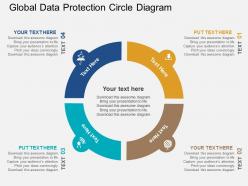
Global data protection circle diagram flat powerpoint design





Try Before you Buy Download Free Sample Product
 Impress Your
Audience
 100%
Editable
 Save Hours
of Time


Whatever the role our Global Data Protection Circle Diagram Flat Powerpoint Design will enact it. You will be more than satisfied.
People who downloaded this PowerPoint presentation also viewed the following :
Global data protection circle diagram flat powerpoint design with all 4 slides:
Broadcast to a bigger audience with our Global Data Protection Circle Diagram Flat Powerpoint Design. Your thoughts are guaranteed broader coverage.


FAQs for Global data protection circle diagram
Global data protection laws center on consent, data minimization, purpose limitation, transparency, and individual rights like access and deletion. These principles streamline compliance across jurisdictions by establishing consistent frameworks for lawful processing, with many multinational organizations finding that unified governance approaches enhance operational efficiency while delivering stronger customer trust and competitive advantage.
Countries approach user consent through varying regulatory frameworks, with the EU's GDPR requiring explicit opt-in consent, while the US follows a sector-specific approach, and emerging markets develop hybrid models. These diverse approaches create both compliance challenges and opportunities for organizations, with many multinational companies finding that implementing the highest standard globally streamlines operations while ultimately delivering enhanced user trust and competitive advantage.
GDPR implications for international businesses include mandatory data consent protocols, significant compliance costs, potential fines up to 4% of global revenue, enhanced customer trust requirements, and complex cross-border data transfer regulations. These requirements streamline privacy practices, enhance customer confidence, and create competitive advantages for compliant organizations, with many multinational companies finding that robust data governance ultimately delivers operational efficiency and stronger market positioning.
Organizations ensure compliance with varying regional data protection regulations through comprehensive data mapping, implementing privacy-by-design frameworks, and establishing unified governance policies that meet the highest standards across jurisdictions. These approaches streamline compliance by creating standardized procedures, automated monitoring systems, and cross-regional audit trails, with many multinational companies finding that centralized privacy operations ultimately reduce costs while enhancing customer trust and competitive advantage.
Data encryption serves as a fundamental security layer by converting sensitive information into unreadable code, ensuring data remains protected during storage, transmission, and processing across international networks. Through advanced encryption standards, organizations in banking, healthcare, and retail sectors can safeguard customer data, maintain regulatory compliance across different jurisdictions, and minimize breach risks, ultimately delivering enhanced security and competitive advantage in an increasingly interconnected global marketplace.
Data breaches significantly damage corporate reputation through lost customer trust, negative media coverage, and investor confidence decline, while creating complex legal challenges across multiple jurisdictions with varying regulations. Companies face substantial fines, class-action lawsuits, and regulatory investigations in different countries, with many organizations finding that recovery costs and compliance requirements often exceed the initial breach damages.
Data transfer challenges include navigating varying compliance requirements, managing consent mechanisms across jurisdictions, addressing data localization mandates, ensuring adequate protection levels, and maintaining operational continuity. Organizations transferring data between regions like the EU and US face complex legal frameworks, with many companies finding that strategic compliance programs and robust cross-border agreements ultimately deliver regulatory confidence and competitive advantage.
Small businesses can effectively implement data protection measures by conducting regular data audits, establishing clear privacy policies, training employees on security protocols, using encrypted storage solutions, and implementing access controls. These foundational steps help streamline compliance with regulations like GDPR, while many small retailers and service providers find that systematic data protection ultimately delivers enhanced customer trust and competitive advantage in an increasingly privacy-conscious marketplace.
Technological advancements aiding global data protection include advanced encryption algorithms, AI-powered threat detection systems, blockchain for secure data storage, zero-trust security frameworks, and automated compliance monitoring tools. These technologies enhance protection by identifying vulnerabilities in real-time, encrypting sensitive information across networks, and streamlining regulatory compliance, with many financial institutions and healthcare organizations finding significantly improved security outcomes.
The "right to be forgotten" varies significantly across jurisdictions, with Europe's GDPR providing comprehensive erasure rights, while the US takes a more limited, sector-specific approach through state privacy laws. Many countries like Brazil, Canada, and Singapore are developing balanced frameworks that weigh individual privacy against legitimate business interests, with organizations increasingly finding that proactive data governance strategies enable compliance across multiple jurisdictions while enhancing customer trust.
Non-compliance with global data protection laws results in substantial financial penalties, legal sanctions, operational disruptions, and severe reputational damage that can devastate customer trust. Organizations face GDPR fines reaching 4% of annual revenue, class-action lawsuits, and business restrictions, while many companies find that compliance violations ultimately compromise competitive positioning and market credibility.
Organizations conduct effective data protection risk assessments by identifying sensitive data types, mapping data flows across systems, evaluating current security controls, analyzing potential threat vectors, and assessing compliance gaps. These assessments enable companies to prioritize vulnerabilities, allocate security resources strategically, and implement targeted safeguards, with many financial services and healthcare institutions finding that regular assessments significantly reduce breach risks while ensuring regulatory compliance.
Data disposal and retention best practices include implementing automated deletion schedules, secure data destruction methods, comprehensive retention policies, regular compliance audits, and encrypted backup protocols. These practices enable organizations to minimize storage costs, reduce security vulnerabilities, and maintain regulatory compliance, with many financial institutions and healthcare providers finding that strategic data lifecycle management ultimately delivers operational efficiency and enhanced customer trust.
Cultural differences significantly influence data protection through varying privacy expectations, regulatory frameworks, trust levels in institutions, and historical experiences with government surveillance. While European cultures prioritize individual privacy rights with strict regulations like GDPR, Asian markets often balance collective benefits with personal data sharing, and American approaches emphasize business flexibility, ultimately requiring multinational organizations to adapt their data strategies across diverse cultural landscapes.
Privacy-by-design principles serve as foundational elements in global data protection strategies, incorporating proactive measures, default privacy settings, end-to-end security, transparency, and user-centric controls from system inception. These principles enable organizations across sectors like healthcare, financial services, and e-commerce to streamline compliance with regulations like GDPR and CCPA, ultimately delivering enhanced consumer trust and competitive advantage.
-
Qualitative and comprehensive slides.
-
Awesomely designed templates, Easy to understand.