


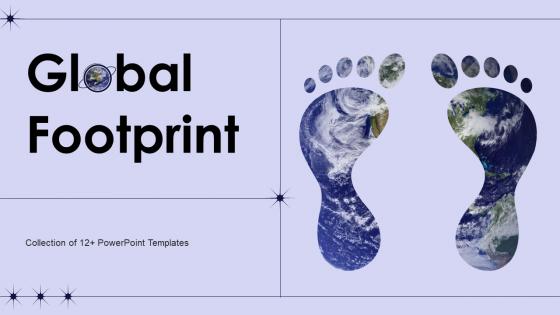
Global Footprint Powerpoint Ppt Template Bundles




Try Before you Buy Download Free Sample Product
 Impress Your
 Audience
 100%
100% Editable
 Save Hours
 of Time


Our Global Footprint Powerpoint Ppt Template Bundles are topically designed to provide an attractive backdrop to any subject. Use them to look like a presentation pro.
People who downloaded this PowerPoint presentation also viewed the following :
Global Footprint Powerpoint Ppt Template Bundles with all 27 slides:
Use our Global Footprint Powerpoint Ppt Template Bundles to effectively help you save your valuable time. They are readymade to fit into any presentation structure.







FAQs for Global Footprint Powerpoint
An organization's global footprint includes market presence across regions, supply chain networks, manufacturing facilities, distribution channels, and digital infrastructure. These components work together by expanding market reach, diversifying revenue streams, and enhancing operational resilience, with many multinational companies finding that strategic geographic diversification ultimately delivers competitive advantage and risk mitigation.
Globalization increases multinational corporations' environmental footprints through expanded supply chains, increased transportation emissions, and resource consumption across multiple regions, while also creating opportunities for sustainable practices and efficiency improvements. Many companies are leveraging global operations to implement green technologies, optimize logistics, and adopt circular economy principles, ultimately finding that strategic environmental management delivers cost savings and competitive advantage.
Businesses can measure their global footprint through revenue distribution across markets, employee headcount by region, operational facility locations, customer base geographic spread, and supply chain reach. These metrics enable organizations to assess market penetration, resource allocation efficiency, and strategic positioning, with many multinational companies finding that comprehensive footprint analysis drives better expansion decisions and competitive advantage.
Technology significantly mitigates industrial global footprints through energy optimization systems, carbon tracking platforms, renewable energy integration, smart manufacturing processes, and automated resource management. These solutions streamline operations by reducing waste, minimizing emissions, and enhancing efficiency across sectors like manufacturing and logistics, ultimately delivering cost savings and competitive advantage in increasingly sustainability-focused markets.
Sustainable supply chain practices reduce global footprint through optimized transportation routes, renewable energy adoption, waste minimization, and local sourcing strategies. These approaches streamline operations by cutting emissions, reducing resource consumption, and enhancing operational efficiency, with companies across manufacturing, retail, and technology sectors finding that sustainable practices ultimately deliver cost savings and competitive advantage.
A large global footprint brings developing nations foreign investment, job creation, technology transfer, and infrastructure development, while potentially causing income inequality, environmental degradation, and cultural disruption. These economic opportunities enable skills development, improved living standards, and enhanced connectivity, with many countries finding that strategic partnerships with global entities ultimately deliver sustainable growth and competitive positioning in international markets.
Individuals can calculate their personal global footprint using online carbon calculators, energy audits, consumption tracking apps, and lifestyle assessment tools that measure transportation, housing, diet, and purchasing patterns. These tools enable targeted changes like reducing energy consumption, choosing sustainable transportation, adopting plant-based diets, and mindful purchasing, with many users finding significant environmental impact reductions through systematic lifestyle adjustments.
Ethical considerations include labor practices across different regulatory environments, environmental impact in developing regions, tax optimization strategies, cultural sensitivity in local markets, and supply chain transparency. These challenges present both compliance risks and competitive opportunities, with many multinational corporations finding that proactive ethical frameworks ultimately deliver stronger stakeholder trust, regulatory advantages, and sustainable growth in increasingly scrutinized global markets.
Industries vary significantly in their global environmental footprints, with manufacturing, energy, and agriculture typically generating the highest emissions through resource extraction, production processes, and supply chain operations. While heavy industries like steel and cement present substantial challenges, sectors like technology and financial services increasingly demonstrate lower direct impacts, with many organizations finding that strategic sustainability initiatives across all industries ultimately deliver competitive advantages and operational efficiencies.
Cities can adopt renewable energy systems, implement comprehensive waste reduction programs, develop efficient public transportation networks, promote sustainable urban planning, and establish green building standards. These strategies streamline resource consumption while enhancing operational efficiency, with many municipalities finding that integrated approaches like smart grid technologies and circular economy initiatives ultimately deliver significant cost savings and improved quality of life for residents.
Government policies significantly influence international business operations through trade regulations, tax structures, environmental standards, labor laws, and market access requirements. These policies shape strategic decisions on manufacturing locations, supply chain configurations, and market entry approaches, with many multinational corporations finding that favorable regulatory environments ultimately deliver competitive advantages and operational efficiencies across diverse markets.
Global footprint directly influences climate change initiatives by measuring resource consumption, carbon emissions, and environmental impact across operations, supply chains, and markets. Organizations with larger global footprints increasingly leverage sustainability strategies, renewable energy adoption, and carbon reduction programs to meet climate goals, while smaller footprints enable faster implementation of green technologies, ultimately delivering competitive advantage and regulatory compliance.
Consumer behaviors significantly influence global footprints through purchasing decisions, usage patterns, disposal methods, and demand for sustainable alternatives. When consumers prioritize eco-friendly products, companies respond by streamlining supply chains, reducing packaging, and enhancing resource efficiency, with many retailers finding that sustainable practices ultimately deliver competitive advantage while minimizing environmental impact.
Innovative approaches include circular fashion models, sustainable material sourcing, local production networks, digital design processes, and waste-to-textile technologies. These strategies streamline operations by minimizing transportation costs, reducing resource consumption, and enhancing supply chain transparency, with many fashion brands finding that sustainable practices ultimately deliver competitive advantage and stronger customer loyalty.
Educational institutions can raise global footprint awareness through curriculum integration, campus sustainability programs, research initiatives, community partnerships, and student-led environmental projects. These approaches enable universities and schools to demonstrate practical solutions like renewable energy adoption, waste reduction strategies, and carbon tracking systems, ultimately creating environmentally conscious graduates who drive sustainable practices across industries.
-
SlideTeam just saved my project! Thank you so much. The variety of templates helped me showcase multiple perspectives easily.
-
Excellent design and quick turnaround.