

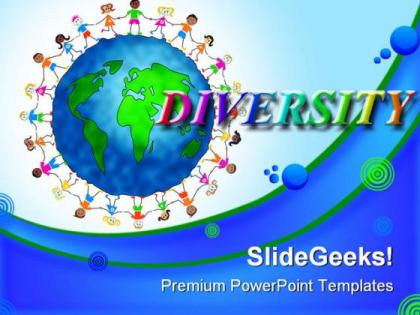
Global kids diversity children powerpoint templates and powerpoint backgrounds 0311




Try Before you Buy Download Free Sample Product
 Impress Your
 Audience
 100%
100% Editable
 Save Hours
 of Time


Our Global Kids Diversity Children PowerPoint Templates And PowerPoint Backgrounds 0311 are of high pedigree. Created by well-bred designers.
People who downloaded this PowerPoint presentation also viewed the following :
Global kids diversity children powerpoint templates and powerpoint backgrounds 0311 with all 3 slides:
Spice it up with our Global Kids Diversity Children PowerPoint Templates And PowerPoint Backgrounds 0311. Your talk will excite the palates of your audience.

FAQs for Global kids diversity children powerpoint templates and
Geographic location, historical migration patterns, socioeconomic conditions, educational systems, and family traditions serve as primary factors shaping cultural diversity among children worldwide. These influences work together by creating distinct worldviews, language development, and social practices, with children in urban centers, rural communities, and multicultural societies experiencing vastly different cultural formations that ultimately shape their global perspectives and adaptability.
Early multilingual exposure enhances cognitive flexibility, executive function, problem-solving abilities, attention control, and memory capacity in developing brains. Children in bilingual households, international schools, and diverse communities demonstrate stronger multitasking skills, creative thinking, and cultural adaptability, while developing enhanced neural pathways that deliver lifelong learning advantages and improved academic performance across subjects.
Schools promote inclusivity through multicultural curriculum integration, diverse literature and learning materials, cultural celebration events, peer mentorship programs, and inclusive classroom discussions that highlight different perspectives. These approaches enhance student understanding by fostering cross-cultural friendships, developing global awareness, and building empathy skills, with many educational institutions finding that such initiatives ultimately deliver improved academic outcomes and better prepare students for an increasingly interconnected world.
Parents serve as primary influencers in developing children's global awareness through modeling inclusive behaviors, facilitating cross-cultural interactions, encouraging diverse friendships, and exposing children to international perspectives through books, media, and travel. These approaches enable families to cultivate empathy, cultural competence, and open-mindedness, ultimately delivering well-rounded global citizens prepared for increasingly interconnected environments.
Children's literature fosters diversity appreciation by exposing young readers to different cultures, traditions, family structures, languages, and perspectives through relatable characters and authentic storytelling. These diverse narratives help children develop empathy, cultural awareness, and global understanding, while enabling educators and parents to facilitate meaningful conversations about inclusion, ultimately preparing students for an increasingly interconnected world.
Effective approaches include culturally responsive teaching methods, diverse curriculum materials, bias interruption training for educators, inclusive classroom practices, and family engagement strategies. These methods enhance learning environments by promoting equity, fostering cross-cultural understanding, and creating welcoming spaces, with many schools finding that strategic implementation ultimately delivers improved academic outcomes and stronger community connections.
Socioeconomic status significantly shapes children's access to cultural experiences, educational opportunities, and community resources, creating varied pathways for cultural expression and identity development. Children from different economic backgrounds experience cultural diversity through distinct lenses, with affluent communities often providing broader cultural exposure while lower-income areas may offer deeper authentic cultural connections within specific communities.
Globalization creates both cultural homogenization and increased cross-cultural awareness, transforming childhood experiences through shared media, educational approaches, and consumer products while simultaneously sparking efforts to preserve local traditions. Children in diverse societies increasingly navigate dual identities, with many families finding that strategic cultural integration enhances global competency while maintaining authentic cultural roots, ultimately delivering competitive advantages in interconnected economies.
Technology enables multicultural education through virtual cultural exchanges, interactive global maps, language learning apps, diverse digital storytelling platforms, and video calls with international classrooms. These tools help children explore different traditions, languages, and perspectives firsthand, while educational games and virtual reality experiences bring global cultures into their learning environment, ultimately fostering empathy and cross-cultural understanding.
Immigrant children face language barriers, cultural identity conflicts, academic system differences, social integration difficulties, and family expectation pressures while adapting to new environments. These challenges often manifest in schools and communities where children navigate different communication styles, educational approaches, and peer relationships, with many educational institutions finding that targeted support programs and culturally responsive teaching methods significantly enhance adaptation outcomes and academic success.
Festivals and cultural celebrations enhance children's understanding of diversity by exposing them to different traditions, foods, music, languages, and customs from around the world. Through participating in events like Diwali, Chinese New Year, or Carnival, children develop cultural awareness, empathy, and appreciation for global perspectives, ultimately building inclusive mindsets that enable better cross-cultural communication and collaboration.
Art and music education promote cultural awareness by exposing children to diverse traditions, storytelling methods, musical instruments, and creative expressions from various cultures worldwide. Through collaborative projects like multicultural festivals, ensemble performances, and cross-cultural art exchanges, children develop empathy, communication skills, and global perspectives, ultimately fostering inclusive mindsets and preparing them for increasingly interconnected communities.
Global initiatives supporting diverse child populations include UNICEF's equity-focused programs, UNESCO's inclusive education frameworks, Save the Children's protection services, WHO's child health initiatives, and various UN sustainable development goals targeting children. These comprehensive approaches streamline access to education, healthcare, and protection services across different cultural, ethnic, and socioeconomic backgrounds, with many international organizations finding that coordinated efforts ultimately deliver improved outcomes and enhanced opportunities for vulnerable children worldwide.
Stereotypes create barriers in children's social interactions by fostering prejudgments, limiting cross-cultural friendships, reducing empathy, and perpetuating social divisions within diverse environments. These biases significantly impact classroom dynamics, playground relationships, and group activities, with many schools finding that targeted diversity programs and inclusive storytelling help children overcome preconceptions, ultimately building stronger intercultural connections and collaborative skills.
Media representation significantly shapes children's understanding of diversity by providing visual models, normalizing different cultures and backgrounds, influencing social attitudes, and building empathy through storytelling. Through diverse characters and narratives, children develop broader worldviews, challenge stereotypes, and embrace inclusion more naturally, with educational programs and inclusive content ultimately fostering acceptance and cultural understanding.
-
Excellent products for quick understanding.
-
Best way of representation of the topic.