


Global Market Assessment And Entry Strategy For Business Expansion Powerpoint Presentation Slides Strategy CD V





Try Before you Buy Download Free Sample Product
 Impress Your
 Audience
 100%
100% Editable
 Save Hours
 of Time


A global strategy helps an organization enter foreign markets and reduce business risk. Check out our efficiently designed presentation on Global Market Assessment and Entry Strategy for Business Expansion. The following template helps analyze the target market and evaluate different global expansion methods. This PPT is valuable for a company intending to diversify the market segments and increase its revenue potential. It initially provides an overview of global strategy and process to formulate a plan for international expansion. An assessment of the target market by evaluating the market size and forecasted growth rate is also described in this deck. It showcases competitor analysis that can help to evaluate other critical players in the target market. Furthermore, It shows multiple strategies for global expansion, such as standardization, transnational, multinational, international, etc. After selecting the global market entry strategy, the following presentation highlights multiple overseas market entry modes such as merger and acquisition, joint venture, strategic alliance, international licensing, global export, etc. After identifying all global market entry modes, it covers marketing and hiring plans for the international market. At last, it showcases the impact of entering the global market on the organization. Get access to this 100 percent editable template now.
People who downloaded this PowerPoint presentation also viewed the following :
Content of this Powerpoint Presentation
Slide 1: This slide introduces Global Market Assessment and Entry Strategy for Business Expansion. State your company name and begin.
Slide 2: This slide states Agenda of the presentation.
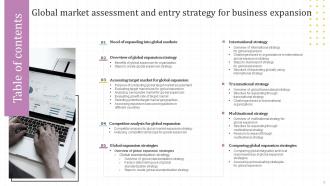
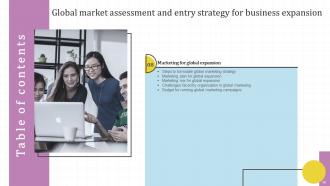
Slide 3: This slide presents Table of Content for the presentation.
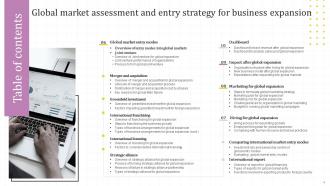
Slide 4: This is another slide continuing Table of Content for the presentation.
Slide 5: This slide highlights title for topics that are to be covered next in the template.
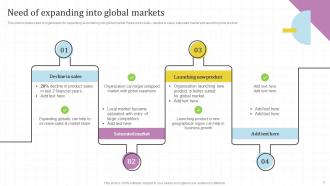
Slide 6: This slide displays Need of expanding into global markets.
Slide 7: This slide highlights title for topics that are to be covered next in the template.
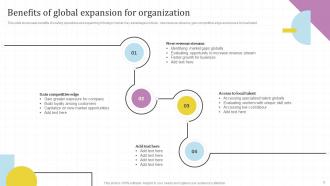
Slide 8: This slide showcases benefits of scaling operations and expanding in foreign market.
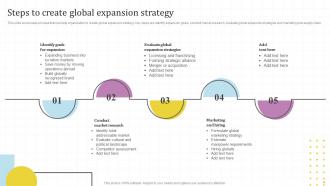
Slide 9: This slide shows Steps to create global expansion strategy.
Slide 10: This slide highlights title for topics that are to be covered next in the template.
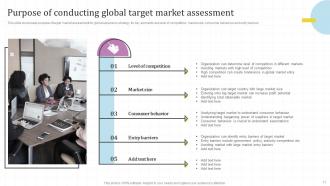
Slide 11: This slide presents Purpose of conducting global target market assessment.
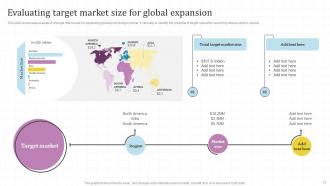
Slide 12: This slide displays Evaluating target market size for global expansion.
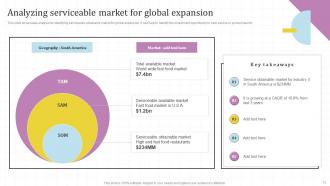
Slide 13: This slide represents Analysing serviceable market for global expansion.
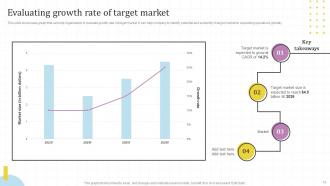
Slide 14: This slide showcases Evaluating growth rate of target market.
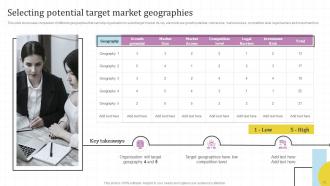
Slide 15: This slide shows Selecting potential target market geographies.
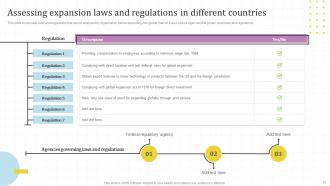
Slide 16: This slide presents Assessing expansion laws and regulations in different countries.
Slide 17: This slide highlights title for topics that are to be covered next in the template.
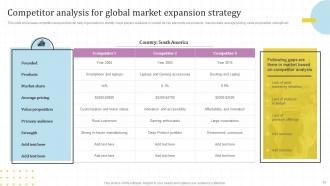
Slide 18: This slide displays Competitor analysis for global market expansion strategy.
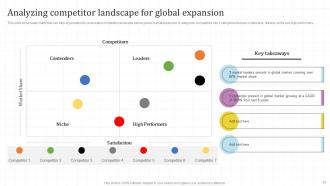
Slide 19: This slide represents Analyzing competitor landscape for global expansion.
Slide 20: This slide highlights title for topics that are to be covered next in the template.
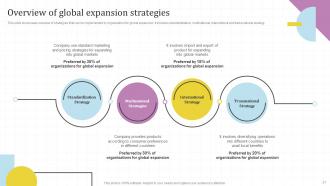
Slide 21: This slide showcases Overview of global expansion strategies.
Slide 22: This slide highlights title for topics that are to be covered next in the template.
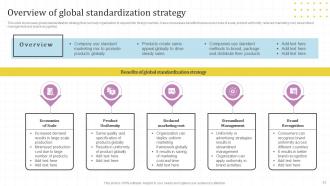
Slide 23: This slide shows Benefits of global standardization strategy.
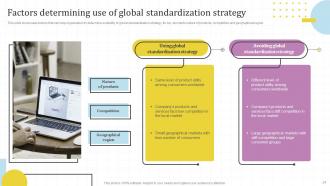
Slide 24: This slide presents Factors determining use of global standardization strategy.
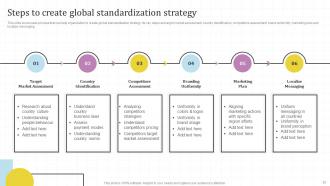
Slide 25: This slide displays Steps to create global standardization strategy.
Slide 26: This slide highlights title for topics that are to be covered next in the template.
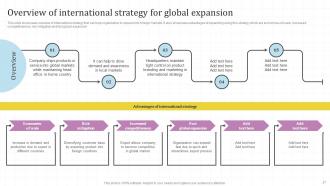
Slide 27: This slide represents Overview of international strategy for global expansion.
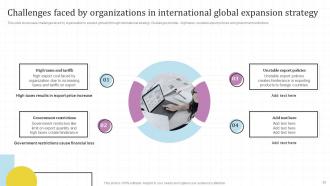
Slide 28: This slide showcases Challenges faced by organizations in international global expansion strategy.
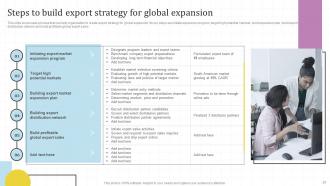
Slide 29: This slide shows Steps to build export strategy for global expansion.
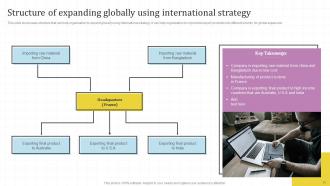
Slide 30: This slide presents Structure of expanding globally using international strategy.
Slide 31: This slide highlights title for topics that are to be covered next in the template.
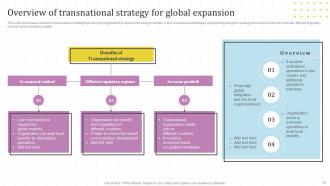
Slide 32: This slide displays Overview of transnational strategy for global expansion.
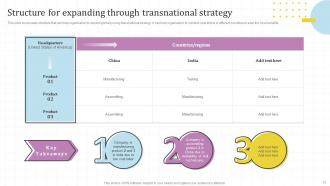
Slide 33: This slide represents Structure for expanding through transnational strategy.
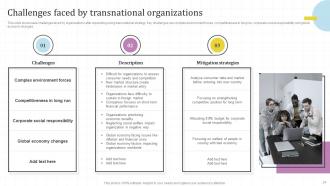
Slide 34: This slide showcases Challenges faced by transnational organizations.
Slide 35: This slide highlights title for topics that are to be covered next in the template.
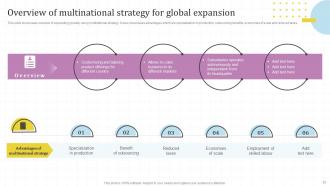
Slide 36: This slide shows Overview of multinational strategy for global expansion.
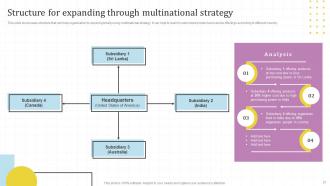
Slide 37: This slide presents Structure for expanding through multinational strategy.
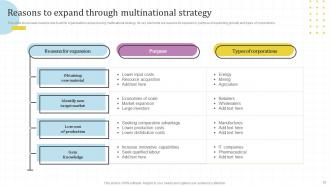
Slide 38: This slide displays Reasons to expand through multinational strategy.
Slide 39: This slide highlights title for topics that are to be covered next in the template.
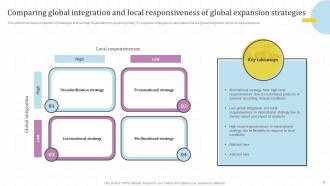
Slide 40: This slide represents Comparing global integration and local responsiveness of global expansion strategies.
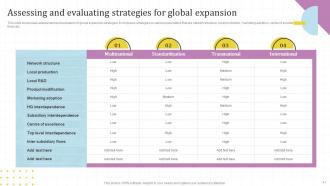
Slide 41: This slide showcases Assessing and evaluating strategies for global expansion.
Slide 42: This slide highlights title for topics that are to be covered next in the template.
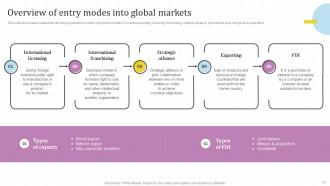
Slide 43: This slide shows Overview of entry modes into global markets.
Slide 44: This slide highlights title for topics that are to be covered next in the template.
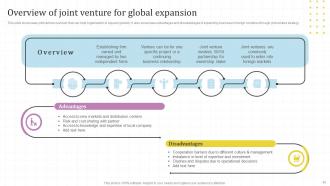
Slide 45: This slide presents Overview of Joint venture for global expansion.
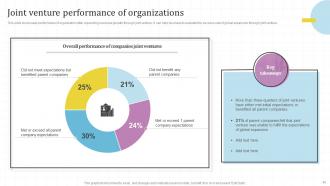
Slide 46: This slide displays Overall performance of companies joint ventures.
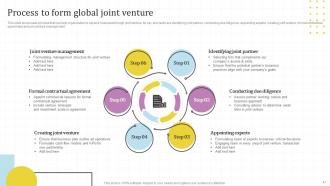
Slide 47: This slide represents Process to form global joint venture.
Slide 48: This slide highlights title for topics that are to be covered next in the template.
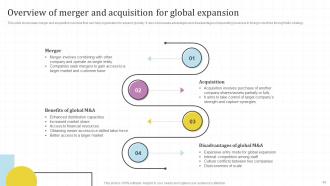
Slide 49: This slide showcases merger and acquisition overview that can help organization to expand globally.
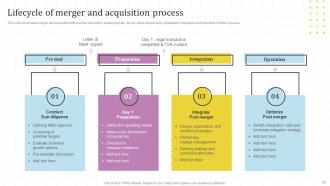
Slide 50: This slide shows Lifecycle of merger and acquisition process.
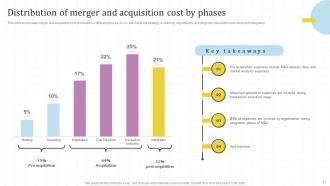
Slide 51: This slide presents Distribution of merger and acquisition cost by phases.
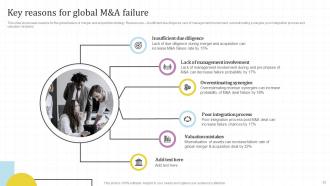
Slide 52: This slide showcases reasons for the failure of merger and acquisition strategy.
Slide 53: This slide highlights title for topics that are to be covered next in the template.
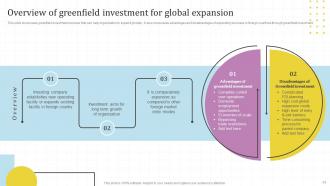
Slide 54: This slide shows Overview of greenfield investment for global expansion.
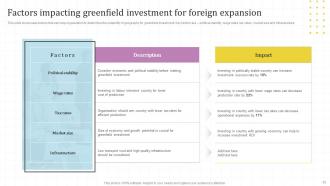
Slide 55: This slide presents Factors Impacting greenfield investment for foreign expansion.
Slide 56: This slide highlights title for topics that are to be covered next in the template.
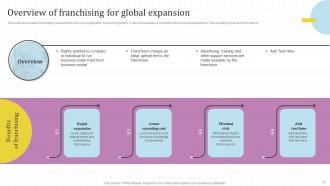
Slide 57: This slide displays Overview of franchising for global expansion.
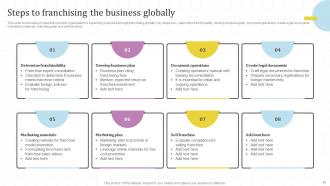
Slide 58: This slide represents Steps to franchising the business globally.
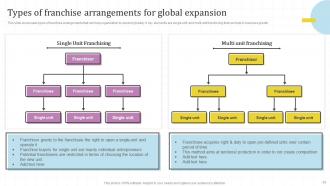
Slide 59: This slide showcases Types of franchise arrangements for global expansion.
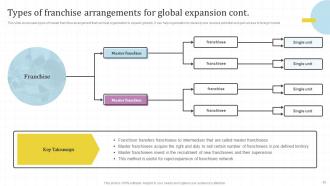
Slide 60: This is another slide continuing Types of franchise arrangements for global expansion.
Slide 61: This slide highlights title for topics that are to be covered next in the template.
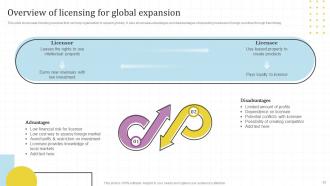
Slide 62: This slide showcases licensing overview that can help organization to expand globally.
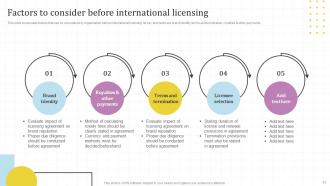
Slide 63: This slide shows Factors to consider before international licensing.
Slide 64: This slide highlights title for topics that are to be covered next in the template.
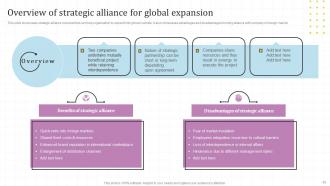
Slide 65: This slide presents Overview of strategic alliance for global expansion.
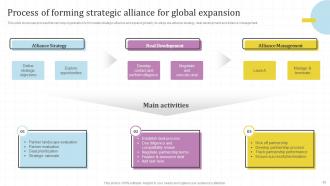
Slide 66: This slide displays Process of forming strategic alliance for global expansion.
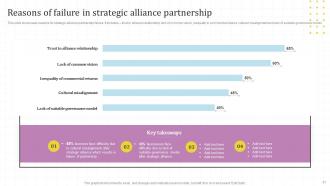
Slide 67: This slide represents Reasons of failure in strategic alliance partnership.
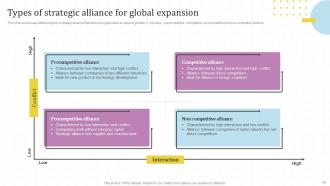
Slide 68: This slide showcases Types of strategic alliance for global expansion.
Slide 69: This slide highlights title for topics that are to be covered next in the template.
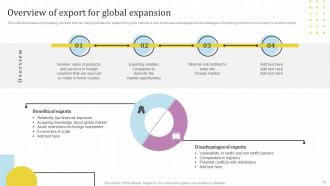
Slide 70: This slide shows Overview of export for global expansion.
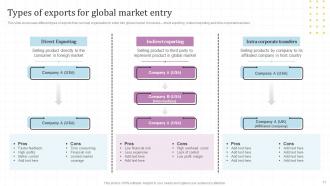
Slide 71: This slide presents Types of exports for global market entry.
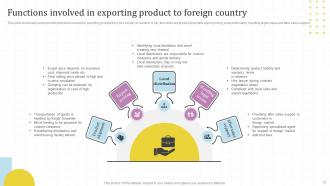
Slide 72: This slide displays Functions involved in exporting product to foreign country.
Slide 73: This slide highlights title for topics that are to be covered next in the template.
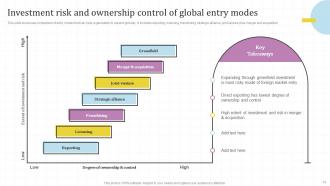
Slide 74: This slide represents Investment risk and ownership control of global entry modes.
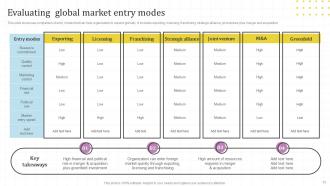
Slide 75: This slide showcases Evaluating global market entry modes.
Slide 76: This slide highlights title for topics that are to be covered next in the template.
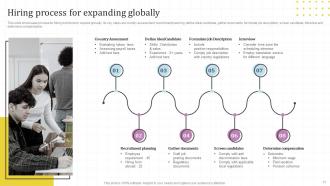
Slide 77: This slide shows Hiring process for expanding globally.
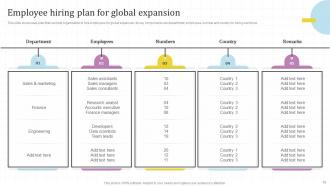
Slide 78: This slide presents Employee hiring plan for global expansion.
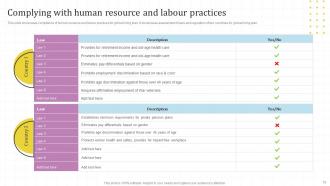
Slide 79: This slide displays Complying with human resource and labour practices.
Slide 80: This slide highlights title for topics that are to be covered next in the template.
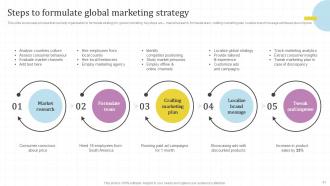
Slide 81: This slide represents Steps to formulate global marketing strategy.
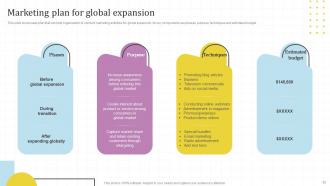
Slide 82: This slide showcases Marketing plan for global expansion.
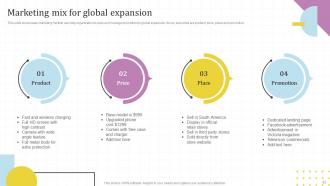
Slide 83: This slide shows Marketing mix for global expansion.
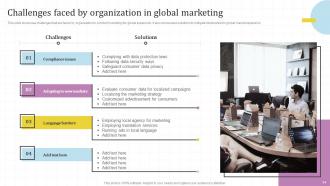
Slide 84: This slide presents Challenges faced by organization in global marketing.
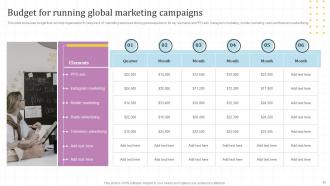
Slide 85: This slide displays Budget for running global marketing campaigns.
Slide 86: This slide highlights title for topics that are to be covered next in the template.
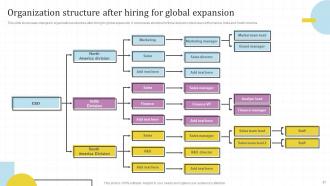
Slide 87: This slide represents Organization structure after hiring for global expansion.
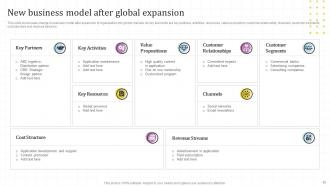
Slide 88: This slide shows New business model after global expansion.
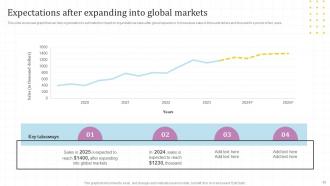
Slide 89: This slide presents Expectations after expanding into global markets.
Slide 90: This slide highlights title for topics that are to be covered next in the template.
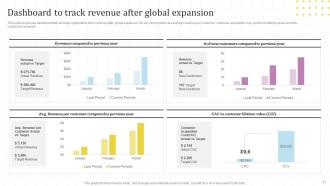
Slide 91: This slide displays Dashboard to track revenue after global expansion.
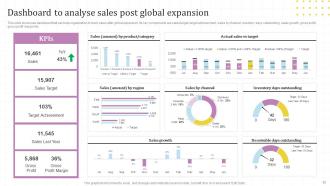
Slide 92: This slide represents Dashboard to analyse sales post global expansion.
Slide 93: This slide contains all the icons used in this presentation.
Slide 94: This slide is titled as Additional Slides for moving forward.
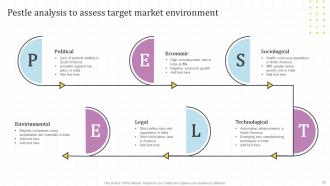
Slide 95: This slide displays Pestle analysis to assess target market environment.
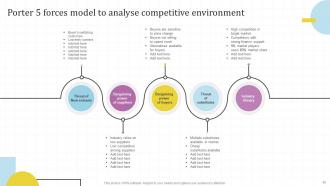
Slide 96: This slide represents Porter 5 forces model to analyse competitive environment.
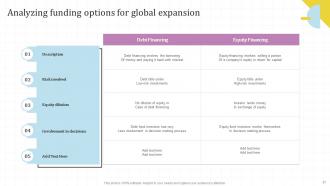
Slide 97: This slide showcases Analyzing funding options for global expansion.
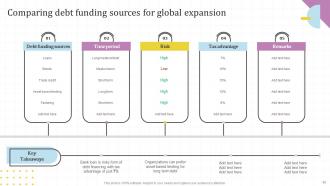
Slide 98: This slide shows Comparing debt funding sources for global expansion.
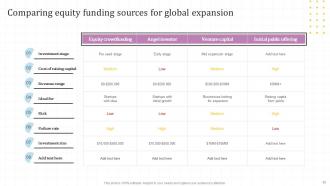
Slide 99: This slide presents Comparing equity funding sources for global expansion.
Slide 100: This is Our Team slide with names and designation.
Slide 101: This slide presents Roadmap with additional textboxes.
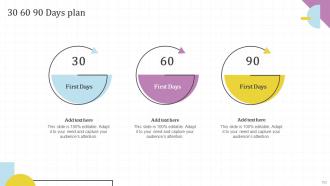
Slide 102: This slide provides 30 60 90 Days Plan with text boxes.
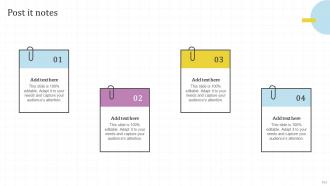
Slide 103: This slide shows Post It Notes. Post your important notes here.
Slide 104: This is a Timeline slide. Show data related to time intervals here.
Slide 105: This slide depicts Venn diagram with text boxes.
Slide 106: This is an Idea Generation slide to state a new idea or highlight information, specifications etc.
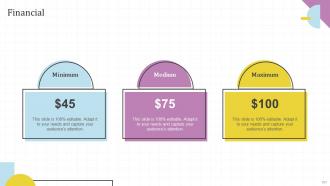
Slide 107: This is a Financial slide. Show your finance related stuff here.
Slide 108: This is Our Target slide. State your targets here.
Slide 109: This is a Thank You slide with address, contact numbers and email address.
Global Market Assessment And Entry Strategy For Business Expansion Powerpoint Presentation Slides Strategy CD V with all 114 slides:
Use our Global Market Assessment And Entry Strategy For Business Expansion Powerpoint Presentation Slides to effectively help you save your valuable time. They are readymade to fit into any presentation structure.

































FAQs for Global Market Assessment And Entry Strategy For Business Expansion Powerpoint Presentation Slides
Key economic indicators influencing global market trends include GDP growth rates, inflation levels, employment statistics, interest rates, and currency exchange rates. These indicators help investors and businesses assess market conditions by revealing economic health, consumer spending power, and investment opportunities across regions, with many financial institutions and multinational corporations finding that monitoring these metrics enables more strategic decision-making and competitive positioning.
Geopolitical events significantly reshape investment strategies by altering risk assessments, currency valuations, trade relationships, and regulatory frameworks across regions. Financial institutions increasingly diversify portfolios geographically, adjust sector allocations based on political stability, and leverage hedging instruments to mitigate exposure, ultimately delivering more resilient returns while navigating global uncertainties.
Technology revolutionizes global market dynamics by enabling real-time data analytics, automated trading systems, digital payment platforms, and AI-driven market predictions. These innovations streamline cross-border transactions, enhance supply chain transparency, and accelerate market entry strategies, with financial institutions and multinational corporations finding that technological integration delivers competitive advantages and operational efficiency in increasingly interconnected markets.
Businesses can effectively assess international market risks through comprehensive political stability analysis, regulatory compliance evaluation, currency fluctuation assessment, competitive landscape research, and cultural adaptation requirements. Through strategic partnerships with local experts, companies streamline market entry by identifying regulatory hurdles, understanding consumer behaviors, and mitigating financial exposures, ultimately delivering informed expansion strategies and sustainable competitive advantage.
Companies should consider cultural values, economic conditions, demographic trends, technological adoption rates, and regulatory environments when analyzing global consumer behavior. These factors influence purchasing decisions, brand preferences, and market entry strategies, with businesses in retail, technology, and financial services finding that localized insights combined with broader trend analysis ultimately delivers more effective market positioning and competitive advantage across diverse international markets.
Cultural differences significantly impact marketing strategies through varying consumer behaviors, communication preferences, purchasing patterns, and value systems across diverse markets. Companies must adapt messaging, product positioning, and promotional channels accordingly, with brands like McDonald's localizing menus and Coca-Cola customizing campaigns, ultimately enabling stronger customer connections and competitive advantage in global markets.
Common global market research methodologies include primary research through surveys and focus groups, secondary research via industry reports and databases, competitive analysis, cultural ethnography, and digital analytics. These approaches enable organizations to understand consumer behaviors, regulatory landscapes, and competitive dynamics across different regions, with many multinational companies finding that combining quantitative and qualitative methods delivers comprehensive market insights for strategic expansion decisions.
Currency fluctuation affects global trade by altering import/export costs, profit margins, and competitive positioning across international markets. Companies adapt through hedging strategies, flexible pricing models, and regional sourcing adjustments, with many multinational corporations finding that diversified currency exposure and dynamic pricing enable them to maintain competitiveness while minimizing financial risk.
Businesses can stay competitive through strategic diversification, digital transformation, agile supply chain management, continuous market intelligence, and strategic partnerships across key regions. These approaches enable organizations to rapidly adapt to market shifts, anticipate consumer demands, and leverage emerging opportunities, with many multinational companies finding that flexible operational models and data-driven decision-making ultimately deliver sustained competitive advantage.
Sustainability is increasingly critical in global market assessment, as it influences regulatory compliance, consumer preferences, investor decisions, and long-term operational viability. Companies conducting market assessments now evaluate environmental policies, carbon footprint requirements, and sustainable supply chain opportunities, with many organizations finding that sustainability factors significantly impact market entry strategies, competitive positioning, and ultimately determine success in environmentally-conscious markets worldwide.
Emerging markets attracting foreign investment include India, Vietnam, Indonesia, Mexico, and several African nations like Nigeria and Kenya. These markets offer rapidly growing middle classes, digital infrastructure development, favorable demographics, and government policy reforms that streamline business operations, ultimately delivering lower operational costs, access to new consumer bases, and significant competitive advantages for early investors.
Global supply chain disruptions significantly influence market assessments by altering demand forecasting, shifting competitive landscapes, and reshaping risk evaluation models. These disruptions force organizations to reassess market viability through alternative sourcing strategies, inventory optimization, and geographic diversification, with many companies finding that supply chain resilience becomes a critical competitive differentiator in increasingly volatile markets.
Real-time market analysis tools include advanced analytics platforms, AI-powered sentiment analysis, automated data feeds, social media monitoring systems, and predictive modeling software. These technologies streamline decision-making by processing vast datasets, identifying emerging trends, and delivering actionable insights instantly, with many financial institutions and retail companies finding that automated analysis significantly enhances competitive positioning.
Data analytics enhances global market assessment decision-making by providing real-time insights, predictive modeling, competitive intelligence, and customer behavior analysis across multiple regions simultaneously. These technologies streamline market entry strategies, optimize resource allocation, and minimize investment risks, with many multinational corporations finding that data-driven approaches deliver faster market penetration and significantly improved ROI outcomes.
Trade agreements significantly expand global market opportunities by reducing tariffs, eliminating trade barriers, streamlining regulatory processes, and facilitating cross-border investments and partnerships. These frameworks enable organizations to access new customer bases, optimize supply chains, and leverage cost advantages across multiple markets, with many multinational companies finding that strategic market entry becomes more viable and profitable.
-
SlideTeam is my one-stop destination for templates. Highly recommended!
-
They guys always go the extra mile to meet the expectations of their customers. Almost a year has been associated with them.