

Goals Hierarchy Powerpoint Ppt Template Bundles





Try Before you Buy Download Free Sample Product
 Impress Your
Audience
 100%
Editable
 Save Hours
of Time


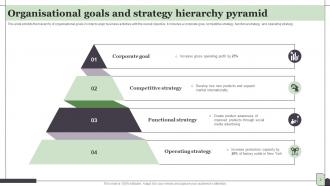
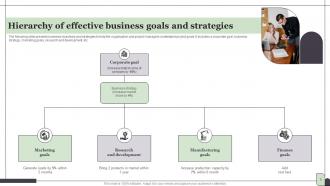
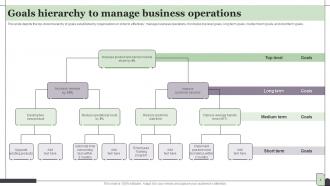
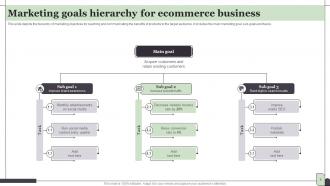
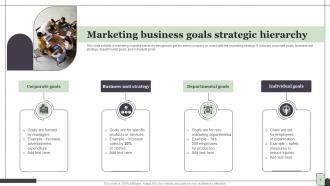
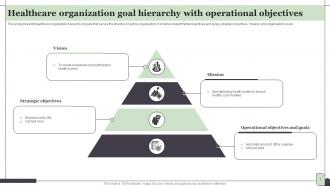
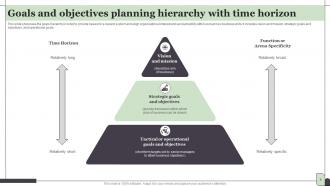
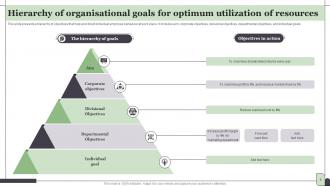
Introducing our comprehensive PowerPoint PPT presentation on Goals Hierarchy. This professionally designed deck offers a visual structure to understand the interconnections of organizational goals, with a specific focus on marketing goals within the broader business goals structure. Unlock the power of the organizations goals pyramid as you explore the intricacies of setting, aligning, and cascading goals throughout your company. This PPT showcases hierarchy charts that vividly illustrate the relationship between different goal levels, ensuring clarity and coherence across teams and departments. With our meticulously crafted slides, youll be equipped to communicate the strategic significance of each goal tier, emphasizing how marketing goals contribute to the overarching business objectives. Elevate your presentations with visually appealing graphics, engaging content, and easy to follow diagrams, helping your audience grasp the importance of goal alignment and the resulting impact on organizational success. Experience seamless knowledge transfer and inspire your stakeholders with our Goals Hierarchy PPT.
People who downloaded this PowerPoint presentation also viewed the following :
Goals Hierarchy Powerpoint Ppt Template Bundles with all 17 slides:
Use our Goals Hierarchy Powerpoint Ppt Template Bundles to effectively help you save your valuable time. They are readymade to fit into any presentation structure.







FAQs for Goals Hierarchy Powerpoint
Goals hierarchy is a structured framework organizing objectives from broad, long-term aspirations down to specific, actionable tasks, creating clear alignment between daily activities and ultimate life vision. This strategic approach enables individuals to maintain focus, track meaningful progress, and make consistent decisions that compound over time, with many professionals finding that hierarchical goal-setting significantly enhances productivity and personal fulfillment.
Businesses can effectively implement a goals hierarchy by establishing clear strategic objectives at the organizational level, cascading departmental targets that align with company vision, and setting individual performance metrics that directly support team outcomes. Through regular progress reviews and transparent communication channels, organizations like manufacturing companies and financial services firms streamline accountability, enhance cross-functional collaboration, and ultimately deliver improved operational efficiency and competitive advantage.
Effective techniques include cascading goal frameworks like OKRs, SMART goal methodology, balanced scorecards, regular alignment reviews, and cross-functional collaboration sessions. These approaches streamline organizational focus by connecting individual contributions to strategic priorities, enhancing transparency across departments, and enabling measurable progress tracking, with many companies finding that structured goal hierarchies ultimately deliver improved performance and employee engagement.
A well-defined goals hierarchy streamlines decision-making by providing clear prioritization frameworks, eliminating conflicting objectives, and ensuring resource allocation aligns with strategic priorities. This structured approach enables organizations to evaluate options against established criteria, accelerate approval processes, and maintain consistent direction across departments, ultimately delivering faster strategic execution and enhanced operational efficiency.
Communication serves as the foundation for successful goals hierarchy by ensuring alignment, clarity, and buy-in across all organizational levels, facilitating transparent cascading of objectives from strategic vision to individual tasks. Through regular feedback loops, collaborative planning sessions, and clear progress updates, teams can maintain coherence between departmental priorities and individual contributions, ultimately delivering enhanced coordination and measurable results.
A goals hierarchy should evolve regularly as business priorities shift, market conditions change, and strategic objectives are achieved or require adjustment. This evolution involves quarterly reviews, stakeholder alignment sessions, and systematic updating of cascading objectives throughout organizational levels. Companies like Microsoft and Amazon continuously refine their hierarchies, ultimately maintaining strategic focus while adapting to competitive landscapes and growth opportunities.
Priority levels within a goals hierarchy significantly influence project management outcomes by ensuring resource allocation aligns with strategic objectives, enabling teams to focus on high-impact deliverables, and providing clear decision-making frameworks during conflicts. This structured approach streamlines project execution, minimizes scope creep, and enhances stakeholder alignment, with many organizations finding that well-defined hierarchies ultimately deliver faster completion times and improved ROI.
**INPUT**: What tools or software can assist in visualizing and maintaining a goals hierarchy? **OUTPUT**: Goal hierarchy visualization tools include MindMeister, Lucidchart, OmniFocus, Asana, and Microsoft Visio, which enable strategic mapping and tracking. These platforms streamline organizational alignment by providing visual frameworks, automated progress tracking, and collaborative features, with many enterprises finding that integrated dashboards ultimately enhance transparency and accelerate goal achievement across departments.
Team members contribute to refining goals hierarchy through diverse perspectives, practical insights, cross-functional expertise, and frontline experience that leadership may overlook. Their contributions include identifying unrealistic timelines, suggesting resource reallocation, highlighting interdependencies between objectives, and providing implementation feedback that enhances strategic alignment, ultimately delivering more achievable goals and stronger organizational buy-in.
Cultural differences significantly impact goals hierarchy through varying communication styles, authority expectations, individualism versus collectivism preferences, and time orientation approaches. While Western teams often favor explicit hierarchical structures and individual accountability, Asian and Latin cultures may emphasize consensus-building and group harmony, with many global organizations finding that flexible, culturally-adaptive goal frameworks ultimately deliver better engagement and performance outcomes.
Common challenges when establishing a goals hierarchy include misalignment between organizational levels, lack of clarity in goal definitions, insufficient communication across departments, resistance to change from stakeholders, and difficulty measuring progress effectively. These obstacles can be overcome by implementing structured alignment frameworks, conducting regular cross-functional workshops, and establishing clear communication channels, with many organizations finding that consistent leadership engagement and transparent progress tracking ultimately delivers better strategic execution and improved operational efficiency.
Leaders ensure accountability at each level by establishing clear metrics, regular check-ins, and transparent reporting systems that connect individual performance to departmental and organizational outcomes. Through cascaded KPIs, milestone reviews, and performance dashboards, organizations create visibility across all hierarchy levels, with many companies finding that linking compensation and recognition to goal achievement significantly enhances accountability and drives consistent execution.
Effective goals hierarchy metrics include alignment scores measuring vertical and horizontal goal connectivity, progress tracking ratios across organizational levels, resource allocation efficiency, and completion rate correlations between parent and child objectives. These measurement approaches enable organizations to assess strategic coherence, identify bottlenecks in goal cascading, and optimize performance accountability systems, ultimately delivering enhanced organizational focus and measurable competitive advantage.
Aligning short-term and long-term goals within a hierarchy enhances strategic planning by creating clear pathways, ensuring resource consistency, and maintaining organizational focus across multiple timeframes. This strategic combination enables companies to track progress systematically, adapt to market changes while preserving core objectives, and ultimately deliver sustained competitive advantage, with many organizations finding that structured goal alignment significantly improves execution rates.
Individuals can create effective personal goals hierarchies by establishing clear long-term visions, breaking them into quarterly milestones, weekly priorities, and daily actionable tasks, while regularly reviewing progress and adjusting timelines. This structured approach enables better resource allocation, maintains motivation through achievable checkpoints, and ensures daily activities align with broader life objectives, with many finding that visual mapping and monthly assessments significantly enhance goal achievement rates.
-
“There is so much choice. At first, it seems like there isn't but you have to just keep looking, there are endless amounts to explore.”
-
The best part about SlideTeam is their meticulously prepared presentations (complete-decks and single-slides both), infused with high-quality graphics and easy to edit. All-in-all worthy products.