

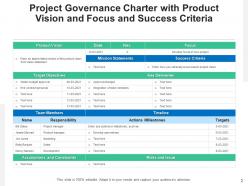
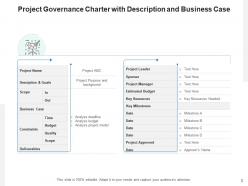
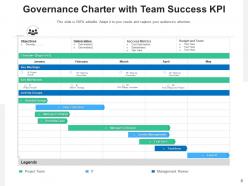
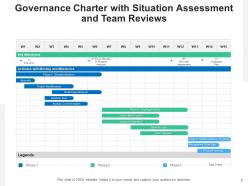
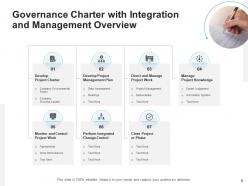
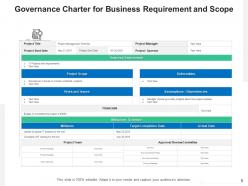
Governance charter team members timeline target business case





Try Before you Buy Download Free Sample Product
 Impress Your
 Audience
 100%
100% Editable
 Save Hours
 of Time


Our Governance Charter Team Members Timeline Target Business Case are topically designed to provide an attractive backdrop to any subject. Use them to look like a presentation pro.
People who downloaded this PowerPoint presentation also viewed the following :
Governance charter team members timeline target business case with all 12 slides:
Use our Governance Charter Team Members Timeline Target Business Case to effectively help you save your valuable time. They are readymade to fit into any presentation structure.


FAQs for Governance charter team members timeline
Effective governance principles include transparency, accountability, stakeholder engagement, ethical decision-making, and strategic oversight across operations. These frameworks enhance organizational performance by establishing clear responsibilities, ensuring regulatory compliance, and maintaining public trust, with many institutions finding that strong governance structures ultimately deliver competitive advantage, reduced risks, and sustainable growth in increasingly complex business environments.
Technology enhances governance transparency and accountability through digital platforms, automated reporting systems, blockchain ledgers, real-time data dashboards, and citizen engagement portals. These solutions streamline regulatory compliance, minimize human error, and enable continuous monitoring, with government agencies and corporations finding that automated audit trails and public data access ultimately deliver enhanced stakeholder trust and operational efficiency.
Community engagement plays a central role in creating responsive governance policies by providing direct citizen input, identifying local priorities, building public trust, and ensuring accountability through transparent feedback mechanisms. Through town halls, digital platforms, and stakeholder consultations, government institutions streamline policy development, enhance citizen satisfaction, and deliver more effective public services, with many municipalities finding that active community participation ultimately reduces implementation costs while strengthening democratic legitimacy.
Governance differs significantly between developed and developing countries through institutional maturity, resource allocation mechanisms, and regulatory enforcement capabilities. Developed nations typically demonstrate stronger rule of law and transparency, while developing countries often face capacity constraints but show innovative approaches to digital governance and community engagement, with many organizations finding that cross-border knowledge sharing enhances administrative efficiency and citizen services.
Corruption undermines governance by eroding public trust, distorting resource allocation, weakening institutional effectiveness, and creating systemic inefficiencies across government operations. Strategic mitigation approaches include implementing transparent procurement systems, establishing independent oversight bodies, leveraging digital governance platforms, and strengthening accountability mechanisms, with many public institutions finding that these comprehensive reforms ultimately deliver enhanced service delivery and restored citizen confidence.
Governance affects environmental sustainability by establishing regulatory frameworks, accountability mechanisms, and strategic resource allocation that drive climate initiatives forward. Through transparent reporting standards, stakeholder engagement protocols, and integrated sustainability metrics, organizations streamline environmental compliance, enhance operational efficiency, and deliver competitive advantage, with many corporations finding that strong governance structures ultimately accelerate their transition to sustainable practices.
Data analytics enhances governance decision-making by providing evidence-based insights, predictive modeling for policy outcomes, real-time performance monitoring, and citizen behavior analysis. Through advanced analytics platforms, government agencies streamline resource allocation, improve service delivery, and increase transparency, with many municipalities finding that data-driven approaches ultimately deliver more effective policies and enhanced public trust.
Ethical leadership drives good governance by establishing transparent decision-making processes, ensuring accountability at all levels, and building stakeholder trust through consistent moral standards. These principles enable organizations to navigate complex regulatory environments, minimize compliance risks, and enhance operational integrity, with many institutions finding that ethical frameworks ultimately deliver sustainable competitive advantages and stronger stakeholder relationships.
Organizations ensure equitable representation by implementing diverse board compositions, establishing inclusive nomination processes, creating advisory councils from underrepresented groups, and mandating transparent stakeholder engagement mechanisms. These governance frameworks enhance decision-making quality by incorporating varied perspectives, ultimately delivering better risk management and stakeholder trust, with many companies finding that diverse leadership drives innovation and sustainable growth.
**INPUT**: What governance models are most effective for international organizations? **OUTPUT**: Effective governance models for international organizations include federal structures, matrix management systems, regional autonomy frameworks, centralized policy coordination, and hybrid accountability mechanisms. These approaches streamline decision-making by balancing local responsiveness with global consistency, enabling organizations to navigate diverse regulatory environments while maintaining operational efficiency, ultimately delivering competitive advantage across multiple markets. **Word count**: 54 words
Cultural factors significantly influence governance practices through varying approaches to hierarchy, decision-making processes, stakeholder engagement, and regulatory compliance across different regions. Organizations operating globally increasingly find that successful governance requires adapting to local cultural norms while maintaining consistent standards, with companies in Asia emphasizing collective consensus, European firms prioritizing regulatory transparency, and American businesses focusing on shareholder accountability, ultimately delivering more effective stakeholder relationships and competitive advantage.
Strategies include stakeholder mapping, regular consultation forums, digital engagement platforms, transparent communication channels, and collaborative decision-making frameworks. These approaches streamline participation by creating accessible touchpoints, providing timely feedback mechanisms, and establishing clear accountability structures, with many organizations finding that enhanced stakeholder involvement ultimately delivers improved governance outcomes and stronger institutional trust.
Governance frameworks adapt to rapidly changing societal needs through agile policy development, stakeholder engagement mechanisms, digital transformation initiatives, and continuous feedback loops. These approaches enable governments and organizations to respond more quickly to emerging challenges like climate change, technological disruption, and social inequality, ultimately delivering more responsive public services and enhanced citizen trust.
Good governance and economic development share a symbiotic relationship, with effective governance enabling sustainable growth through transparent institutions, rule of law, regulatory frameworks, and efficient resource allocation. Countries with strong governance structures attract greater foreign investment, foster entrepreneurship, and deliver better public services, while robust economic development provides resources for improved governance systems, ultimately creating a virtuous cycle of prosperity.
Social justice issues intersect with governance through equitable representation, inclusive policy-making, transparent resource allocation, and community engagement mechanisms that address systemic disparities. While governance structures traditionally favor established voices, increasingly diverse communities are finding that participatory budgeting, community advisory boards, and equity-focused frameworks enhance democratic legitimacy and deliver more responsive services.
-
Best way of representation of the topic.
-
Best way of representation of the topic.
-
Good research work and creative work done on every template.