

Green Architecture Aiming Towards Carbon Neutral Buildings Sustainability CD





Try Before you Buy Download Free Sample Product
 Impress Your
Audience
 100%
Editable
 Save Hours
of Time


Green architecture refers to the philosophy that emphasizes the design and construction of buildings with environmental friendliness in mind. This Green architecture Aiming towards carbon-neutral buildings deck covers details related to the environmental effects of the built environment. It includes details related to achieving the goal of carbon-neutral buildings by the end of 2030 and details associated with implementing green architecture to achieve this architectural goal. This deck includes details related to sustainable architecture redesign strategies. It also covers details related to strategies for public buildings and green remodeling. Lastly, it covers details related to the impact of implementing sustainable architecture practices on the environment, costs incurred in implementing green architecture strategies, and case studies to understand real-life applications of green architecture. Get access now.
People who downloaded this PowerPoint presentation also viewed the following :
Content of this Powerpoint Presentation
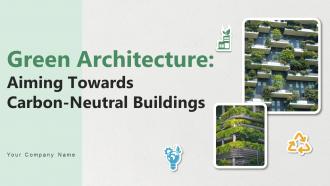
Slide 1: This slide showcase title Green Architecture: Aiming Towards Carbon-Neutral Buildings. State Your Company Name
Slide 2: This slide showcase Agenda.
Slide 3: This slide exhibit Table of content.
Slide 4: This slide exhibit Table of content that is to be discuss further.
Slide 5: This slide covers graph highlighting greenhouse gas emissions by different sectors across the globe.
Slide 6: This slide represents impact of man-made structures, that provide people with recreational spaces on environment.
Slide 7: This slide exhibit Table of content that is to be discuss further.
Slide 8: This slide covers details related to the objective of architects to make carbon-neutral buildings by 2030.
Slide 9: This slide exhibit Table of content that is to be discuss further.
Slide 10: This slide covers details related to reasons for deploying sustainable architecture that aims to create buildings possessing lower environmental impact as compared to conventional methods.
Slide 11: This slide covers details related to key characteristics of sustainable architecture that aim to create buildings possessing lower environmental impact.
Slide 12: This slide exhibit Table of content that is to be discuss further.
Slide 13: This slide covers details related to one of the essential components of sustainable architecture that aims to create buildings possessing lower environmental impact.
Slide 14: This slide covers details related to ways vegetable roofs can help protect cities from climate change.
Slide 15: This slide covers details related to the integration of tools and technologies that allow solar energy to be added to the electricity grid for sustainable architecture.
Slide 16: This slide covers details related to ways sustainable architecture helps in reducing negative impacts on natural environment.
Slide 17: This slide covers details related to one of the essential components of sustainable architecture that aims to create buildings possessing lower environmental impact.
Slide 18: This slide covers sustainable landscaping practices that help preserve local ecosystems and prevent air, water, and soil pollution.
Slide 19: This slide exhibit Table of content that is to be discuss further.
Slide 20: This slide covers details related to ABC architectural firm , which aims to provide sustainable architectural solutions to combat the environmental changes faced by the built environment.
Slide 21: This slide exhibit Table of content that is to be discuss further.
Slide 22: This slide covers details related to the system that provides thermal insulation, prevents excessive air leakage, and carries wind loading.
Slide 23: This slide covers details related to rooftop decks that aim to provide structural support for the roofing system.
Slide 24: This slide covers a comparison between eco-friendly wall cladding and protective material attached to the exterior of the building to protect it from harmful weather elements.
Slide 25: This slide covers utilization of lights that contains no toxin materials and assists in reducing carbon footprint.
Slide 26: This slide covers comparison between eco-friendly composite and wood decking for selecting the best decking for green architecture.
Slide 27: This slide covers details related to one of the most effective solutions of sustainable architecture, which aims to reduce buildings' negative impacts on the environment.
Slide 28: This slide exhibit Table of content that is to be discuss further.
Slide 29: This slide covers details related to sustainable architecture design strategies, which aim to reduce the negative impact of buildings on the natural environment.
Slide 30: This slide covers details related to sustainable architecture design strategies, which aim to reduce the negative impact of buildings on the natural environment for public buildings.
Slide 31: This slide covers details related to sustainable architecture design strategies, which aim to reduce the negative impact of buildings on the natural environment.
Slide 32: This slide covers details related to sustainable architecture design strategies, which aim to reduce the negative impact of buildings on the natural environment.
Slide 33: This slide covers details related to sustainable architecture design strategies, which aim to reduce the negative impact of buildings on the natural environment for public buildings.
Slide 34: This slide covers details related to sustainable architecture design strategies, which aim to reduce the negative impact of buildings on the natural environment for public buildings.
Slide 35: This slide exhibit Table of content that is to be discuss further.
Slide 36: This slide covers details related to installation of tankless water heater, that heats water on demand instead of using storage tank.
Slide 37: This slide covers techniques to be adopted by architects for enhancing the sustainability of the components that separate the exterior of the building from the interior.
Slide 38: This slide covers integration of mechanical device that provides controlled ventilation into building for enhancing air quality.
Slide 39: This slide exhibit Table of content that is to be discuss further.
Slide 40: This slide covers details related to leveraging computer graphics, which focuses on analyzing and producing images in real-time for energy analysis.
Slide 41: This slide covers details related to leveraging computer graphics, which focuses on analyzing and producing images in real-time for exploring various building options.
Slide 42: This slide covers details related to leveraging computer graphics, which focuses on analyzing and producing images in real-time for daylighting studies.
Slide 43: This slide covers details related to leveraging computer graphics, which focuses on analyzing and producing images in real time for virtual walkthroughs.
Slide 44: This slide exhibit Table of content that is to be discuss further.
Slide 45: This slide represents the budget prepared to predict cash flows and allocate the required resources for implementing green architecture solutions.
Slide 46: This slide exhibit Table of content that is to be discuss further.
Slide 47: This slide covers details related to the potential impact of deploying sustainable architecture solutions on the natural environment.
Slide 48: This slide exhibit Table of content that is to be discuss further.
Slide 49: This slide covers case studies to analyze real-life implementation of green architecture solutions for reducing consumption of energy-efficient fuels.
Slide 50: This slide covers case studies to analyze the real-life implementation of green architecture solutions for reducing the consumption of energy-efficient fuels.
Slide 51: This slide shows all the icons included in the presentation.
Slide 52: This slide is titled as Additional Slides for moving forward.
Slide 53: This slide provides 30 60 90 Days Plan with text boxes.
Slide 54: This slide displays Mind Map with related imagery.
Slide 55: This slide contains Puzzle with related icons and text.
Slide 56: This slide depicts Venn diagram with text boxes.
Slide 57: This is a Thank You slide with address, contact numbers and email address.
Green Architecture Aiming Towards Carbon Neutral Buildings Sustainability CD with all 65 slides:
Use our Green Architecture Aiming Towards Carbon Neutral Buildings Sustainability CD to effectively help you save your valuable time. They are readymade to fit into any presentation structure.










FAQs for Green Architecture Aiming Towards Carbon Neutral
So basically green architecture looks at the whole lifespan of a building, not just what it costs upfront. Better insulation saves you tons on energy bills. They use stuff like reclaimed wood and low-carbon concrete. Plus designing with your climate instead of against it - makes way more sense, right? Water systems are big too, like collecting rainwater and reusing greywater. My cousin did this with her house and she's saving crazy money now. The trick is planning all this from the start. Retrofitting later is such a pain and way more expensive.
So renewable energy basically takes green buildings from "eh, better than nothing" to actually giving back to the environment. Solar panels, wind, geothermal - whatever works for your area. Your building starts making its own clean power and sometimes even sells extra back to the grid. Pretty wild how good the tech has gotten recently, honestly. You'll slash your carbon footprint and save money long-term. Plus you won't stress about energy prices going crazy. I'd start with an energy audit to figure out what makes sense for your specific location and climate - way better than just guessing.
Location is everything - seriously, it'll make or break your whole project before you even start building. You want to work with what's already there instead of fighting it. Look at how the sun hits the site, where water naturally flows, what ecosystems you'd be messing with. Also check how close you are to buses, trains, basic infrastructure. I mean, what's the point of a "green" building if everyone has to drive forever just to get there? Do your homework on the site first. It's gonna shape literally every other choice you make later.
Honestly, materials sourcing is where you'll make or break your green goals. Go local when you can - cuts way down on shipping emissions and helps your local economy too. I'm a big fan of recycled content and stuff like bamboo that grows super fast. Skip anything that needs tons of energy to produce or involves nasty chemicals. Here's what I'd do: map out each material's whole lifecycle before deciding. Don't just look at upfront costs - think about the total environmental hit. It's way more telling than the sticker price.
Dude, check out Singapore's Parkroyal Collection - they literally built gardens into every single floor. Copenhagen did something insane too: CopenHill is a power plant with a ski slope on top (I still can't wrap my head around that one). Milan's Bosco Verticale has these forest-covered towers that clean the air, while Seattle's Bullitt Center produces more energy than it actually needs. The cool thing is none of these just slapped on solar panels and called it green. They wove nature right into the core design. Worth studying if you're working on anything similar.
So basically green buildings use a bunch of different tricks for water conservation. Rainwater harvesting is huge - they collect it for watering plants and stuff like that. Greywater recycling takes water from your sinks and showers and reuses it too. My neighbor actually has one of these systems and swears by it. Permeable paving helps with runoff issues, and native plants need way less water anyway. Low-flow fixtures are pretty standard now. Oh, and check what your city offers - lots of places give rebates for this stuff which is honestly a nice bonus.
Honestly, start with an energy audit first - you'll be surprised what's actually bleeding money. Smart HVAC systems are huge, especially with automated controls that actually learn your patterns. LED lights with occupancy sensors are no-brainer upgrades. High-performance insulation makes a massive difference too. Heat recovery ventilation is something most people skip but shouldn't. Triple-pane windows are worth it if you're in a crazy hot or cold climate. Solar's great but the payback really depends on where you live and what rebates you can snag. Oh, and treat everything like one big system instead of just random upgrades.
Honestly, switching to low-VOC paints and finishes was a game-changer for me - way less chemical smell. Plants are your best friend here too. Snake plants are literally indestructible (I've tried), and pothos grows like crazy. Cross-ventilation is clutch if you can swing it - those operable windows make such a difference. Oh, and don't sleep on your HVAC filters. I went high-efficiency and noticed cleaner air pretty fast. My sister got me into living walls recently but that's probably overkill for most people. Start small with materials and see how it feels.
Honestly, green buildings are money machines. Developers see higher property values and faster sales, plus there's usually tax breaks to help with upfront costs. Your utility bills drop like 20-40% every month - that adds up fast. Some insurance companies even give discounts (random bonus). The best part? These places hold their value way better than regular buildings. Quality tenants actually pay more for green features too. Oh, and definitely check what your city offers first - I was shocked how much some places will throw at you just for building green. Worth looking into for sure.
Climate is seriously the biggest factor in green building - you can't ignore it. Hot, dry areas? Focus on passive cooling and thermal mass to cut energy bills. Cold places need max solar gain and crazy good insulation. Humid vs. dry climates totally change your ventilation game too. Even your roof design depends on local rainfall patterns, which honestly makes sense when you think about it. The smart move is always checking weather data before you design anything. Trust me, it beats fixing expensive screw-ups later when you realize you built for the wrong climate.
Honestly, it comes down to three things: getting it installed right, staying on top of maintenance, and picking stuff that actually works in your area. I've watched so many eco-friendly projects go to hell because contractors didn't follow the manufacturer's instructions properly. Set up quarterly checks for green roofs and living walls - that stuff needs babying. Bamboo floors and reclaimed wood? Check those annually. Don't skip the protective coatings either, they're worth it. Oh, and make a maintenance calendar. Sounds nerdy but it'll save your ass later when everything's still looking good.
Honestly, government stuff is what's really pushing green architecture forward. Tax credits and rebates make sustainable projects way more appealing to developers. LEED requirements for public buildings basically forced everyone to step up their game - now it's spreading to private work too. Energy codes are getting stricter, so you kinda have to think green if you want approvals. Oh, and fast-track permitting is huge if you can qualify for it. Definitely look into what incentives your area offers before you start planning anything. The money you can save is pretty wild sometimes.
Dude, green buildings are like wildlife magnets in cities! Native plants on roofs and walls give birds and pollinators actual places to hang out. Rain gardens are pretty clutch too - bugs and frogs love them, plus they handle flooding. The trick is connecting everything so animals can hop between spots. Even just slapping some native plants on a building facade works wonders. I'm obsessed with how a simple green wall becomes this whole mini ecosystem. Start small with native plantings - it's honestly one of the easiest ways to help urban wildlife thrive.
Money's gonna be your biggest headache, honestly. Clients see living walls and think "expensive plant decoration" - good luck convincing them it's worth it. Maintenance is a nightmare too since plants don't take care of themselves. Building codes weren't designed for this stuff either, which makes permitting fun. Urban projects are worse because you're cramped and dealing with crappy air quality. My advice? Start simple with natural materials and better lighting first. Save the fancy green wall for later when they trust you more.
So lifecycle assessment is basically your reality check for materials. You get the whole story - mining, manufacturing, shipping, disposal, everything. That bamboo floor might seem eco-friendly until you see the carbon footprint from processing and transport. Sometimes the "green" option isn't actually greener, which honestly blew my mind when I first learned this. Run LCAs on your top 3-4 choices for each major component. The data will show you where your budget makes the biggest environmental difference. Trust me, you'll be shocked at some of the results.
-
Superb! The innovative and inspiring template designs provide an edge to the presentation.
-
I downloaded some of the presentations for work. They were simple to modify and saved me a lot of time and effort.