

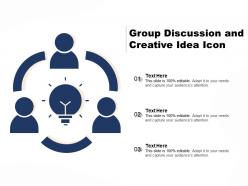
Group discussion and creative idea icon





Try Before you Buy Download Free Sample Product
 Impress Your
Audience
 100%
Editable
 Save Hours
of Time


Give invaluable advice with our Group Discussion And Creative Idea Icon. Folks will express intense gratitude.
People who downloaded this PowerPoint presentation also viewed the following :
Group discussion and creative idea icon with all 2 slides:
Folks express intense gratitude due to our Group Discussion And Creative Idea Icon. It allows you to give invaluable advice.

FAQs for Group discussion and
Psychological safety is huge - people need to feel safe throwing out weird ideas without getting shot down. Mix in different backgrounds too, because that's where the magic happens. I've watched so many brainstorms crash and burn the second someone dismisses the first "out there" suggestion. Don't evaluate ideas while you're still generating them. Build on what others say instead of just waiting for your turn to pitch. Honestly? Sometimes a little chaos beats those super rigid agendas. Try opening with some random warm-up question - gets everyone loose way faster than you'd think.
Honestly, it's like having different tools in your toolbox. When everyone thinks the same way, you're stuck with one hammer trying to fix everything. But mix in people with totally different backgrounds? Now you've got ideas bouncing off each other in ways that actually surprise you. Someone will take your half-baked thought and twist it into something brilliant. Or they'll call out the obvious flaw you missed because you were too close to see it. The best solutions I've seen come from that awkward moment when two completely different approaches crash into each other. Don't hire your clones.
Honestly, warm-ups work better than you'd think - try "two truths and a lie" or just have people share something random from their weekend. The "yes, and..." thing from improv is actually genius for meetings because people stop shutting each other down. I'd share something personal first to break the ice, then do small groups before big discussions. People are way more comfortable in pairs. Oh, and maybe rotate who runs different parts so one person isn't always leading? Anonymous idea tools help too if your group's really shy.
Okay so here's what works for me - start with your main goal and maybe 2-3 big questions, but don't plan every single minute. I do these "exploration windows" where I'll give everyone like 15 minutes to just go crazy with ideas before we rein it back in. When things get off track, I use stuff like "what if we tried..." instead of being all authoritative about it. Honestly, half the battle is just reading the room. You gotta know when to let people ramble versus when to nudge them back on course. I bounce between open discussion and actual decision-making throughout the whole thing.
Honestly, active listening is a game-changer for group brainstorms. You catch those half-baked ideas that could turn into gold - way better than just waiting for your turn to speak. People open up more when they feel heard, so you get the really weird, interesting stuff instead of safe suggestions. The best part? You start connecting dots between what everyone's saying. Oh, and try repeating back what someone said before jumping in with your own thoughts. Keeps things flowing. I learned this the hard way after years of terrible team meetings where nobody actually listened to each other.
Honestly, templates are like giving your brain something to actually work with instead of just staring at nothing. When people see visual stuff - frameworks, colors, whatever - their minds start connecting dots they wouldn't normally connect. Short bursts work better than long brainstorms too, but that's another thing entirely. The structure actually makes you MORE creative, not less. Mind maps are solid, or those customer journey templates. Even basic sticky note setups work. Your group will come up with way more interesting ideas when they've got visual starting points to riff off of.
Ugh, the loud people problem! Okay so round-robin discussions work really well - everyone gets their turn to talk. Anonymous sticky notes or Miro boards help too since people can share without feeling judged. Here's what I swear by: make a "no jumping in" rule where ideas have to sit for a minute before anyone responds. For those people who just won't stop talking, timeboxing saves your sanity. Oh, and try rotating who runs the meeting so different voices get heard. Next time, maybe ask the quiet folks to go first? Works better than you'd think.
Okay so first thing - get everyone to brainstorm solo for like 5-10 minutes before you start sharing. Prevents that groupthink nonsense from taking over immediately. Then do the "yes, and..." thing instead of people just shooting down ideas. I'm telling you, set a crazy high number like 50 ideas in 30 minutes. Forces people past their boring first thoughts. Also? Zero criticism during the actual brainstorm. Save that for later. Oh and skip the whole going-around-the-table thing - just have everyone write on sticky notes at the same time. Way better energy, trust me.
Honestly, when people feel safe throwing out crazy ideas, that's when the magic happens. Your team stops worrying about looking stupid and starts actually building off each other's thoughts. Short bursts work better than those marathon sessions everyone dreads. Trust me, once people aren't walking on eggshells, the "yes, and..." energy kicks in naturally. Ideas start snowballing into stuff nobody could've thought up alone. Next time you're brainstorming, just tell everyone upfront that weird ideas are welcome. You'll be shocked how much more creative people get when they're not self-censoring every thought.
Diverse teams are honestly pretty amazing for creativity - everyone brings totally different approaches to solving problems. But here's the thing: those differences can also cause some friction. Like, some people love conflict and debate, others shut down completely. Or maybe someone's used to super hierarchical workplaces while others expect everyone to just jump in freely. What works for me is being upfront about these differences from the start. Make sure everyone feels safe to share their ideas, you know? Oh, and try mixing up how you brainstorm - some people are way better at writing their thoughts down first rather than just shouting out ideas.
Psychological safety is everything - that's where the good stuff happens. Jump in with a weird idea yourself right away to show it's cool to take risks. I always separate brainstorming from judging because people clam up otherwise. Build on what others say instead of shooting things down, and honestly? The weirdest suggestions usually spark the best solutions. Try some silly warm-up exercises first so everyone gets comfortable being goofy together. Once they realize you won't judge them, ideas start flowing like crazy.
Build in pause moments so people can actually think before jumping to the next thing. Every 15-20 minutes, do quick reflection rounds - give everyone 2 minutes to jot down thoughts, then share one insight or build on someone's idea. For feedback, get specific instead of just saying "good idea." Try "what if we pushed this further by..." or "this reminds me of..." Those connecting moments are honestly where things click. Oh, and end each session by having people share what sparked new thinking for them. It's simple but works really well.
Ugh, yeah - worst creativity killers are definitely those "that'll never work" people who shoot down everything instantly. Also when everyone just agrees with the first decent idea (groupthink is real). Here's what actually works: ban criticism during the initial brainstorm. Seriously, even stupid ideas can spark better ones. Get your quiet people talking too - sometimes they have the best insights but won't interrupt. Anonymous submissions help if your team's really shy about speaking up. Oh, and start by telling everyone you want like 50 terrible ideas before worrying if they're realistic. Volume first, then you filter.
Oh honestly, digital whiteboards are game-changers for this stuff - Miro and Mural let everyone jump in at once instead of awkward silence while someone thinks out loud. Breakout rooms work great too for smaller brainstorming, then you merge back together. The anonymous polling features are clutch because some people just won't speak up otherwise (you know the type). Screen sharing helps you actually build on each other's ideas in real time. Pro tip: switch between different tools mid-session or people get bored. Way better than staring at each other through Zoom cameras.
Look, without clear objectives your brainstorming sessions just turn into chaos. Trust me on this one - I've sat through way too many meetings where people ramble about random ideas while completely missing the actual problem. You need everyone focused on the same goal from the start. When people actually know what they're solving for, their creative energy goes somewhere useful instead of scattered everywhere. Plus you can tell when you've struck gold vs. just wasting time. My advice? Set specific goals upfront and make sure everyone's on the same page before diving in.
No Reviews