


Guide To Creating Global Product Communication Strategy CD




Try Before you Buy Download Free Sample Product
 Impress Your
 Audience
 100%
100% Editable
 Save Hours
 of Time


Check out our professionally designed Guide to Creating Global Product Communication Strategy PowerPoint Presentation. A method employed to market a companys products and services to the target audience, facilitating the communication and promotion of the products value to customers. This approach aids in building awareness and enhancing sales. This presentation outlines the process of developing an effective product communication strategy. It also encompasses various promotional techniques to market products, including advertising, public relations, digital marketing, direct marketing, sales promotion, and personal selling. Additionally, the Digital Marketing slides highlight the companys product communication challenges and offer corresponding solutions. It provides an overview of the businesss favorable and adverse impacts. Lastly, the Sales Promotion presentation covers the marketing team, a dashboard illustrating performance, a budget breakdown, and the costs incurred in implementing advertising strategies. Get access to this 100 percent editable template now.
People who downloaded this PowerPoint presentation also viewed the following :
Content of this Powerpoint Presentation
Slide 1: This slide introduces Guide to Creating Global Product Communication Strategy. State your company name and begin.
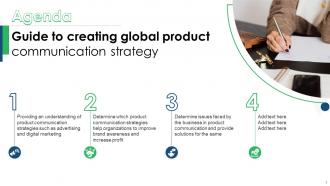
Slide 2: This is an Agenda slide. State your agendas here.
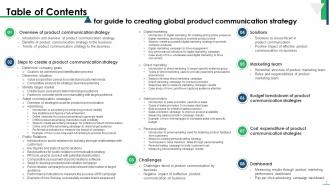
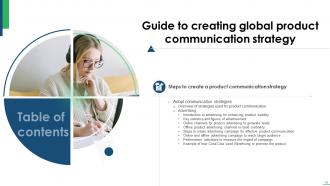
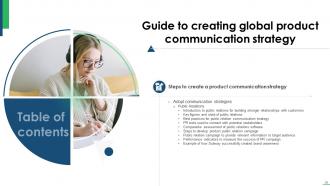
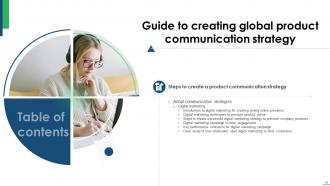
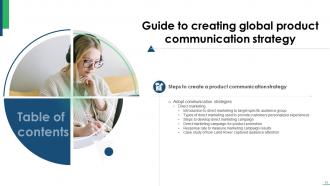
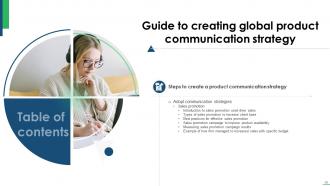
Slide 3: This slide shows Table of Content for the presentation.
Slide 4: This slide shows title for topics that are to be covered next in the template.
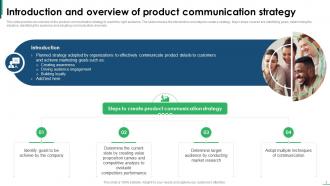
Slide 5: This slide provides an overview of the product communication strategy to reach the right audience.
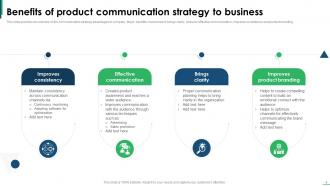
Slide 6: This slide displays an overview of the communication strategy advantages to company. Major benefits covered are it brings clarity, ensures effective communication etc.
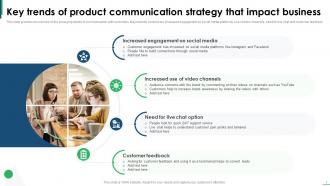
Slide 7: This slide provides an overview of the emerging trends of communication with customers. Major trends covered are increased engagement on social media platforms etc.
Slide 8: This slide shows title for topics that are to be covered next in the template.
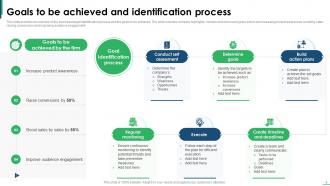
Slide 9: This slide provides an overview of the business target identification process and the goals to be achieved.
Slide 10: This slide shows title for topics that are to be covered next in the template.
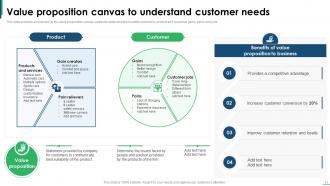
Slide 11: This slide displays an overview of the value proposition canvas created to determine the benefits received by product and customer gains.
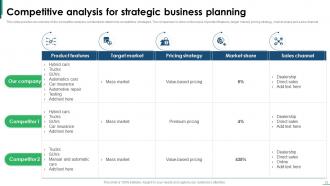
Slide 12: This slide provides an overview of the competitor analysis conducted to determine competitors’ strategies.
Slide 13: This slide shows title for topics that are to be covered next in the template.
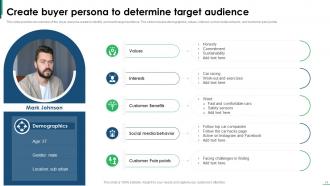
Slide 14: This slide provides an overview of the buyer persona create to identify and reach target audience.
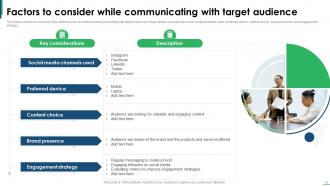
Slide 15: This slide presents an overview of the factors to be considered before connecting with target customers.
Slide 16: This slide shows title for topics that are to be covered next in the template.
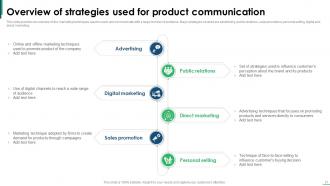
Slide 17: This slide provides an overview of the marketing techniques used to reach and communicate with a large number of audience.
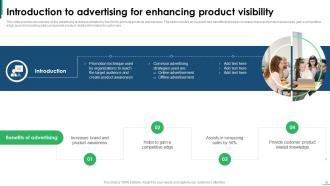
Slide 18: This slide presents an overview of the advertising technique adopted by the firm to promote products and services.
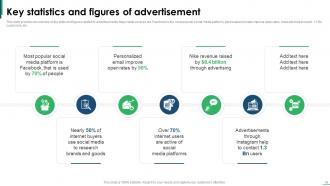
Slide 19: This slide displays an overview of the stats and figures related to advertisements. Major stats covered are Facebook.
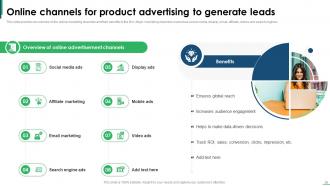
Slide 20: This slide provides an overview of the online marketing channels and their benefits to the firm.
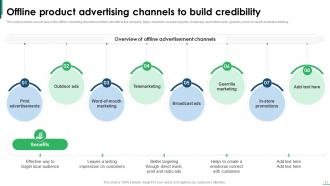
Slide 21: This slide displays an overview of the offline marketing channels and their benefits to the company.
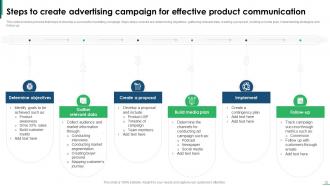
Slide 22: This slide includes process that helps to develop a successful marketing campaign. Major steps covered are determining objectives, gathering relevant data etc.
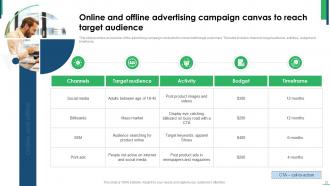
Slide 23: This slide provides an overview of the advertising campaign conducted to connect with target customers.
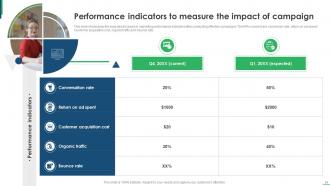
Slide 24: This slide showcases the expected increase in marketing performance indicators after conducting effective campaigns.
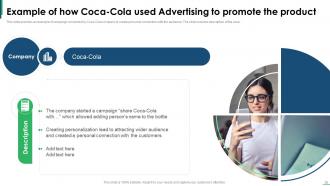
Slide 25: This slide provides an example of campaign conducted by Coca-Cola company to create personal connection with the audience.
Slide 26: This slide shows title for topics that are to be covered next in the template.
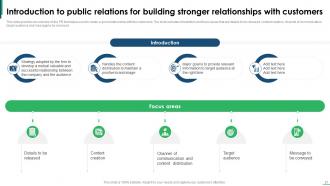
Slide 27: This slide provides an overview of the PR technique used to create a good relationship with the customers.
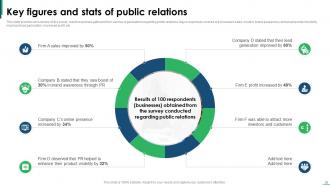
Slide 28: This slide displays an overview of the survey result responses gathered from various organizations regarding public relations.
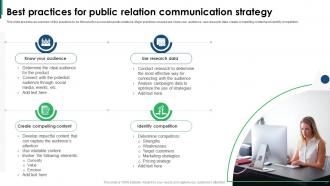
Slide 29: This slide provides an overview of the practices to be followed for successful public relations. Major practices covered are know your audience etc.
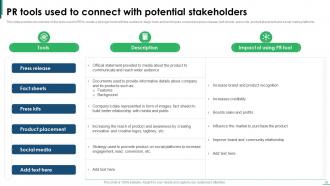
Slide 30: This slide displays an overview of the tools used in PR to create a stronger bond with the audience.
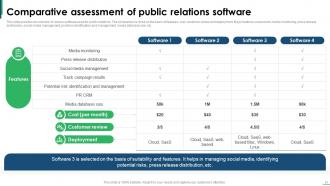
Slide 31: This slide provides an overview of various software used for public relations. The comparison is done on the basis of features, cost, customer review and deployment.
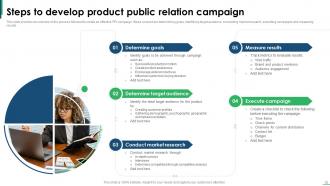
Slide 32: This slide displays an overview of the process followed to create an effective PR campaign. Steps covered are determining goals, identifying target audience etc.
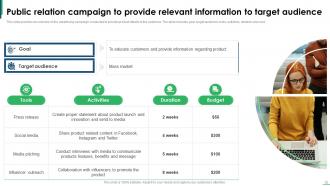
Slide 33: This slide provides an overview of the advertising campaign conducted to provide product details to the audience.
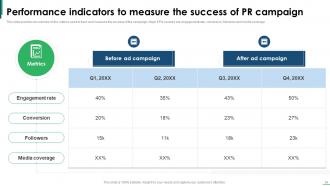
Slide 34: This slide displays an overview of the metrics used to track and measure the success of the campaign. Major KPIs covered are engagement rate, conversion etc.
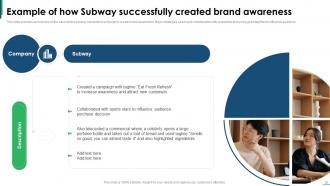
Slide 35: This slide provides an overview of the case where subway conducted campaign to create brand awareness.
Slide 36: This slide shows title for topics that are to be covered next in the template.
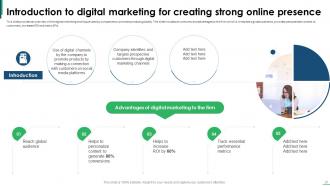
Slide 37: This slide provides an overview of the digital marketing technique used by companies to promote products globally.
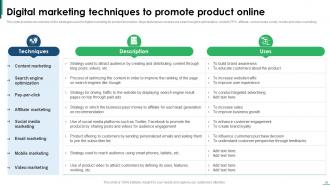
Slide 38: This slide displays an overview of the strategies used in digital marketing for product promotion.
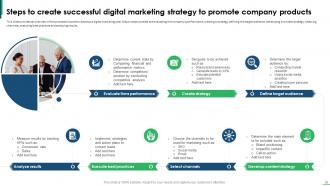
Slide 39: This slide provides an overview of the process followed to develop a digital marketing plan. Major steps covered are evaluating the company’s performance etc.
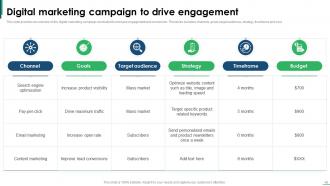
Slide 40: This slide displays an overview of the digital marketing campaign conducted to increase engagement and conversion.
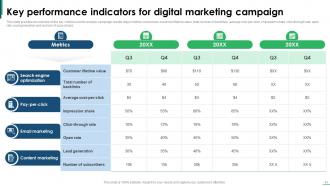
Slide 41: This slide provides an overview of the key metrics used to analyze campaign results. Major metrics covered are customer lifetime value, total number of backlinks etc.
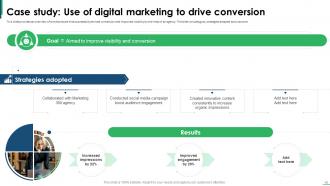
Slide 42: This slide displays an overview of the distributer that successfully derived conversion and improved visibility by the help of an agency.
Slide 43: This slide shows title for topics that are to be covered next in the template.
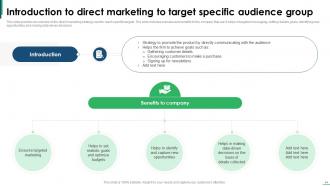
Slide 44: This slide provides an overview of the direct marketing strategy used to reach specific targets. The slide includes overview and benefits to the company.
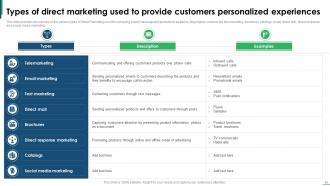
Slide 45: This slide displays an overview of the various types of direct marketing used for conveying brand message and products to audience.
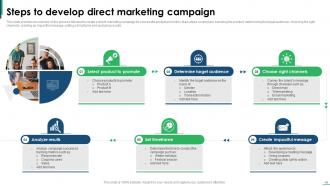
Slide 46: This slide provides an overview of the process followed to create a direct marketing campaign for successful product promotion.
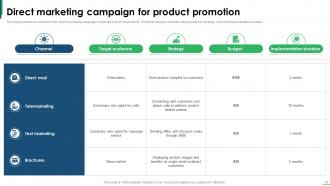
Slide 47: This slide displays an overview of the direct marketing campaign conducted to promote products.
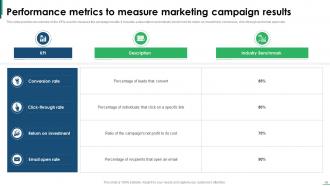
Slide 48: This slide provides an overview of the KPIs used to measure the campaign results. It includes a description and industry benchmark for return on investment etc.
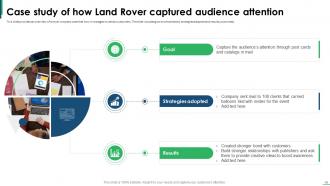
Slide 49: This slide displays an overview of the car company case that how it managed to attract customers.
Slide 50: This slide shows title for topics that are to be covered next in the template.
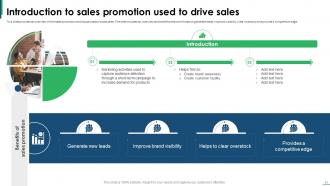
Slide 51: This slide provides an overview of the sales promotion technique used to boost sales. The slide includes an overview and benefits.
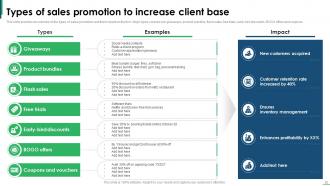
Slide 52: This slide displays an overview of the types of sales promotion and their impact on the firm. Major types covered are giveaways, product bundles, flash sales etc.
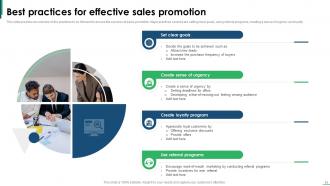
Slide 53: This slide provides an overview of the practices to be followed to ensure the success of sales promotion.
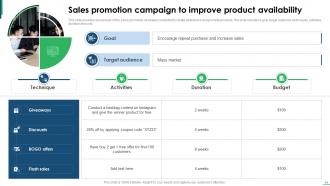
Slide 54: This slide displays an overview of the sales promotion campaign conducted to create awareness and promote products.
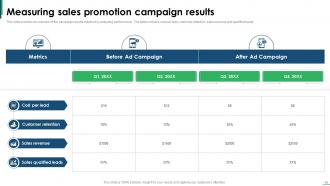
Slide 55: This slide provides an overview of the campaign results obtained by analyzing performance . The table includes cost per lead, customer retention etc.
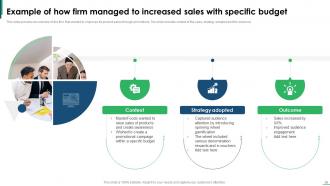
Slide 56: This slide displays an overview of the firm that wanted to improves its product sales through promotions.
Slide 57: This slide shows title for topics that are to be covered next in the template.
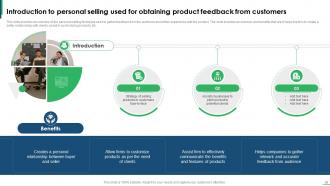
Slide 58: This slide provides an overview of the personal selling technique used to gather feedback from the audience about their experience with the product.
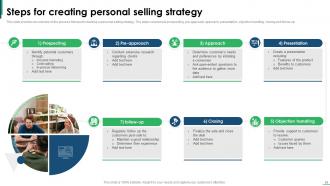
Slide 59: This slide displays an overview of the process followed to develop a personal selling strategy.
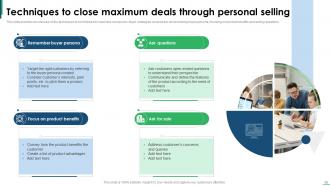
Slide 60: This slide provides an overview of the techniques to be followed to maximize conversion. Major strategies covered are remembering buyer persona etc.
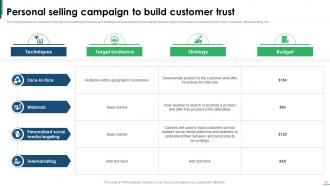
Slide 61: This slide displays an overview of the personal selling techniques and strategies to be adopted to promote the product.
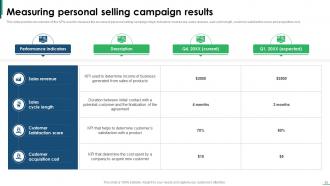
Slide 62: This slide provides an overview of the KPIs used to measure the success of personal selling campaign.
Slide 63: This slide shows title for topics that are to be covered next in the template.
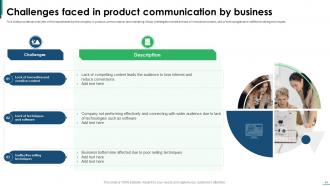
Slide 64: This slide provides an overview of the issues faced by the company in product communication and marketing. Major challenges covered are lack of innovative content etc.
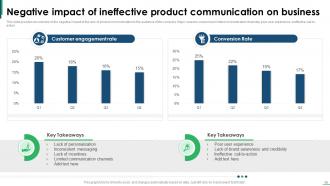
Slide 65: This slide displays an overview of the negative impact of the lack of product communication to the audience of the company.
Slide 66: This slide shows title for topics that are to be covered next in the template.
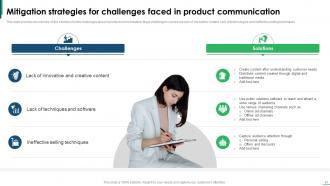
Slide 67: This slide provides an overview of the solutions for the challenges faced in product communication.
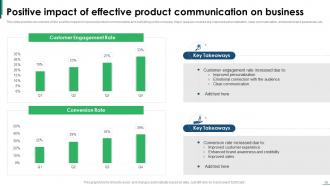
Slide 68: This slide displays an overview of the positive impact of improved product communication and marketing on the company.
Slide 69: This slide shows title for topics that are to be covered next in the template.
Slide 70: This slide provides an overview of the structure of marketing team that helps to promote the products and services of the company.
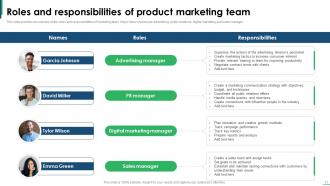
Slide 71: This slide displays an overview of the roles and responsibilities of marketing team.
Slide 72: This slide shows title for topics that are to be covered next in the template.
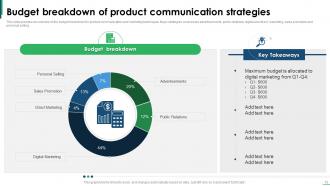
Slide 73: This slide provides an overview of the budget breakdown for product communication and marketing techniques.
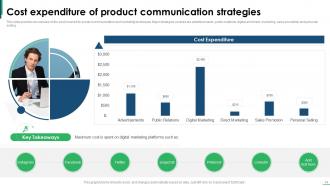
Slide 74: This slide displays an overview of the cost incurred for product communication and marketing techniques.
Slide 75: This slide shows title for topics that are to be covered next in the template.
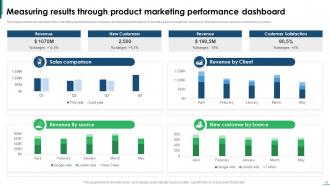
Slide 76: This slide provides an overview of the marketing dashboard use to measure and analyze performance.
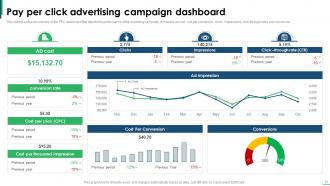
Slide 77: This slide displays an overview of the PPC dashboard that depicts the performance of the marketing campaign.
Slide 78: This slide shows all the icons included in the presentation.
Slide 79: This slide is titled as Additional Slides for moving forward.
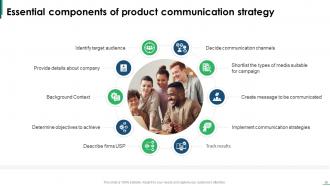
Slide 80: This slide displays Essential components of product communication strategy with additional textboxes and related imagery.
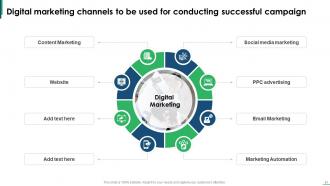
Slide 81: This slide displays Digital marketing channels to be used for conducting successful campaign with additional textboxes and related imagery.
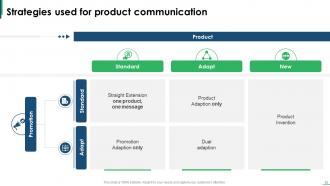
Slide 82: This slide displays Strategies used for product communication with additional textboxes and related imagery.
Slide 83: This slide shows Post It Notes for reminders and deadlines. Post your important notes here.
Slide 84: This is About Us slide to show company specifications, services etc.
Slide 85: This is Our Target slide. State your targets here.
Slide 86: This is a Timeline slide. Show data related to time intervals here.
Slide 87: This slide presents Roadmap with additional textboxes.
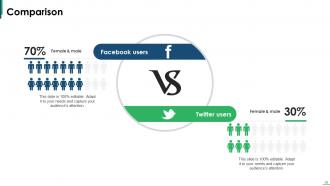
Slide 88: This is a Comparison slide with additional textboxes and related imagery.
Slide 89: This is a Thank You slide with address, contact numbers and email address.
Guide To Creating Global Product Communication Strategy CD with all 97 slides:
Use our Guide To Creating Global Product Communication Strategy CD to effectively help you save your valuable time. They are readymade to fit into any presentation structure.










FAQs for Guide To Creating Global Product
Honestly, start by checking how consistent your messaging is right now across different regions - that'll show you where the gaps are. Three things matter most: keep your brand voice consistent but let it flex for local culture, make sure your visuals look unified everywhere, and coordinate your launch timing. McDonald's nails this - same golden arches globally, but they'll throw rice burgers on the menu in Asia. Set up clear processes so your teams don't go rogue with messaging updates. Your regional teams are gold mines of local knowledge, so create feedback loops with them. It's all about finding that sweet spot between global consistency and what actually works locally.
Dude, this stuff is way trickier than people think. What kills it in the US might totally flop somewhere else - I found out the hard way when our "be yourself" campaign crashed and burned in Japan. Colors mean different things, humor doesn't always translate, and some cultures are way more collective vs individual focused. You can't just swap languages either. The whole message needs rethinking - like, completely different value props sometimes. My advice? Find local marketing people who actually get the culture, not just someone who speaks the language. They'll save you from looking like an idiot.
Honestly, digital tech is what makes global product communication actually possible now. You can hit multiple markets at once while still customizing for each region - pretty wild compared to the old days of just throwing stuff out there and hoping it stuck. AI handles translations in real-time, social platforms let you get super targeted, and analytics show you what's actually working. AR/VR demos are incredible for products too. The trick is using data to match cultural preferences without losing your brand voice. Oh, and definitely check which platforms your markets actually use first - I learned the hard way that LinkedIn isn't universal.
Honestly, start with a brand playbook that isn't totally rigid - core messaging, tone stuff, visual guidelines that actually work across different markets. Give your regional teams room to adapt for their local audience while keeping the main brand promise intact. Regular check-ins between global and regional marketing help catch issues before campaigns go live. Oh, and definitely set up a shared asset library so everyone's using the same approved stuff. I'd audit what each region is doing first though - you might find the messaging is already way more scattered than you think. Too many companies create these super strict templates that just flop in different cultures.
Track your reach and engagement stuff - brand awareness, message recall, sentiment by region. CTR and conversions are obvious. The real challenge though? Measuring if your message actually resonates culturally, not just hitting numbers. Watch local media mentions and social chatter. See how your messaging translates (and I mean really translates, not just literally). Quarterly check-ins with regional teams are clutch - they'll spot things your spreadsheets totally miss. Raw data only tells half the story anyway.
Ugh, regulations will mess with your head - every market wants totally different messaging. Health claims that fly in the US? Completely illegal in Europe. Your imagery, disclaimers, even basic product claims all need to change country by country. Honestly, your lawyers will hate you less if you loop them in early instead of after you've already designed everything. I learned this the hard way when we almost got our whole campaign killed over one stupid claim. Just bake the regulatory stuff into your creative process from the start, trust me.
Honestly, don't just translate your stuff - that's a recipe for disaster. Research the hell out of each market's culture and how they actually communicate. I've seen US campaigns bomb spectacularly in places like Japan because nobody bothered to adapt the messaging. Get native speakers involved early (not just translators, actual locals). Your visual design, product positioning, even your whole message hierarchy might need a complete overhaul. Oh, and test everything locally first - saves you from looking like an idiot later. Pick one market, nail that process down, then expand from there.
Research which platforms actually work in each market first - like WeChat's huge in China while LinkedIn kills it here in the US. Adapt your content style for local tastes but don't lose your brand voice. Local influencers are gold for building trust. Cultural stuff matters way more than people think, honestly. Set up different posting calendars that hit local holidays and trends. Oh, and keep your core message consistent across everything - that's what ties it all together. It's basically about being local without becoming a completely different brand, you know?
Oh man, direct translation is a nightmare waiting to happen. You'll completely miss cultural context and end up sounding totally tone-deaf. Sometimes even offensive, honestly. It's not just about swapping words - different cultures respond to completely different humor, emotions, symbols, colors, all of it. Remember Chevy trying to sell the Nova in Latin America? "No va" literally means "doesn't go" in Spanish. Oops. You really need local market experts who get both the language AND the culture, not just someone who happens to speak two languages.
Dude, stakeholder engagement will seriously make or break this thing. Get your regional teams and local market people involved from day one - they know stuff about cultural nuances that'll save your ass later. I've watched so many campaigns crash because some exec thought "hey, it worked in Denver, ship it to Mumbai!" Your local folks will catch problems early and help you avoid looking like an idiot. Oh, and definitely loop in key customers too. Map out who you need now and keep checking in with them throughout. Trust me on this one.
Honestly, you can't skip market research - it's what tells you who you're actually talking to and how to reach them. Without it, you're basically throwing stuff at the wall and hoping something sticks (trust me, I've wasted budget this way). Look into both qualitative and quantitative research early on. Cultural nuances are huge too - you don't want to be the brand that accidentally offends half your target market. Figure out their preferred channels, what tone works, timing for launches. Oh and definitely get local market insights, not just general data. Those details make or break campaigns.
Set up quarterly check-ins where your local teams can actually share what's working and what's flopping in their markets. Cultural stuff, messaging that hits different, competitor moves - all of it. Don't just collect complaints (though you'll get tons lol). Test localized versions based on their input. The trick is making them feel heard without letting your brand turn into a hot mess across different regions. Oh, and pay attention to which channels perform better locally - that intel is gold. Make it structured but not like, corporate death-by-meeting structured.
Honestly, stories are everything in global campaigns. People remember narratives way better than boring feature lists - I've watched too many technical presentations bomb while simple customer stories actually stick. Your best bet? Collect real success stories from customers in different regions and build those into your messaging. Behind-the-scenes content works great too. Stories cross cultural barriers in ways that specs just can't. They make complex stuff digestible and they're super shareable on social. A good "here's how we solved this person's nightmare problem" story beats a list of features every single time.
Skip the text-heavy approach and go visual instead. Images and symbols work way better than words that need translating anyway. Some of my favorite global campaigns barely have any copy at all! Get native speakers involved for whatever text you do use. Colors mean different things everywhere - like white means death in some places, not purity. Same with gestures and humor. Test everything with local focus groups first. Trust me, what feels "universal" often isn't. Figure out which product benefits actually matter everywhere vs. what's just cultural. Demonstrations and emotions translate better than clever wordplay ever will.
Honestly, figure out what can't change about your brand first - your main value prop, logo, that kind of stuff. McDonald's does this perfectly... golden arches everywhere, but they'll throw rice burgers on the menu in Asia because why not? Your local teams need wiggle room though. Give them flexible guidelines so they can tweak the language and cultural stuff without making your brand unrecognizable. The real challenge is deciding what's sacred vs. what can adapt based on what locals actually want. Start there and you'll save yourself a ton of headaches later.
-
Excellent template with unique design.
-
I downloaded some of the presentations for work. They were simple to modify and saved me a lot of time and effort.
-
Satisfied with the way SlideTeam resolved my query regarding the right business PPTs that I was having difficulty finding. I found the perfect match with their assistance.
-
Thanks to SlideTeam, we have an ideal template to present all the info we need to cover. Their slides give our numbers and projections a more clear and enchanting look.