

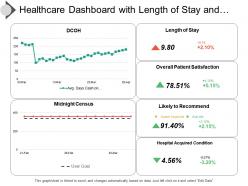
Healthcare dashboard with length of stay and hospital acquired condition





Try Before you Buy Download Free Sample Product
 Impress Your
Audience
 100%
Editable
 Save Hours
of Time


Build a bedrock for greater growth with our Healthcare Dashboard With Length Of Stay And Hospital Acquired Condition. They encourage better discipline.
People who downloaded this PowerPoint presentation also viewed the following :
Healthcare dashboard with length of stay and hospital acquired condition with all 6 slides:
Our Healthcare Dashboard With Length Of Stay And Hospital Acquired Condition enable you to compete with the best. Hold your ground in any contest.


FAQs for Healthcare dashboard with length of stay and
Effective healthcare dashboards should include patient flow metrics, clinical quality indicators, financial performance data, operational efficiency measures, and staff productivity analytics. These comprehensive metrics enable hospitals and healthcare systems to monitor patient wait times, track treatment outcomes, optimize resource allocation, and enhance care delivery, with many institutions finding that integrated dashboards significantly improve decision-making and patient satisfaction.
Real-time data transforms healthcare management by enabling immediate clinical responses, optimizing resource allocation, and identifying patient trends as they develop. Through continuous monitoring dashboards, hospitals can reduce emergency response times, streamline bed management, and enhance patient safety protocols, while administrators gain visibility into operational efficiency, ultimately delivering faster care and improved outcomes.
Best practices for visualizing patient care quality metrics include clear trend indicators, comparative benchmarks, real-time alerts, standardized color coding, and intuitive drill-down capabilities. These visualization techniques streamline decision-making by highlighting performance gaps, tracking improvement trajectories, and enabling quick identification of critical areas, with many healthcare systems finding that well-designed dashboards ultimately enhance patient outcomes while reducing administrative burden.
Healthcare dashboards facilitate better patient engagement by providing real-time access to personal health data, appointment scheduling, medication reminders, and direct communication channels with healthcare providers. Through these integrated platforms, patients can actively monitor their health metrics, receive personalized care recommendations, and participate more meaningfully in treatment decisions, ultimately delivering improved health outcomes and stronger patient-provider relationships.
Data integration serves as the foundation for comprehensive healthcare dashboards by consolidating patient records, lab results, imaging data, billing information, and real-time monitoring systems into unified views. This seamless integration enables healthcare providers to access complete patient histories, identify treatment patterns, and make informed clinical decisions faster, while reducing medical errors and ultimately delivering more personalized, efficient patient care across departments.
Predictive analytics enhances healthcare dashboard outcomes by forecasting patient deterioration, predicting readmission risks, and identifying disease progression patterns before they become critical. Through machine learning algorithms, hospitals can anticipate resource needs, optimize staffing levels, and enable proactive interventions, ultimately delivering faster patient responses and improved care quality while reducing operational costs.
Healthcare dashboards require robust encryption protocols, multi-factor authentication, role-based access controls, audit trails, and HIPAA-compliant data storage systems. These security measures work together by restricting unauthorized access, monitoring user activity, and ensuring data integrity, with many hospitals and healthcare networks finding that layered security approaches ultimately deliver patient trust while enabling seamless clinical workflows.
Healthcare dashboards aid compliance by centralizing regulatory reporting, automating data collection for audits, tracking quality metrics in real-time, and providing audit trails for documentation requirements. Through integrated monitoring systems, hospitals and clinics streamline HIPAA compliance, Joint Commission standards, and CMS reporting while reducing manual errors, ultimately delivering faster regulatory responses and minimizing compliance risks across healthcare operations.
Healthcare dashboards can be customized by role-specific metrics, data granularity, and visualization preferences, ensuring administrators see operational efficiency indicators while clinicians access patient-centered analytics and financial teams monitor revenue cycles. Through personalized interfaces and filtered data views, hospitals and medical centers deliver targeted insights that enhance decision-making speed, streamline workflows, and ultimately improve patient outcomes across departments.
Effective healthcare KPI visualization techniques include heat maps for patient flow patterns, trend lines for infection rates and readmission statistics, gauge charts for capacity utilization, and comparative bar charts for departmental performance metrics. These visualizations enable healthcare administrators to quickly identify bottlenecks, track patient outcomes, and optimize resource allocation, with many hospitals finding that interactive dashboards significantly enhance decision-making speed and operational efficiency.
Mobile accessibility enhances healthcare dashboards by enabling real-time patient monitoring, instant alert notifications, and seamless data access across devices and locations. Through responsive design and cloud integration, healthcare providers can review critical metrics, update patient records, and coordinate care remotely, ultimately delivering faster response times and improved patient outcomes.
Healthcare dashboard data accuracy faces challenges including data silos across departments, inconsistent entry protocols, integration complexities from multiple systems, real-time synchronization delays, and human error during manual processes. These issues can compromise patient safety and clinical decisions, with many hospitals finding that standardized workflows, automated validation systems, and regular auditing protocols significantly enhance reliability and operational efficiency.
User feedback enhances healthcare dashboard design by identifying usability gaps, clarifying workflow requirements, and revealing critical information priorities that developers might overlook. Through iterative testing with doctors, nurses, and administrators, healthcare organizations can streamline navigation, optimize data visualization, and ensure dashboards deliver faster patient insights and improved clinical decision-making capabilities.
When selecting healthcare dashboard software, prioritize real-time patient monitoring, clinical workflow integration, customizable reporting tools, data security compliance, and interoperability with existing systems. These features streamline patient care by enabling faster diagnoses, reducing administrative overhead, and enhancing care coordination, with many hospitals finding that comprehensive dashboards ultimately deliver improved patient outcomes and operational efficiency.
Healthcare dashboards contribute to operational efficiency by centralizing patient data, streamlining workflow management, and enabling real-time resource allocation across departments. Through automated reporting and predictive analytics, hospitals can reduce administrative overhead, minimize patient wait times, and optimize staff scheduling, with many healthcare systems finding that integrated dashboards ultimately deliver faster patient care and significantly lower operational costs.
-
Very unique and reliable designs.
-
Great designs, Easily Editable.