

Healthcare Insurance App Investor Funding Elevator Pitch Deck Ppt Template





Try Before you Buy Download Free Sample Product
 Impress Your
Audience
 100%
Editable
 Save Hours
of Time


Introducing the Healthcare insurance app Investor Funding Elevator Pitch Deck PowerPoint presentation. Our innovative pitch deck is tailored to captivate potential investors, presenting the unique value proposition of Bind. At Bind, it is firmly believed everyone deserves access to high quality healthcare tailored to their needs. The target market consists of individuals seeking affordable, on demand health insurance solutions that can adapt to changing circumstances. Additionally, the Healthcare and Fitness pitch deck highlights Binds impressive statistics, demonstrating its market presence and growth potential. It also showcases strategic partnerships with local health providers, corporations and even national sports leagues, illustrating the vastness of their network. The engaging digital campaigns and loyalty programs further foster customer engagement and satisfaction. Moreover, the deck introduces the visionary minds behind Bind, presenting their esteemed executive team and board of directors. Lastly, the Health Plans PPT slides outline their future initiatives to forge connections with key stakeholders and capitalize on emerging opportunities. Download this 100percentage editable presentation and get access to our highly researched and skilfully designed pitch deck.
People who downloaded this PowerPoint presentation also viewed the following :
Content of this Powerpoint Presentation
Slide 1: This slide introduces Healthcare insurance app - Investor Funding Elevator Pitch Deck. State your company name and begin.
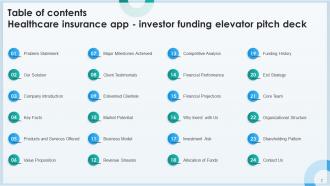
Slide 2: This slide shows Table of Content for the presentation.
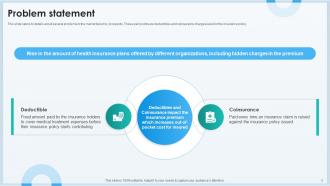
Slide 3: This slide presents several problems in the market faced by prospects.
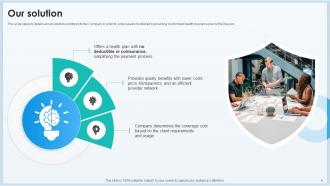
Slide 4: This slide describes solutions rendered by the Company in order to solve issues mentioned by providing customized health insurance plan to the insured.
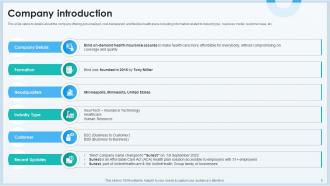
Slide 5: This slide presents the company offering personalized, cost-transparent, and flexible health plans.
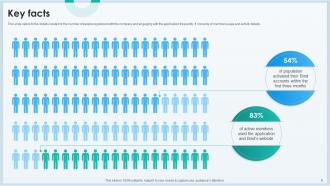
Slide 6: This slide provides details related to the number of people registered with the company and engaging with the application frequently.
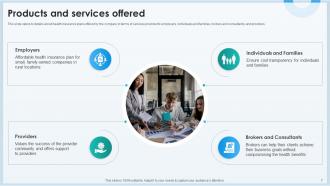
Slide 7: This slide displays health insurance plans offered by the company.
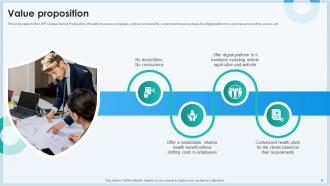
Slide 8: This slide presents USP (Unique Selling Proposition) of health insurance companies.
Slide 9: This slide covers particular objectives or goals that the organization intends to attain.
Slide 10: This slide presents client's feedback based on their experiences.
Slide 11: This slide presents details related to some of the health insurance company clients.
Slide 12: This slide displays details related to the company's market potential leading to lower healthcare costs annually for members and employers.
Slide 13: This slide highlights the business model used to understand the operational details of the company.
Slide 14: This slide displays different sources of income of health insurance companies.
Slide 15: This slide presents a case study representing the facts defining why employees prefer health plans offered by Bind compared to the other options.
Slide 16: This slide displays company’s performance in the health insurance industry.
Slide 17: This slide presents forecast of future revenues and expenses, and it consists of information depicting revenue growth and reduced costs.
Slide 18: This slide displays health plan created by the company considering the customer requirements.
Slide 19: This slide describes the company offering personalized, cost-transparent, and flexible health plans.
Slide 20: This slide presents distribution of funds raised in the investment round.
Slide 21: This slide describes the funding round announced by the Health Insurance company for different dates and different transaction names.
Slide 22: This slide represents exit strategies such as IPOs, mergers, and acquisitions that enable the entrepreneur to liquidate their position in a financial asset.
Slide 23: This slide presents names and designation of current employees of the insurance company.
Slide 24: This slide displays key people associated with Company leadership.
Slide 25: This slide depicts the details related to the shareholding patterns representing the share ownership pattern of companies.
Slide 26: This is a contact us slide to show company's contact information.
Slide 27: This slide shows all the icons included in the presentation.
Slide 28: This is a Comparison slide with additional textboxes and related imagery.
Slide 29: This slide presents Roadmap with additional textboxes.
Slide 30: This slide shows Post It Notes for reminders and deadlines. Post your important notes here.
Slide 31: This slide depicts Venn diagram with text boxes.
Slide 32: This is a financial slide. Show your finance related stuff here.
Healthcare Insurance App Investor Funding Elevator Pitch Deck Ppt Template with all 40 slides:
Use our Healthcare Insurance App Investor Funding Elevator Pitch Deck Ppt Template to effectively help you save your valuable time. They are readymade to fit into any presentation structure.
-

Healthcare Insurance App Investor Funding Elevator Pitch Deck
-
Healthcare insurance app investor funding elevator pitch deck
-
Problem statement
-
Our solution
-
Company Introduction
-
Key facts
-
Products and services offered
-
Value proposition
-

Major milestones achieved
-

Client testimonials
-

Esteemed clientele
-

Market potential
-

Business model
-

Revenue streams
-

Competitive analysis
-

Financial performance
-

Financial projections
-

Why invest with us
-

Investment ask
-

Allocation of funds
-

Funding history
-

Exit strategy
-

Core team
-

Organizational structure
-

Shareholding Pattern
-

Contact Us
-

Icons slide Healthcare insurance app investor funding elevator pitch deck
-

Additional slides
-

Venn diagram
-

Swot analysis
-

Puzzle diagram
-

Target
-

-

-

-

-

-

-

-

FAQs for Healthcare Insurance App Investor Funding Elevator Pitch
Honestly, just nail the basics first. Claim tracking, digital ID cards, and provider search are must-haves. Then add prescription stuff and cost estimators - people love knowing what they'll actually pay before getting hit with surprise bills. Deductible tracking is clutch since everyone's constantly lost about their finances. Oh, and appointment scheduling if you can swing it. Push notifications are good for claim updates but don't spam them or they'll just turn it off. Keep everything stupid simple though - the last thing someone wants is fighting with an app when they're already dealing with health crap.
Encryption's your starting point - AES-256 for everything, data sitting around and data moving. HIPAA compliance is non-negotiable, obviously. Multi-factor auth too, but here's the thing - don't make it so annoying that users hate logging in to check basic stuff. Nobody wants to enter six codes just to see their deductible. Regular security audits are key, plus solid cloud hosting with tight access controls. Oh, and nail down your data retention policies early. Honestly though? Just get a security assessment first. It'll tell you exactly what's broken and where to start fixing things.
So basically AI handles all the boring paperwork that used to drag on forever. Upload your claim through the app and it instantly reads your documents, pulls out the important stuff, and matches it against your policy. Pretty wild how quick it is now, honestly. Simple claims get approved in minutes instead of waiting around for days. You'll actually know what's happening with real-time updates too - way better than being left hanging. Oh, and make sure your receipt photos aren't blurry or whatever, the system reads clear images way better.
So the app gives you direct messaging with your insurance company - no more waiting on hold forever. Push notifications keep you updated on claims and policy stuff automatically. You can upload documents right from your phone, which honestly saves so much time. There's also video chat with agents when you need actual help. Everything gets saved in one spot, so they can't pull that "we didn't get your paperwork" crap anymore. Oh, and definitely turn on notifications first thing or you'll miss important updates. Makes dealing with insurance way less painful.
For your healthcare app, start with daily/monthly active users and session length - those are your bread and butter. Feature adoption is key too, like how many people actually submit claims vs just browse around. Honestly, customer satisfaction scores matter way more in healthcare than other industries because trust is everything. User retention tells you if people stick around long-term. On the ops side, track claim processing times and support tickets. I'd probably start with maybe 5 core metrics that connect to your main business goals, then add more once you've got solid baseline data to work with.
So basically you'd build a portal that connects people straight to their in-network virtual doctors. Schedule video calls, check medical history, refill prescriptions - all in one spot. The real-time coverage verification is clutch though, so people know their copay before booking. Honestly, telehealth has gotten so much smoother lately. You could throw in appointment reminders and secure doctor messaging too. Goal is making it super simple - someone feels crappy, opens the app, and they're talking to a doc within minutes. Way better than sitting in a waiting room feeling miserable.
Honestly, personalized wellness stuff is where it's at for keeping users hooked. Think about it - instead of just being another boring claims app, you become part of their daily routine. Tracking workouts, medication reminders, that kind of thing. The real magic happens when you get specific though. Like, nobody cares about generic "drink more water" tips, but telling someone they're due for a dermatology visit that's actually covered? That hits different. Plus healthier users = fewer claims for you, so win-win. I'd probably test it with your most active users first - they'll give you better feedback anyway.
Just build it straight into the app - surveys after they complete stuff, quick rating buttons, maybe a feedback tab in settings. But honestly? Get some real patients to test it out. They'll roast your confusing parts way better than any survey. Here's what most people mess up though: actually telling users when you fix their complaints. Send them a quick "hey, we fixed that annoying thing you mentioned" push notification. Makes them feel heard. I'd pick just one method first, see what actually gets responses, then add more later.
Honestly, HIPAA compliance is brutal - one screwup and you're looking at massive fines. You'll need encryption everywhere, user access controls, and cloud storage that meets all their standards. The annoying part? Balancing security with actually making the app usable. Nobody wants to jump through five hoops just to see their deductible info. Plus these regulations shift constantly, so build your architecture to be flexible from day one. Oh, and definitely run your data flows by legal early - like way before you think you need to. Trust me on that one.
Oh this app is seriously a game-changer - it translates all that insurance garbage into words you can actually understand. Like, you know how they throw around "deductibles" and "copays" like we're supposed to magically know what that means? The app breaks it down super simply. You can compare different plans side-by-side too, which honestly saves so much headache. It shows you exactly what each plan costs and what you're getting. Trust me, use it before enrollment or you'll be picking plans blindfolded like the rest of us used to do.
Start with the obvious stuff - credit/debit cards and digital wallets like Apple Pay since everyone's tapping to pay now. Bank transfers matter too, especially for monthly premiums. People really want to use their HSA/FSA cards (who doesn't love spending pre-tax money, right?). PayPal's still popular with certain crowds. Buy-now-pay-later could work for bigger procedures, though I'd probably add that later. Honestly, just nail the basics first - you can always expand based on what users actually ask for instead of guessing.
Yeah, gamification totally works because people love competing and earning stuff. Start with basic points for smart choices - like picking generics or staying in-network. Badges for price shopping before procedures are solid too. Honestly, anything that makes boring healthcare decisions feel like you're winning something. Even my dad got weirdly into tracking his HSA "score" last year. Make it simple at first - see what people actually use, then add leaderboards or whatever. The whole point is rewarding behaviors that save them cash while making it feel less like homework.
Look, your interface needs to work for literally everyone - from millennials who'll ditch your app in 2 seconds if it sucks, to older folks managing serious health stuff but maybe not great with phones. Big buttons and clear fonts matter way more than you'd think. I've watched my mom struggle with these apps and it's painful. Fast, intuitive design keeps younger users happy, while simple workflows help seniors actually use the thing. Otherwise people just call customer service anyway, which honestly defeats the whole point of building an app in the first place, right?
Dude, partnering with healthcare providers is a game changer. You get live data instead of boring static stuff - appointment booking, prescription refills, test results, telehealth. Suddenly your app isn't just showing insurance cards anymore. It becomes the one place people go for health stuff, which honestly saves everyone time. Providers love it because patients stay more engaged. You win because people stick around instead of jumping between apps all day. Oh, and start with smaller clinic networks first - they're way easier to work with than massive hospital systems. Big hospitals move like molasses.
So here's what I'd do - start with a super simple onboarding that figures out what they actually care about first. Then break down all that confusing insurance stuff using interactive wizards for plan comparisons. Short videos work great for explaining deductibles and copays (honestly, most people have no clue what those mean). Some apps I've seen get pretty clever with gamification - like progress bars and badges when you complete your profile. Push notifications are solid for coverage updates based on what they're using. The main thing is don't dump a wall of policy text on them. Nobody reads that stuff anyway. Keep everything bite-sized.
-
“Excellent information with easy access.”
-
Amazing slides! Unique, attractive, and easy to understand.