

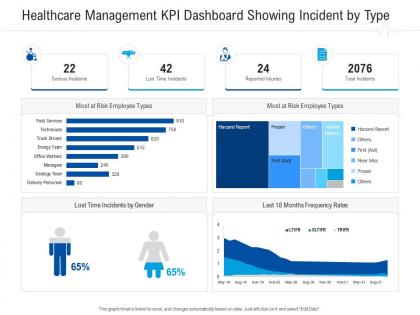
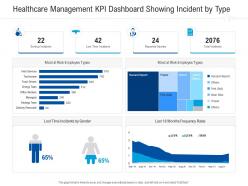
Healthcare management kpi dashboard showing incident by type healthcare management system ppt ideas




Try Before you Buy Download Free Sample Product
 Impress Your
 Audience
 100%
100% Editable
 Save Hours
 of Time


Our Healthcare Management KPI Dashboard Showing Incident By Type Healthcare Management System Ppt Ideas are topically designed to provide an attractive backdrop to any subject. Use them to look like a presentation pro.
People who downloaded this PowerPoint presentation also viewed the following :
Healthcare management kpi dashboard showing incident by type healthcare management system ppt ideas with all 2 slides:
Use our Healthcare Management KPI Dashboard Showing Incident By Type Healthcare Management System Ppt Ideas to effectively help you save your valuable time. They are readymade to fit into any presentation structure.
FAQs for Healthcare management kpi dashboard showing incident by type healthcare management
Okay so start with the obvious ones - patient satisfaction scores, readmission rates, how long people stay on average. Staff turnover is huge too because nobody talks about how expensive it is to keep hiring. Financial stuff you can't ignore: cost per patient, revenue per bed. Bed occupancy rates and wait times will show you if you're actually running efficiently or just pretending to be. Then you've got your safety metrics like infection rates and med errors - those are basically non-negotiable. Honestly I'd build your dashboard around these core ones first, then worry about department-specific stuff later once you get the hang of it.
Honestly, KPI dashboards are game-changers because you can see what's happening right now instead of guessing. No more pulling reports from like 10 different systems - such a pain. You'll catch problems early, like if patient satisfaction starts tanking or readmissions are creeping up. The visual stuff makes it super easy to show your team what matters. I'd start with maybe 3-5 key metrics that actually move the needle on patient outcomes and money. Trust me, once you have everything in one place, decisions become so much clearer.
Definitely track your HCAHPS scores and how patients rate communication with doctors and nurses. Pain management effectiveness matters too. Call button response times are critical - honestly, nothing pisses off patients more than waiting around when they need help. I'd also look at discharge readiness scores and how likely people are to recommend you. Oh, and complaint resolution times for sure. Break everything down by department and shift so you can catch patterns early. Update weekly if possible - that way you're not scrambling to fix issues that've been brewing for months.
Honestly, financial KPIs are game-changers because they show you the money behind your day-to-day operations. Like when you match revenue per patient with bed occupancy - suddenly those operational decisions make way more sense. You'll catch inefficiencies you missed before and actually prove your improvement projects were worth it. I'd start small though - just pick your top 3 operational metrics and find their financial twins. That connection alone will totally flip how you think about priorities. It's wild how much clearer everything becomes once you see both sides of the story instead of flying blind.
Honestly, operational KPIs are like having a crystal ball for your processes. You'll spot bottlenecks before they become disasters - stuff like patient wait times or how fast you're turning over beds. Tuesday mornings always slow in the ER? Now you know to schedule better or add staff. The trick is choosing KPIs that actually matter for patient flow and resources (not just random metrics that look impressive). Once you see the patterns, you can fix things instead of just reacting to chaos all the time. It's pretty amazing how much smoother everything runs.
So basically you get real-time updates on all the stuff that matters - wait times, how full your beds are, readmission rates, patient satisfaction. Everything updates automatically instead of you having to pull reports manually (which honestly saves so much time). You can set alerts too, so if something hits a red flag threshold, you'll know right away. I'd start with just your most critical metrics though - don't go crazy adding everything at once. Your team needs time to actually use it. The best part is having it all in one place instead of bouncing around different systems.
So compliance KPIs totally flip how you manage - patient safety and infection rates suddenly matter more than your budget numbers. Super annoying when you're trying to hit financial targets, but honestly? Better than getting slammed with penalties later. Track stuff like HIPAA violations, readmission rates, and whether your staff actually has current certifications. The trick is figuring out which regulations mess with your department the most. Build your KPIs around those first. Oh, and documentation accuracy - boring but it'll save your butt during audits. Creates this whole framework that keeps you out of trouble.
Tableau and Power BI are your best bets here - both connect really well to healthcare systems and clinical staff actually find them intuitive to use. Qlik Sense works too if you're already in that ecosystem. I'd honestly go with whatever your IT team knows best though, because you'll need their help with EHR integrations anyway. Too many places build these massive dashboards that nobody ends up using. Start small - pick like 3-4 metrics max for your pilot. Real-time data's tricky so make sure whatever you pick can handle live connections. Also, pretty dashboards don't mean much if they're a pain to navigate.
Look at what each place actually does day-to-day. Hospitals? Track ER wait times, surgery success rates, how fast beds turn over. Clinics are more about appointment flow, wait times, getting people their preventive stuff done. Nursing homes are totally different - you want fall prevention, med compliance, whether residents are happy. Honestly, I've seen too many places just grab some random healthcare dashboard template and wonder why nobody uses it. Pick maybe 5-7 things your leadership already talks about in meetings. Start there and build out.
Honestly, data silos are gonna be your biggest headache. Plus staff will resist change - they always do. Your IT folks will complain about integrating everything, but they'll figure it out. Start with just one or two departments first instead of going company-wide. Get some clinical champions on board early since they can sell it better than you can. Oh, and define your KPIs upfront or you'll have departments measuring completely different things. Focus on stuff that actually helps the frontline people, not just pretty charts for executives. Training's huge too - show them how it makes their day easier.
Honestly, KPIs can actually boost engagement if you do them right. Your team needs to see their work matters - so track stuff like patient satisfaction or clinical outcomes tied to what they do. Short, clear goals work best. But here's where most places screw up: they measure everything instead of focusing on what actually motivates people. Choose metrics around patient care quality, not just how fast someone works. Then use that data to celebrate wins and help people grow. Skip the whole "gotcha" performance review vibe though - that kills morale fast.
Honestly, good visuals will save your life here. Line charts make trends super obvious, bar graphs are perfect for comparing departments, and heat maps? Total game-changer for patient flow stuff. Color coding helps you flag whatever's urgent. Way better than drowning people in spreadsheet hell - nobody wants that. When readmission rates drop 15%, pointing to a chart beats explaining numbers any day. Pick your top 5 KPIs first. Different metrics need different chart types, so maybe test a few formats with your team before rolling it out. Trust me, stakeholders will actually pay attention for once.
So basically you feed all your old patient data plus seasonal stuff into ML models to predict volumes, readmissions, resource needs - the usual suspects. Your dashboard shows these forecasts right next to current numbers, which honestly beats scrambling every day. Start with ER capacity or staffing since those hit hardest when you're wrong. One thing though - you gotta keep updating the algorithms because healthcare moves fast. Like, way faster than I expected when I first started this. Stale models will just feed you junk predictions that'll make your planning worse than useless.
Honestly, patient privacy is huge - don't put anything that could ID someone, even by accident. Your KPIs should actually improve patient care, not just hit arbitrary numbers that look impressive in meetings (because we all know how useless those can be). Watch out for creating incentives that discriminate against sicker patients or encourage docs to cherry-pick easy cases. Also think about whether you're pushing staff toward dangerous shortcuts or burnout territory. Really ask yourself: will this metric genuinely help patients, or just make the C-suite happy about their dashboard? That distinction matters more than people realize.
So basically, benchmarking stops your KPIs from being meaningless numbers floating around. You'll actually know if you're crushing it or totally behind compared to similar places. I learned this the hard way - we thought our readmission rates were solid until we saw peer data and realized we were way below average. Ouch. Industry benchmarks help you set real targets too, plus they're great ammunition when you need resources from leadership. Pick your top 2-3 metrics first, then hunt down reliable sources like CMS or your state hospital group for comparison data.
-
Awesome presentation, really professional and easy to edit.
-
I discovered this website through a google search, the services matched my needs perfectly and the pricing was very reasonable. I was thrilled with the product and the customer service. I will definitely use their slides again for my presentations and recommend them to other colleagues.
-
Excellent Designs.
-
I discovered this website through a google search, the services matched my needs perfectly and the pricing was very reasonable. I was thrilled with the product and the customer service. I will definitely use their slides again for my presentations and recommend them to other colleagues.
-
Professional and unique presentations.