

Healthcare Project Manpower Planning Dashboard




Try Before you Buy Download Free Sample Product
 Impress Your
 Audience
 100%
100% Editable
 Save Hours
 of Time


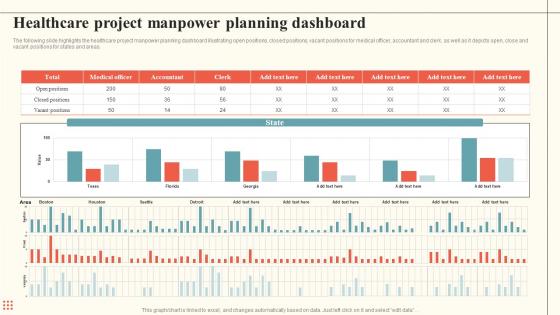
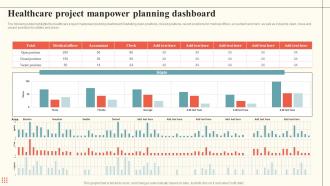
The following slide highlights the healthcare project manpower planning dashboard illustrating open positions, closed positions, vacant positions for medical officer, accountant and clerk, as well as it depicts open, close and vacant positions for states and areas.
People who downloaded this PowerPoint presentation also viewed the following :
Healthcare Project Manpower Planning Dashboard with all 7 slides:
Use our Healthcare Project Manpower Planning Dashboard to effectively help you save your valuable time. They are readymade to fit into any presentation structure.






FAQs for Healthcare Project
Effective healthcare manpower planning strategies include workforce forecasting, competency mapping, succession planning, training and development programs, and performance management systems. These components work together by analyzing current staffing gaps, predicting future needs, and developing targeted recruitment initiatives, with many hospitals and health systems finding that strategic workforce planning reduces turnover costs while improving patient care outcomes.
Healthcare organizations assess staffing needs through workforce analytics, patient volume forecasting, demographic analysis, skill gap assessments, and regulatory requirement reviews. These strategic approaches enable hospitals and health systems to anticipate demand fluctuations, identify critical shortages, and optimize resource allocation, ultimately delivering improved patient care while maintaining operational efficiency in an increasingly complex healthcare environment.
Data analytics enables healthcare organizations to forecast workforce requirements by analyzing patient demographics, seasonal demand patterns, historical staffing data, and emerging health trends. Through predictive modeling and real-time analytics, hospitals and health systems can optimize staffing levels, reduce overtime costs, and improve patient care delivery, with many finding that data-driven workforce planning enhances operational efficiency while ensuring adequate coverage across all departments.
Healthcare institutions should address specialized medical profession gaps through strategic workforce planning, partnerships with medical schools, competitive compensation packages, telemedicine integration, and cross-training programs. These approaches enable hospitals and healthcare systems to attract specialized talent, expand service capabilities, and improve patient outcomes, while many institutions find that combining recruitment initiatives with technology-enhanced care delivery ultimately delivers both operational efficiency and enhanced patient access.
Healthcare retention strategies include competitive compensation packages, flexible scheduling options, comprehensive benefits, professional development opportunities, and positive workplace culture initiatives. These approaches enhance job satisfaction by addressing work-life balance, career advancement, and recognition needs, with many healthcare organizations finding that strategic combinations of financial incentives and workplace improvements significantly reduce turnover while attracting top talent.
Population health data influences manpower planning by identifying disease patterns, demographic trends, aging populations, and regional health disparities that determine staffing needs across specialties. Through predictive analytics and epidemiological insights, healthcare systems can strategically allocate physicians, nurses, and specialists to high-demand areas, ultimately ensuring adequate coverage while optimizing resource distribution and patient outcomes.
**INPUT**: What are the challenges in aligning workforce supply with changing patient demographics? **OUTPUT**: Key challenges include aging populations requiring specialized geriatric care, rural-urban migration creating geographic mismatches, chronic disease prevalence demanding multidisciplinary teams, and cultural diversity requiring linguistically competent staff. These demographic shifts often outpace traditional workforce planning cycles, with many healthcare systems finding that proactive forecasting and flexible training programs become essential for maintaining quality care standards. [Word count: 60 words]
Interdisciplinary teams enhance healthcare manpower planning by combining diverse clinical perspectives, operational insights, and strategic expertise to create comprehensive workforce strategies. These collaborative approaches enable hospitals and health systems to better forecast staffing needs, optimize resource allocation, and improve patient care delivery, with many healthcare organizations finding that cross-functional planning ultimately delivers more accurate predictions and sustainable staffing solutions.
Technological advancements significantly reshape healthcare workforce dynamics by automating routine tasks, enhancing diagnostic capabilities, enabling telemedicine services, and creating demand for new specialized roles like health informatics specialists and AI technicians. While these innovations streamline operations and improve patient care efficiency, they also require substantial retraining investments, with many healthcare systems finding that strategic technology adoption ultimately delivers competitive advantages.
Ongoing professional development is critical in healthcare manpower planning as it ensures staff maintain current competencies, adapt to evolving medical technologies, and meet changing patient care demands. Strategic development programs enhance retention rates, improve service quality, and reduce recruitment costs, with many healthcare organizations finding that investing in continuous learning ultimately delivers better patient outcomes and competitive advantage.
Governments can implement targeted education funding, streamlined licensing processes, competitive compensation frameworks, rural practice incentives, and international recruitment programs. These policies enhance workforce sustainability by reducing training barriers, accelerating credential recognition, and improving retention rates, with many healthcare systems finding that strategic workforce investments ultimately deliver better patient outcomes and operational resilience.
Healthcare leaders can ensure diversity and inclusion by implementing targeted recruitment strategies, establishing mentorship programs for underrepresented groups, creating inclusive leadership development pathways, and partnering with diverse educational institutions. These approaches streamline talent acquisition while enhancing cultural competency, with many hospital systems finding that diverse teams deliver improved patient outcomes, reduce healthcare disparities, and ultimately strengthen community trust and organizational performance.
Key effectiveness metrics include staff-to-patient ratios, turnover rates, patient satisfaction scores, overtime costs, and vacancy fill times. Healthcare organizations increasingly track these indicators alongside patient outcome measures, finding that strategic workforce alignment reduces operational expenses, improves care quality, and enhances staff retention, ultimately delivering competitive advantage in today's demanding healthcare environment.
Telemedicine significantly reduces staffing requirements for routine consultations, follow-up appointments, and specialist referrals while enabling remote patient monitoring with fewer on-site personnel. Healthcare facilities increasingly find that virtual care models streamline resource allocation, minimize administrative overhead, and allow medical staff to serve broader patient populations, ultimately delivering enhanced operational efficiency and expanded access to specialized care.
Healthcare organizations can effectively manage temporary staffing shortages through cross-training programs, flexible scheduling systems, partnerships with staffing agencies, telemedicine integration, and strategic workforce reallocation. These approaches streamline operations by maximizing existing talent, reducing response times, and maintaining patient care quality, with many hospitals finding that diversified staffing strategies ultimately deliver operational resilience and cost efficiency.
-
Great quality product.
-
I am a big fan of their newsletters because that is how I found my perfect requirement at the time of urgency. Thank God, I kept opening those.