


Historical Evolution Of Digital Anthropology PPT Template ST AI SS





Try Before you Buy Download Free Sample Product
 Impress Your
Audience
 100%
Editable
 Save Hours
of Time


Explore the fascinating journey of digital anthropology with our comprehensive PowerPoint presentation template. This professionally designed deck highlights key milestones, influential figures, and transformative technologies. Perfect for educators, researchers, and students, it offers a visually engaging way to present complex ideas in an accessible format.
People who downloaded this PowerPoint presentation also viewed the following :
Historical Evolution Of Digital Anthropology PPT Template ST AI SS with all 9 slides:
Use our Historical Evolution Of Digital Anthropology PPT Template ST AI SS to effectively help you save your valuable time. They are readymade to fit into any presentation structure.








FAQs for Historical Evolution Of Digital Anthropology PPT Template
Digital anthropology's foundational concepts include virtual ethnography, digital culture analysis, human-computer interaction studies, online community research, and cyber-identity exploration. These methodologies have evolved from basic internet observation to sophisticated data analytics, enabling organizations across healthcare, education, and retail sectors to understand digital behaviors, enhance user experiences, and develop more effective engagement strategies in increasingly connected environments.
Early anthropological studies integrated technology through systematic documentation methods, including photography for cultural artifacts, audio recording for linguistic analysis, film for ritual documentation, and telegraph systems for coordinating fieldwork communications. These technological tools revolutionized ethnographic research by enabling more accurate data collection, cross-cultural comparisons, and collaborative studies across remote locations, with many pioneering anthropologists finding that systematic documentation ultimately enhanced the depth and credibility of their cultural analyses.
Digital anthropology has challenged traditional fieldwork boundaries, participant observation methods, ethnographic writing conventions, and community definitions by introducing virtual spaces, online interactions, and digital identity studies. Through examining social media behaviors, virtual communities, and digital rituals, anthropologists now explore hybrid physical-digital cultures, multi-sited ethnographies, and networked societies, ultimately expanding disciplinary scope beyond geographic limitations while questioning fundamental assumptions about presence, authenticity, and cultural boundaries.
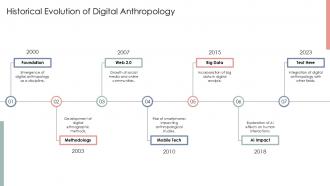
The internet served as digital anthropology's foundational catalyst, enabling anthropologists to study online communities, digital cultures, virtual identities, and cyber-social behaviors across platforms like forums, social media, and virtual worlds. This digital transformation opened unprecedented research opportunities into human interaction patterns, cultural formation processes, and identity construction in virtual spaces, ultimately delivering new methodologies for understanding contemporary human behavior and social organization.
Mobile technologies have revolutionized anthropological fieldwork by enabling real-time data collection, multimedia documentation, GPS mapping, and instant communication with participants and colleagues. These tools streamline research through digital surveys, video ethnography, and cloud-based storage, with many anthropologists finding that mobile platforms enhance participant engagement while delivering faster analysis, broader accessibility, and ultimately more comprehensive cultural insights.
Digital anthropology faces significant ethical challenges around informed consent, data sovereignty, cultural representation, algorithmic bias, and long-term data stewardship in online communities. These considerations have evolved as researchers increasingly recognize that traditional consent models often inadequately address the complexities of digital environments, with many institutions now developing more nuanced frameworks that balance research value with participant autonomy and cultural sensitivity.
Social media has revolutionized cultural analysis in digital anthropology by enabling real-time observation of cultural practices, community formations, and identity expressions across global networks. These platforms deliver unprecedented access to authentic cultural behaviors, social interactions, and emerging digital rituals, with many anthropologists finding that Facebook, Twitter, and Instagram provide richer ethnographic data than traditional fieldwork methods alone.
Digital anthropology research employs virtual ethnography, social media analysis, digital storytelling, online participant observation, and computational methods for large-scale data interpretation. These methodologies enable researchers to study human behavior across platforms like Facebook and Instagram, while organizations in healthcare, education, and marketing leverage these insights to enhance user experiences, streamline digital interactions, and ultimately deliver more culturally-informed services.
Digital anthropology addresses contemporary social issues by examining how communities navigate globalization through digital platforms, studying transnational networks, migration patterns, and cultural preservation online. Through ethnographic research of diaspora communities, social media interactions, and virtual identity formation, anthropologists analyze how migrants maintain connections across borders while adapting to new environments, ultimately delivering insights into cultural resilience and digital citizenship in an increasingly interconnected world.
Digital anthropologists analyze online communities and virtual identities through participant observation in digital spaces, ethnographic interviews with community members, content analysis of posts and interactions, network mapping of relationships, and behavioral pattern tracking across platforms. These methodologies enable researchers to understand how individuals construct digital personas, navigate virtual social hierarchies, and build meaningful connections online, with many academic institutions and tech companies finding that these insights significantly enhance user experience design and community management strategies.
Big data availability has revolutionized digital anthropology research by enabling large-scale pattern analysis, cross-platform behavioral tracking, algorithmic sentiment analysis, and real-time cultural trend identification across diverse populations. These enhanced methodologies allow researchers to combine traditional ethnographic approaches with quantitative insights, ultimately delivering deeper understanding of digital cultures while streamlining data collection processes for more comprehensive anthropological studies.
Collaboration with technologists and data scientists has transformed digital anthropology by combining ethnographic insights with advanced analytics, machine learning capabilities, and large-scale data processing methods. This interdisciplinary partnership enables anthropologists to analyze digital behaviors across platforms, uncover deeper cultural patterns through computational tools, and deliver more comprehensive insights, with many research institutions finding that these strategic combinations ultimately enhance both theoretical understanding and practical applications for businesses navigating digital transformation.
Notable case studies include Heidi Campbell's research on religious communities' digital practices, Daniel Miller's work on social media usage across different cultures, and Tom Boellstorff's ethnographic studies of virtual worlds like Second Life. These comprehensive studies demonstrate how digital anthropology reveals cultural adaptation patterns, cross-cultural communication behaviors, and identity formation in digital spaces, with organizations increasingly leveraging these insights to enhance global marketing strategies and improve cross-cultural user experiences.
Digital anthropology contributes to endangered language and culture preservation by creating digital archives, developing language learning apps, establishing virtual cultural centers, and building online documentation platforms. Through these technologies, communities can record oral traditions, share cultural practices with global audiences, and connect diaspora populations with their heritage, ultimately delivering enhanced cultural continuity and accessibility while enabling younger generations to maintain linguistic and cultural connections.
Digital anthropology will likely expand into AI ethics research, virtual reality ethnography, blockchain community studies, and metaverse cultural analysis as emerging technologies reshape human interaction. These evolving directions enable anthropologists to examine digital identity formation, algorithmic bias impacts, and virtual community behaviors, ultimately delivering deeper insights into technology's societal influence while helping organizations navigate increasingly complex digital landscapes.
-
A perfect platform for all your presentation needs. Unlimited products at an affordable price.
-
The presentations are very helpful. I am always able to get appropriate templates for the different topics related to my profession.