

Hobbies ppt summary backgrounds




Try Before you Buy Download Free Sample Product
 Impress Your
Audience
 100%
Editable
 Save Hours
of Time


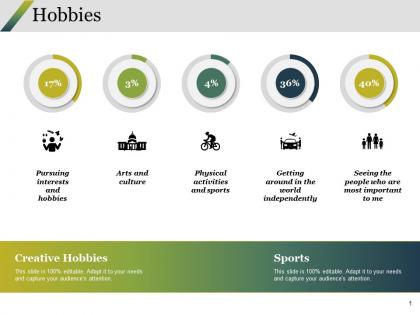
Function with equanimity with our Hobbies Ppt Summary Backgrounds. Display exceptional balance of approach.
People who downloaded this PowerPoint presentation also viewed the following :
Hobbies ppt summary backgrounds with all 5 slides:
Explain the geometry with our Hobbies Ppt Summary Backgrounds. They accurately display the layout.


FAQs for Hobbies
Top hobbies for mental well-being include gardening, reading, painting, yoga, cooking, and music playing. These activities enhance stress reduction by encouraging mindfulness, creative expression, and physical movement, while providing measurable benefits like improved focus and emotional regulation, with many individuals finding that consistent engagement ultimately delivers better sleep quality and increased resilience in daily challenges.
Finding the right hobby involves assessing personal interests, energy levels, available time, and preferred social settings, while considering whether you enjoy creative, physical, intellectual, or hands-on activities. Many people discover fulfilling hobbies by experimenting with different options, joining community groups, or taking introductory classes, ultimately finding activities that enhance well-being and provide meaningful personal growth.
Hobbies play a crucial role in enhancing creativity by providing outlets for experimentation, problem-solving, and innovative thinking outside professional constraints. These activities develop transferable skills including patience, attention to detail, and strategic planning, with many professionals finding that creative hobbies like photography, woodworking, or music ultimately enhance their workplace performance and adaptability.
Hobbies improve social connections by bringing together people with shared interests, creating natural conversation starters, and fostering collaborative activities through clubs, workshops, and online communities. These shared passions enable individuals to build meaningful relationships, develop support networks, and participate in group events, ultimately delivering stronger social bonds and enhanced sense of belonging within diverse communities.
Digital-age hobbies include virtual reality gaming, drone photography, cryptocurrency trading, 3D printing crafts, and AI-assisted content creation. These activities enhance technical skills while providing creative outlets, with many enthusiasts finding that hobbies like coding personal apps or creating digital art ultimately deliver marketable skills and potential income streams.
Technology enhances traditional hobbies through digital tools, online communities, mobile applications, smart devices, and virtual platforms that streamline learning and expand creative possibilities. Artists use tablets for digital painting, musicians leverage recording software and online collaboration, gardeners employ smart sensors for plant monitoring, and crafters access global tutorials, ultimately delivering enhanced skills, broader communities, and more efficient hobby management.
Pursuing hobbies presents both initial investment costs and potential long-term financial returns, with expenses varying from equipment, materials, training, and ongoing maintenance fees. While hobbies like photography, woodworking, or crafting require upfront capital, many enthusiasts find that strategic skill development ultimately delivers supplemental income opportunities, cost savings through DIY capabilities, and enhanced personal satisfaction.
Busy professionals can incorporate hobbies by utilizing micro-sessions during breaks, combining activities with existing routines, scheduling dedicated time blocks, and choosing portable or flexible pursuits that adapt to their schedule. Strategic time management, such as hobby integration during commutes, lunch hours, or early mornings, enables sustainable engagement while maintaining work-life balance, ultimately delivering stress reduction and enhanced creativity that benefits professional performance.
Environmentally sustainable hobbies include gardening with native plants, upcycling furniture and materials, birdwatching and wildlife photography, composting organic waste, and participating in community clean-up initiatives. These activities enhance environmental awareness while reducing resource consumption, with many conservation organizations finding that hobby-based engagement ultimately delivers measurable ecological benefits and fosters long-term environmental stewardship.
Cultural differences significantly influence hobby preferences through traditional practices, available resources, social values, and climate considerations. For example, collectivist cultures often favor group activities like community gardening or team sports, while individualistic societies embrace solo pursuits like hiking or crafting, with many finding that cultural heritage ultimately shapes recreational choices and social connections.
Outdoor hobbies deliver stress reduction, enhanced mood, and improved cognitive function through natural light exposure and physical activity, while indoor hobbies provide focused concentration, creative expression, and skill development in controlled environments. Both approaches offer distinct mental health advantages, with many individuals finding that strategic combinations of outdoor activities like hiking and indoor pursuits like reading ultimately enhance overall psychological well-being.
Someone can turn a hobby into a profitable side business by identifying market demand, developing a pricing strategy, creating an online presence through social media and e-commerce platforms, and establishing consistent quality standards. Many crafters, photographers, and fitness enthusiasts find success by starting small with local markets or online sales, gradually scaling through customer feedback and strategic reinvestment, ultimately delivering additional income streams and entrepreneurial experience.
Hobbies significantly enhance personal growth by developing new skills, building confidence, expanding creativity, and fostering self-awareness through diverse experiences. Through engaging in varied interests, individuals discover hidden talents, strengthen problem-solving abilities, and build resilience, while developing patience and discipline, ultimately delivering greater self-understanding and personal fulfillment across life areas.
People can overcome barriers to starting new hobbies by setting realistic expectations, allocating small time blocks initially, and leveraging online resources for affordable learning options. Many individuals find that joining community groups, utilizing free tutorials, and starting with minimal equipment investments help eliminate cost and time constraints, while connecting with like-minded enthusiasts provides ongoing motivation and support.
The best resources for finding local hobby groups include community centers, libraries, social platforms like Meetup and Facebook Groups, recreational facilities, and hobby-specific retailers or studios. These platforms streamline connection by offering searchable databases, event calendars, and peer recommendations, with many enthusiasts finding that local libraries and community centers provide the most accessible starting points for discovering diverse, affordable learning opportunities.
-
Designs have enough space to add content.
-
Best way of representation of the topic.