


How IoMT Is Transforming Medical Industry Powerpoint Presentation Slides IoT CD V




Try Before you Buy Download Free Sample Product
 Impress Your
 Audience
 100%
100% Editable
 Save Hours
 of Time


Here is a competently designed How IoMT is Transforming Medical Industry PPT that explores the profound impact of IoT on healthcare. This Remote Patient Monitoring module witnesses real world examples like virtual hospitals, wearable biosensors and smart inhalers that exemplify IoTs application in healthcare. Furthermore, our Virtual Hospitals presentation traverses through IoT applications such as remote patient monitoring, telemedicine and smart hospitals. Lastly, the IoT Applications in Healthcare uncover the financial aspects and examine real life case studies highlighting IoTs potential to revolutionize healthcare practices and save lives. With a specific focus on robotic surgery, wearable devices and their impact on healthcare, this module emphasizes how IoT transforms patient care and management. Gain access now to stay ahead in the evolution of healthcare.
People who downloaded this PowerPoint presentation also viewed the following :
Content of this Powerpoint Presentation
Slide 1: This slide introduces How IoMT is Transforming Medical Industry. State your company name and begin.
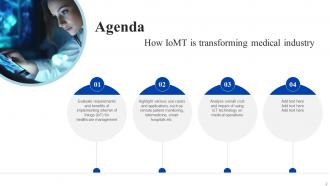
Slide 2: This slide states Agenda of the presentation.
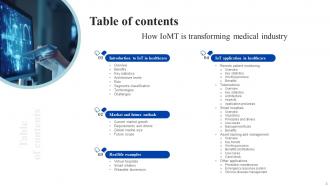
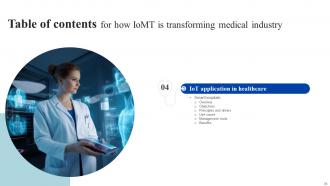
Slide 3: This slide shows Table of Content for the presentation.
Slide 4: This is another slide continuing Table of Content for the presentation.
Slide 5: This slide highlights title for topics that are to be covered next in the template.
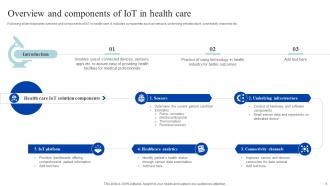
Slide 6: This slide displays Practice of using technology in health industry for better outcomes.
Slide 7: This slide represents Benefits of IoT deployment in healthcare industry.
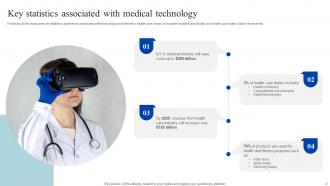
Slide 8: This slide showcases Key statistics associated with medical technology.
Slide 9: This slide shows Architecture levels of IoT in health care.
Slide 10: This slide presents Role of IoT and technology for effective medical management.
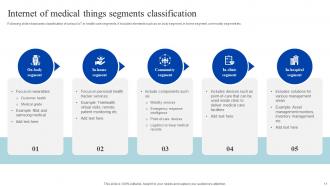
Slide 11: This slide displays Internet of medical things segments classification.
Slide 12: This slide represents Technologies used in medical care supplies and devices.
Slide 13: This slide showcases Challenges of implementing IoT in health sector.
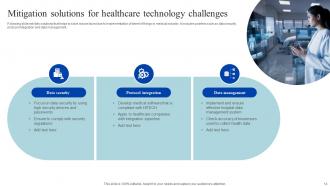
Slide 14: This slide shows Mitigation solutions for healthcare technology challenges.
Slide 15: This slide highlights title for topics that are to be covered next in the template.
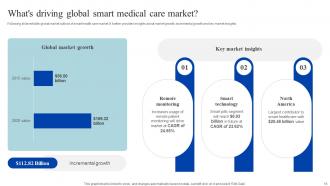
Slide 16: This slide presents What's driving global smart medical care market.
Slide 17: This slide displays Requirement and major drivers of IoT in healthcare.
Slide 18: This slide represents Global market size of IoT in health industry.
Slide 19: This slide showcases Future scope and potential of technology in healthcare.
Slide 20: This slide highlights title for topics that are to be covered next in the template.
Slide 21: This slide shows IoT in health care example: Sydney end to end virtual hospital.
Slide 22: This slide presents IoT in health care example: Smart inhalers by UK QIoT.
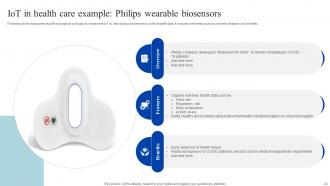
Slide 23: This slide displays IoT in health care example: Philips wearable biosensors.
Slide 24: This slide highlights title for topics that are to be covered next in the template.
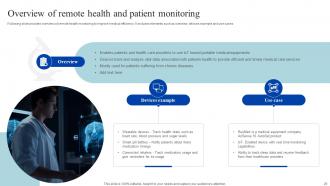
Slide 25: This slide represents Overview of remote health and patient monitoring.
Slide 26: This slide showcases Remote health monitoring key statistics and impact.
Slide 27: This slide shows Working process of remote health monitoring system.
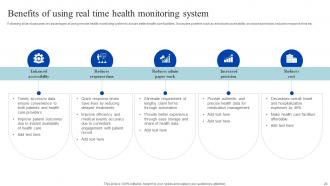
Slide 28: This slide presents Benefits of using real time health monitoring system.
Slide 29: This slide highlights title for topics that are to be covered next in the template.
Slide 30: This slide displays Overview of telemedicine solutions for medical care.
Slide 31: This slide represents Key statistics and benefits of using telemedicine.
Slide 32: This slide showcases IoT for telemedicine health services architecture.
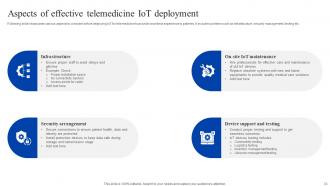
Slide 33: This slide shows Aspects of effective telemedicine IoT deployment.
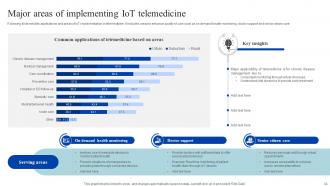
Slide 34: This slide presents Major areas of implementing IoT telemedicine.
Slide 35: This slide highlights title for topics that are to be covered next in the template.
Slide 36: This slide displays Overview of smart hospitals and healthcare facilities.
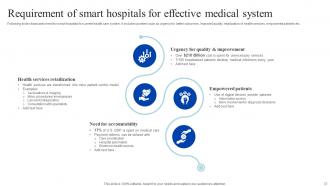
Slide 37: This slide represents Requirement of smart hospitals for effective medical system.
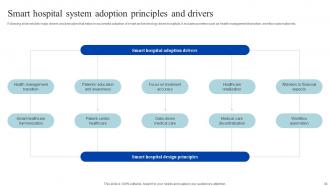
Slide 38: This slide showcases Smart hospital system adoption principles and drivers.
Slide 39: This slide shows Smart hospital use cases and impact.
Slide 40: This slide presents Smart hospital management system tools.
Slide 41: This slide displays Smart hospital benefits for effective healthcare delivery.
Slide 42: This slide highlights title for topics that are to be covered next in the template.
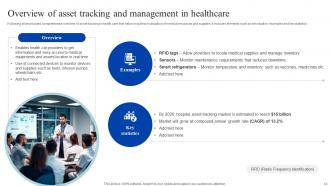
Slide 43: This slide represents Overview of asset tracking and management in healthcare.
Slide 44: This slide showcases IoT based asset management key trends.
Slide 45: This slide shows Workflow process of health care asset tracking.
Slide 46: This slide presents Benefits and features of healthcare asset tracking.
Slide 47: This slide displays Use cases for tracking medical assets.
Slide 48: This slide represents Case studies: IoT for medical asset tracking and management.
Slide 49: This slide highlights title for topics that are to be covered next in the template.
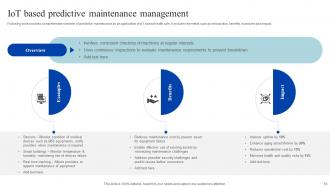
Slide 50: This slide showcases IoT based predictive maintenance management.
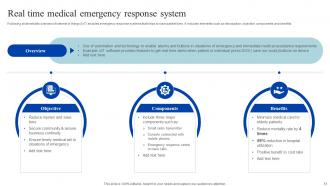
Slide 51: This slide shows Real time medical emergency response system.
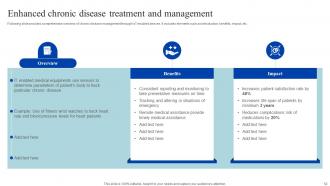
Slide 52: This slide presents Enhanced chronic disease treatment and management.
Slide 53: This slide highlights title for topics that are to be covered next in the template.
Slide 54: This slide displays Robotic surgery devices for smart medical assistance.
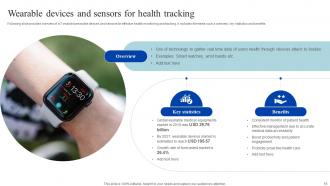
Slide 55: This slide represents Wearable devices and sensors for health tracking.
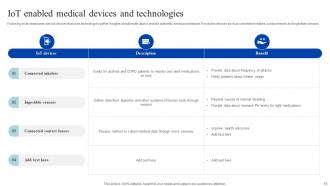
Slide 56: This slide showcases IoT enabled medical devices and technologies.
Slide 57: This slide highlights title for topics that are to be covered next in the template.
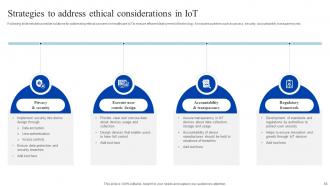
Slide 58: This slide shows Strategies to address ethical considerations in IoT.
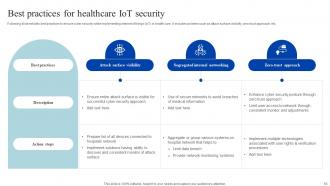
Slide 59: This slide presents Best practices for healthcare IoT security.
Slide 60: This slide highlights title for topics that are to be covered next in the template.
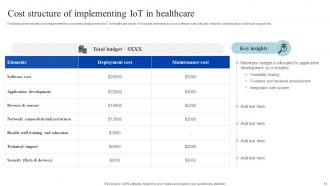
Slide 61: This slide displays Cost structure of implementing IoT in healthcare.
Slide 62: This slide highlights title for topics that are to be covered next in the template.
Slide 63: This slide represents Analyzing impact of IoT on different health care segments.
Slide 64: This slide showcases Impact of IoT technology on medical care.
Slide 65: This slide highlights title for topics that are to be covered next in the template.
Slide 66: This slide shows Healthcare analytics dashboard using IoT technology.
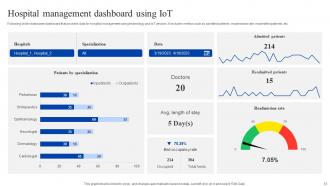
Slide 67: This slide presents Hospital management dashboard using IoT.
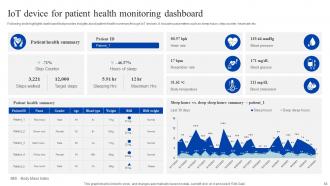
Slide 68: This slide displays IoT device for patient health monitoring dashboard.
Slide 69: This slide highlights title for topics that are to be covered next in the template.
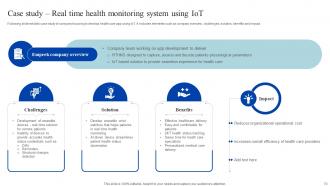
Slide 70: This slide represents Case study – Real time health monitoring system using IoT.
Slide 71: This slide showcases Case study: Saving lives with the Internet of Things (IoT).
Slide 72: This slide shows CardiLink: Delivering lifesaving connectivity case study.
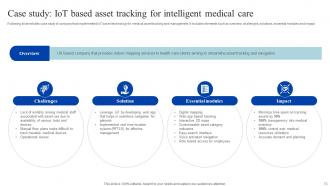
Slide 73: This slide presents Case study: IoT based asset tracking for intelligent medical care.
Slide 74: This slide contains all the icons used in this presentation.
Slide 75: This slide is titled as Additional Slides for moving forward.
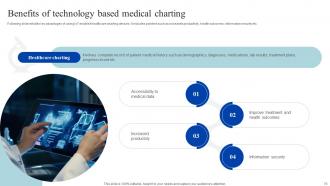
Slide 76: This slide displays Benefits of technology based medical charting.
Slide 77: This slide represents Adoption of IoT technology for transforming healthcare sector.
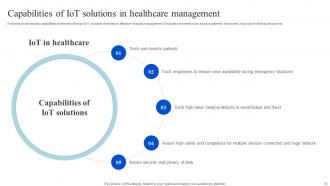
Slide 78: This slide showcases Capabilities of IoT solutions in healthcare management.
Slide 79: This is a Timeline slide. Show data related to time intervals here.
Slide 80: This slide depicts Venn diagram with text boxes.
Slide 81: This is a Thank You slide with address, contact numbers and email address.
How IoMT Is Transforming Medical Industry Powerpoint Presentation Slides IoT CD V with all 89 slides:
Use our How IoMT Is Transforming Medical Industry Powerpoint Presentation Slides IoT CD V to effectively help you save your valuable time. They are readymade to fit into any presentation structure.







































FAQs for How IoMT Is Transforming Medical Industry Powerpoint Presentation Slides
So IoMT basically has four main pieces - wearables and medical sensors, cloud storage for all that data, mobile apps, and analytics software. You've definitely seen some of this stuff already. Like those Apple Watches tracking heart rates or glucose monitors that connect to your phone. Pretty cool how it all connects, honestly. When everything works together, doctors can monitor patients from anywhere and people get instant feedback about their health. The data actually helps make better treatment decisions too. If you're thinking about getting into this space, I'd figure out which part solves your biggest headache first.
So IoMT gives you constant patient data that regular appointments just can't match. Wearables and smart sensors monitor vitals, medication habits, symptoms - all day, every day. No more wondering what went wrong between visits, which honestly happens way too often. Early detection becomes way easier when you're seeing everything in real-time. You can tweak treatments faster and actually understand how patients behave at home. Better outcomes because you're not flying blind anymore. Oh, and start with patients who really need that continuous monitoring - don't just throw devices at everyone.
Honestly, data security can make or break your whole IoMT setup. Patient info is flowing everywhere - between devices, networks, you name it. A breach would be a nightmare, especially with HIPAA breathing down your neck (those penalties are brutal). You'll want end-to-end encryption and solid authentication from the start. Regular security audits too. I've seen too many places try to bolt security on later and it never works well. Build everything around a strong cybersecurity framework first, then add your devices and systems on top of that foundation.
Honestly, start with a solid risk assessment of all your IoMT devices - don't try to wing it. Build compliance right into your deployment from the beginning because retrofitting later is absolutely brutal (learned that one the hard way). Data encryption and access controls are non-negotiable with HIPAA. Document everything, train your team properly on device protocols, and loop in legal early since regs keep shifting. Oh, and set up quarterly reviews to spot problems before they blow up. Trust me, being proactive here saves major headaches down the road.
Oh man, IoMT adoption is a real pain honestly. Integration with old systems is nightmare fuel - nothing talks to each other properly. Privacy stuff freaks everyone out too, which I get. Staff hate learning new tech when they're already buried in work. Implementation messes up workflows for weeks. Maintenance costs add up fast. People resist change hard - they're used to their routines, you know? Start with small pilots though. Get your team picking the tech with you so they don't feel like you're just dumping change on them. Makes a huge difference.
So IoMT devices are basically like turning patients into walking health monitors. Smartwatches track heart stuff, glucose monitors beam data straight to you, blood pressure cuffs upload automatically - it's actually pretty neat tech. You get this constant flow of patient data without them having to come in all the time. Honestly beats the old days of guessing how they're doing between visits. The real win is catching problems early and tweaking treatments remotely. I'd start with your chronic patients or the ones who just got discharged - they're usually the best candidates for this kind of monitoring.
So IoMT basically helps you catch health issues before they blow up into expensive ER visits. Instead of that whole "wait until something's broken" approach, you're monitoring people remotely and spotting red flags early. Yeah, there's definitely upfront costs for all the devices and tech setup - that part's not cheap. But here's the thing: your staff can actually focus on patients who need help most instead of just winging it. Most places see their money back within like 18-24 months because you're avoiding so many readmissions and running things way more efficiently.
So basically these IoMT devices are like turning your body into this crazy data collection system. Your wearables and implants track everything - heart rate, blood sugar, how you absorb meds, sleep patterns, all that stuff. Instead of doctors just guessing what'll work, they can see what actually helps YOUR specific body. It's pretty wild honestly. The tricky part is making sure whatever device you get actually talks to your doctor's computer system (some are weirdly incompatible). But when it works? Your treatment gets adjusted based on real data instead of just hoping for the best.
So basically these medical gadgets use sensors and stuff to track your health data, then send it to your doctor's systems. They encrypt everything when it moves around - though tbh the whole security thing is still kinda messy and changing fast. Your healthcare team has to follow HIPAA rules and use access controls to keep things private. But here's the thing - you really need to know what your devices are actually collecting. I'd definitely check those privacy settings and bug your doctor about how they handle your data before you hook up anything new to their system.
So the big things happening with IoMT right now - AI is getting crazy good at predicting health issues before they happen. 5G is finally making real-time remote monitoring actually work. Edge computing means devices can process stuff instantly instead of waiting for the cloud. Wearables are honestly blowing my mind lately, like glucose monitors that automatically adjust insulin pumps. There's this huge push to make everything talk to each other properly (finally!), and blockchain's becoming the go-to for keeping patient data locked down. Regulations are scrambling to catch up. If you're diving into any IoMT stuff, just make sure whatever you pick plays nice with existing hospital tech and doesn't suck at security.
Honestly, IoMT devices are pretty much useless if they can't talk to each other. You need stuff that works with standards like HL7 FHIR - otherwise you're stuck with data sitting in separate systems while nurses manually copy numbers between platforms. Super frustrating. Real-time monitoring and coordinated care only happen when everything connects smoothly. I learned this the hard way watching a hospital struggle with three different patient monitors that couldn't share info. When you're picking systems, definitely check if they'll play nice with what you already have. Trust me, it's worth the extra research upfront.
So IoMT is basically changing everything for chronic disease management. Connected devices like glucose monitors and smart inhalers let you track patients 24/7 - their vitals, whether they're taking meds, symptoms, all of it. The cool part? You catch problems before they blow up into ER visits. All that data goes straight to providers so they can jump in early and tweak treatments. Patients actually get more involved too when they can watch their numbers improve (which honestly makes sense). I'd start by figuring out which chronic patients would get the most out of remote monitoring first.
So these IoMT things can basically text you when it's pill time and actually track if you took them. Smart pill bottles, wearables, even pills with tiny sensors - honestly sounds like something from Black Mirror but it's real. The cool part? It cuts out all the "wait, did I take my meds this morning?" confusion we all have. Your doctor gets alerts if you're skipping doses too. Some systems even learn your schedule and adjust reminders around it. I'd start with asking about smart pill dispensers - they're way less intimidating than sensor pills.
Honestly, wearable IoMT devices are pretty cool for continuous monitoring - you catch issues early instead of waiting for appointments. Real-time data means way better personalized care for patients too. But the privacy stuff keeps me up at night sometimes. All that health data creates massive security headaches, and half these consumer devices aren't even medical-grade accurate. My advice? Stick with FDA-approved ones when you can and don't skip the encryption protocols. The tech's amazing but you've got to be smart about rolling it out.
So your IoMT devices basically go from just collecting data to actually making smart predictions. Like, instead of only tracking heart rate, they'll warn you before someone has a cardiac event or catch infections super early. The AI crunches patterns from tons of wearables and sensors - stuff we'd never spot ourselves. You get real-time alerts, personalized treatment plans, even automatic med adjustments. Honestly the predictive stuff is getting scary good. I'd say start with something simple like remote monitoring first, then see how much it actually helps your patients before going all-in.
-
Exclusive and extensive collection of templates. Really helped me create a professional presentation in just no time.
-
SlideTeam’s pool of 2Million+ PPTs has really benefited my team, everyone from the IT department to HR. We are lucky to have crossed ways with them.