

How to find select and manage influencers for social media marketing powerpoint presentation slides





Try Before you Buy Download Free Sample Product
 Impress Your
Audience
 100%
Editable
 Save Hours
of Time


Our How To Find Select And Manage Influencers For Social Media Marketing Powerpoint Presentation Slides are topically designed to provide an attractive backdrop to any subject. Use them to look like a presentation pro.
People who downloaded this PowerPoint presentation also viewed the following :
Content of this Powerpoint Presentation
Slide 1: This slide introduces How To Find, Select & Manage Influencers For Social Media Marketing. State your Company name and begin.
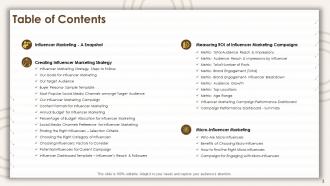
Slide 2: This slide displays Table of Contents.
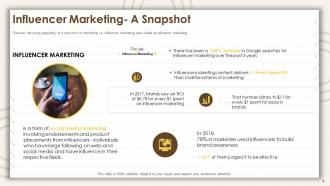
Slide 3: This slide presents Influencer Marketing - A Snapshot
Slide 4: This slide represents Influencer Marketing- A Snapshot. Discover the rising popularity of a new form of marketing i.e. influencer marketing also called as influence marketing.
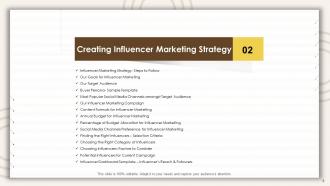
Slide 5: This slide discusses about Creating Influencer Marketing Strategy
Slide 6: This slide represents Influencer Marketing Strategy- Steps to Follow
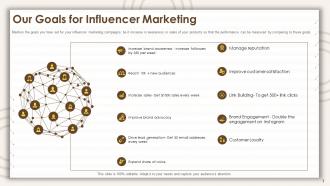
Slide 7: This slide states Our Goals for Influencer Marketing. Mention the goals you have set for your influencer marketing campaigns, be it increase in awareness or sales of your products so that the performance can be measured by comparing to these goals.
Slide 8: This slide shows Our Target Audience.
Slide 9: This slide gives brief description of student Hannah.
Slide 10: This slide showcases Most Popular Social Media Channels amongst Target Audience.
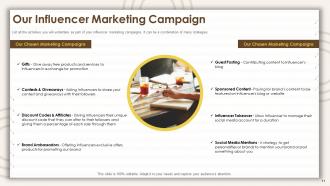
Slide 11: This slide displays Our Influencer Marketing Campaign. List all the activities you will undertake as part of your influencer marketing campaigns. It can be a combination of many strategies.
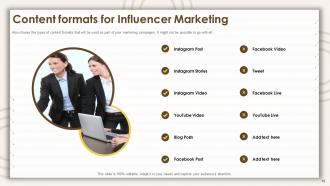
Slide 12: This slide displays Content formats for Influencer Marketing.
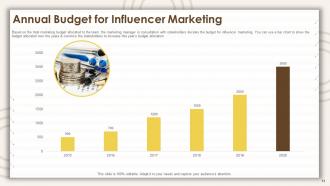
Slide 13: This slide showcases Annual Budget for Influencer Marketing.
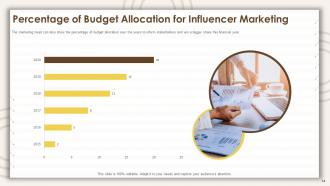
Slide 14: This slide showcases Percentage of Budget Allocation for Influencer Marketing.
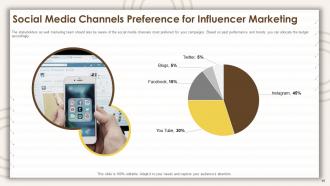
Slide 15: This slide presents Social Media Channels Preference for Influencer Marketing.
Slide 16: This slide shows Finding the Right Influencers – Selection Criteria
Slide 17: This slide tells about Choosing the Right Category of Influencers.
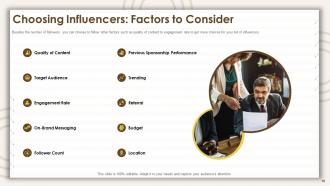
Slide 18: This slide shows Choosing Influencers: Factors to Consider.
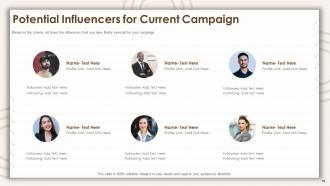
Slide 19: This slide presents Potential Influencers for Current Campaign.
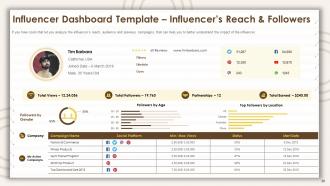
Slide 20: This slide presents Influencer Dashboard Template – Influencer’s Reach & Followers
Slide 21: This slide showcases Influencer Marketing - A Snapshot
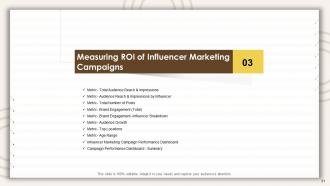
Slide 22: This slide displays Metric- Total Audience Reach & Impressions.
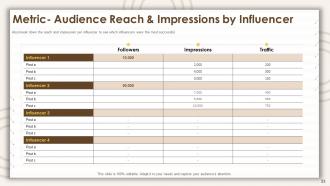
Slide 23: This slide shows Metric- Audience Reach & Impressions by Influencer.
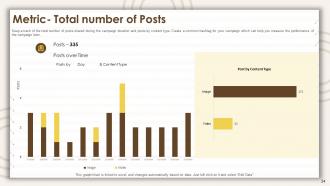
Slide 24: This slide displays Metric- Total number of Posts
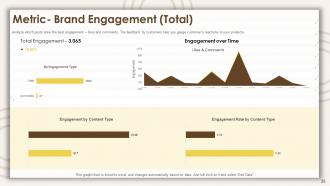
Slide 25: This slide showcases Metric- Brand Engagement.
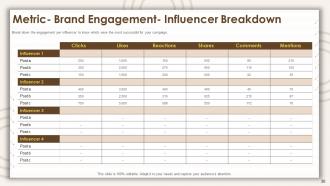
Slide 26: This slide shows Metric- Brand Engagement- Influencer Breakdown. Break down the engagement per influencer to know which were the most successful for your campaign.
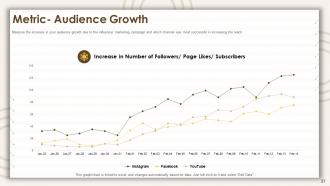
Slide 27: This slide displays Metric- Audience Growth
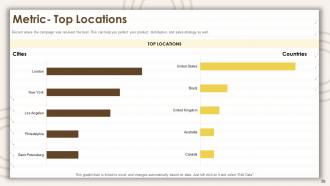
Slide 28: This slide displays Metric- Top Locations. Record where the campaign was received the best. This can help you perfect your product, distribution, and sales strategy as well.
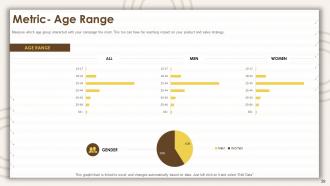
Slide 29: This slide shows Metric- Age Range. Measure which age group interacted with your campaign the most. This too can have far reaching impact on your product and sales strategy.
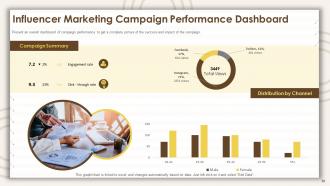
Slide 30: This slide displays Influencer Marketing Campaign Performance Dashboard.
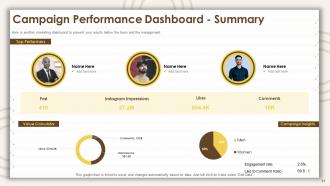
Slide 31: This slide showcases Campaign Performance Dashboard - Summary
Slide 32: This slide showcases Influencer Marketing - A Snapshot
Slide 33: This slide gives introduction about Micro-Influencers
Slide 34: This slide shows Benefits of Choosing Micro-Influencers.
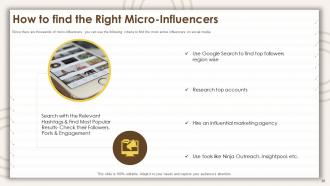
Slide 35: This slide displays How to find the Right Micro-Influencers.
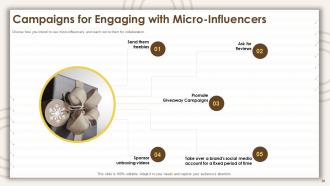
Slide 36: This slide shows Campaigns for Engaging with Micro-Influencers.
Slide 37: This is How to Find, Select & Manage Influencers for Social Media Marketing Icons Slide
Slide 38: This slide displays Influencer Marketing - A Snapshot Additional Slides
Slide 39: This slide shows Bar Chart for product comparison.
Slide 40: This is Financial slide with Minimum, Medium and Maximum.
Slide 41: This slide shows Comparison between male and female users.
Slide 42: This slide represents Goal.
Slide 43: This slide is titled as Important Notes.
Slide 44: This slide displays Location.
Slide 45: This slide displays Magnifying Glass for highlighting important content.
Slide 46: This slide displays Mind Map.
Slide 47: This is Lego slide.
Slide 48: This is Venn slide.
Slide 49: This is Puzzle slide.
Slide 50: This slide shows Idea Generation for representing ideas.
Slide 51: This is Thank You slide with Contact details.
How to find select and manage influencers for social media marketing powerpoint presentation slides with all 51 slides:
Use our How To Find Select And Manage Influencers For Social Media Marketing Powerpoint Presentation Slides to effectively help you save your valuable time. They are readymade to fit into any presentation structure.












FAQs for How to find select and manage influencers for social media marketing
Influencer marketing offers brands several key benefits, including increased brand awareness, enhanced credibility, and targeted reach. By partnering with influencers who resonate with their target audience, brands can tap into established communities, generating authentic engagement and driving conversions. With many industries finding success, influencer marketing delivers a cost-effective way to build brand loyalty and expand market share.
Identifying the right influencers for your target audience involves analyzing their audience demographics, engagement rates, and content alignment with your brand values. Through meticulous research, you can pinpoint influencers whose followers closely resemble your ideal customer profile, ensuring maximum reach and impact. This strategic approach not only enhances brand visibility but also fosters authentic connections and drives conversions, ultimately contributing to a successful influencer marketing campaign.
Influencer marketing success hinges on several key metrics, including engagement rate, reach, website traffic, and conversion rates. These metrics, when analyzed together, paint a clear picture of the campaign's effectiveness in driving brand awareness, audience interaction, and ultimately, sales. For example, a high engagement rate on influencer-generated content signals strong audience interest, while a spike in website traffic from influencer links demonstrates successful lead generation.
Micro-influencers can significantly impact brand visibility and engagement by leveraging their niche audiences and authentic connections. They amplify brand reach through targeted content shared with highly engaged followers, often within specific industries like fashion, travel, or technology. This targeted approach drives higher click-through rates and conversion rates compared to broader campaigns, ultimately delivering increased brand awareness and customer acquisition.
Working with influencers presents potential pitfalls like inauthentic content, audience mismatch, and lack of transparency, which can harm brand image and ROI. To mitigate these risks, brands should carefully vet influencers for alignment with their values and target audience, establish clear campaign guidelines and deliverables, and prioritize authentic engagement over vanity metrics, ultimately fostering trust and building genuine connections with consumers.
Influencer marketing strategies differ across social media platforms due to their unique audiences and content formats. On Instagram, visual storytelling through high-quality photos and videos reigns supreme, while TikTok thrives on short-form, engaging videos that leverage trends. Platforms like LinkedIn focus on professional networking and thought leadership, making B2B influencer collaborations particularly effective. Ultimately, tailoring content and influencer selection to each platform's strengths delivers the most impactful results.
Influencer marketing presents both opportunities and legal challenges for brands. Key considerations include ensuring influencers disclose their relationship with your brand transparently, adhering to advertising regulations like FTC guidelines, and obtaining proper permissions for using copyrighted material. These legal safeguards protect both brands and influencers, minimizing risks while fostering trust with consumers. Many brands are finding success by proactively addressing these concerns, ultimately building stronger, more ethical influencer campaigns.
Maintaining authenticity in influencer marketing involves carefully selecting influencers whose values align with the brand's, ensuring transparency in sponsored content, and encouraging genuine engagement. Brands can achieve this by collaborating with micro-influencers who have niche audiences and strong credibility within their communities, clearly disclosing sponsored partnerships, and allowing influencers creative freedom to share their authentic experiences with the product or service. Ultimately, this approach fosters trust with consumers and drives long-term brand loyalty.
Storytelling is fundamental to successful influencer marketing campaigns, as it connects with audiences on an emotional level. It allows brands to weave narratives that resonate with consumers, showcasing products or services within relatable scenarios, ultimately driving brand awareness and purchase intent. Many brands find that integrating influencer-created stories about their products, rather than just promotional content, fosters authenticity and trust, leading to increased engagement and conversions.
Influencer marketing strategies must adapt to cultural nuances across global markets, as what resonates in one region may not translate well in another. Cultural differences influence everything from content style and tone to the type of influencers considered credible, with some cultures valuing humor and relatability while others prioritize authority and expertise. Brands must conduct thorough research to understand local customs, values, and communication styles, partnering with influencers who authentically connect with the target audience within that specific cultural context.
Influencers should adhere to transparency, authenticity, and disclosure guidelines when promoting products. These ethical practices involve clearly disclosing sponsored content, being honest about their experiences with products, and avoiding misleading or exaggerated claims. With many consumers seeking genuine recommendations, influencers who prioritize ethics build trust and credibility, ultimately leading to stronger audience engagement and long-term success.
Brands can leverage user-generated content from influencers to boost engagement by showcasing authentic experiences and fostering trust. Influencers create content that resonates with their followers, encouraging interaction through likes, comments, and shares, while also driving traffic to brand websites or social media pages. This authentic approach, particularly in sectors like fashion, travel, and beauty, can significantly increase brand awareness and customer loyalty.
Innovative strategies for integrating influencer marketing include identifying micro-influencers with niche audiences, leveraging user-generated content campaigns, and incorporating influencer endorsements into existing content calendars. These strategies enhance brand authenticity, expand reach to targeted demographics, and ultimately drive increased engagement and conversions, with many brands finding that influencer collaborations deliver a significant return on investment.
Influencer marketing can be adapted for B2B companies by targeting industry thought leaders and experts who have a strong following within specific niches. These influencers can amplify brand messaging, generate leads, and build credibility within the target market through insightful content, webinars, and product reviews, ultimately driving awareness and accelerating sales cycles.
Influencer marketing is evolving rapidly, with key trends shaping its future. These include the rise of micro-influencers, who boast highly engaged niche audiences, a growing emphasis on authenticity and transparency, and the integration of artificial intelligence for campaign optimization and influencer discovery. Many brands are finding success with micro-influencers, as their content often resonates more authentically with audiences, leading to higher engagement and conversion rates.
-
Great experience, I would definitely use your services further.
-
Informative presentations that are easily editable.
-
Easily Editable.