


Hr 100 Day Plan Powerpoint Ppt Template Bundles





Try Before you Buy Download Free Sample Product
 Impress Your
 Audience
 100%
100% Editable
 Save Hours
 of Time


Our Hr 100 Day Plan Powerpoint Ppt Template Bundles are topically designed to provide an attractive backdrop to any subject. Use them to look like a presentation pro.
People who downloaded this PowerPoint presentation also viewed the following :
Hr 100 Day Plan Powerpoint Ppt Template Bundles with all 22 slides:
Use our Hr 100 Day Plan Powerpoint Ppt Template Bundles to effectively help you save your valuable time. They are readymade to fit into any presentation structure.

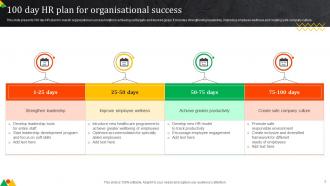
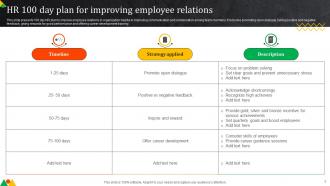
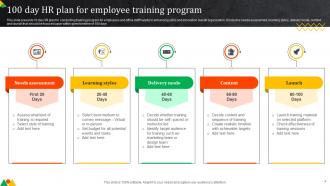
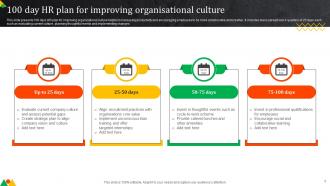
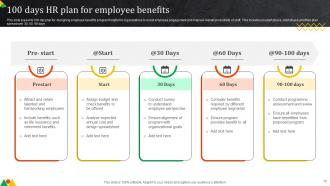
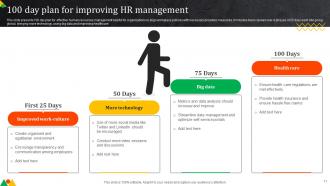
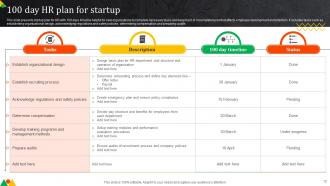
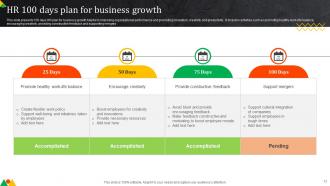







FAQs for Hr 100 Day Plan Powerpoint
Key objectives in an HR 100 Day Plan include assessing current workforce capabilities, establishing stakeholder relationships, reviewing compensation structures, evaluating performance management systems, and identifying talent gaps. These strategic priorities enable HR leaders to streamline operations, enhance employee engagement, and optimize resource allocation, with many organizations finding that comprehensive early assessment ultimately delivers improved retention rates and competitive advantage.
An HR 100 Day Plan aligns with business strategy by establishing key performance indicators that directly support organizational objectives, mapping talent acquisition priorities to growth targets, and implementing employee development initiatives that build capabilities for strategic success. Through strategic workforce planning, performance management alignment, and culture-building activities, HR leaders can streamline operations, enhance employee engagement, and deliver measurable outcomes that accelerate business goals while positioning the organization for sustained competitive advantage.
Effective assessment methods include conducting comprehensive employee surveys, reviewing existing HR policies and procedures, analyzing workforce data and metrics, interviewing key stakeholders across departments, and benchmarking against industry standards. These approaches enable new HR leaders to identify gaps, streamline processes, and prioritize strategic initiatives, with many organizations finding that this systematic evaluation delivers improved employee satisfaction and operational efficiency.
HR professionals should prioritize initiatives by focusing on immediate operational needs, relationship building, and strategic workforce challenges, typically addressing compliance gaps, key stakeholder introductions, and critical talent issues first. This approach enables seamless integration while establishing credibility, with many organizations finding that early wins in employee engagement and process improvements ultimately deliver enhanced operational efficiency and stronger organizational culture.
Employee feedback serves as a critical foundation for HR 100 Day Plans, enabling leaders to identify workplace challenges, assess current culture, and prioritize strategic initiatives based on actual employee needs. Through surveys, focus groups, and one-on-one conversations, HR professionals can streamline their approach by addressing retention concerns, enhancing communication gaps, and ultimately delivering targeted solutions that improve employee satisfaction and organizational effectiveness.
Data analytics informs HR 100 Day Plan strategies by analyzing employee turnover patterns, performance metrics, engagement scores, compensation benchmarks, and recruitment effectiveness data. Through workforce analytics platforms, HR leaders can identify talent gaps, predict retention risks, and optimize resource allocation, while benchmarking against industry standards, ultimately delivering data-driven decisions that enhance organizational performance.
Effective approaches include structured orientation programs, mentorship assignments, regular check-ins with supervisors, skills-based training modules, and cultural integration activities. These strategies streamline the transition by establishing clear expectations, building meaningful connections, and accelerating productivity, with many organizations finding that comprehensive onboarding reduces turnover while enhancing employee engagement and long-term retention.
The HR 100 Day Plan addresses immediate staffing challenges by conducting comprehensive workforce audits, identifying critical skill gaps, implementing accelerated recruitment processes, and establishing temporary staffing solutions. Through strategic talent mapping and streamlined hiring workflows, organizations can reduce time-to-fill metrics, enhance candidate experiences, and secure essential talent, while building sustainable pipelines that ultimately deliver operational continuity and competitive advantage.
Strategies include transparent communication initiatives, employee recognition programs, cross-departmental collaboration opportunities, mentorship frameworks, and inclusive decision-making processes. These approaches enhance engagement by building trust, encouraging knowledge sharing, and creating psychological safety, with many organizations finding that early cultural investments significantly improve retention rates, boost productivity, and establish competitive advantage in talent acquisition.
HR leaders should communicate their vision through structured presentations, one-on-one meetings with key executives, team briefings, and written documentation that clearly outlines objectives, timelines, and expected outcomes. This multi-channel approach enables transparency and buy-in across all levels, with many organizations finding that regular progress updates and feedback sessions ultimately enhance stakeholder engagement and strategic alignment.
Training initiatives should prioritize onboarding optimization, leadership development programs, skills gap assessments, compliance training updates, and digital literacy enhancement. These programs streamline employee integration, strengthen management capabilities, and ensure regulatory adherence, while many organizations finding that strategic early training investments ultimately deliver improved retention rates, enhanced productivity, and stronger competitive positioning.
HR 100 Day Plan effectiveness can be measured through key performance indicators like employee engagement scores, retention rates, recruitment metrics, policy implementation timelines, and stakeholder feedback surveys. These measurements enable HR leaders to track progress against established goals, identify areas requiring adjustment, and demonstrate tangible value to organizational leadership, ultimately ensuring strategic alignment and continuous improvement.
HR technology changes in the first 100 days should focus on applicant tracking systems, employee onboarding platforms, performance management tools, HR analytics software, and self-service portals. These technologies streamline recruitment processes, automate administrative tasks, and enhance employee experiences, with many organizations finding that strategic HR tech implementation delivers faster hiring, improved data visibility, and significantly reduced manual workloads.
Compliance and risk management integration involves conducting comprehensive policy audits, establishing regulatory monitoring systems, implementing risk assessment frameworks, and creating incident response protocols. These strategic measures streamline HR operations by identifying vulnerabilities, ensuring legal adherence, and minimizing operational disruptions, with many organizations finding that proactive compliance integration ultimately delivers enhanced workplace safety and reduced liability exposure.
**INPUT**: What strategies can be employed to engage and retain top talent within the first 100 days? **OUTPUT**: Effective talent engagement strategies include comprehensive onboarding programs, mentorship pairings, clear performance expectations, regular feedback sessions, and strategic project assignments that showcase company culture. These approaches streamline integration by providing structured support, accelerating productivity, and building meaningful connections, with many organizations finding that early engagement investments ultimately deliver higher retention rates and enhanced employee satisfaction.
-
A big thanks to SlideTeam! An incredible and diverse library of templates helped me with my business project presentation.
-
Best way of representation of the topic.