


Hr development roadmap presentation design




Try Before you Buy Download Free Sample Product
 Impress Your
 Audience
 100%
100% Editable
 Save Hours
 of Time


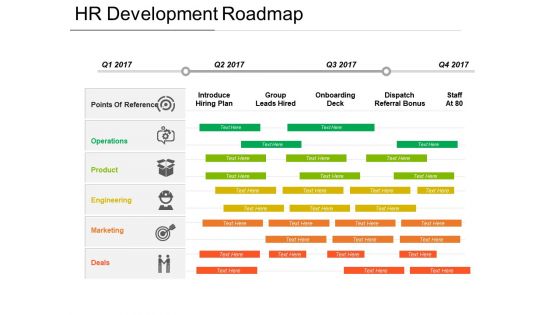
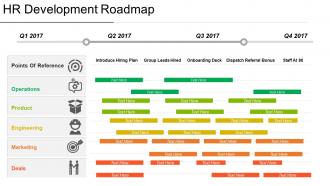
HR development roadmap presentation design is a self-expressive, thoroughly editable PPT design that can be used by professionals, educators as well as students. This innovative human resource roadmap PPT PowerPoint model is crafted such that it fulfills all your need for a professional HR presentation. In fact, this human resource plan roadmap PPT template is a perfect layout for explaining the human resource plans and strategies to the audience in a very easy manner. The use of colored graphics further makes it very easy to comprehend presentation example. Presenting the quarterly spread of one year along with the human resource timeline roadmap, lets the HR manager present the time taken by each of the specific elements of human resource department to fulfill its course of action. Not only this one can modify this roadmap timeline milestones PPT presentation infographic and use it for all the marketing and other business presentations too. Get it first hand from our Hr Development Roadmap Presentation Design. Authenticity of the gen is guaranteed.
People who downloaded this PowerPoint presentation also viewed the following :
Hr development roadmap presentation design with all 5 slides:
Investigate core elements with our Hr Development Roadmap Presentation Design. Derive information about the essentials.

FAQs for Hr development
Key components include skills gap analysis, leadership development programs, succession planning, performance management systems, and employee engagement initiatives. These elements work together by identifying development needs, creating targeted training pathways, and establishing clear career progression routes, with many organizations finding that strategic HR roadmaps enhance talent retention while delivering improved productivity and competitive advantage.
Organizations align HR development goals with business objectives by conducting strategic workforce planning, mapping skill gaps to business needs, creating competency frameworks tied to performance metrics, and establishing cross-functional collaboration between HR and department leaders. This strategic combination enables companies to develop talent that directly supports growth initiatives, enhances operational efficiency, and delivers competitive advantage, with many organizations finding that aligned development programs significantly improve employee engagement and business outcomes.
Talent management serves as the strategic foundation for HR development roadmaps by identifying skill gaps, succession planning needs, performance optimization opportunities, and leadership development pathways. Through comprehensive talent assessments and strategic workforce planning, organizations can align their development initiatives with business objectives, ultimately creating targeted learning programs that enhance employee capabilities, reduce turnover, and deliver sustainable competitive advantage.
Technology and automation enhance HR development initiatives by streamlining learning management systems, personalizing training pathways, and automating performance tracking and feedback processes. Through AI-powered platforms and digital tools, organizations deliver targeted skill development, reduce administrative overhead, and accelerate employee growth cycles, with many companies finding that automated systems ultimately improve engagement while enabling HR teams to focus on strategic talent development.
Organizations should track employee engagement scores, retention rates, time-to-productivity for new hires, internal promotion percentages, and training ROI metrics to measure HR development effectiveness. These measurements enable companies to assess talent pipeline strength, skill development impact, and leadership readiness, with many finding that comprehensive tracking ultimately delivers improved performance outcomes and competitive talent advantages.
A diverse workforce enriches HR development roadmaps by highlighting varied learning preferences, career pathways, cultural perspectives, and skill development needs across different demographics. This diversity drives organizations to create more inclusive training programs, flexible advancement opportunities, and culturally sensitive leadership development initiatives, ultimately delivering broader talent retention, enhanced innovation, and competitive advantage in increasingly global markets.
Best practices for fostering continuous learning include establishing mentorship programs, implementing regular skills assessments, creating knowledge-sharing platforms, offering flexible learning budgets, and integrating development goals into performance reviews. These approaches streamline talent development by encouraging peer collaboration, identifying skill gaps early, and personalizing growth paths, with many organizations finding that strategic learning cultures ultimately deliver higher employee retention, enhanced innovation, and sustained competitive advantage in increasingly dynamic markets.
HR teams can identify skill gaps through performance assessments, employee surveys, competency mapping, skills audits, and manager feedback sessions. These approaches enable organizations to analyze current capabilities against future needs, particularly in rapidly evolving sectors like technology and healthcare, ultimately delivering targeted training programs and strategic workforce development that enhances competitive advantage.
Mentorship and coaching can be integrated through structured pairing programs, skill-based coaching modules, leadership development tracks, peer mentoring circles, and formal feedback systems. These approaches enhance employee engagement, accelerate skill development, and improve retention rates, with many organizations finding that strategic mentorship programs ultimately deliver stronger internal talent pipelines and competitive advantage.
Organizations may face challenges including limited budgets, employee resistance to change, lack of leadership support, skills gaps in training delivery, and difficulty measuring ROI on development programs. These obstacles can be addressed through strategic planning, phased implementation approaches, and clear communication strategies, with many companies finding that early stakeholder engagement and pilot programs help minimize resistance while demonstrating tangible value.
Organizations ensure HR development roadmap adaptability by implementing flexible skill frameworks, conducting regular market analysis, establishing continuous feedback loops, and building modular training programs that can pivot quickly. Through agile workforce planning and strategic partnerships with learning providers, companies maintain competitive talent capabilities while responding to industry shifts, ultimately delivering enhanced organizational resilience and sustained competitive advantage.
Employee feedback can be incorporated through regular surveys, performance reviews, focus groups, exit interviews, and one-on-one discussions with managers. This strategic combination enables HR teams to identify skill gaps, prioritize training initiatives, and align development programs with actual employee needs, while many organizations finding that feedback-driven approaches ultimately deliver higher engagement rates and more targeted professional growth opportunities.
Leadership engagement serves as the foundation for HR development roadmap success, providing strategic direction, resource allocation, cultural reinforcement, and organizational alignment necessary for sustainable transformation. Through active participation and visible commitment, leaders enable faster implementation, enhanced employee buy-in, and measurable outcomes, with many organizations finding that executive sponsorship ultimately delivers competitive advantage and accelerated talent development across all business units.
Organizations can utilize data analytics to inform HR development decisions by analyzing employee performance metrics, skills gap assessments, engagement surveys, training effectiveness, and career progression patterns. Through predictive analytics, companies streamline talent acquisition, enhance retention strategies, and optimize learning programs, with many organizations finding that data-driven approaches ultimately deliver improved workforce planning and competitive advantage in talent management.
Compliance training ensures organizations meet legal requirements, reduce liability risks, maintain ethical standards, and protect workplace culture within HR development frameworks. Through structured programs covering harassment prevention, safety protocols, and regulatory updates, companies minimize legal exposure, enhance employee confidence, and create safer work environments, with many finding that consistent compliance training ultimately delivers reduced turnover and stronger organizational reputation.
-
Really like the color and design of the presentation.
-
Nice and innovative design.