

HR Transformation Mini Project Charter Powerpoint PPT Template Bundles





Try Before you Buy Download Free Sample Product
 Impress Your
 Audience
 100%
100% Editable
 Save Hours
 of Time


Our HR Transformation Mini Project Charter Powerpoint PPT Template Bundles are topically designed to provide an attractive backdrop to any subject. Use them to look like a presentation pro.
People who downloaded this PowerPoint presentation also viewed the following :
HR Transformation Mini Project Charter Powerpoint PPT Template Bundles with all 20 slides:
Use our HR Transformation Mini Project Charter Powerpoint PPT Template Bundles to effectively help you save your valuable time. They are readymade to fit into any presentation structure.

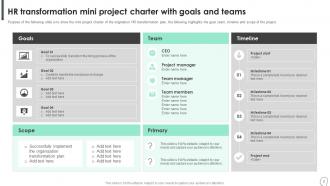
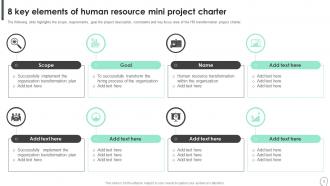
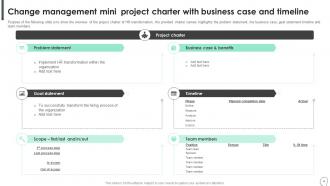
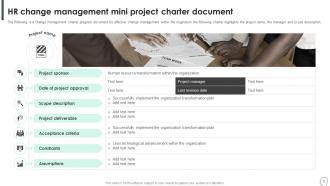








FAQs for HR Transformation Mini Project Charter Powerpoint
Key drivers behind HR transformation include digital automation, evolving workforce expectations, remote work demands, data-driven decision making, and competitive talent acquisition challenges. These factors compel organizations to streamline processes, enhance employee experiences, and leverage analytics for strategic workforce planning, with many companies finding that modernized HR systems ultimately deliver improved operational efficiency and stronger talent retention in an increasingly dynamic business environment.
Technology and automation streamline HR processes by digitizing recruitment workflows, automating payroll and benefits administration, and implementing self-service portals for employee requests. Through AI-powered applicant tracking systems and automated onboarding platforms, organizations reduce administrative overhead, accelerate hiring cycles, and enhance employee experiences, with many companies finding that strategic automation delivers significant cost savings while enabling HR teams to focus on strategic initiatives.
Data analytics enhances HR decision-making by providing insights into employee performance, predicting turnover risks, optimizing recruitment strategies, and measuring engagement levels across organizations. Through predictive modeling and workforce analytics, companies streamline talent acquisition, reduce hiring costs, and improve retention rates, with many enterprises finding that data-driven approaches deliver significantly better strategic outcomes.
HR transformation improves employee engagement and satisfaction by implementing digital self-service platforms, personalized career development programs, data-driven performance management systems, and streamlined communication channels. These strategic initiatives enable organizations to deliver more responsive employee experiences, reduce administrative friction, and provide meaningful growth opportunities, with many companies finding that modernized HR processes ultimately enhance retention rates and workplace satisfaction across diverse teams.
Common HR transformation challenges include resistance to change, legacy system integration complexities, skills gaps, budget constraints, and maintaining employee engagement during transitions. While these obstacles can initially slow progress, organizations increasingly find that strategic planning, comprehensive training programs, and phased implementation approaches help navigate these hurdles, ultimately delivering enhanced operational efficiency and competitive advantage.
HR leaders align transformation efforts with business strategy by establishing clear metrics that connect HR outcomes to business objectives, engaging in strategic planning sessions with executive leadership, and implementing technology solutions that support organizational goals. Through workforce analytics and strategic talent management, organizations streamline operations, enhance employee experiences, and deliver measurable value, with many companies finding that aligned HR transformation ultimately drives competitive advantage and sustainable growth.
HR professionals in transformed environments need digital literacy, data analytics capabilities, strategic business acumen, change management expertise, and employee experience design skills. These competencies enable HR teams to leverage automation tools, interpret workforce metrics, and drive organizational agility, with many companies finding that upskilled HR professionals deliver enhanced talent strategies and competitive advantage.
HR transformation revolutionizes talent acquisition and retention by implementing data-driven recruitment strategies, automated candidate screening systems, and personalized employee development programs. Through advanced analytics and AI-powered platforms, organizations streamline hiring processes, enhance candidate experiences, and create targeted retention initiatives, with many companies finding significantly reduced turnover rates and faster recruitment cycles.
Organizations can adopt comprehensive change management practices including stakeholder engagement, clear communication strategies, phased implementation approaches, continuous feedback mechanisms, and robust training programs. Through strategic planning and employee involvement, companies across industries streamline transitions, minimize resistance, and enhance adoption rates, with many finding that transparent communication and leadership support ultimately deliver smoother transformations and improved organizational outcomes.
Organizations should measure HR transformation success through employee engagement scores, time-to-hire metrics, retention rates, cost per hire, and overall productivity indicators. These measurements enable companies to track operational efficiency improvements, with many finding that combining quantitative data like reduced administrative costs with qualitative feedback ultimately delivers competitive advantage and enhanced workplace experiences.
HR transformation supports diversity, equity, and inclusion through advanced analytics for bias detection, automated recruitment processes that expand candidate pools, standardized performance evaluations, and comprehensive DEI tracking systems. These technologies enable organizations to identify systemic inequities, streamline inclusive hiring practices, and measure progress across demographics, with many companies finding that data-driven approaches ultimately deliver more equitable workplace outcomes.
Coaching and leadership development integrate into HR transformation through personalized development programs, 360-degree feedback systems, mentorship platforms, and competency-based assessments that align with organizational goals. These initiatives enhance manager effectiveness, accelerate talent development, and improve employee engagement across departments, with many organizations finding that strategic leadership investment ultimately delivers stronger performance outcomes and competitive advantage.
Successful HR transformation organizations demonstrate that strategic technology integration, change management excellence, employee-centric design, and executive commitment drive lasting results. Companies like IBM, Unilever, and Microsoft show that transformation requires balancing automation with human connection, with many finding that continuous learning cultures and data-driven decision making ultimately deliver enhanced employee experiences and competitive advantage.
Remote work accelerates HR transformation by driving digital-first processes, cloud-based HRIS systems, virtual onboarding platforms, and data-driven performance management tools. Organizations streamline talent acquisition through AI-powered recruiting, enhance employee engagement via digital wellness programs, and implement flexible policy frameworks, with many companies finding that remote-enabled HR delivers improved operational efficiency and competitive talent advantages.
Employee feedback serves as the foundational data source for HR transformation initiatives, identifying pain points, process inefficiencies, and employee experience gaps that need addressing. Through surveys, focus groups, and digital feedback platforms, organizations can prioritize transformation efforts around actual workforce needs, ultimately delivering more targeted solutions and higher adoption rates across departments.
-
Amazing slides! Unique, attractive, and easy to understand.
-
Content of slide is easy to understand and edit.