

Human face with post it notes flat powerpoint design




Try Before you Buy Download Free Sample Product
 Impress Your
 Audience
 100%
100% Editable
 Save Hours
 of Time


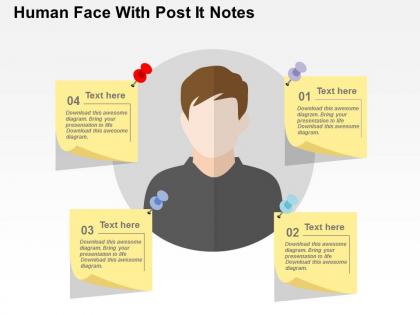
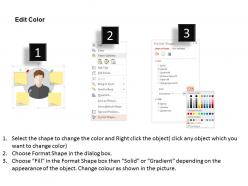
When post it notes came into existence, they were used only for attaching notes and documents to the walls or files. However, with advent of time their usage saw multiple platforms. Human face with post it notes flat PowerPoint design is one such application example. Post it are used for replacing colorful shapes which might also be used for inserting text or images and using it for further expression of ideas in a manner which is very creative. Since these sticky notes are vector based, they can be modified to form new shapes and designs. Presenting sticky notes PowerPoint visual alongside human face can present several concepts, one of which is the human expressions PowerPoint presentation model and thoughts and ideas revolving in the mind of the company manager. Talk about the thoughts and ideas which drive the managerial decision to a level which will help in strategy formulation and execution. A presenter can make use of these post it PPT presentation slide design background to talk about varied creative concepts depending on his imagination. Deal with every hassle with our Human Face With Post It Notes Flat Powerpoint Design. Discover the best answer or any difficulty.
People who downloaded this PowerPoint presentation also viewed the following :
Human face with post it notes flat powerpoint design with all 4 slides:
Our Human Face With Post It Notes Flat Powerpoint Design are like a heady cocktail. Their blend of colors is exciting.
FAQs for Human face with post it notes
Your eyebrows are huge for this - they show surprise, anger, confusion, all that stuff. Eyes are where the real emotions live though (way harder to fake than just smiling, which is why "smiling with your eyes" is actually a thing). Obviously your mouth does the basic happy/sad/disgusted expressions. But here's the thing - they all work together to create these complex emotional signals that let people know what's going on in your head without saying anything. Honestly, once you start watching people's whole face instead of just their mouth, you'll get so much better at reading what they're actually feeling.
Dude, faces are way more cultural than you'd think. A smile that seems genuine to you might look totally fake to someone else. Eye contact's a perfect example - we see it as confident, but in lots of Asian cultures it's actually rude. Beauty standards are all over the place too (seriously, "ideal" face shapes change completely depending where you are). Your brain gets trained by whatever expressions you saw growing up, so you're basically wired to read faces a certain way. When you're dealing with international people, just don't assume everyone's face means what you think it means.
Faces are basically how we all communicate, but there's tons of cultural stuff that changes the rules. Happy and angry look pretty similar everywhere, but everything else? Totally different game. Western cultures love direct eye contact - shows you're confident. Asian cultures often see that as rude though. Smiling can backfire too, which honestly caught me off guard when I first learned that. Some places think you're weird or fake if you smile at strangers. My advice? Watch how locals do it first. Don't just assume what works at home will work there. Mirror their vibe instead.
Honestly, facial recognition is such a weird trade-off. Yeah, it's super convenient for unlocking your phone or getting through airport security faster. But here's the thing - your face basically becomes data that companies and governments can grab without asking. And unlike a password, you can't exactly change your face if someone steals it, which is terrifying when you think about it. Retailers are already using it to track what you buy. I'd check your device settings and opt out wherever you can. Also maybe just pay attention to where cameras are popping up around you.
So your brain is basically hardwired to think symmetrical faces are more attractive - it's this evolutionary thing where we associate symmetry with better health and genes. Pretty crazy how automatic it is, right? Even tiny asymmetries can make someone seem less appealing without you realizing it. Your mind treats balanced features as a sign of good development and fewer mutations. That's honestly why those photo apps always tweak facial symmetry a bit. They know we're all suckers for it! Makes total sense when you think about it from a survival perspective.
Okay so basically your face loses collagen and elastin as you age, which creates wrinkles and that sagging around your cheeks. Skin gets thinner too. The annoying part? Society judges aging faces as less attractive or competent - especially brutal for women in dating and work stuff. But honestly, sunscreen and good skincare can slow things down a lot if you start early. I always tell people prevention beats trying to fix damage later. Oh and stay hydrated! Sounds basic but it actually helps.
Yeah so basically things like nose width, eye shape, lip thickness, cheekbone structure - that stuff does vary between different ethnic groups. But here's what's crazy: there's actually way more variation within groups than between them. People have used these differences to justify discrimination throughout history, which honestly just shows how messed up humans can be. You still see it today with racial profiling and weird media stereotypes. I mean, at the end of the day these are just normal biological differences. They don't say anything about someone's personality or intelligence or value as a person.
Your face has like 40+ muscles (crazy right?) that can show super complex stuff - disappointment mixed with anger, or surprise with skepticism. Other body language is pretty basic compared to that. Plus facial expressions happen instantly and are harder to fake than posture or hand gestures. That's probably why we automatically look at someone's face first when we're trying to figure out what they're feeling. You can tell so much more from a quick glance at someone's expression than watching how they're standing or whatever.
So they found this cool "fusiform face area" in your brain using fMRI - it literally only lights up for faces, not random objects. Your brain processes faces as a whole picture instead of breaking them down piece by piece. That's why upside-down faces look so weird and hard to recognize! People with face blindness (prosopagnosia) actually have multiple processing pathways, and sometimes they'll lose one but keep others working fine. It's pretty fascinating stuff. Plus, figuring out these brain circuits is helping create better treatments for face blindness and making AI recognition way more accurate.
Honestly, studying facial proportions is a game changer - like how eyes sit halfway down the head, or those rule-of-thirds divisions that make faces look balanced. Bone structure underneath drives so much of expression too. The micro-expressions from muscles? That's what makes faces feel alive instead of weird and stiff. Life drawing sessions help tons, or grab a Loomis anatomy book if you're more of a solo learner. Even when I'm doing abstract stuff, knowing this structure underneath makes everything more believable. It's wild how much emotional depth you get just from understanding the basics.
So basically your face muscles are constantly talking to your brain through these feedback loops. Smiling activates your zygomatic major and actually releases endorphins - that's why fake smiling sometimes works. Frowning does the opposite, ramping up stress hormones through those corrugator muscles. When you're scared, your eyes automatically widen to take in more info, which is pretty smart if you think about it. Anger makes you narrow your eyes and clench your jaw to focus on whatever's threatening you. Honestly, the whole "fake it till you make it" thing with forcing a smile during rough moments? It genuinely helps.
Honestly, it's crazy how much this has changed. The 80s through 2000s were all about that super airbrushed, fake perfection thing. Now brands are actually showing real skin textures, different ages, ethnicities - basically what people actually look like. Dove started this whole "real beauty" movement, and Fenty's casting is amazing. Social media definitely pushed this shift because everyone got so tired of impossible standards. Though we're still stuck with this weird "Instagram face" phenomenon happening. But yeah, if you're doing any campaigns, people connect way better with faces that actually represent them instead of some generic model who looks nothing like your audience.
Honestly, the bias thing is what gets me most - these systems mess up way more on people of color and women, which has led to actual wrongful arrests. That's terrifying. Privacy's the other huge issue. Constant surveillance kills free speech and makes people afraid to protest or speak up. Plus there's all the sketchy data storage stuff and most people never even consented to being tracked. If you're building something with this tech, definitely test for bias early and get real consent. Oh, and watch out for scope creep - this stuff always ends up being used for way more than originally intended.
Your face is like your personal canvas, you know? Makeup lets you switch up your whole vibe - want to feel powerful? Go for bold lips. Dramatic eyes make you look confident as hell. Natural tones work when you're going for that approachable look. Tattoos and piercings are more permanent ways to show your personality or culture. Even temporary stuff like face paint at festivals is fun because you get to be someone totally different for a night. People always look at your face first anyway, so might as well have fun with it! Try different looks until something clicks.
Honestly, it's like having a cheat code for conversations. You'll start picking up on micro-expressions - those quick flashes of disappointment or when someone's smile doesn't reach their eyes. Makes you way more empathetic since you're actually seeing what people feel, not just hearing what they say. The eye thing is huge btw - watch how people's eyes move during meetings. You also get better at controlling your own face, which is weirdly helpful. I swear it's almost like having superpowers sometimes when you can read the room that well.
-
Qualitative and comprehensive slides.
-
The content is very helpful from business point of view.