

Human Resource Optimization Powerpoint Presentation Slides




Try Before you Buy Download Free Sample Product
 Impress Your
 Audience
 100%
100% Editable
 Save Hours
 of Time


Increase the productivity of your organization by employing our Human Resource Optimization PowerPoint Presentation Slides. Highlight the need for optimally utilizing the resources in the company and the issues encountered due to inadequate management of the resources with the help of our workforce optimization PPT templates. Poor resource planning and allocation results in havoc for the organization. Therefore, our personnel management PPT presentation helps you to formulate a well-researched business plan. For a better understanding, compare the past and present data on employees and their contribution by taking aid of this human resource planning PPT slideshow. Display your foresightedness by creating a plan of action for the future training and development of the employees. Download these completely adaptable human capital planning PPT graphics and convey your mission, vision, and objectives by giving it your orientation. Impress your audience by providing an overall impact analysis of the resource optimization and the increased profitability for your organization with this workforce training PPT layouts.
People who downloaded this PowerPoint presentation also viewed the following :
Content of this Powerpoint Presentation
Slide 1: This title slide introduces Human Resource Optimization. Add the name of your company here.
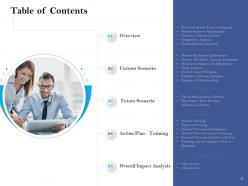
Slide 2: This slide contains the Table of Contents. It includes – Overview, Current Scenario, Future Scenario, etc.
Slide 3: This is a table of content slide showing the Overview.
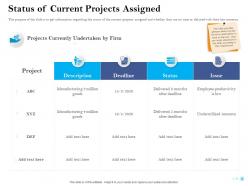
Slide 4: This slide presents the Status of Current Projects Assigned.
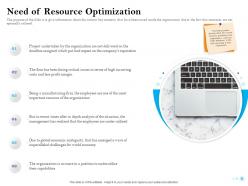
Slide 5: This slide presents the Need of Resource Optimization.
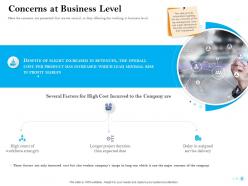
Slide 6: This slide presents the Concerns at Business Level.
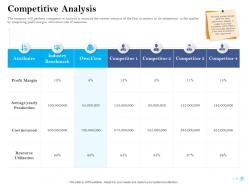
Slide 7: This slide presents the Competitive Analysis.
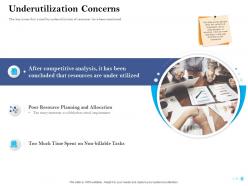
Slide 8: This slide presents the Underutilization Concerns.
Slide 9: This is a table of content slide showing the Current Scenario
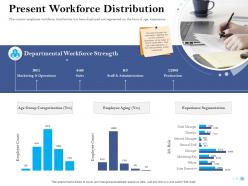
Slide 10: This slide presents the Present Workforce Distribution.
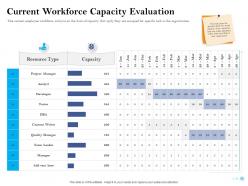
Slide 11: This slide presents the Current Workforce Capacity Evaluation.
Slide 12: This slide presents the Skills Level Analysis by Department.
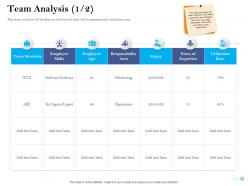
Slide 13: This slide presents the Team Analysis (1/2).
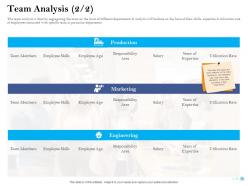
Slide 14: This slide presents the Team Analysis (2/2).
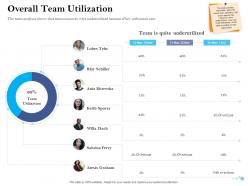
Slide 15: This slide presents the Overall Team Utilization.
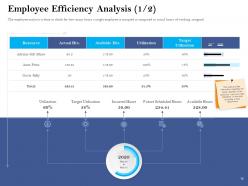
Slide 16: This slide presents the Employee Efficiency Analysis (1/2). The employee analysis is done to check for how many hours a single employee is occupied as compared to actual hours of working assigned.
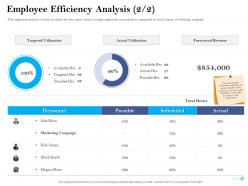
Slide 17: This slide presents the Employee Efficiency Analysis (2/2). This slide provides information regarding the actual utilization of the resources.
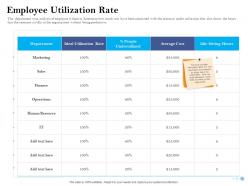
Slide 18: This slide presents the Employee Utilization Rate.
Slide 19: This is a table of content slide showing the Future Scenario.
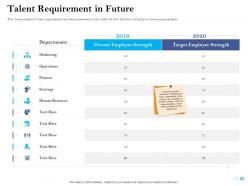
Slide 20: This slide presents the Talent Requirement in Future.
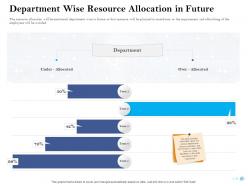
Slide 21: This slide presents the Department Wise Resource Allocation in Future.
Slide 22: This is a table of content slide showing the Action Plan – Training.
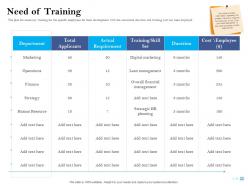
Slide 23: This slide presents the Need of Training.
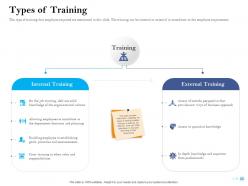
Slide 24: This slide presents the Types of Training.
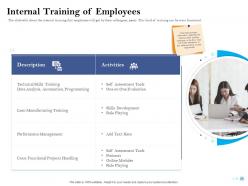
Slide 25: This slide presents the Internal Training of Employees.
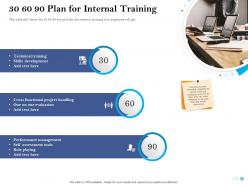
Slide 26: This slide presents the 30 60 90 Plan for Internal Training.
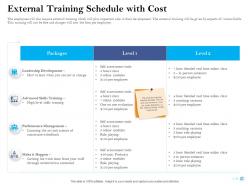
Slide 27: This slide presents the External Training Schedule with Cost.
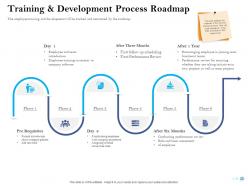
Slide 28: This slide presents the Training & Development Process Roadmap.
Slide 29: This is a table of content slide showing the Overall Impact Analysis.
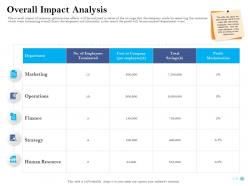
Slide 30: This slide presents the Overall Impact Analysis. The overall impact of resource optimization efforts will be analyzed in terms of the savings that the company made by removing the resources
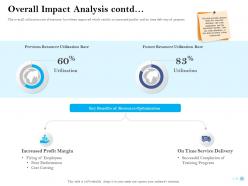
Slide 31: This slide presents the Overall Impact Analysis. (Contd…) - This slide provides a glimpse of the improved utilization rate in the organization and the associated benefits.
Slide 32: This is the Human Resource Optimization - Icons Slide.
Slide 33: This slide introduces the Additional Slides.
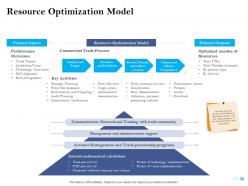
Slide 34: This slide presents the Resource Optimization Model.
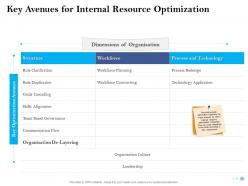
Slide 35: This slide presents the Key Optimization Avenues.
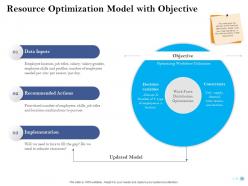
Slide 36: This slide presents the Resource Optimization Model with Objective.
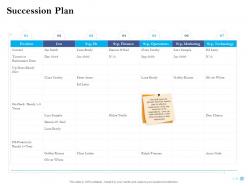
Slide 37: This slide presents the Succession Plan.
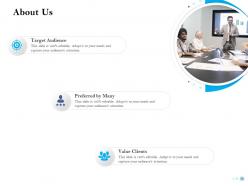
Slide 38: This slide contains the information about the company aka the ‘About Us’ section. This includes the Value Clients, the Target Audience, and Preferred by Many.
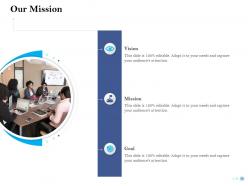
Slide 39: This slide provides the Mission for the entire company. This includes the vision, the mission, and the goal.
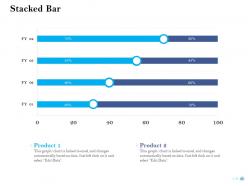
Slide 40: This slide shows a Stacked Bar that compares 2 products’ data over a timeline of financial years.
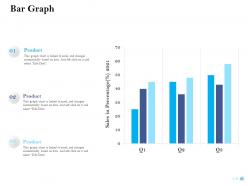
Slide 41: This slide shows a Bar Graph that compares 3 products’ sales over a timeline of financial quarters.
Slide 42: This is the Lego slide. In this slide, you can showcase the building blocks of your project or concept.
Slide 43: This is the Financial slide.
Slide 44: This is the Mind Map slide for brainstorming ideas.
Slide 45: This slide is a Timeline template to showcase the progress of the steps of a project with time.
Slide 46: This is a Thank You slide where details such as the address, contact number, email address are added.
Human Resource Optimization Powerpoint Presentation Slides with all 46 slides:
Use our Human Resource Optimization Powerpoint Presentation Slides to effectively help you save your valuable time. They are readymade to fit into any presentation structure.

FAQs for Human Resource Optimization
Key HR metrics for measuring optimization include employee turnover rates, time-to-hire, employee engagement scores, productivity per employee, and cost-per-hire ratios. These metrics enable organizations to streamline recruitment processes, enhance workforce efficiency, and reduce operational costs, with many companies finding that strategic HR analytics ultimately delivers improved talent retention and competitive advantage.
Technology enhances HR efficiency by automating recruitment screening, streamlining payroll processing, and digitizing employee records management, while enabling self-service portals and data-driven analytics. Through AI-powered applicant tracking systems and cloud-based HRIS platforms, organizations significantly reduce administrative overhead, accelerate hiring cycles, and deliver better employee experiences, ultimately freeing HR teams to focus on strategic initiatives.
Employee engagement serves as a cornerstone of human resource optimization by driving productivity, reducing turnover costs, and enhancing organizational performance through motivated, committed teams. Engaged employees deliver higher quality work, require less supervision, and contribute to innovative problem-solving, with many organizations finding that strategic engagement initiatives ultimately streamline operations while building sustainable competitive advantage.
Predictive analytics transforms HR decision-making by forecasting employee turnover, identifying high-potential talent, and optimizing recruitment strategies through data-driven insights. These capabilities enable organizations to proactively address retention challenges, streamline hiring processes, and enhance workforce planning, with many companies finding that predictive models significantly reduce turnover costs while improving employee satisfaction and organizational performance.
Effective turnover reduction strategies include competitive compensation packages, comprehensive career development programs, flexible work arrangements, regular performance feedback, and strong company culture initiatives. These approaches streamline retention by addressing key departure factors like limited growth opportunities, work-life balance concerns, and inadequate recognition, with many organizations finding that strategic investment in employee satisfaction ultimately delivers reduced recruitment costs and enhanced operational continuity.
Training and development is crucial for optimizing human resource potential, serving as the foundation for skill enhancement, career progression, employee retention, and organizational adaptability. Through strategic learning programs, companies across industries like healthcare, technology, and manufacturing streamline workforce capabilities, reduce turnover costs, and accelerate innovation, ultimately delivering competitive advantage and sustainable growth.
Effective talent acquisition practices include strategic workforce planning, comprehensive candidate sourcing through multiple channels, streamlined interview processes, competitive compensation packages, and robust onboarding programs. These approaches enhance recruitment efficiency by reducing time-to-hire, improving candidate quality, and strengthening employer branding, with many organizations finding that strategic talent acquisition ultimately delivers better employee retention and competitive advantage.
HR analytics improves workforce planning by analyzing employee data, predicting turnover patterns, identifying skill gaps, and forecasting future hiring needs across departments. Through predictive modeling and performance metrics, organizations streamline recruitment processes, enhance retention strategies, and optimize resource allocation, with many companies finding that data-driven approaches ultimately deliver more strategic talent decisions and competitive workforce advantages.
Company culture significantly impacts HR optimization by influencing employee engagement, retention rates, communication effectiveness, and change adoption across the organization. A strong, adaptable culture enables streamlined talent management, reduces recruitment costs, and accelerates digital transformation initiatives, while misaligned cultures can create resistance to new processes, ultimately determining whether optimization efforts deliver sustainable competitive advantage and operational efficiency.
Organizations can align their HR strategy with business goals by establishing clear performance metrics that directly support company objectives, integrating workforce planning with strategic initiatives, and ensuring talent acquisition focuses on skills needed for future growth. Through data-driven approaches, companies streamline recruitment processes, enhance employee development programs, and optimize resource allocation, ultimately delivering improved operational efficiency and competitive advantage in an increasingly dynamic business environment.
HR automation tools include applicant tracking systems, payroll software, performance management platforms, employee onboarding solutions, and workforce analytics dashboards. These technologies streamline recruitment, reduce administrative overhead, and enhance employee experiences by automating repetitive tasks, minimizing errors, and providing real-time insights, with many organizations finding that automated HR processes deliver faster hiring cycles and improved operational efficiency.
Diversity and inclusion enhance HR optimization by expanding talent pools, improving decision-making through varied perspectives, and increasing employee engagement and retention rates. Organizations with inclusive cultures experience higher innovation levels, better customer understanding, and reduced recruitment costs, while diverse teams deliver superior problem-solving capabilities and ultimately stronger financial performance.
Implementing employee feedback mechanisms faces challenges including low participation rates, feedback quality inconsistencies, integration difficulties with existing systems, resistance to change, and resource allocation constraints. While these obstacles present initial hurdles, many organizations find that strategic implementation with proper training, clear communication, and technology integration ultimately delivers enhanced employee engagement, improved retention rates, and streamlined HR processes that boost overall operational efficiency.
Performance management systems can be optimized through continuous feedback mechanisms, goal alignment with business objectives, data-driven analytics, regular calibration sessions, and employee development integration. These strategic approaches streamline evaluation processes by eliminating bias, enhancing transparency, and focusing on measurable outcomes, with many organizations finding that modernized systems ultimately deliver improved employee engagement, retention, and organizational performance.
Succession planning ensures business continuity by identifying and developing internal candidates for key leadership positions, reducing recruitment costs, minimizing disruption during transitions, and preserving institutional knowledge. Through strategic talent mapping and targeted development programs, organizations across industries like healthcare, financial services, and manufacturing build robust leadership pipelines, ultimately delivering competitive advantage and organizational resilience.
-
Thanks for all your great templates they have saved me lots of time and accelerate my presentations. Great product, keep them up!
-
Illustrative design with editable content. Exceptional value for money. Highly pleased with the product.
-
Excellent design and quick turnaround.
-
Graphics are very appealing to eyes.