

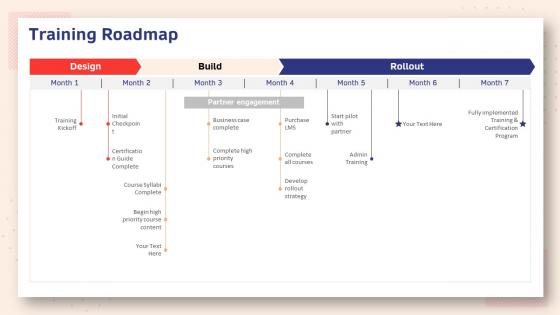
Human resource planning structure training roadmap




Try Before you Buy Download Free Sample Product
 Impress Your
 Audience
 100%
100% Editable
 Save Hours
 of Time


Our Human Resource Planning Structure Training Roadmap are topically designed to provide an attractive backdrop to any subject. Use them to look like a presentation pro.
People who downloaded this PowerPoint presentation also viewed the following :
Human resource planning structure training roadmap with all 9 slides:
Use our Human Resource Planning Structure Training Roadmap to effectively help you save your valuable time. They are readymade to fit into any presentation structure.









FAQs for Human resource planning
Key components include workforce analysis, demand forecasting, supply assessment, gap identification, and strategic alignment with organizational goals. These elements work together by evaluating current talent capabilities, predicting future staffing needs, and developing comprehensive recruitment strategies, with many organizations finding that systematic HR planning ultimately delivers improved talent retention, reduced hiring costs, and enhanced competitive positioning.
Human resource planning aligns with strategic goals by forecasting talent needs, identifying skill gaps, and developing workforce capabilities that support business objectives. Through strategic workforce analysis, organizations ensure they have the right people with appropriate competencies to execute growth plans, enhance operational efficiency, and maintain competitive advantage in increasingly dynamic markets.
**INPUT**: What tools and technologies can enhance human resource planning efforts? **OUTPUT**: Modern HR planning tools include predictive analytics platforms, workforce management systems, AI-powered recruitment software, employee performance dashboards, and integrated HRIS solutions. These technologies streamline talent acquisition, optimize workforce allocation, and enhance strategic decision-making through real-time data insights, with many organizations finding improved operational efficiency and competitive advantage. [Word count: 54 words]
Forecasting techniques enhance workforce planning accuracy by analyzing historical data, identifying seasonal patterns, and predicting future talent needs across departments and skill sets. Through predictive analytics and demand modeling, organizations streamline recruitment timelines, optimize resource allocation, and reduce hiring costs, with many HR departments finding that data-driven forecasting delivers significantly better staffing decisions and competitive advantage.
Data analytics revolutionizes human resource planning by enabling predictive workforce modeling, identifying skill gaps, optimizing recruitment strategies, and forecasting future talent needs through comprehensive data interpretation. Through advanced analytics platforms, organizations streamline succession planning, enhance employee retention strategies, and minimize recruitment costs, with many companies finding that data-driven HR decisions ultimately deliver competitive advantage and improved operational efficiency.
Demographic changes significantly impact human resource planning by altering workforce composition, skill availability, and talent acquisition strategies. Organizations must adapt recruitment approaches, develop age-diverse management practices, and create flexible work arrangements to address shifting populations, with many companies finding that multigenerational workforce strategies enhance innovation while addressing succession planning challenges.
Organizations can address skill gaps through strategic workforce planning, targeted recruitment initiatives, comprehensive upskilling programs, strategic partnerships with educational institutions, and cross-training existing employees. These approaches streamline talent development by enhancing internal capabilities, accelerating external acquisition, and building flexible skill sets, with many companies finding that proactive gap analysis ultimately delivers stronger competitive positioning and improved operational efficiency.
Organizations ensure flexibility in human resource planning through scenario-based workforce modeling, cross-training initiatives, strategic talent pools, and agile staffing frameworks that enable rapid scaling. These approaches streamline resource allocation by building adaptable skill sets, maintaining contingent workforce relationships, and implementing dynamic forecasting systems, ultimately delivering competitive advantage in increasingly volatile business environments.
Organizations face challenges including workforce demand forecasting, skills gap identification, succession planning complexities, budget constraints, and regulatory compliance changes in long-term human resource planning. These obstacles can significantly impact talent acquisition and retention strategies, with many companies finding that integrating predictive analytics and flexible workforce models helps streamline planning processes while maintaining competitive advantage.
Succession planning serves as a strategic component of human resource planning by identifying and developing internal talent to fill critical leadership positions, ensuring organizational continuity and reducing recruitment costs. Through talent mapping and leadership development programs, companies like IBM and General Electric maintain robust leadership pipelines, ultimately delivering seamless transitions and sustained competitive advantage during organizational changes.
Best practices for involving department heads include conducting regular workforce planning meetings, establishing clear communication channels, creating collaborative forecasting sessions, implementing structured feedback mechanisms, and developing shared accountability frameworks. These approaches streamline planning by aligning departmental needs with organizational goals, enhancing resource allocation accuracy, and fostering strategic partnerships, with many organizations finding that department head involvement significantly improves hiring precision and reduces turnover.
Organizations can assess human resource planning effectiveness through key performance indicators like retention rates, time-to-fill positions, employee satisfaction scores, succession planning success, and alignment between workforce capabilities and strategic objectives. These metrics enable companies to identify gaps, optimize resource allocation, and enhance operational efficiency, with many finding that regular assessment cycles ultimately deliver improved talent management and competitive advantage in increasingly dynamic markets.
Remote work significantly impacts human resource planning by requiring new recruitment strategies, performance management systems, digital collaboration tools, and flexible compensation models. Organizations increasingly find that effective remote workforce planning enhances talent acquisition from global markets, reduces overhead costs, and improves employee retention, while demanding strategic investment in technology infrastructure and virtual team management capabilities.
Labor market trends significantly influence human resource planning by determining talent availability, salary benchmarks, skill requirements, and recruitment strategies across industries. Organizations adapt their workforce strategies based on these trends, with technology companies adjusting compensation packages during talent shortages, healthcare systems expanding training programs amid nursing shortages, and retail businesses implementing flexible scheduling to attract workers in competitive markets.
Ethical considerations in human resource planning include ensuring fair hiring practices, promoting diversity and inclusion, maintaining transparent communication, protecting employee privacy, and providing equal development opportunities. These principles enhance organizational reputation, reduce legal risks, and improve employee engagement, with many companies finding that ethical HR practices ultimately deliver stronger talent retention and competitive advantage in increasingly conscientious markets.
-
Great designs, really helpful.