

Human Resources Detailed Analytics Report Dashboard





Try Before you Buy Download Free Sample Product
 Impress Your
Audience
 100%
Editable
 Save Hours
of Time


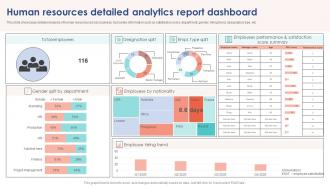
This slide showcases detailed analysis of human resources across business. It provides information such as satisfaction score, department, gender, hiring trend, designation, type, etc.
People who downloaded this PowerPoint presentation also viewed the following :
Human Resources Detailed Analytics Report Dashboard with all 7 slides:
Use our Human Resources Detailed Analytics Report Dashboard to effectively help you save your valuable time. They are readymade to fit into any presentation structure.






FAQs for Human Resources Detailed
Look, start with the basics that actually matter: turnover rates, time-to-hire, and engagement scores. Finance will want cost-per-hire and training ROI too - learned that the hard way. But honestly? The magic happens when you connect these to real business stuff like productivity and revenue per employee. Customer satisfaction scores too, weirdly enough. Don't go overboard though. Pick 3-5 that match what your company's trying to do, track them consistently, and actually use the data to make decisions. Half the companies I know just collect metrics and never do anything with them.
So basically, HR analytics digs into survey responses, performance data, and exit interviews to figure out why people bail or stick around. You'll catch patterns - like maybe Sarah's team keeps losing people while Tom's doesn't, or everyone actually cares more about flexible hours than free snacks (shocking, I know). The cool part? You can spot who's about to quit before they even know it themselves. Look at engagement scores, how long people usually last, stuff like that. Way better than those generic "pizza party fixes everything" approaches. Just start tracking your engagement metrics consistently and see what connects to turnover rates.
So predictive analytics is pretty cool for HR stuff. Basically you can see who's likely to quit before they even know it themselves - weird but super useful. Patterns in the data show turnover trends, performance dips, all that. Plus you'll spot skills gaps coming up months early instead of panicking when someone walks out the door. Honestly beats scrambling to hire people last minute. Business projections help too so you can actually budget for headcount changes and build your talent pipeline ahead of time. Way smarter than just reacting to everything.
So basically, dig into your HR data to see where you're actually lacking diversity - hiring, promotions, retention, the whole thing. Break it down by department and pay levels because that's where the real patterns show up. Honestly, most companies are shocked when they actually look at the numbers instead of just assuming they're doing fine. Track where diverse candidates drop out of your hiring process and check if performance reviews show any weird bias patterns. Oh, and don't forget engagement surveys by demographic groups. The trick is actually doing something with all this data instead of just making charts nobody looks at.
Honestly, start with Tableau or Power BI - that's where you'll build your actual dashboards. Make sure whatever you pick plays nice with your HRIS (most do now, which is great). Excel's still clutch for quick stuff, don't sleep on it. If you want to get into predictive modeling later, you'll need R or Python. Oh, and grab something like Culture Amp for employee surveys - that sentiment data is gold. My advice? Pick one solid visualization tool first and work with what you already have in your HRIS. You can always get fancier once you show people this stuff actually works.
Honestly, measuring HR analytics ROI is pretty straightforward - just compare what you're spending on the program against the actual business improvements you can track. Look at stuff like lower turnover costs, quicker hiring times, better productivity numbers. The annoying part? You can't always prove your analytics caused every change (other factors mess with results too). But whatever, don't overthink it. Pick 2-3 specific outcomes you want to move. Get baseline numbers before you start. Then track the financial difference after implementing your data-driven approach. Document everything because you'll need proof when asking for more budget later.
Okay so first thing - be upfront about what data you're collecting and why. People hate finding out later that you've been tracking stuff they didn't know about. Only grab what's actually useful for business decisions, not everything you possibly can. Try to anonymize data when you can and lock down who gets access to the sensitive stuff. Oh and definitely check for bias in any algorithms - that's where things can get really messy if certain groups get treated unfairly. I'd start with auditing what you're doing now, then write up some clear policies. It's honestly not as complicated as it sounds once you get going.
Dude, HR analytics is seriously worth looking into. Instead of just going with your gut, you'll actually have data showing which job boards work best and how long your hiring takes. I started with just tracking 2-3 things because honestly, more than that gets overwhelming fast. The cool part? You can spot patterns in your top performers and figure out what makes candidates likely to stick around. Plus it shows you where good people are dropping out of your process - sometimes it's stuff you'd never think of. Once you see the bottlenecks, fixing them becomes way easier.
Performance data and engagement surveys are your best friends here. Turnover patterns tell you a ton too - way more than most people realize. Don't get caught up tracking every single metric though, I've watched companies go down that rabbit hole. Focus on stuff that actually connects to business results. Oh, and absenteeism rates? Pure gold for spotting problems early. Time-to-fill for jobs is another big one. Here's what works: figure out your biggest HR headaches first, then decide what data you need to fix them. Way easier than drowning in spreadsheets.
Okay so sentiment analysis basically reads through all your company's written stuff - emails, surveys, Slack convos, exit interviews, whatever. It figures out if people are feeling positive, negative, or just meh about work things based on their language patterns. Super helpful for catching burnout early or spotting which managers are being terrible (we all know that one). You can track if your culture's actually improving over time instead of just hoping it is. Honestly, I'd start by running it on your last engagement survey - you'll probably be surprised what comes up. The patterns are usually pretty obvious once you see them laid out.
So basically, HR analytics lets you dig into performance data and employee assessments to see where people are actually struggling. You can spot which teams are missing key skills or having trouble with certain tasks. What's really telling is when you look at turnover data too - people often quit when they feel undertrained, which is honestly pretty predictable. Instead of rolling out those boring company-wide training programs that nobody wants, you can create personalized learning paths. It's way more effective because you're targeting actual skill gaps rather than just guessing what people need.
Honestly, the worst part is dealing with all your systems that just refuse to talk to each other. HRIS, payroll, performance tools - they're all speaking different languages basically. Data quality becomes a nightmare too because everything's in weird formats. Your team will probably push back hard if they're used to their Excel sheets (can't blame them really). Oh, and you'll definitely need someone who actually knows analytics - either train people up or hire fresh talent. My advice? Pick one small project first to show it actually works before going crazy with the whole integration thing.
Honestly, just use Google Sheets or Excel at first - no need to buy expensive software right away. Track maybe 3-4 things that actually matter to your business, like turnover rates or how long hiring takes. Don't go overboard trying to measure everything (learned that the hard way). Check if your current HR system already has reporting built in - most people don't even realize it's there. You're not trying to become a data scientist overnight. Just pick one thing this week and start tracking it consistently. Once you see some trends forming, you'll know what decisions to make.
First thing - get some decent dashboards that normal humans can actually read. Nobody wants to decode spreadsheets from hell. Train your people on the basics so they're not totally lost, then show them how the numbers tie into what they do every day. Honestly, once they see their work reflected in the data, they usually start caring more. When someone makes a good call using metrics, celebrate it! Share those wins in meetings. Oh, and obviously use data yourself - if you're not walking the walk, why should they? Pick maybe two metrics to start with, don't overwhelm them.
Oh man, visualization tools are a game changer for HR stuff! Charts and dashboards beat staring at endless spreadsheets any day. You'll spot patterns super fast - like which departments can't keep people or when hiring gets crazy busy. My monthly reports used to be torture before we got visual dashboards, not gonna lie. Leadership eats this stuff up way more than boring number dumps too. Bar charts and heat maps are perfect starting points for your key metrics. Trust me, everything just clicks better when you can actually see what's happening. Even my boss who hates data suddenly gets it now.
-
I am a big fan of their newsletters because that is how I found my perfect requirement at the time of urgency. Thank God, I kept opening those.
-
Great quality product.