

Implementation Of Shopper Marketing Strategies For Retail Promotion Powerpoint Presentation Slides MKT CD





Try Before you Buy Download Free Sample Product
 Impress Your
 Audience
 100%
100% Editable
 Save Hours
 of Time


Shopper marketing is a technique that aims to analyze a customers buyers journey to enhance the customers shopping experience. Grab our Implementation of Shopper Marketing Strategies for Retail Promotion template. It represents a shopper marketing overview, including statistics, trends, evolution, and its comparison with trade marketing strategy. Our Customer segmentation deck covers a summary of the retail store showcasing its segmentation analysis, offered products, current marketing strategies used, and challenges faced by the store. It showcases a shopper marketing plan highlighting five phases assessment, sustaining shopper strategies, stakeholder alignment, marketing program, and measuring results. Additionally, our Retail promotion PPT depicts the PITA model, gathering of shopper insights, drivers and barriers for shoppers, shopper profile, shopper engagement plan, in store communication plan, and cross functional team building. Further, it highlights promotional activities such as in store events, loyalty programs, displays, demos, ambiance, and social media marketing. Lastly, our Customer engagement plan module covers the impact of shopper marketing on retail store performance and metrics dashboard. Download our 100 percentage editable and customizable template, also compatible with Google Slides.
People who downloaded this PowerPoint presentation also viewed the following :
Content of this Powerpoint Presentation
Slide 1: This slide introduces Implementation of Shopper Marketing Strategies for Retail Promotion. Commence by stating Your Company Name.
Slide 2: This slide depicts the Agenda of the presentation.
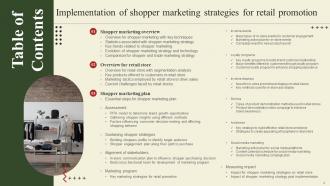
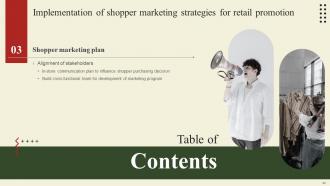
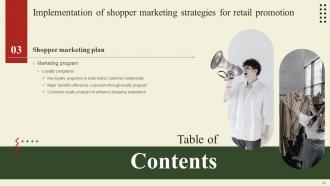
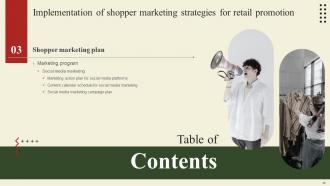
Slide 3: This slide incorporates the Table of Contents.
Slide 4: This slide highlights the Title for the Topics to be covered in the following template.
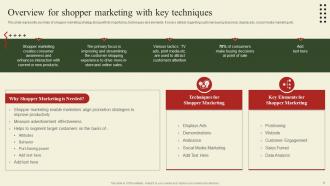
Slide 5: This slide presents the Overview for shopper marketing with key techniques.
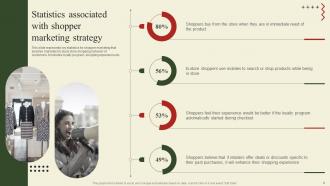
Slide 6: This slide shows the key statistics for shopper marketing that enables marketers to study store shopping behavior of customers.
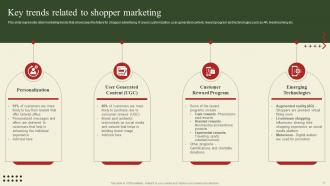
Slide 7: This slide reveals the Key trends related to shopper marketing.
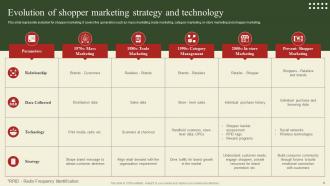
Slide 8: This slide portrays the Evolution of shopper marketing strategy and technology.
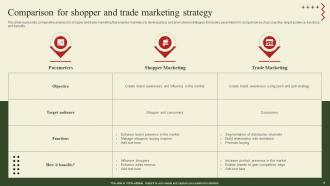
Slide 9: This slide depicts the Comparison for shopper and trade marketing strategy.
Slide 10: This slide displays the Hedaing for the Contents to be covered further.
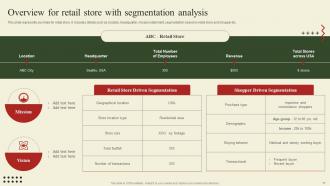
Slide 11: This slide showcases the Overview for retail store with segmentation analysis.
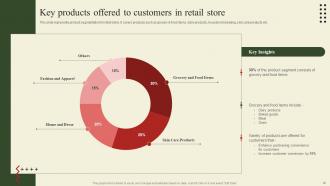
Slide 12: This slide exhibits the Key products offered to customers in retail store.
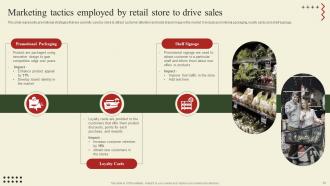
Slide 13: This slide talks about the Marketing tactics employed by retail store to drive sales.
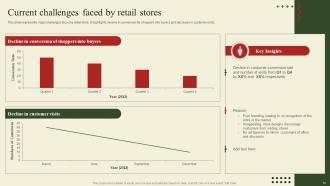
Slide 14: This slide reveals the Current challenges faced by retail stores.
Slide 15: This slide incorporates the Title for the Ideas to be discussed further.
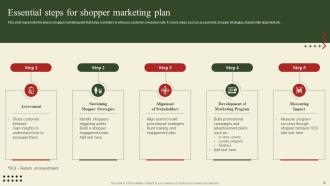
Slide 16: This slide lists the Essential steps for shopper marketing plan.
Slide 17: This slide elucidates the Heading for the Ideas to be covered in the upcoming template.
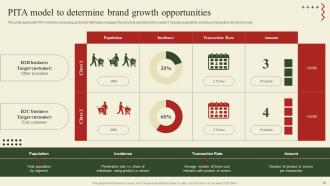
Slide 18: This slide represents PITA model for assessing customers that helps managers their product potential in the market.
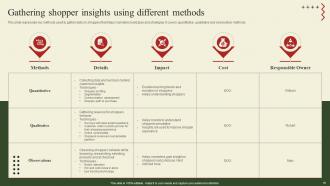
Slide 19: This slide deals with Gathering shopper insights using different methods.
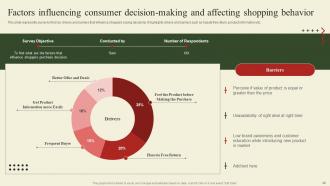
Slide 20: This slide exhibits the Factors influencing consumer decision-making and affecting shopping behavior.
Slide 21: This slide displays the Title for the Components to be discussed further.
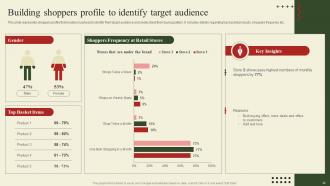
Slide 22: This slide focuses on building Building shoppers profile to identify target audience.
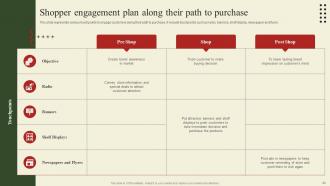
Slide 23: This slide reveals the Shopper engagement plan along their path to purchase.
Slide 24: This slide includes the Heading for the Topics to be covered in the forth-coming template.
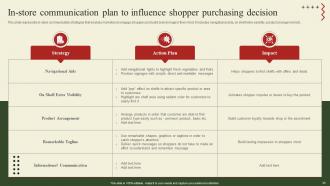
Slide 25: This slide showcases the In-store communication plan to influence shopper purchasing decision.
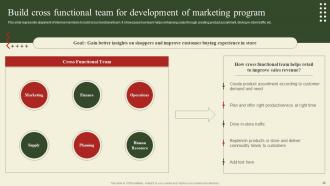
Slide 26: This slide represents alignment of internal members to build cross functional team.
Slide 27: This slide portrays the Title for the Topics to be discussed in the next template.
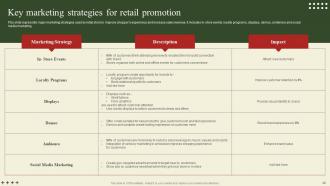
Slide 28: This slide states the Key marketing strategies for retail promotion.
Slide 29: This slide highlights the Heading for the Contents to be covered in the following template.
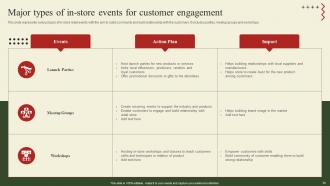
Slide 30: This slide depicts the Major types of in-store events for customer engagement.
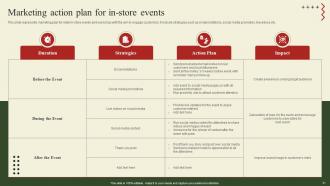
Slide 31: This slide shows the Marketing action plan for in-store events.
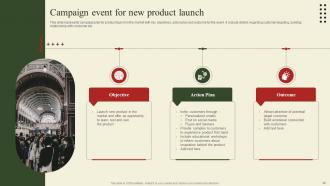
Slide 32: This slide talks about the Campaign event for new product launch.
Slide 33: This slide displays the Title for the Ideas to be discussed further.
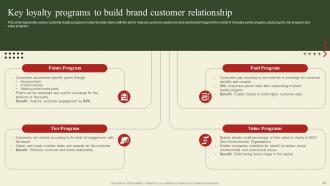
Slide 34: This slide showcases the Key loyalty programs to build brand customer relationship.
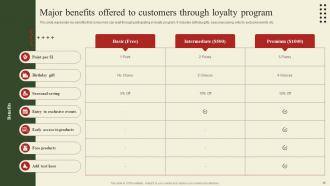
Slide 35: This slide exhibits the Major benefits offered to customers through loyalty program.
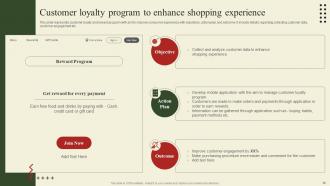
Slide 36: This slide reveals the Customer loyalty program to enhance shopping experience.
Slide 37: This slide mentions the Heading for the Ideas to be covered in the forth-coming template.
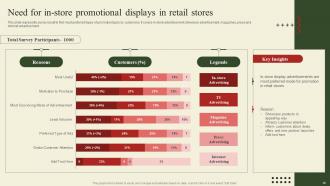
Slide 38: This slide emphasizes on the Need for in-store promotional displays in retail stores.
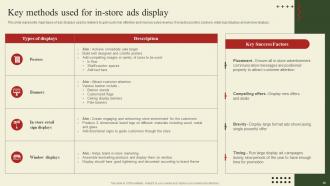
Slide 39: This slide exhibits the Key methods used for in-store ads display.
Slide 40: This slide shows the Title for the Components to be discussed next.
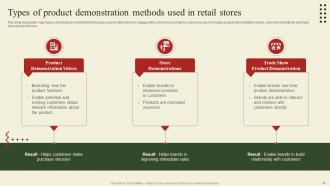
Slide 41: This slide states the Types of product demonstration methods used in retail stores.
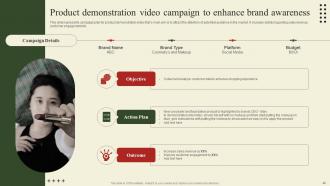
Slide 42: This slide represents the Product demonstration video campaign to enhance brand awareness.
Slide 43: This slide elucidates the Heading for the Topics to be covered in the following template.
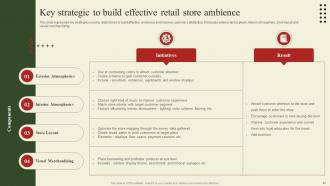
Slide 44: This slide highlights the Key strategic to build effective retail store ambience.
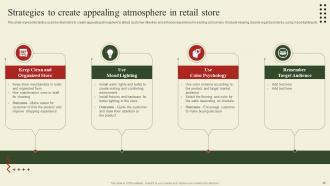
Slide 45: This slide portrays the Strategies to create appealing atmosphere in retail store.
Slide 46: This slide indicates the Title for the Topics to be discussed in the following template.
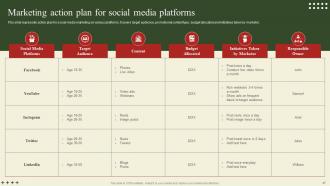
Slide 47: This slide reveals the Marketing action plan for social media platforms.
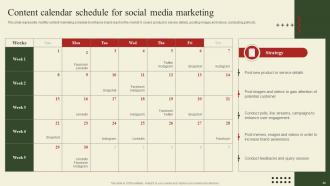
Slide 48: This slide indicates the Content calendar schedule for social media marketing.
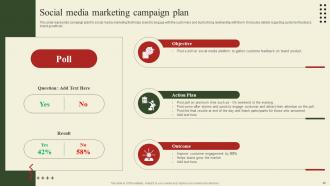
Slide 49: This slide focuses on the Social media marketing campaign plan.
Slide 50: This slide elucidates the Heading for the Components to be covered further.
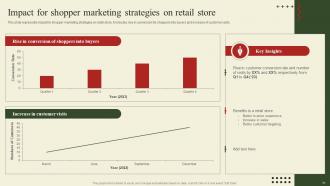
Slide 51: This slide represents impact for shopper marketing strategies on retail store.
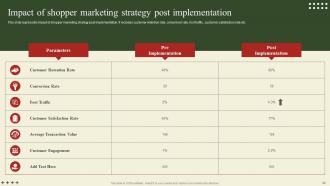
Slide 52: This slide showcases the impact of shopper marketing strategy post implementation.
Slide 53: This is the Icons slide containing all the Icons used in the plan.
Slide 54: This slide is used for depicting some Additional information.
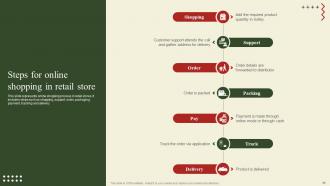
Slide 55: This slide represents online shopping process in retail stores.
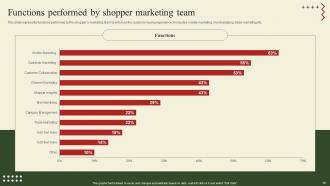
Slide 56: This slide states the Functions performed by shopper marketing team.
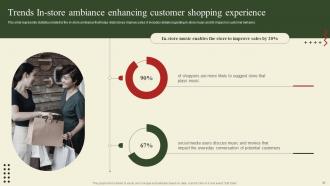
Slide 57: This slide exhibits the Trends In-store ambiance enhancing customer shopping experience.
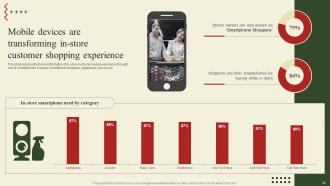
Slide 58: This slide presents the transformation of in-store customer buying experience through use of smartphones.
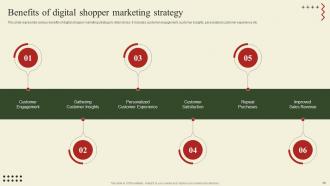
Slide 59: This slide shows the Benefits of digital shopper marketing strategy.
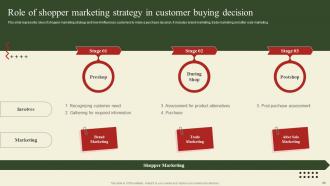
Slide 60: This slide portrays the Role of shopper marketing strategy in customer buying decision.
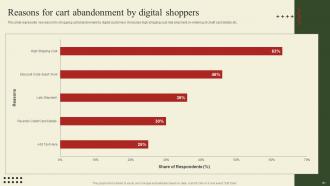
Slide 61: This slide highlights the Reasons for cart abandonment by digital shoppers.
Slide 62: This is the About us slide. State your company-related information here.
Slide 63: This slide is used for showcasing the organization's Vision, Mission, and Goals.
Slide 64: This is Our team slide. State your team-realted information here.
Slide 65: This is the Idea generation slide for encouraging fresh ideas.
Slide 66: This is Our target slide. State your firm's targets here.
Slide 67: This is the Venn diagram slide.
Slide 68: This is the Puzzle slide with related imagery.
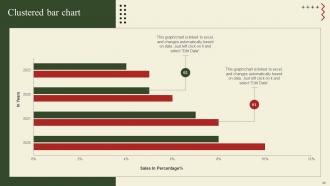
Slide 69: This slide reveals the Clustered bar chart.
Slide 70: This is the Thank You slide for acknowledgement.
Implementation Of Shopper Marketing Strategies For Retail Promotion Powerpoint Presentation Slides MKT CD with all 75 slides:
Use our Implementation Of Shopper Marketing Strategies For Retail Promotion Powerpoint Presentation Slides MKT CD to effectively help you save your valuable time. They are readymade to fit into any presentation structure.











FAQs for Implementation Of Shopper Marketing Strategies For Retail Promotion Powerpoint Presentation
Key elements include target shopper insights, path-to-purchase mapping, channel integration, promotional timing, and point-of-sale optimization. These components work together by aligning marketing messages with actual shopping behaviors, leveraging both digital and in-store touchpoints, and ultimately delivering increased conversion rates and brand loyalty across retail environments.
Brands leverage behavioral data to enhance shopper marketing by analyzing purchase patterns, personalizing product recommendations, optimizing store layouts, and timing promotional campaigns effectively. Through advanced analytics platforms, retailers like Target and Amazon create customized shopping experiences, reduce cart abandonment rates, and increase conversion rates, while grocery chains use heat mapping data to strategically position high-margin products, ultimately delivering higher sales and improved customer satisfaction.
In-store experience serves as the critical conversion point where shopper marketing strategies translate into actual purchases, influencing brand perception, customer loyalty, and purchase decisions through strategic product placement, interactive displays, and seamless customer journeys. Retailers like Target and Sephora enhance shopper experiences through personalized recommendations, digital integration, and optimized store layouts, ultimately delivering higher conversion rates and stronger brand relationships while building competitive advantage in an increasingly experience-driven marketplace.
Digital touchpoints integrate into traditional shopper marketing through mobile apps for in-store navigation, QR codes linking to product information, social media campaigns driving foot traffic, and personalized email offers tied to purchase history. These technologies enhance the physical shopping experience by providing seamless omnichannel interactions, real-time inventory updates, and targeted promotions, ultimately delivering higher engagement and conversion rates.
Effective ROI measurement methods include sales lift analysis, basket penetration rates, conversion tracking, brand awareness metrics, and customer acquisition costs. These approaches enable retailers to quantify campaign performance by comparing pre-campaign baselines with post-activation results, tracking digital engagement alongside in-store purchases, ultimately delivering actionable insights that optimize future marketing investments and enhance competitive positioning.
Shopper marketing strategies can be tailored through demographic research, personalized messaging, channel optimization, timing adjustments, and cultural considerations. Retailers like Target use age-specific campaigns while grocery chains adjust product placement and promotional tactics for different income levels, ultimately delivering more relevant shopping experiences and higher conversion rates across diverse consumer segments.
Social media platforms revolutionize shopper marketing by enabling targeted advertising, influencer partnerships, user-generated content campaigns, and real-time customer engagement throughout the purchase journey. These platforms streamline brand discovery and purchase decisions, with retailers like Sephora and Nike leveraging Instagram and TikTok to drive immediate conversions, ultimately delivering enhanced customer experiences and measurable sales growth.
Collaboration between brands and retailers improves shopper marketing outcomes by aligning promotional strategies, sharing customer data insights, and coordinating in-store and digital touchpoints. Through strategic partnerships, brands and retailers streamline inventory management, enhance personalized messaging, and deliver cohesive customer experiences, with many finding that joint planning ultimately reduces costs while maximizing sales impact.
Innovative technologies reshaping shopper marketing include augmented reality for virtual try-ons, AI-powered personalization engines, beacon technology for location-based promotions, voice commerce integration, and advanced analytics platforms. These technologies streamline customer engagement by delivering personalized experiences, reducing purchase friction, and enhancing in-store navigation, with retailers increasingly finding that strategic technology combinations drive higher conversion rates and customer loyalty.
Personalization in shopper marketing leverages customer data analytics, behavioral tracking, targeted promotions, dynamic content delivery, and segmented messaging to create tailored experiences. Through AI-driven recommendation engines and real-time customization, retailers enhance customer engagement, increase conversion rates, and build loyalty, with many brands finding that personalized campaigns deliver significantly higher ROI and stronger customer relationships.
Common mistakes include misaligned timing with shopper purchase journeys, inadequate cross-channel integration, insufficient retailer collaboration, and poor measurement frameworks. These execution gaps often result from brands treating shopper marketing as traditional advertising rather than strategic retail partnership, with many consumer goods companies finding that successful campaigns require synchronized digital-physical touchpoints and real-time performance optimization.
Promotional strategies align with shopper marketing objectives by targeting specific purchase moments, leveraging behavioral insights, and creating personalized experiences across touchpoints. Through location-based offers, dynamic pricing, and contextual messaging, retailers like Target and Walmart enhance conversion rates, increase basket sizes, and build customer loyalty, ultimately delivering measurable sales growth and competitive advantage.
Packaging significantly influences shopper marketing effectiveness by serving as the final touchpoint, communicating brand value, and driving purchase decisions through visual appeal, product information, and shelf differentiation. Strategic packaging design enhances brand recognition, conveys quality perceptions, and creates emotional connections, with many retailers finding that optimized packaging increases conversion rates and customer loyalty at critical decision moments.
Shopper marketing strategies support brand loyalty by creating personalized experiences, implementing targeted promotions, optimizing product placement, and leveraging data analytics to understand purchasing behaviors. Through loyalty programs and strategic in-store displays, retailers like grocery chains and electronics stores enhance customer engagement, streamline the shopping journey, and ultimately deliver increased repeat purchases while building lasting brand relationships.
Seasonal trends significantly influence shopper marketing tactics through adjusted product positioning, promotional timing, inventory management, display strategies, and consumer messaging approaches. During peak seasons like holidays or back-to-school periods, retailers strategically enhance in-store experiences, accelerate digital campaigns, and optimize product availability, with many finding that aligning marketing efforts with seasonal shopping behaviors ultimately delivers higher conversion rates and customer engagement.
-
Huge collection of high-quality templates. Worth each penny.
-
I was never satisfied with my own presentation design but SlideTeam has solved that problem for me. Thank you SlideTeam!