

Implementation Of Successful Credit Card Marketing Plan Strategy CD V




Try Before you Buy Download Free Sample Product
 Impress Your
 Audience
 100%
100% Editable
 Save Hours
 of Time


A credit card marketing strategy is the technique to attract, convert and retain potential customers. This Implementation of Successful Credit Card Marketing Plan presentation helps credit card businesses to tackle some of the marketing challenges. This PPT includes a company overview, such as SWOT analysis, target audience segmentation, and customer profile, along with key problems faced by the organization, such as low customer acquisition rate, high customer churn rate, and poor customer experience. This PowerPoint PPT showcases the impact of the low customer acquisition rate and marketing strategies to overcome the challenges sign-up bonuses, personalized email, educational podcast campaigns, and cost. It also includes possible reasons for the high customer churn rate, marketing techniques to improve targeted retention program, loyalty program, social media engagement, and budget. Lastly, it represents the impact of poor customer experience, promotional strategies print media advertisement, limited-time promotional campaign, seasonal marketing along with expenditure allocation, team, and impact of credit card marketing. Download our 100 percent editable and customizable template, which is also compatible with Google Slides.
People who downloaded this PowerPoint presentation also viewed the following :
Content of this Powerpoint Presentation
Slide 1: This slide displays the title Implementation of Successful Credit Card Marketing Plan.
Slide 2: This slide displays the title Agenda.
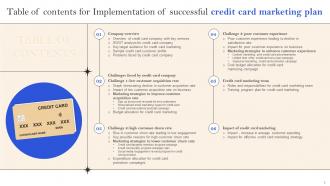
Slide 3: This slide exhibit table of content.
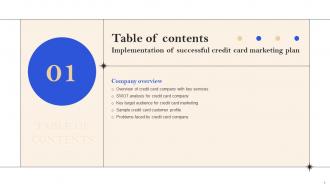
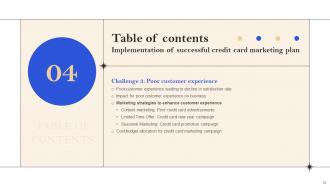
Slide 4: This slide exhibit table of content that is to be discuss further.
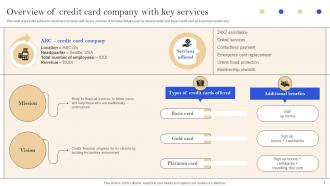
Slide 5: This slide represents outline for credit card company with its key services.
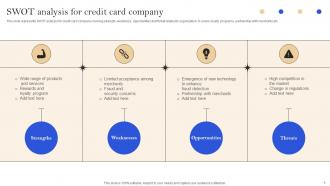
Slide 6: This slide represents SWOT analysis for credit card company covering strength, weakness, opportunities and threat related to organization.
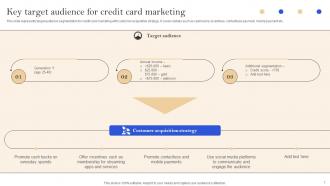
Slide 7: This slide represents target audience segmentation for credit card marketing with customer acquisition strategy.
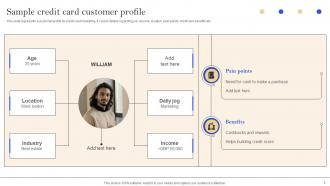
Slide 8: This slide represents a customer profile for credit card marketing.
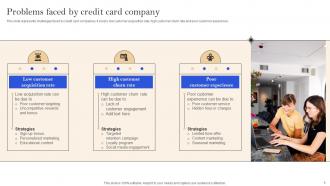
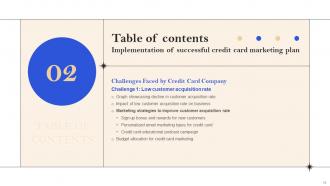
Slide 9: This slide represents challenges faced by credit card companies.
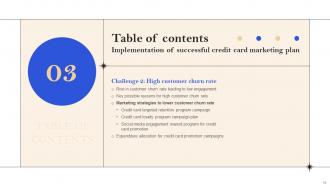
Slide 10: This slide exhibit table of content that is to be discuss further.
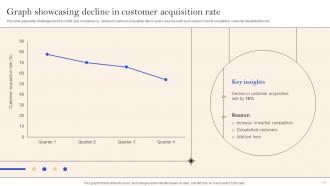
Slide 11: This slide represents challenges faced by credit card companies i.e., decline in customer acquisition rate.
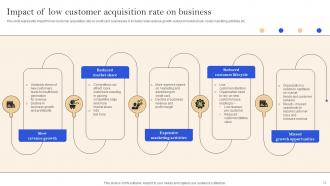
Slide 12: This slide represents impact for low customer acquisition rate on credit card businesses.
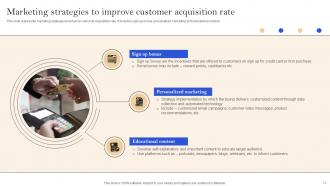
Slide 13: This slide represents marketing strategies to enhance customer acquisition rate.
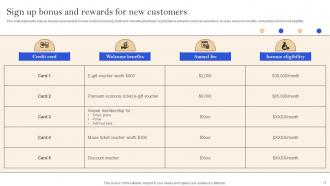
Slide 14: This slide represents sign-up bonuses and rewards for new customers during credit card marketing that helps organizations enhance customer experience.
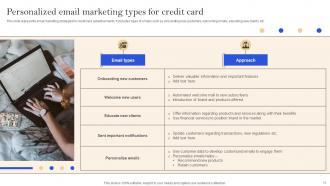
Slide 15: This slide represents email marketing strategies for credit card advertisements.
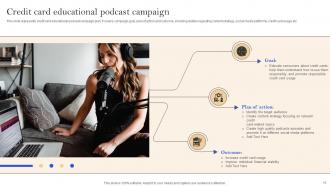
Slide 16: This slide represents credit card educational podcast campaign plan.
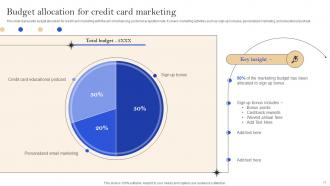
Slide 17: This slide represents budget allocation for credit card marketing with the aim of enhancing customer acquisition rate.
Slide 18: This slide exhibit table of content that is to be discuss further.
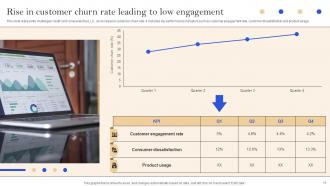
Slide 19: This slide represents challenges credit card companies face, i.e., an increase in customer churn rate.
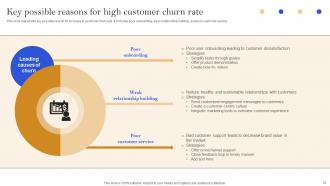
Slide 20: This slide represents key possible reason for increase in customer churn rate.
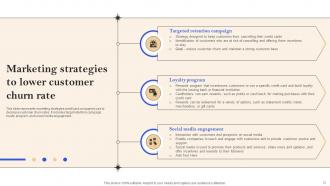
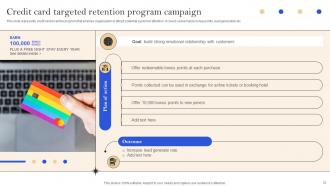
Slide 21: This slide represents marketing strategies credit card companies use to decrease customer churn rates.
Slide 22: This slide represents credit card incentive program that enables organization to attract potential customer attention.
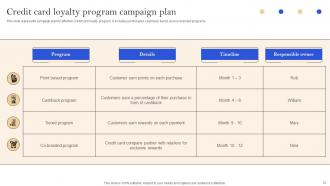
Slide 23: This slide represents campaign plan for effective credit card loyalty program.
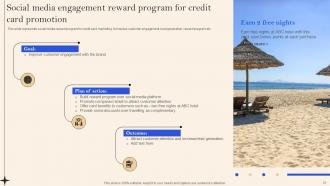
Slide 24: This slide represents social media reward program for credit card marketing.
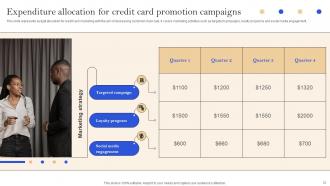
Slide 25: This slide represents budget allocation for credit card marketing with the aim of decreasing customer churn rate.
Slide 26: This slide exhibit table of content that is to be discuss further.
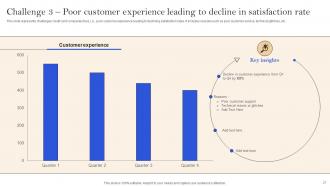
Slide 27: This slide represents challenges credit card companies face, i.e., poor customer experience leading to declining satisfaction rates.
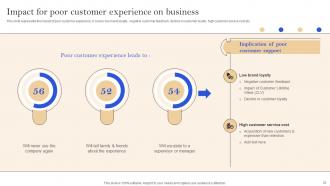
Slide 28: This slide represents the impact of poor customer experience.
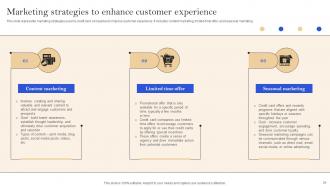
Slide 29: This slide represents marketing strategies used by credit card companies to improve customer experience.
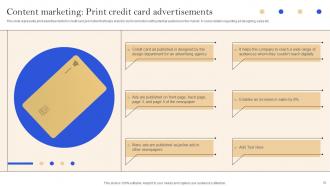
Slide 30: This slide represents print advertisements for credit card promotion that helps brand to build connection with potential audience in the market.
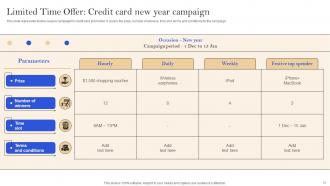
Slide 31: This slide represents festive season campaign for credit card promotion. It covers the prize, number of winners, time slot, terms and conditions for the campaign.
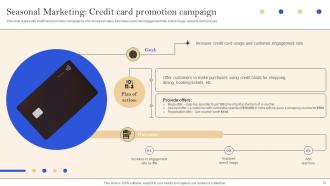
Slide 32: This slide represents credit card promotion campaign for end-of-season sales. It includes customer engagement rate, brand image, rewards and bonuses.
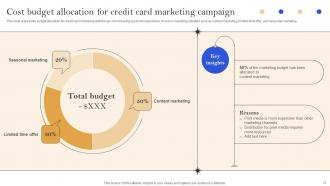
Slide 33: This slide represents budget allocation for credit card marketing with the aim of increasing customer experience.
Slide 34: This slide exhibit table of content that is to be discuss further.
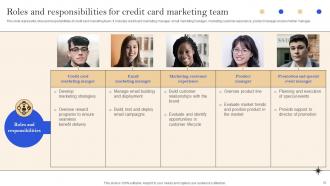
Slide 35: This slide represents roles and responsibilities of credit card marketing team.
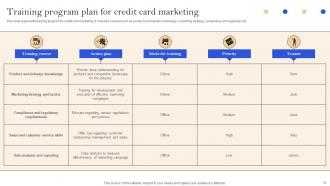
Slide 36: This slide represents training program for credit card marketing.
Slide 37: This slide exhibit table of content that is to be discuss further.
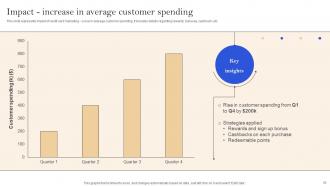
Slide 38: This slide represents impact of credit card marketing – a rise in average customer spending.
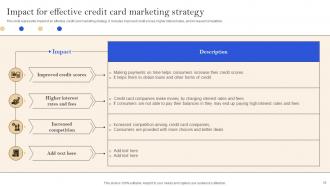
Slide 39: This slide represents impact of an effective credit card marketing strategy.
Slide 40: This is the icons slide.
Slide 41: This slide presents title for additional slides.
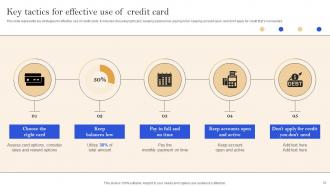
Slide 42: This slide represents key strategies for effective use of credit cards.
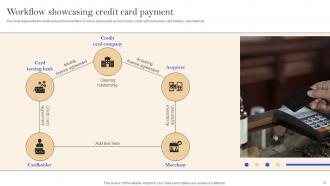
Slide 43: This slide represents the credit card payment workflow. It covers participants such as banks, credit card companies, card holders, merchants etc.
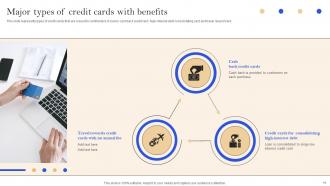
Slide 44: This slide represents types of credit cards that are issued to cardholders.
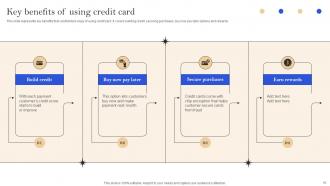
Slide 45: This slide represents key benefits that cardholders enjoy of using credit card.
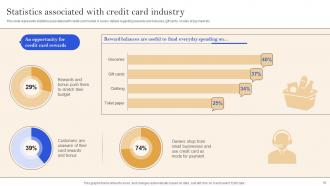
Slide 46: This slide represents statistics associated with credit card market.
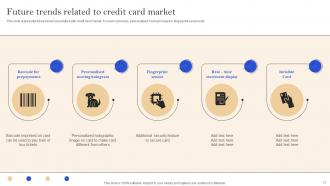
Slide 47: This slide represents future trends associated with credit card market. It covers barcodes, personalized moving hologram, fingerprint sensors etc.
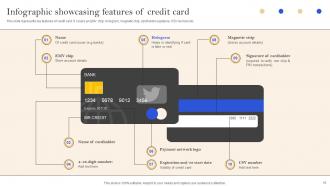
Slide 48: This slide represents key features of credit card. It covers an EMV chip, hologram, magnetic chip, cardholder signature, CSV number etc.
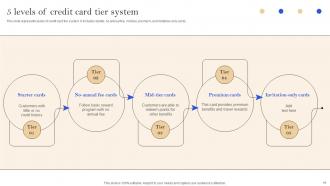
Slide 49: This slide represents levels of credit card tier system. It includes starter, no annual fee, mid-tier, premium, and invitation-only cards.
Slide 50: This is thank you slide & contains contact details of company like office address, phone no., etc.
Implementation Of Successful Credit Card Marketing Plan Strategy CD V with all 60 slides:
Use our Implementation Of Successful Credit Card Marketing Plan Strategy CD V to effectively help you save your valuable time. They are readymade to fit into any presentation structure.












FAQs for Implementation Of Successful Credit Card Marketing Plan
Effective credit card marketing strategies include targeted customer segmentation, competitive rate positioning, rewards program differentiation, digital channel optimization, and strategic partnership development. These elements work together by identifying high-value demographics, streamlining application processes, and enhancing customer acquisition through personalized campaigns, with many financial institutions finding that integrated approaches significantly boost conversion rates while reducing acquisition costs.
Credit card target audiences can be identified through demographic analysis, spending behavior patterns, credit history assessment, lifestyle preferences, and digital engagement metrics. Financial institutions enhance segmentation by analyzing transaction data, income levels, and life stage indicators like homeownership or family status, ultimately delivering personalized marketing campaigns that resonate with specific consumer needs and financial goals.
Digital marketing enables credit card providers to reach targeted audiences through social media advertising, search engine optimization, email campaigns, content marketing, and personalized online experiences. These channels streamline customer acquisition by delivering tailored messaging, tracking consumer behavior, and optimizing conversion rates, with many financial institutions finding that digital approaches significantly reduce marketing costs while enhancing customer engagement and accelerating application processes.
Social media influences consumer perception of credit card brands by showcasing real-world benefits, enabling transparent customer interactions, and delivering targeted educational content about financial products. Through strategic social campaigns, banks and financial institutions build trust, demonstrate value propositions, and address customer concerns directly, ultimately enhancing brand credibility and competitive positioning in an increasingly digital marketplace.
Cashback rewards, welcome bonuses, introductory 0% APR periods, travel miles, and sign-up incentives prove most effective in attracting new credit card customers. Financial institutions find that strategic combinations of these offers, particularly generous welcome bonuses paired with ongoing rewards programs, significantly enhance customer acquisition rates while building long-term loyalty and engagement.
Loyalty programs significantly enhance customer retention in the credit card industry by offering personalized rewards, exclusive benefits, and tiered membership levels that increase switching costs. Through strategic reward structures, banks and financial institutions reduce churn rates, increase card usage frequency, and strengthen customer lifetime value, with many finding that well-designed programs deliver competitive advantage.
Ethical considerations include transparent fee disclosure, responsible targeting practices, clear terms and conditions, avoiding predatory lending to vulnerable populations, and honest advertising about rewards and benefits. Financial institutions increasingly balance competitive marketing with consumer protection, ensuring credit offerings match customer financial capabilities while maintaining regulatory compliance, ultimately building sustainable customer relationships through trust and responsible lending practices.
Data analytics enhances credit card marketing strategies by enabling customer segmentation, predictive modeling, personalized campaign targeting, and real-time performance optimization. Through machine learning algorithms, financial institutions can identify high-value prospects, predict customer lifetime value, and deliver tailored offers across digital channels, ultimately increasing conversion rates, reducing acquisition costs, and maximizing portfolio profitability in competitive markets.
Educational credit card marketing strategies include interactive online calculators, personalized benefit demonstrations, video tutorials, comparison tools, and transparent fee breakdowns. Financial institutions enhance consumer understanding by showcasing real-world scenarios like travel rewards usage, cashback optimization, and fraud protection benefits, ultimately building trust and enabling informed decision-making in an increasingly competitive marketplace.
Customer feedback influences credit card marketing campaigns by identifying customer pain points, preferences, and unmet needs, enabling financial institutions to create targeted messaging and product positioning. Through surveys, social media monitoring, and customer service insights, banks refine their value propositions, adjust rewards structures, and develop personalized offers, ultimately delivering more relevant campaigns that resonate with specific customer segments and drive higher conversion rates.
Recent innovative credit card marketing tactics include personalized AI-driven recommendations, gamified rewards programs, social media influencer partnerships, cashback category rotations, and embedded financial wellness tools. These strategies enhance customer engagement by delivering targeted experiences, interactive earning opportunities, and value-added services, with many financial institutions finding that personalized approaches significantly improve acquisition rates and long-term customer loyalty.
Partnerships with retailers enhance credit card marketing by offering co-branded cards, exclusive discounts, and reward programs tied to customer shopping habits. These strategic alliances enable financial institutions to access retailers' customer bases, deliver personalized incentives, and create compelling value propositions, ultimately driving higher card adoption rates and increased customer loyalty across both brands.
Credit card marketing strategies must comply with the Truth in Lending Act, Fair Credit Reporting Act, Card Act provisions, state usury laws, and advertising disclosure requirements. These regulations streamline consumer protection by mandating clear fee structures, interest rate transparency, and responsible marketing practices, with many financial institutions finding that compliance ultimately enhances customer trust and reduces regulatory risk.
Credit card companies can use customer journey mapping to identify pain points, optimize touchpoints, and personalize messaging across acquisition, activation, and retention phases. By analyzing customer interactions from initial awareness through application, approval, and ongoing usage, companies streamline onboarding processes, reduce abandonment rates, and deliver targeted offers, ultimately enhancing customer experiences while increasing conversion rates and long-term loyalty.
Credit card marketing success requires tracking acquisition cost per customer, approval rates, activation rates, spending velocity, and customer lifetime value. These metrics enable financial institutions to optimize campaign targeting, reduce acquisition expenses, and maximize portfolio profitability, with many banks finding that focusing on activation rates and early spending patterns delivers stronger long-term customer relationships and competitive advantage.
-
Stunning collection! With a wide variety of options available, I was able to find a perfect slide for my presentation. Thank you, SlideTeam!
-
The team is highly dedicated and professional. They deliver their work on time and with perfection.