Implementing Asset Monitoring System Powerpoint Presentation Slides
Try Before you Buy Download Free Sample Product
Audience
Editable
of Time
An asset tracking system is a technique to monitor an organizations assets more efficiently to enhance customer service and improve equipment longevity. Grab our Implementing asset monitoring system template. It is expertly crafted to keep track of purchases to strengthen security and IT safety. Our IT asset management deck provides the latest technology trends for keeping track of assets. It involves the current scenario of an organizations asset and inventory management systems. Additionally, our Inventory management system PPT offers essential methods of an asset tracking system such as RFID tags, barcode scanning, Bluetooth low energy, near-field communication, and more. It further showcases detailed working and key benefits of implementing these systems. Furthermore, our RFID integration module includes a workflow chart and the roles and responsibilities of the HR manager and team. It contains cost analysis and comparative software assessment for enhancing overall performance. Lastly, our Asset management template exhibits the KPI dashboards and impact analysis for measuring the effectiveness of implementing a tracking system. Get instant access.
People who downloaded this PowerPoint presentation also viewed the following :
Content of this Powerpoint Presentation
Slide 1: This slide introduces Implementing asset monitoring system. Commence by stating Your Company Name.
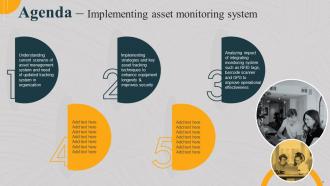
Slide 2: This slide depicts the Agenda of the presentation.
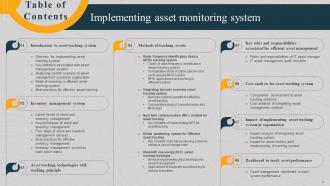
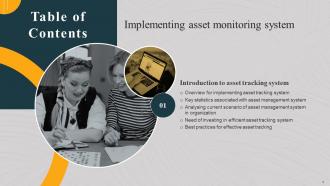
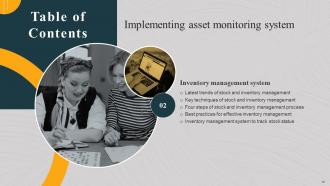
Slide 3: This slide incorporates the Table of Contents.
Slide 4: This slide highlights the Title for the Topics to be covered further.
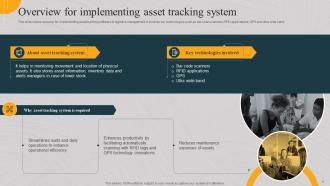
Slide 5: This slide presents an Overview for implementing asset tracking system.
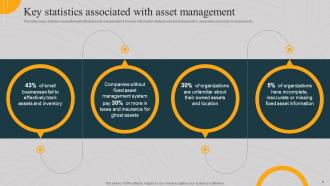
Slide 6: This slide exhibits the Key statistics associated with asset management.
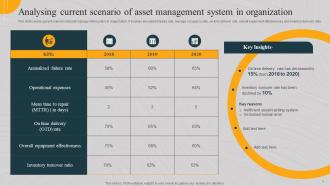
Slide 7: This slide deals with Analysing current scenario of asset management system in organization.
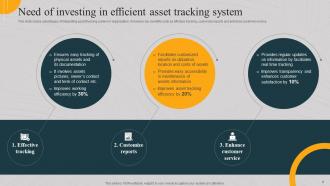
Slide 8: This slide portrays the Need of investing in efficient asset tracking system.
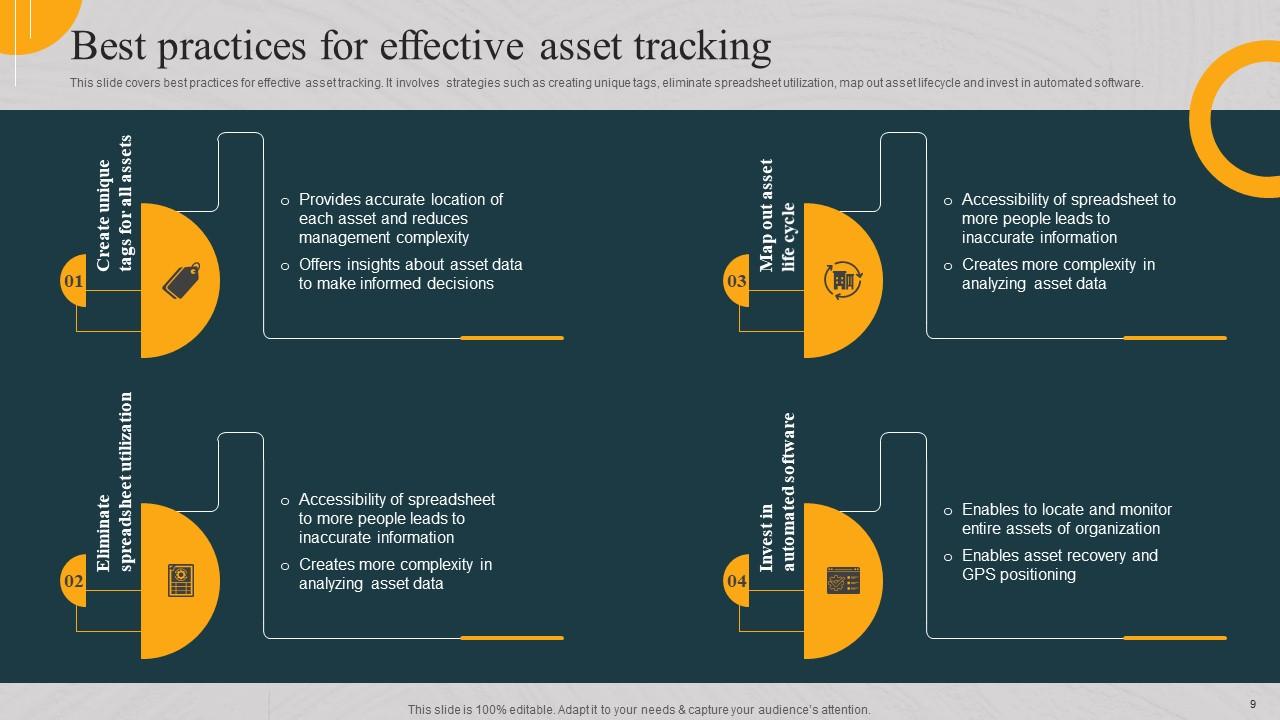
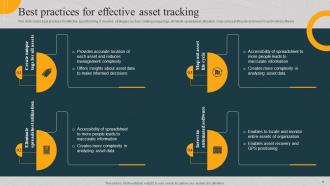
Slide 9: This slide covers best practices for effective asset tracking.
Slide 10: This slide includes the Heading for the Contents to be discussed next.
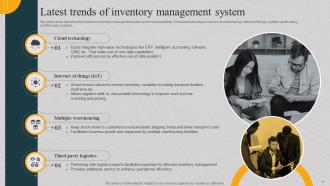
Slide 11: This slide talks about the Latest trends of inventory management system.
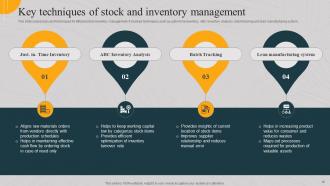
Slide 12: This slide showcases the Key techniques of stock and inventory management.
Slide 13: This slide states the Four steps of stock and inventory management process.
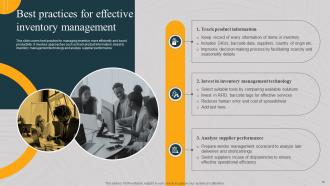
Slide 14: This slide reveals the Best practices for effective inventory management.
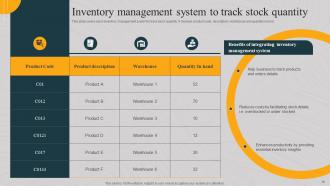
Slide 15: This slide covers stock inventory management system to track stock quantity.
Slide 16: This slide indicates the Title for the Ideas to be covered in the upcoming template.
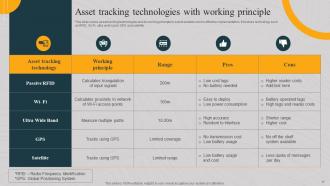
Slide 17: This slide highlights the Asset tracking technologies with working principle.
Slide 18: This slide represents the Heading for the Ideas to be discussed next.
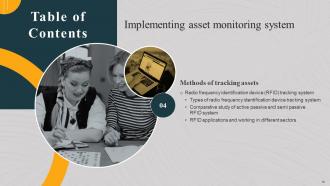
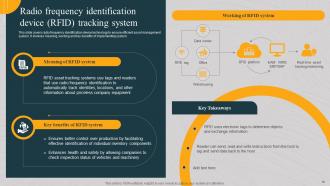
Slide 19: This slide focuses on the Radio frequency identification device (RFID) tracking system.
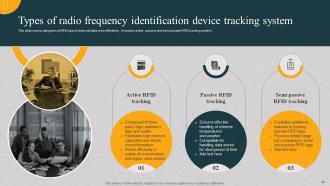
Slide 20: This slide states the Types of radio frequency identification device tracking system.
Slide 21: This slide illustrates the Comparative study of active passive and semi passive RFID system.
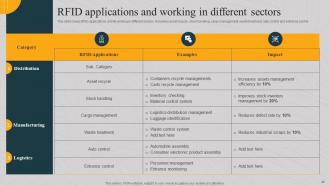
Slide 22: This slide covers RFID applications and its working in different sectors.
Slide 23: This slide mentions the Title for the Contents to be covered in the forth-coming template.
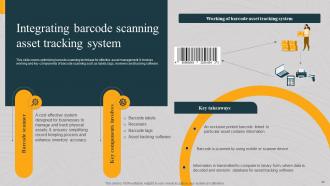
Slide 24: This slide deals with Integrating barcode scanning asset tracking system.
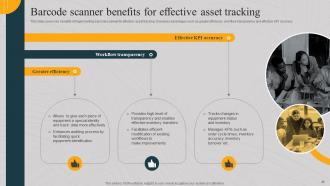
Slide 25: This slide highlights the Barcode scanner benefits for effective asset tracking.
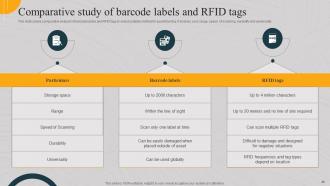
Slide 26: This slide shows the Comparative study of barcode labels and RFID tags.
Slide 27: This slide portrays the Heading for the Topics to be discussed next.
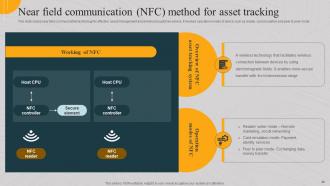
Slide 28: This slide talks about the Near field communication (NFC) method for asset tracking.
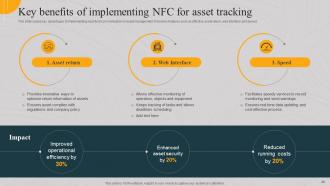
Slide 29: This slide exhibits the Key benefits of implementing NFC for asset tracking.
Slide 30: This slide reveals the Title for the Topics to be covered in the upcoming template.
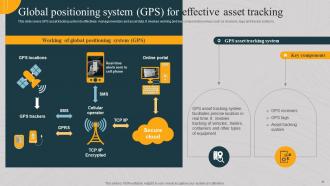
Slide 31: This slide indicates the Global positioning system (GPS) for effective asset tracking.
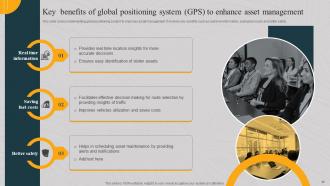
Slide 32: This slide states the Key benefits of global positioning system (GPS) to enhance asset management.
Slide 33: This slide displays the Heading for the Contents to be discussed further.
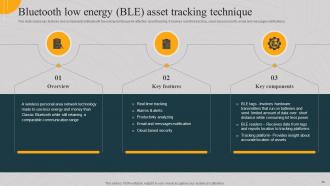
Slide 34: This slide covers key features and components of Bluetooth low energy technique for effective asset tracking.
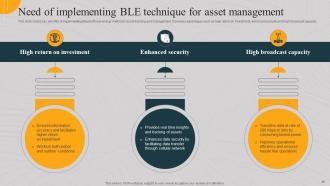
Slide 35: This slide portrays the Need of implementing BLE technique for asset management.
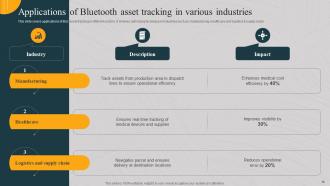
Slide 36: This slide depicts the Applications of Bluetooth asset tracking in various industries.
Slide 37: This slide includes the Title for the Ideas to be covered next.
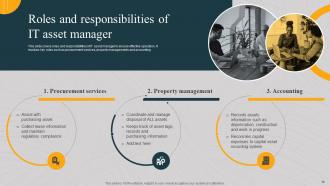
Slide 38: This slide exhibits the Roles and responsibilities of IT asset manager.
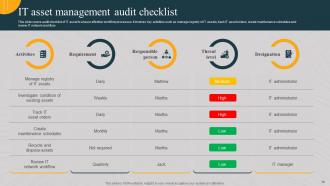
Slide 39: This slide covers audit checklist of IT asset to ensure effective workflow processes.
Slide 40: This slide highlights the Heading for the Ideas to be discussed in the following template.
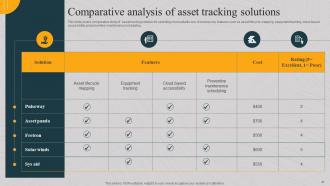
Slide 41: This slide shows the Comparative analysis of asset tracking solutions.
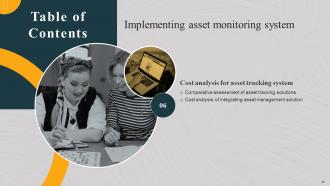
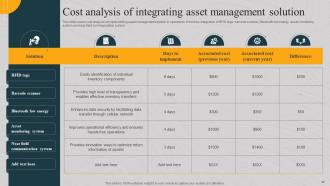
Slide 42: This slide depicts the Cost analysis of integrating asset management solution.
Slide 43: This slide displays the Title for the Contents to be covered next.
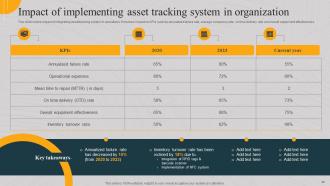
Slide 44: This slide reveals the Impact of implementing asset tracking system in organization.
Slide 45: This slide covers inclining and declining impact on asset management KPIs.
Slide 46: This slide includes the Heading for the Topics to be discussed further.
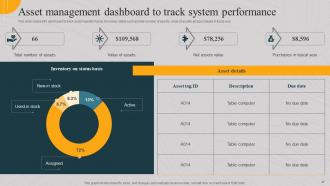
Slide 47: This slide illustrates the Asset management dashboard to track system performance.
Slide 48: This is the Icons slide containing all the Icons used in the plan.
Slide 49: This slide is used for depicting some Additional information.
Slide 50: This is the Idea generation slide for encouraging innovative ideas.
Slide 51: This slide displays the company's Timeline.
Slide 52: This is the 30 60 90 days plan slide for effective planning.
Slide 53: This slide elucidates the organization's Roadmap.
Slide 54: This is Our team slide. State your team-related information here.
Slide 55: This slide presents the SWOT analysis.
Slide 56: This slide contains the Post it notes for reminders and deadlines.
Slide 57: This is the Venn diagram slide. This slide is 100% editable. Adapt it to your needs and capture your audience's attention.
Slide 58: This is the Thank you slide for acknowledgement.
Implementing Asset Monitoring System Powerpoint Presentation Slides with all 60 slides:
Use our Implementing Asset Monitoring System Powerpoint Presentation Slides to effectively help you save your valuable time. They are readymade to fit into any presentation structure.
FAQs for Implementing Asset Monitoring System
So you're gonna need four key pieces: sensors and IoT stuff for real-time data, a central database to dump everything, analytics tools that can spot patterns and send alerts, plus a dashboard that doesn't suck. Seriously, most dashboards are hot garbage when you actually need them during a crisis. Start small though - pick your most critical equipment first, then build out from there. Oh, and set up automated alerts so you catch problems before they get expensive. Nobody wants to babysit charts all day.
You know what's crazy? Having real-time data means you actually catch problems before they blow up into expensive disasters. No more waiting around for weekly reports or finding out your equipment died yesterday. When something goes wrong, you get pinged immediately. This totally changes how you plan maintenance too - you can see usage patterns and predict failures based on what's actually happening, not just crossing your fingers. Way less downtime, costs drop, and you're not wasting resources. Oh, and start with your most critical stuff first. Don't try to monitor everything at once.
So basically, IoT sensors turn your equipment into smart assets that actually talk to you. Instead of guessing when stuff might break, you get real-time data on temperature, vibration, all that good stuff. Honestly, it's pretty game-changing - you can fix things before they fail rather than scrambling after disaster strikes. The money you'll save on emergency repairs is crazy. I'd start small though, maybe just your most expensive equipment first? Once you see the numbers, you'll want sensors on everything. It beats those old-school inspection schedules by miles.
Definitely encrypt everything - data transmission, storage, all of it. Role-based access controls are huge too, so random people can't peek at sensitive equipment info. Multi-factor authentication is annoying but necessary. Oh, and run security audits regularly (I know, total drag). Back up your data somewhere safe and have a plan for when things go sideways. Honestly, treat this stuff like gold because thieves love equipment details way more than you'd think. Short version: layer your defenses thick.
So you're gonna want to track four main things. Availability stuff first - uptime percentage and how often things break down. Basic but crucial. Efficiency comes next: throughput rates, energy use per unit. Maintenance indicators are where it gets interesting - vibration, temperature, wear patterns (some of this data is honestly pretty cool once you dive in). Cost tracking too - what you're spending on maintenance and total ownership costs. I'd start simple and build up your monitoring over time rather than going crazy with sensors right away.
So basically your sensors are tracking vibration, temperature, pressure - all that stuff - and feeding it into algorithms that can spot patterns. Pretty neat when it actually works. Instead of just doing maintenance every X months or waiting for things to blow up, you get heads up like "that pump bearing's gonna die in 2-3 weeks." Game changer honestly. You can actually plan your downtime, get parts ordered ahead of time. No more of those brutal emergency repairs that always happen on Friday nights, you know?
Ugh, leadership's gonna be your first headache - they hate spending money upfront on this stuff. Your IT people will complain nonstop about making it work with current systems (compatibility is genuinely terrible). Staff training eats up way more time than you'd think. Here's the thing though - if your sensors aren't positioned right or calibrated properly, you're basically making decisions off complete junk data. That's worse than having no system at all. I'd honestly just pick your most important equipment first and run a small test. Prove it actually saves money before you go crazy with it.
Honestly, these systems are lifesavers for compliance stuff. They track where everything is, when maintenance is due, all that good stuff regulators want to see. No more digging through random spreadsheets when auditors show up - the system spits out reports automatically. You'll get alerts before deadlines so you're not scrambling last minute. Real-time tracking means you can actually prove your assets are being maintained properly. My friend Jake saved his company from a huge fine just because his system flagged expired certifications early. Set up those automated alerts and you're golden.
So yeah, IoT sensors and RFID are still solid choices, but predictive analytics with AI is seriously impressive right now. Computer vision systems can actually watch your stuff and catch problems early - it's pretty wild. Edge computing's becoming huge too since you process everything locally instead of cloud delays. The real-time monitoring combined with machine learning predictions? Game changer honestly. Digital twins are getting more common as well, basically virtual copies of your actual assets. My advice would be finding platforms that mix different tracking methods. Don't put all your eggs in one tech basket, you know?
Look, software analytics show you exactly where you're bleeding money on assets that aren't pulling their weight. Maybe equipment's just sitting there during busy periods, or you've got one machine that's a total maintenance nightmare compared to the others. Day-to-day operations make this stuff hard to catch. The cool part? You can actually predict when things will break instead of just reacting. Plus you're scheduling based on real data, not just winging it. Honestly, I'd focus on your priciest assets first - way easier to see results that way.
Yeah, the upfront stuff isn't cheap - sensors, software, installation, getting your people trained up. Most places break even around 12-18 months though since you're not dealing with catastrophic equipment failures anymore. Manual inspections become way less of a headache, and honestly the unplanned downtime savings alone probably justify it. After that you're mainly paying subscription fees and swapping out sensors here and there. I'd totally start with whatever equipment would hurt most if it died, then build out from there once you've got some wins to show for it.
Dude, cloud computing is perfect for this. You can throw some IoT sensors on your equipment and monitor everything from your phone - no need to buy a bunch of servers or set up crazy infrastructure. Real-time data on where stuff is, how it's performing, all that good stuff. The analytics are honestly way better than old-school systems, plus you get automatic updates without lifting a finger. Costs are way lower upfront too since you're basically renting instead of buying. I'd start small though - pick your most important assets and test it out first. Integration with your other systems is pretty seamless once you get going.
So basically manufacturing, energy, and transportation get the most bang for their buck with asset monitoring. Oil refineries watching their pipelines, factories tracking production equipment, logistics companies monitoring fleets - that kind of stuff. Healthcare uses it for medical devices too, plus utilities for power grids and mining operations. The pattern? Expensive equipment where breakdowns cost a fortune. Honestly, if your machinery failing means everything stops or creates safety issues, that's where you start. Oh, and downtime in these industries is brutal - like, losing thousands per hour brutal.
Mobile access is a total game changer - your field techs can actually fix problems while they're standing right there instead of walking back to log everything later. Real-time alerts hit their phones, they update records on the spot, and honestly? The data gets way more accurate when people aren't trying to remember details hours later. Your whole team stays in the loop instantly when stuff breaks down. Managers don't have to wait around for those end-of-day reports anymore either. I'd start with getting the mobile app on your field crew's phones first - they're the ones who'll see the biggest difference.
Honestly, asset monitoring is a game changer for cutting waste. You can catch inefficiencies before they spiral out of control. Real-time tracking shows when machines need maintenance, so you avoid those brutal breakdowns that force early replacements. Energy usage gets way more optimized too - though the data can be overwhelming at first. Track your biggest energy hogs or equipment that always seems to break. That's where you'll see real results. It's actually pretty cool watching your waste metrics drop month over month. Equipment lasts longer when you understand how it performs under different conditions.
-
Excellent Designs.
-
I took a chance with SlideTeam. I never looked back. Great products and great service.