


Implementing Sales Growth Strategies To Increase Ecommerce Website Conversion Rate Complete Deck




Try Before you Buy Download Free Sample Product
 Impress Your
 Audience
 100%
100% Editable
 Save Hours
 of Time


Your companys activities are driven by interconnected plans called e-commerce strategies that help you, as the seller, understand your market. Check out our professionally designed presentation on Implementing Sales Growth Strategies to Increase E-commerce Website Conversion Rate, which showcases e-commerce strategies that can help increase product sales and provide customers with a seamless shopping experience. It helps promote e-commerce products or services on different platforms and acquire new customers and showcases the future potential of e-commerce sales growth and strategies to increase online sales. Our E-commerce website deck covers email marketing strategy, which can help send personalized product offers to customers and increase sales and various tactics that can help reduce shopping cart abandonment. This PPT also shows website and search engine optimization that can help to improve ranking and generate sales by adopting social media marketing to increase the revenue of online shopping websites. Lastly, this deck showcases budget allocation for e-commerce sales growth strategies and highlights dashboards to analyze and track e-commerce sales plus marketing campaigns. Get access now.
People who downloaded this PowerPoint presentation also viewed the following :
Content of this Powerpoint Presentation
Slide 1: This slide introduces Implementing Sales Growth Strategies to Increase Ecommerce Website Conversion Rate. Commence by stating Your Company Name.
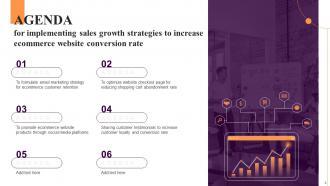
Slide 2: This slide depicts the Agenda of the presentation.
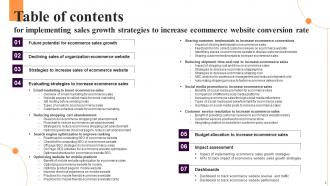
Slide 3: This slide includes the Table of contents.
Slide 4: This slide elucidates the Title for the Topics to be covered in the next template.
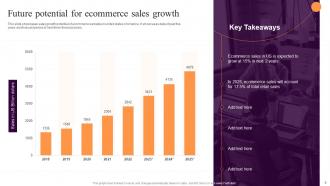
Slide 5: This slide showcases sales growth potential of ecommerce websites in united states of America.
Slide 6: This slide incorporates the Heading for the Contents to be discussed further.
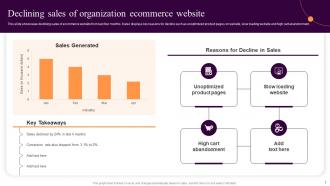
Slide 7: This slide shows declining sales of ecommerce website from last four months.
Slide 8: Thi sslide contains the Title for the Ideas to be covered next.
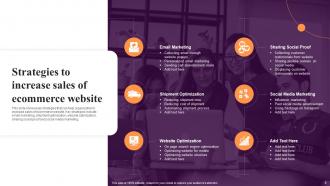
Slide 9: This slide states the strategies that can help organization to increase sales of ecommerce website.
Slide 10: This slide exhibits the Heading for the Contents to be discussed in the upcoming slide.
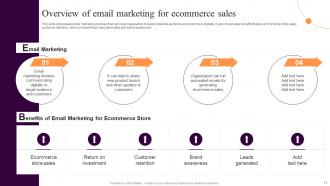
Slide 11: This slide covers email marketing overview that can help organization to target potential audience and customers digitally.
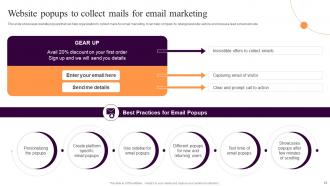
Slide 12: This slide elucidates website popups that can help organization to collect mails for email marketing.
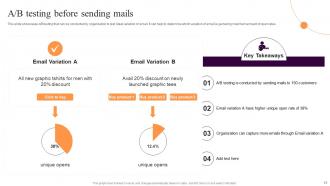
Slide 13: This slide showcases A/B testing that can be conducted by organization to test ideal variation of email.
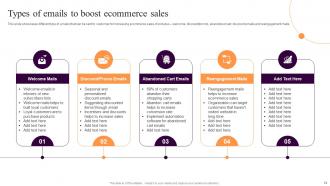
Slide 14: This slide reveals different type of emails that can be sent to customer for increasing ecommerce sales.
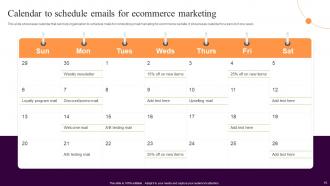
Slide 15: This slide presents the calendar that can help organization to schedule mails for conducting email marketing for ecommerce website.
Slide 16: This slide incorporates the Title for the Ideas to be discussed further.
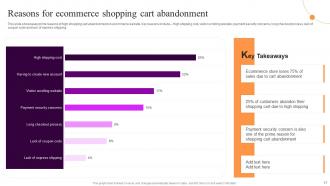
Slide 17: This slide showcases prime reasons of high shopping cart abandonment on ecommerce website.
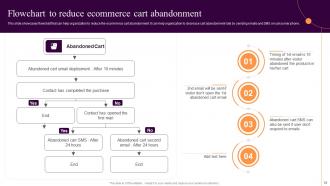
Slide 18: This slide represents a flowchart that can help organization to reduce the ecommerce cart abandonment.
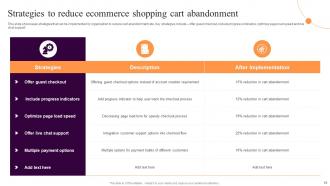
Slide 19: This slide displays the strategies that can be implemented by organization to reduce cart abandonment rate.
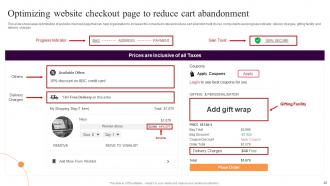
Slide 20: This slide outlines optimization of website checkout page that can help organization to increase the conversion rate and reduce cart abandonment.
Slide 21: This slide contains the Heading for the Components to be covered further.
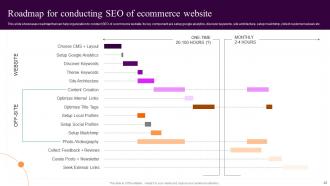
Slide 22: This slide elucidates the Roadmap for conducting SEO of ecommerce website.
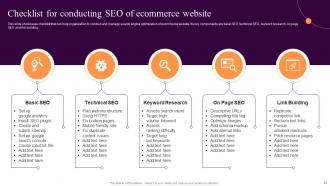
Slide 23: This slide showcases checklist that can help organization to conduct and manage search engine optimization of ecommerce website.
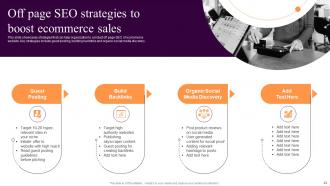
Slide 24: This slide exhibits strategies that can help organization to conduct off page SEO of ecommerce website.
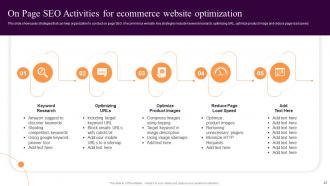
Slide 25: This slide highlights strategies that can help organization to conduct on page SEO of ecommerce website.
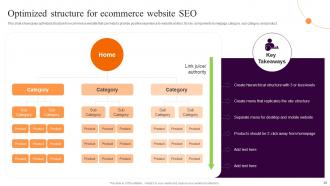
Slide 26: This slide presents optimized structure for ecommerce website that can help to provide positive experience to website visitors.
Slide 27: This slide mentions the Title for the Topics to be covered further.
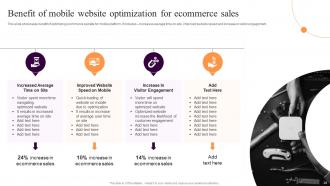
Slide 28: This slide focuses on benefit of optimizing ecommerce website for mobile platform.
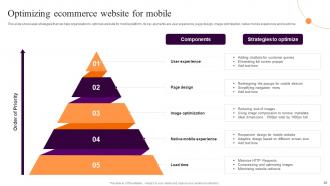
Slide 29: This slide showcases strategies that can help organization to optimize website for mobile platform.
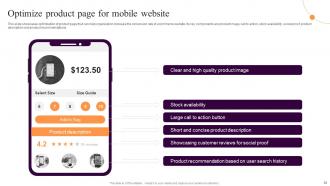
Slide 30: This slide represents optimization of product page that can help organization increase the conversion rate of ecommerce website.
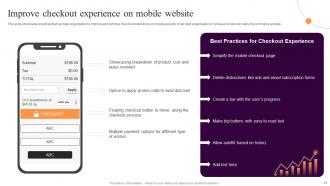
Slide 31: This slide highlights practices that can help organization to improve and optimize checkout experience on mobile website.
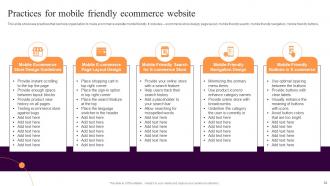
Slide 32: This slide mentions the practices that can help organization to make ecommerce website mobile friendly.
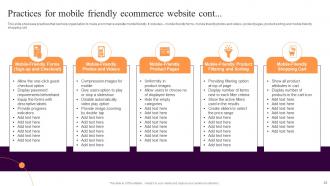
Slide 33: This slide elucidates the practices that can help organization to make ecommerce website mobile friendly.
Slide 34: This slide shows the Heading for the Components to be discussed further.
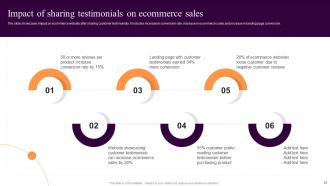
Slide 35: The slide deals with the impact on ecommerce website after sharing customer testimonials.
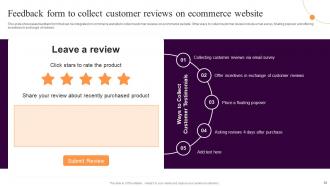
Slide 36: This slide reveals the feedback form that can be integrated on commerce website to collect customer reviews on it.
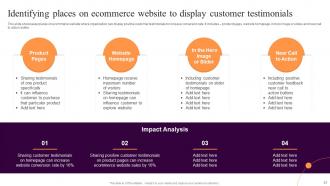
Slide 37: This slide represents places on ecommerce website where organization can display positive customer testimonials to increase conversion rate.
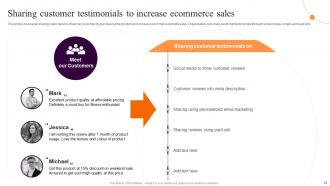
Slide 38: This slide showcases sharing customers to influencer customer for purchasing the product and increase ecommerce website sales.
Slide 39: This slide exhibits the Title for the Topics to be covered furtehr.
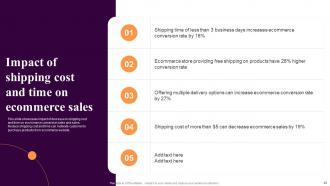
Slide 40: This slide shows the impact of decrease in shipping cost and time on ecommerce conversion rates and sales.
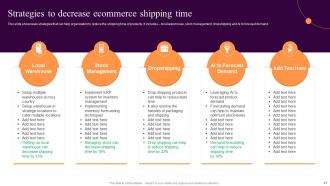
Slide 41: This slide mentions the strategies that can help organization to reduce the shipping time of products.
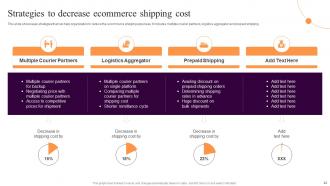
Slide 42: This slide highlights the strategies that can help organization to reduce the ecommerce shipping expenses.
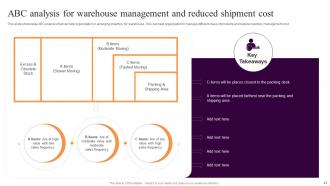
Slide 43: This slide depicts ABC analysis that can help organization in arranging inventory for warehouse.
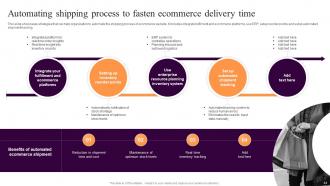
Slide 44: This slide showcases strategies that can help organization to automate the shipping process of ecommerce website.
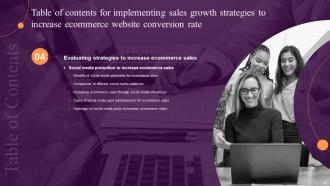
Slide 45: This slide incorporates the Heading for the Contents to be discussed further.
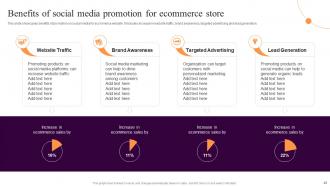
Slide 46: This slide states the benefits of promotion on social media for ecommerce website.
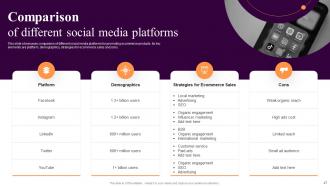
Slide 47: This slide reveals the comparison of different social media platforms for promoting ecommerce products.
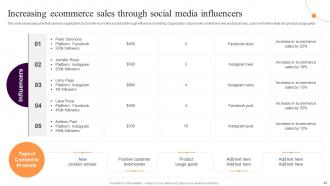
Slide 48: This slide elucidates the plan that can help organization to promote ecommerce products through influencer marketing.
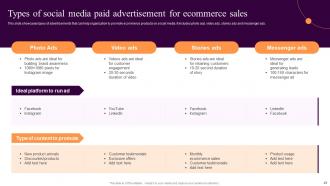
Slide 49: This slide showcases types of advertisements that can help organization to promote ecommerce products on social media.
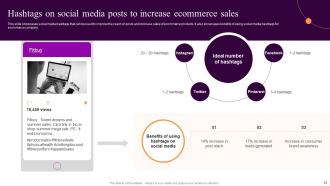
Slide 50: This slide potrays social media hashtags that can be used to improve the reach of posts and increase sales of ecommerce products.
Slide 51: This slide exhibits the Heading for the Components to be discussed in the next template.
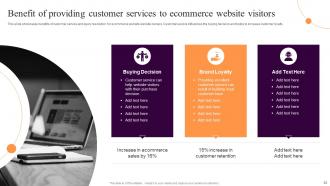
Slide 52: This slide shows the benefits of customer service and query resolution for ecommerce website website owners.
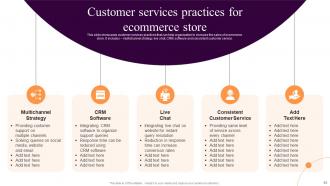
Slide 53: This slide showcases customer services practices that can help organization to increase the sales of ecommerce store.
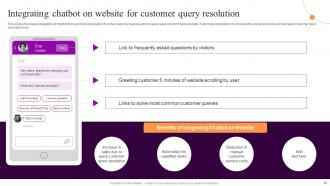
Slide 54: This slide presents integration of chatbot that can help organization to solve customer queries and increase sales of ecommerce website.
Slide 55: This slide includes the Heading for the Topics to eb covered further.
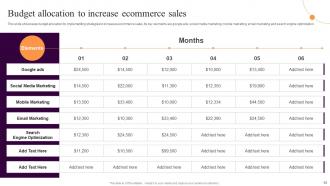
Slide 56: This slide reveals budget allocation for implementing strategies to increases ecommerce sales.
Slide 57: This slide highlights the Title for the Ideas to be discussed further.
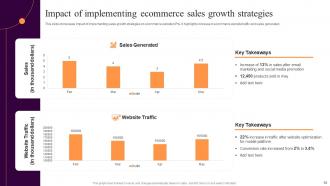
Slide 58: This slide showcases impact of implementing sales growth strategies on ecommerce website KPIs.
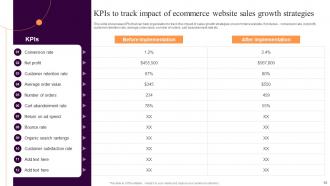
Slide 59: This slide outlines KPIs that can help organization to track the impact of sales growth strategies on ecommerce website.
Slide 60: This slide highlights the Title for the Contents to be covered in the upcoming template.
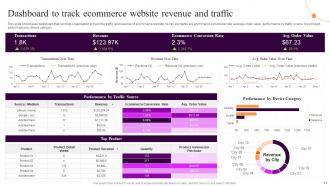
Slide 61: This slide shows the dashboard that can help organization to track the traffic and revenue of ecommerce website.
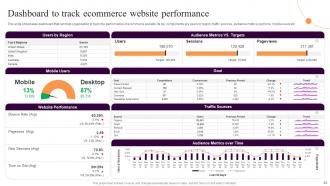
Slide 62: This slide elucidates the dashboard that can help organization to track the performance of ecommerce website.
Slide 63: This is the Icons slide containing all the Icons used in the plan.
Slide 64: This slide depicts the additional information.
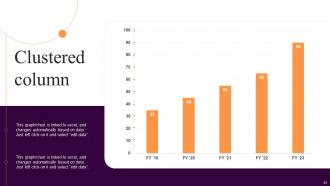
Slide 65: This slide shows the Clustered column for relevant information.
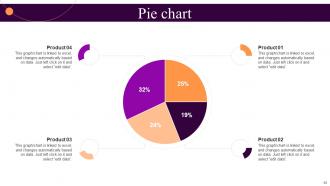
Slide 66: This slide presents a Pie chart for showcasing Company related information.
Slide 67: This is Our vision, mission, and goal slide. List Your organization's mission and vission here.
Slide 68: This is Meet our team slide. State the information related to your team members here.
Slide 69: This is the About us slide for listing the Company's information.
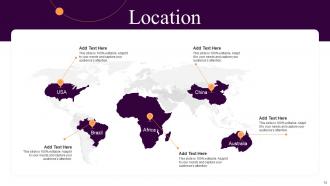
Slide 70: This slide reevals the Organization's Location across the world.
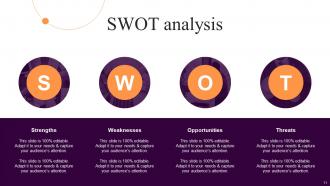
Slide 71: This slide reevals the SWOT analysis.
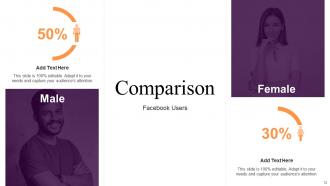
Slide 72: This slide is used for Comparison.
Slide 73: This slide elucidates the Lego with related imagery.
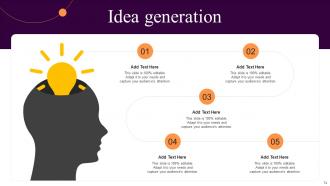
Slide 74: This is the Idea generation slide for encouraging fresh ideas.
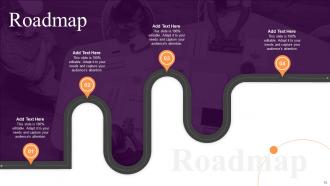
Slide 75: This slide depicts the Company's Roadmap showcasing it's journey.
Slide 76: This is the Circular slide with related imagery.
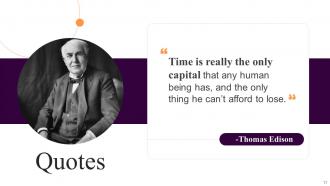
Slide 77: This is the Quotes slide for motivation.
Slide 78: This is the Thank You slide for acknowledgement.
Implementing Sales Growth Strategies To Increase Ecommerce Website Conversion Rate Complete Deck with all 83 slides:
Use our Implementing Sales Growth Strategies To Increase Ecommerce Website Conversion Rate Complete Deck to effectively help you save your valuable time. They are readymade to fit into any presentation structure.










FAQs for Implementing Sales Growth Strategies To Increase Ecommerce Website Conversion
Effective sales growth strategies for small businesses include customer relationship management systems, targeted digital marketing campaigns, strategic partnerships with complementary businesses, value-based selling approaches, and referral incentive programs. These methods enable competitive differentiation by enhancing customer experiences, streamlining sales processes, and maximizing resource allocation, with many small businesses finding that strategic combinations of these approaches deliver sustainable growth and improved market positioning.
Leveraging customer feedback enhances sales growth strategies by identifying product gaps, refining value propositions, and personalizing customer experiences based on actual preferences and pain points. Through systematic feedback analysis, companies streamline their sales processes, develop targeted messaging that resonates with prospects, and ultimately deliver solutions that directly address market demands, with many organizations finding this approach significantly increases conversion rates and customer retention.
Technology plays a crucial role in optimizing sales growth strategies through CRM systems, sales automation tools, predictive analytics, AI-powered lead scoring, and customer data platforms. These technologies streamline prospecting, enhance customer targeting, and accelerate deal closure by providing real-time insights, automating repetitive tasks, and enabling personalized customer interactions, ultimately delivering faster sales cycles and improved conversion rates.
Sales teams can effectively measure growth strategy success through key performance indicators like conversion rates, customer acquisition costs, average deal size, sales cycle length, and revenue per representative. These metrics enable organizations to track performance across different channels and customer segments, with many companies finding that combining leading indicators like pipeline velocity with lagging indicators like quarterly revenue growth ultimately delivers comprehensive insights into strategy effectiveness and competitive positioning.
Companies like Amazon revolutionized sales through personalized recommendations and Prime membership, while Salesforce transformed B2B sales with cloud-based CRM platforms and subscription models. HubSpot's inbound marketing methodology, Netflix's data-driven content personalization, and Zoom's freemium strategy demonstrate how innovative approaches streamline customer acquisition, enhance retention rates, and ultimately deliver sustainable competitive advantages across diverse markets.
Social media drives sales growth by building brand awareness, engaging directly with customers, showcasing products through visual content, and leveraging targeted advertising capabilities. Through platforms like Instagram and LinkedIn, businesses streamline customer acquisition, enhance relationship building, and generate qualified leads, with many retailers finding that authentic social engagement ultimately delivers higher conversion rates and sustainable revenue growth.
Pricing strategies significantly impact sales growth by influencing customer acquisition, market positioning, competitive advantage, and profit margins. Strategic pricing approaches, from value-based pricing in technology sectors to dynamic pricing in retail, enable businesses to maximize revenue, attract target demographics, and optimize market share, ultimately delivering sustainable growth and enhanced profitability.
Cross-selling and upselling integrate into sales growth strategies by leveraging existing customer relationships, analyzing purchase patterns, and training teams to identify complementary needs. These approaches streamline revenue expansion through targeted recommendations, personalized offerings, and strategic timing, with many retail and financial services companies finding that existing customers generate significantly higher conversion rates than new prospects.
Best practices for training sales teams include comprehensive product knowledge development, consultative selling techniques, CRM system proficiency, objection handling methodologies, and continuous performance coaching. Through role-playing exercises and real-world scenario training, organizations streamline onboarding processes, enhance customer relationship management, and accelerate deal closure rates, with many companies finding that structured training programs ultimately deliver higher conversion rates and sustainable revenue growth.
Market research is crucial for developing effective sales growth strategies, as it identifies customer needs, competitive landscapes, market opportunities, and buying behaviors that directly inform strategic decisions. Through comprehensive market analysis, companies can target the right segments, optimize pricing strategies, and develop compelling value propositions, ultimately delivering higher conversion rates and sustainable revenue growth.
Storytelling enhances sales growth by building emotional connections with prospects, making complex products relatable, and differentiating offerings through compelling narratives. Through customer success stories, case studies, and problem-solution scenarios, sales teams create memorable experiences that resonate with buyers' challenges, ultimately accelerating decision-making and increasing conversion rates across industries.
Businesses should track conversion rates, customer acquisition costs, average deal size, sales cycle length, and customer lifetime value to measure strategy effectiveness. These metrics enable organizations to identify bottlenecks, optimize resource allocation, and enhance performance across their sales funnel, with many companies finding that comprehensive tracking ultimately delivers improved forecasting accuracy and sustainable revenue growth.
Partnerships can be structured through revenue-sharing models, co-marketing agreements, referral programs, joint ventures, and strategic alliances that expand market reach. Through complementary expertise and shared resources, organizations streamline customer acquisition, enhance service offerings, and access new territories, with many companies finding that strategic partnerships ultimately deliver accelerated growth and competitive advantages.
**INPUT**: What are the challenges businesses face when executing sales growth strategies? **OUTPUT**: Businesses encounter challenges including inconsistent lead quality, lengthy sales cycles, inadequate pipeline visibility, misaligned marketing efforts, and insufficient sales team training when executing growth strategies. These obstacles often result from poor data integration, unclear target market definition, and inadequate resource allocation, with many organizations finding that streamlined processes and strategic technology adoption ultimately deliver enhanced conversion rates and sustainable revenue growth. **Word count: 60 words**
Businesses maintain sustainable sales growth by focusing on customer retention, investing in employee training, implementing feedback systems, and prioritizing long-term relationships over short-term gains. Through strategic account management and personalized service approaches, companies like Amazon and Salesforce achieve consistent revenue increases while enhancing customer experiences, ultimately delivering competitive advantage and sustainable profitability.
-
Awesomely designed templates, Easy to understand.
-
Such amazing slides with easy editable options. A perfect time-saver.