

Importance Of Effective Communication In Hospitality Industry Training Ppt




Try Before you Buy Download Free Sample Product
 Impress Your
Audience
 100%
Editable
 Save Hours
of Time


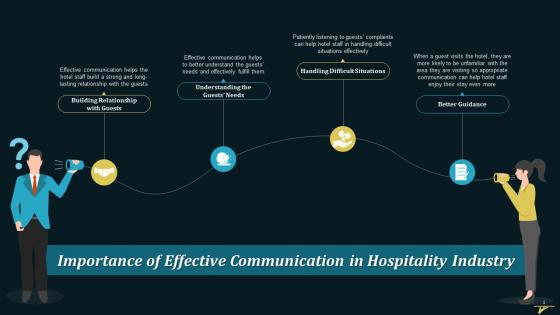
This slide lists the benefits of effective communication in hospitality industry such as building relationships with guests, dealing with difficult situations, understanding the needs of guests, and better guidance.
People who downloaded this PowerPoint presentation also viewed the following :
Importance Of Effective Communication In Hospitality Industry Training Ppt with all 19 slides:
Use our Importance Of Effective Communication In Hospitality Industry Training Ppt to effectively help you save your valuable time. They are readymade to fit into any presentation structure.










FAQs for Importance Of Effective Communication In Hospitality
Okay so first - hook them right away or you'll lose people immediately. Structure your points logically and don't jump around like crazy. Eye contact is huge, even though it feels weird at first. Use gestures that feel natural, not like you're conducting an orchestra or something. Keep your language simple - nobody wants to decode what you're saying. Oh and practice OUT LOUD beforehand because reading it silently doesn't count. Visual aids should help, not distract everyone from your actual message. Always have a backup plan because tech will fail you at the worst possible moment. Trust me on that one.
Okay so here's the deal with body language - it either backs up what you're saying or totally undermines it. Like, you can't cross your arms and claim you're "open to feedback" because people will pick up on that weird contradiction every time. Eye contact shows you actually care about the conversation. Looking at your phone? Yeah, that just screams you'd rather be anywhere else. Your posture and how you position yourself matter too - honestly more than most people realize. Before your next big presentation or awkward conversation, just do a quick mental check. Make sure your body isn't saying something completely different than your mouth.
Honestly, audience analysis is make-or-break for presentations. You've gotta know who you're talking to first. Are they tech people or total newbies? What's actually stressing them out at work? Once you figure out their background and what they care about, you can speak their language instead of just rambling. I learned this the hard way - bombed a presentation once because I pitched way too technical to a room full of executives. Short version: ask yourself what THIS specific group needs to hear and how they want to hear it. Everything else flows from there.
Here's the thing about stories - people literally can't tune them out. Your brain just automatically starts following along, picturing what's happening, wondering how it'll end. I've seen boring presentations come alive just by adding one good anecdote. Stories make abstract stuff click because you're giving people something concrete to grab onto. Plus they create natural breaks in your content so you're not just dumping information on everyone. Keep them short though - maybe a minute tops. I'd start with something personal that ties to your main point, then sprinkle in quick examples throughout. Way more engaging than just facts and bullet points.
Honestly, the worst culprits are usually noise and distractions, plus people making assumptions about what you mean. Emotional stuff gets in the way too. Oh, and jargon - I'm terrible about using work speak when I shouldn't! Cultural differences can really mess things up as well. Best fix? Actually listen instead of just waiting for your turn to talk. Ask questions when you're confused. Have them repeat back what they heard - sounds awkward but it works. Also timing is everything - don't try having serious convos when someone's stressed or distracted. Figure out what's blocking you first, then work on that specific thing.
Dude, visuals are a game changer - people remember like 65% more info when you show them stuff instead of just talking at them. Our brains process images crazy fast too, something like 60,000x faster than text (wild, right?). I bombed a presentation once with nothing but bullet points and numbers. Never again lol. Charts and diagrams make your points actually stick. Just don't go overboard with random graphics that don't mean anything. Keep it simple and make sure each visual backs up what you're saying. One image per main point works pretty well.
So basically, chop everything into bite-sized pieces and use comparisons people already get. I like to paint the big picture first, then zoom in on specifics. Ditch the fancy jargon - honestly, we throw around complicated terms way too much just because we can. Visuals are your friend here. Could be diagrams, examples, even simple bullet points that don't make people's eyes glaze over. Keep checking in with questions to see if they're still with you. The real trick? Figure out what they already know so you're not talking over their heads or dumbing it down too much.
Oh man, Q&As can be nerve-wracking! First thing - always repeat their question back so everyone hears it. Don't rush into answers either. You can totally say "great question, give me a sec to think." People appreciate that honesty. If someone gets confrontational, just stay cool. I've seen speakers get flustered and it's painful to watch. Don't know something? Just admit it and offer to follow up later. Way better than BS-ing your way through. Thank people for questions too - it gets others talking. Even if they throw off your rhythm, roll with it.
Honestly, how you say something matters way more than the actual words. Your tone and body language basically do all the heavy lifting in conversations. I've watched people tank perfectly good ideas just by delivering them with their arms crossed and zero energy - it's painful to see. Eye contact and posture show you're actually listening, not just waiting for your turn to talk. Your voice needs to match what you're saying too. Try leaning in a bit during important talks. Sounds basic, but people respond totally differently when you do.
One slide, one main point - everything else is just noise. Ditch the fancy jargon because nobody's impressed by words they have to decode. I always mess up my transitions when I wing it, so actually practice those parts. Short sentences work way better when you're up there talking, even if you normally speak in paragraphs. The whole "tell them what you're gonna say, say it, then recap" thing is old school but it honestly works. Oh, and definitely time yourself - I've seen too many people crash and burn because they ran long. Your slides should support you, not the other way around.
Honestly, interactive stuff is a game-changer for presentations. Polls and Q&As stop people from mentally checking out - I've seen it happen so many times. Even something basic like "raise your hand if you've ever..." completely shifts the room's energy. You'll get instant feedback too, which is clutch if your message isn't hitting right. Quick breakout discussions work great. The whole point is turning your audience from zombies into actual participants. Makes everything way more memorable. Oh, and just try adding one interactive moment to your next presentation - you'll see what I mean about the vibe changing.
Oh man, cultural awareness is huge for communication! Americans are super direct, but in many Asian cultures being indirect shows respect and keeps things peaceful. Personal space varies tons too - what feels normal to you might make someone else uncomfortable. Eye contact's another big one. Some people want to chat and build rapport first, others just want the facts. Honestly, I've learned to just watch how people respond and adjust from there. If they seem put off by my usual approach, I'll try matching their style instead. Works way better than bulldozing ahead.
Get there early and just chat with people as they're walking in - ask what they do, why they came, whatever. Honestly, small talk about traffic works too lol. It calms your nerves and you'll learn stuff about the room. Then when you start, throw in references to those conversations or things everyone relates to. Open with a story that fits or ask a simple question to get them engaged. The whole point is making that human connection first. Don't just jump straight into your slides - people need to feel like you actually see them sitting there.
Practice your talk until you know it backwards - frees up brain space for dealing with nerves. Deep breathing actually works (I was skeptical too). Show up early to mess with the tech and chat with people, makes everything feel less formal. Honestly, focusing on your message instead of how you look helps tons. I used to get crazy sweaty hands but that early arrival thing really saved me. Start with something you're genuinely pumped about. Oh and have a backup plan if tech craps out - even just knowing you've got one makes you way more confident.
Honestly, tech can make your presentations way better if you don't go overboard. Interactive polls are great for keeping people awake - way better than just talking at them for 30 minutes straight. You can share slides in real-time so nobody's lost, and video conferencing works pretty well for remote folks. Animations and infographics beat boring text blocks every time. Oh, and recording lets people catch up later if they zone out. Just pick one new tool per presentation though. I learned that the hard way after trying to use like five different apps at once and everything crashed. Keep it simple - the tech should help your message, not become the whole show.
-
Informative presentations that are easily editable.
-
Great designs, really helpful.