

Improving Recruitment Process To Retain Employees In Organization Powerpoint Presentation Slides




Try Before you Buy Download Free Sample Product
 Impress Your
 Audience
 100%
100% Editable
 Save Hours
 of Time


A recruitment action plan can help organizations select suitable employees from prominent candidates. A streamlined hiring process can help HR managers reduce the organizations attrition rate. Grab our professional Improving Recruitment Process to Retain Employees in Organization template that provides an overview of current recruitment, the organizations onboarding process, and the organizations problems in recruiting candidates. It also provides a timeline for the new recruitment action plan and identifies positions currently vacant in the organization. It also shows a detailed overview of internal and external sources of employee recruitment. The PowerPoint offers an ideal candidate persona and screening criteria for the candidate shortlisting. It also showcases rounds of interviews and schedules to conduct them promptly. Furthermore, the PPT includes employees responsibilities for recruiting candidates and the budget allocated for the hiring process. The complete deck also impacts HR KPIs after formulating and executing a new recruitment action plan. Get access now.
People who downloaded this PowerPoint presentation also viewed the following :
Content of this Powerpoint Presentation
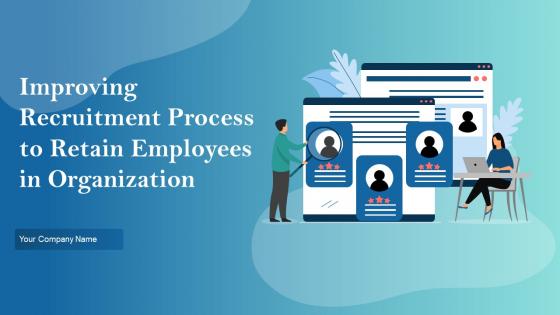
Slide 1: This slide displays the title Improving Recruitment Process to Retain Employees in Organization.
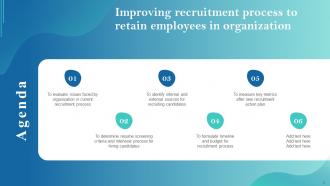
Slide 2: This slide displays the title Agenda.
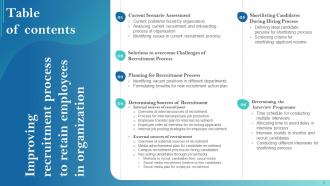
Slide 3: This slide exhibit table of content.
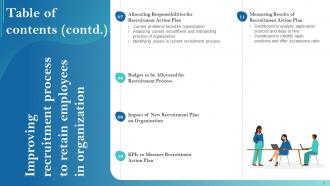
Slide 4: This slide exhibit table of content.
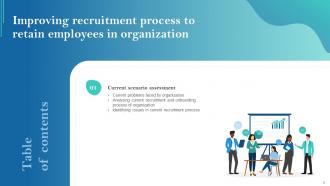
Slide 5: This slide exhibit table of content- Current scenario assessment.
Slide 6: This slide showcases problems faced by HR department in organization.
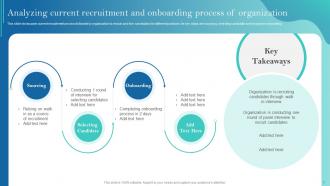
Slide 7: This slide showcases current recruitment process followed by organization to recruit and hire candidates for different positions.
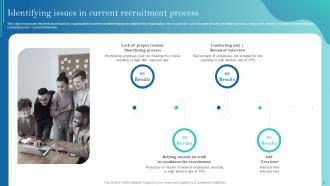
Slide 8: This slide showcases issues that are faced by organization in current recruitment process deployed by organization.
Slide 9: This slide exhibit table of content- Solutions to overcome challenges of recruitment process.
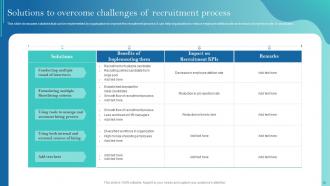
Slide 10: This slide showcases solutions that can be implemented by organization to improve the recruitment process.
Slide 11: This slide exhibit table of content- Planning for recruitment process.
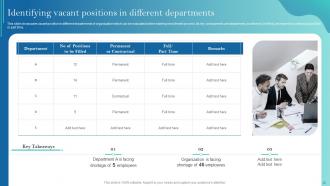
Slide 12: This slide showcases vacant position in different departments of organization which can be evaluated before starting recruitment process.
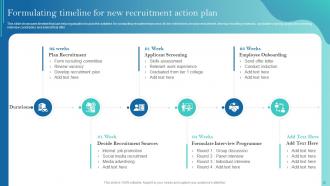
Slide 13: This slide showcases timeline that can help organization to plan the activities for conducting recruitment process.
Slide 14: This slide exhibit table of content- Determining internal sources of recruitment.
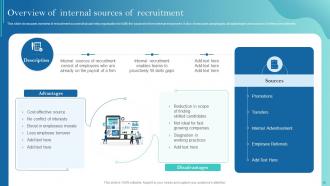
Slide 15: This slide showcases overview of recruitment sources that can help organization to fulfill the vacancies from internal employees.
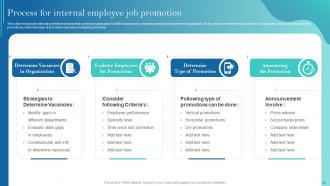
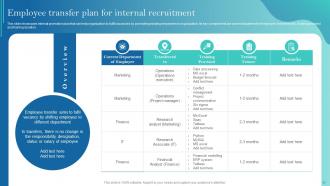
Slide 16: This slide showcases internal promotion process that can help organization to fulfill vacancies by promoting existing employees in organization.
Slide 17: This slide showcases internal promotion plan that can help organization to fulfill vacancies by promoting existing employees in organization.
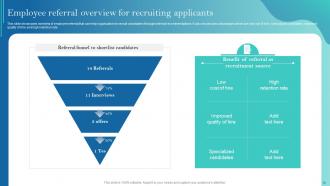
Slide 18: This slide showcases overview of employee referral that can help organization to recruit candidates through internal recommendations.
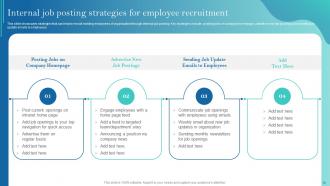
Slide 19: This slide showcases strategies that can help to recruit existing employees of organization through internal job posting.
Slide 20: This slide exhibit table of content- External sources of recruitment.
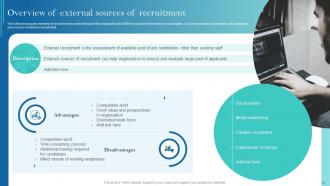
Slide 21: This slide showcases overview of recruitment sources that can help organization to fulfill the vacancies from external candidates.
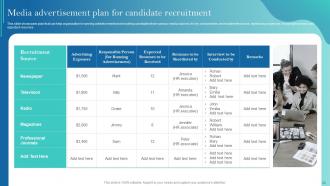
Slide 22: This slide showcases plan that can help organization in running advertisement and recruiting candidates from various media sources.
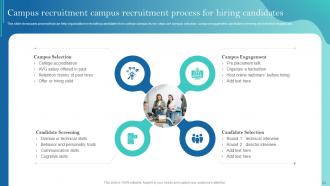
Slide 23: This slide showcases process that can help organization in recruiting candidates from college campus.
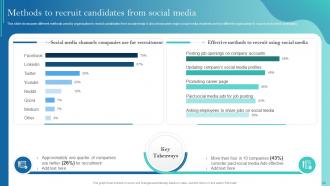
Slide 24: This slide showcases different methods used by organization to recruit candidates from social media.
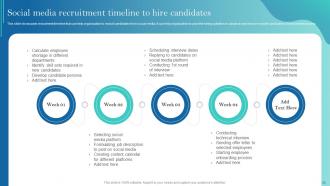
Slide 25: This slide showcases recruitment timeline that can help organization to recruit candidates from social media.
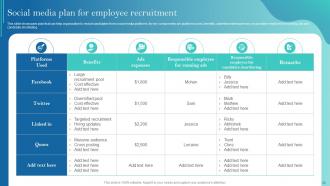
Slide 26: This slide showcases plan that can help organization to recruit candidates from social media platforms.
Slide 27: This slide exhibit table of content- Shortlisting candidates during hiring process.
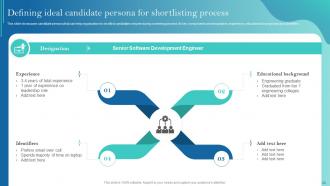
Slide 28: This slide showcases candidate persona that can help organization to shortlist candidates resume during screening process.
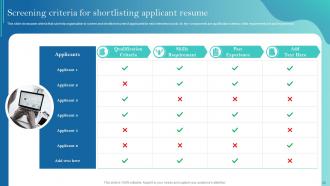
Slide 29: This slide showcases criteria that can help organization to screen and shortlist resume of applicants for next interview rounds.
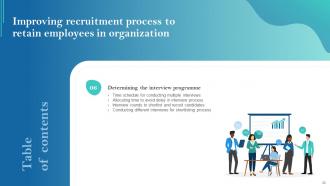
Slide 30: This slide exhibit table of content- Determining the interview programme.
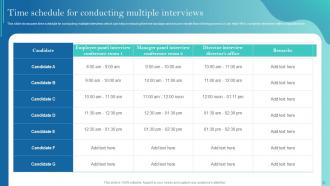
Slide 31: This slide showcases time schedule for conducting multiple interviews which can help in reducing the time wastage and ensure smooth flow of hiring process.
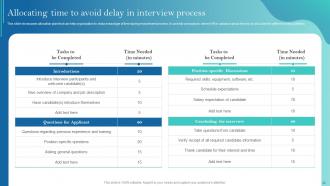
Slide 32: This slide showcases allocation plan that can help organization to reduce wastage of time during recruitment process.
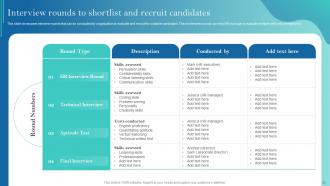
Slide 33: This slide showcases interview rounds that can be conducted by organization to evaluate and recruit the suitable candidates.
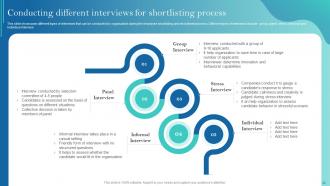
Slide 34: This slide showcases different types of interviews that can be conducted by organization during the employee shortlisting and recruitment process.
Slide 35: This slide exhibit table of content- Allocating responsibilities for recruitment action plan.
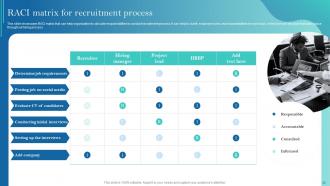
Slide 36: This slide showcases RACI matrix that can help organization to allocate responsibilities to conduct recruitment process.
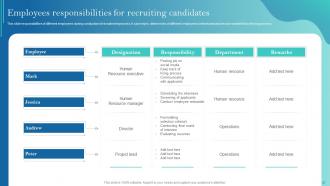
Slide 37: This slide responsibilities of different employees during conduction of recruitment process.
Slide 38: This slide exhibit table of content- Budget to be allocated for recruitment process.
Slide 39: This slide showcases budget that can help organization to estimate and control expenses during recruitment process.
Slide 40: This slide exhibit table of content- Impact of new recruitment plan on organization.
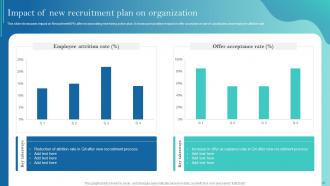
Slide 41: This slide showcases impact on Recruitment KPIs after incorporating new hiring action plan.
Slide 42: This slide exhibit table of content- Kpis to measure recruitment action plan.
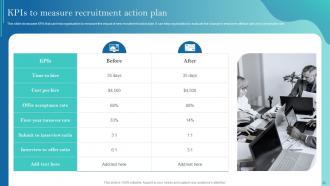
Slide 43: This slide showcases KPIs that can help organization to measure the impact of new recruitment action plan.
Slide 44: This slide exhibit table of content- Measuring results of recruitment action plan.
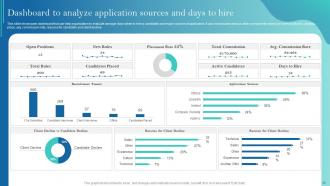
Slide 45: This slide showcases dashboard that can help organization to evaluate average days taken to hire a candidate and major sources of application.
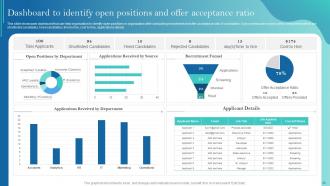
Slide 46: This slide showcases dashboard that can help organization to identify open positions in organization after conducting recruitment and offer acceptance.
Slide 47: This is the icons slide.
Slide 48: This slide presents title for additional slides.
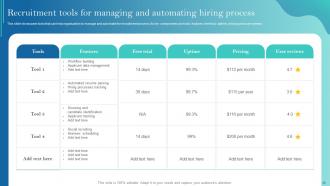
Slide 49: This slide showcases tools that can help organization to manage and automate the recruitment process.
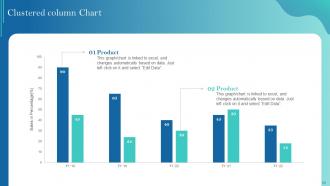
Slide 50: This slide exhibits yearly profits stacked line charts for different products.
Slide 51: This slide depicts 30-60-90 days plan for projects.
Slide 52: This slide depicts posts for past experiences of clients.
Slide 53: This slide depicts Our goal.
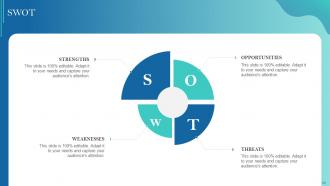
Slide 54: This slide depicts SWOT.
Slide 55: This slide shows puzzle for displaying elements of company.
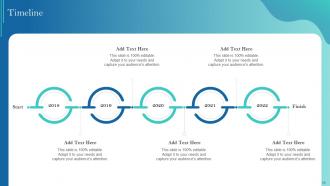
Slide 56: This slide exhibit Timeline.
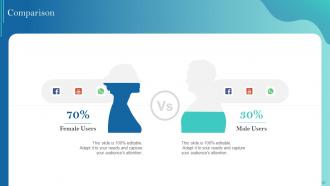
Slide 57: This slide compare male & female user.
Slide 58: This is thank you slide & contains contact details of company like office address, phone no., etc.
Improving Recruitment Process To Retain Employees In Organization Powerpoint Presentation Slides with all 63 slides:
Use our Improving Recruitment Process To Retain Employees In Organization Powerpoint Presentation Slides to effectively help you save your valuable time. They are readymade to fit into any presentation structure.










FAQs for Improving Recruitment Process To Retain Employees In Organization
Key indicators include high time-to-fill rates, elevated cost-per-hire, poor candidate experience feedback, low offer acceptance rates, and high early turnover among new hires. These metrics reveal inefficiencies that impact organizational competitiveness, with many companies finding that streamlining their recruitment processes through better technology and candidate communication ultimately delivers faster hiring cycles and improved talent quality.
Data analytics enhances recruitment efficiency by analyzing candidate sourcing patterns, predicting hiring success rates, and identifying bottlenecks in the selection process. Through predictive modeling and performance metrics, organizations streamline candidate screening, reduce time-to-hire, and improve quality-of-hire outcomes, with many companies finding significantly lower recruitment costs and enhanced candidate experiences.
Employer branding significantly influences talent attraction by showcasing company culture, values, career growth opportunities, competitive compensation, and workplace environment across digital platforms and professional networks. Strong employer brands enable organizations to attract higher-quality candidates, reduce recruitment costs, and minimize time-to-hire, with many companies finding that authentic brand messaging ultimately delivers competitive advantage in increasingly competitive talent markets.
AI and machine learning streamline recruitment by automating resume screening, predicting candidate success through data analysis, and reducing time-to-hire through intelligent matching algorithms. These technologies enable HR teams to focus on strategic interactions while minimizing administrative tasks, with many organizations finding that automated systems deliver faster hiring processes, improved candidate quality, and significantly reduced recruitment costs.
Common overlooked recruitment bottlenecks include inefficient candidate screening processes, poor communication between hiring managers and HR teams, inadequate job descriptions, lengthy approval workflows, and limited employer branding efforts. These challenges often result in extended time-to-hire, candidate drop-offs, and missed opportunities for top talent, with many organizations finding that streamlining these areas significantly enhances their competitive advantage in talent acquisition.
Candidate experience improves through transparent communication, streamlined application processes, timely feedback, and personalized interactions at each stage. Organizations like tech companies and financial services enhance experiences by implementing automated status updates, reducing interview wait times, and providing clear role expectations, ultimately attracting top talent while strengthening their employer brand.
Bias reduction techniques include structured interviews with standardized questions, blind resume screening, diverse interview panels, skills-based assessments, and AI-powered candidate matching tools. These approaches streamline evaluation by focusing on competencies rather than demographics, with many organizations finding that implementing multiple techniques simultaneously delivers more equitable hiring outcomes and access to broader talent pools, ultimately enhancing team diversity and performance.
Candidate feedback reveals critical insights about application processes, interview experiences, communication gaps, and decision timelines that directly impact employer branding and talent acquisition success. Organizations leverage this feedback to streamline hiring workflows, enhance candidate experiences, and reduce time-to-hire, with many companies finding that systematic feedback integration significantly improves offer acceptance rates and strengthens their competitive position in talent markets.
Strategies to enhance HR-hiring manager collaboration include establishing shared hiring metrics, implementing collaborative interview processes, creating regular alignment meetings, using integrated recruitment platforms, and developing clear role definitions throughout the hiring cycle. These approaches streamline communication by centralizing candidate feedback, standardizing evaluation criteria, and ensuring consistent messaging, with many organizations finding that structured collaboration reduces time-to-hire while improving candidate quality and overall recruitment outcomes.
Organizations can measure recruitment effectiveness through key metrics including time-to-hire, cost-per-hire, quality of hire scores, candidate experience ratings, and retention rates of new employees. By tracking these indicators consistently, companies streamline their hiring processes, identify bottlenecks in recruitment workflows, and enhance candidate satisfaction, ultimately delivering faster placements and stronger long-term employee performance across departments.
Companies can adopt social media recruiting, employee referral programs, talent pipelining, industry networking events, and AI-powered candidate matching platforms to reach passive candidates. These innovative approaches enhance recruitment efficiency by expanding talent pools, leveraging existing networks, and utilizing predictive analytics, with many organizations finding that strategic sourcing ultimately delivers higher-quality hires and reduced time-to-fill metrics.
Skill assessment is crucial in recruitment, serving as the primary filter between qualified candidates and poor hires, significantly reducing turnover costs and improving team performance. Modern organizations optimize assessments through structured technical evaluations, behavioral interviews, real-world simulations, and AI-powered screening tools, with many companies finding that combining multiple assessment methods delivers faster hiring decisions and better cultural fit.
Effective onboarding practices include structured orientation programs, role-specific training modules, mentorship assignments, clear performance expectations, and regular check-ins with managers. These approaches streamline new hire integration by accelerating productivity, enhancing employee engagement, and reducing early turnover, with many organizations finding that comprehensive onboarding ultimately delivers stronger retention rates and faster time-to-contribution across departments.
A structured interview process enhances recruitment effectiveness by standardizing questions, reducing bias, and enabling consistent candidate evaluation across all interviews. This approach streamlines decision-making through objective scoring criteria, ensures legal compliance, and improves candidate experience, with many organizations finding that structured processes reduce time-to-hire while significantly increasing quality of hires and long-term retention rates.
Social media platforms serve as powerful recruitment tools for talent sourcing, employer branding, candidate research, and direct engagement through professional networks like LinkedIn and industry-specific communities. These platforms enable recruiters to access broader talent pools, showcase company culture authentically, and streamline initial candidate screening, with many organizations finding that strategic social media recruitment significantly reduces hiring timelines while enhancing candidate quality and organizational visibility.
-
You can rely on SlideTeam whenever you run out of designs for your presentation. Thank you so much SlideTeam!
-
I discovered some really original and instructive business slides here. I found that they suited me well.