

Inbound And Outbound Services Company Profile Powerpoint Presentation Slides






Try Before you Buy Download Free Sample Product
 Impress Your
 Audience
 100%
100% Editable
 Save Hours
 of Time


A company profile describes all the relevant elements of a business, which helps the investors and stakeholders evaluate the business value and performance. Check out our professionally designed Inbound and Outbound Services Company Profile PowerPoint presentation. It covers the executive summary of BPO, company overview, vision mission, offices, business process outsourcing solutions, specialized services, and inbound and outbound calls volume rate. Additionally, It presents the business model, company journey roadmap, team org structure, management team, business clients, customer testimonials, awards, and accolades. Moreover, It describes financials, including revenue and profit, revenue breakdown of services by industries and regions, and integrated performance. At last, this profile includes a gender equality index, competitive analysis, financial performance comparison, SWOT analysis, complaint handling strategy, CSR initiatives, and a case study of a shopping website. Download our 100 percent editable and customizable company profile decks to know more in detail.
People who downloaded this PowerPoint presentation also viewed the following :
Content of this Powerpoint Presentation
Slide 1: This slide introduces Inbound and Outbound Services Company Profile. State Your Company Name and begin.
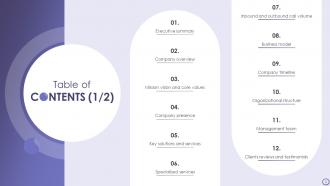
Slide 2: This slide presents Table of Content for the presentation.
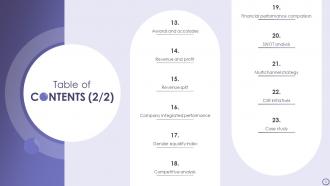
Slide 3: This is another slide continuing Table of Content for the presentation.
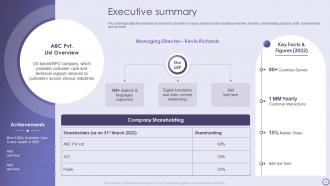
Slide 4: This slide highlights the executive summary of call center company.
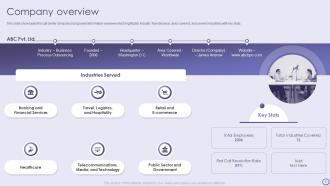
Slide 5: This slide showcases the call center company background information overview.
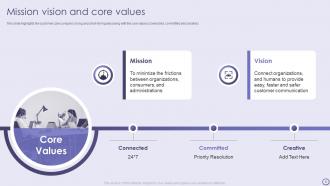
Slide 6: This slide highlights the customer care company’s long and short-term goals.
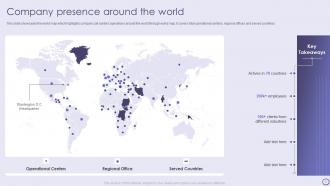
Slide 7: This slide represents Company presence around the world.
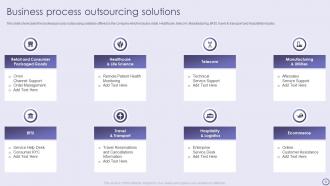
Slide 8: This slide shows Business process outsourcing solutions.
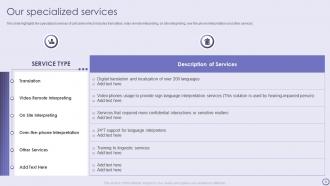
Slide 9: This slide presents specialized services of call center which includes translation, video remote interpreting, etc.
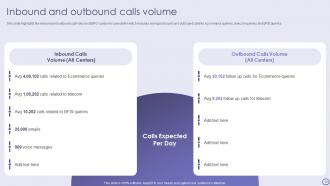
Slide 10: This slide highlights the inbound and outbound call volume at BPO customer care center.
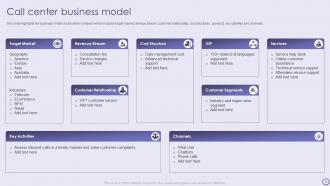
Slide 11: This slide displays the business model of call center company.
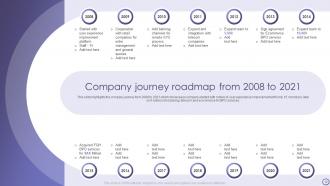
Slide 12: This slide represents Started with user experience improvement platform.
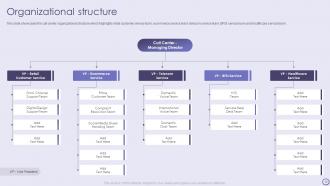
Slide 13: This slide showcases the call center organizational structure.
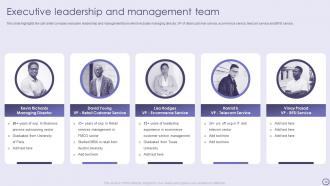
Slide 14: This slide shows Executive leadership and management team.
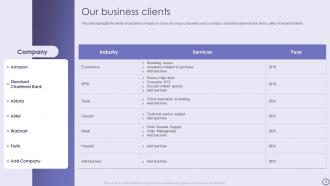
Slide 15: This slide highlights the clients of call center company.
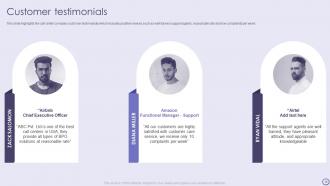
Slide 16: This slide presents the call center company customer testimonials .
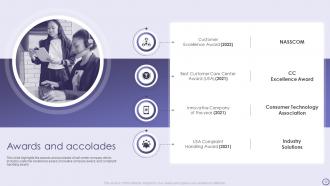
Slide 17: This slide displays the awards and accolades of call center company.
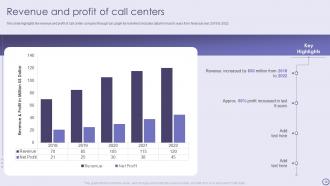
Slide 18: This slide showcases the revenue and profit of call center company.
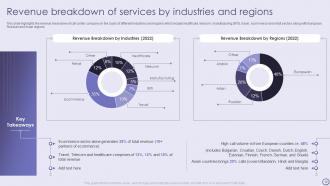
Slide 19: This slide shows Revenue breakdown of services by industries and regions.
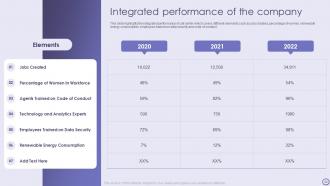
Slide 20: This slide presents Integrated performance of the company.
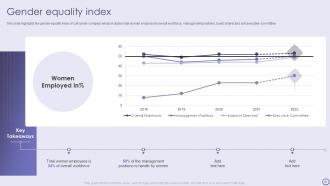
Slide 21: This slide highlights the gender equality index of call center company.
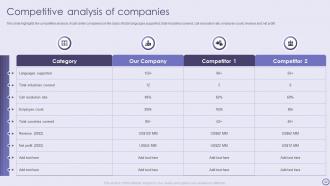
Slide 22: This slide displays the competitive analysis of call center companies.
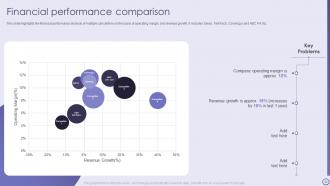
Slide 23: This slide represents the financial performance analysis of multiple call centers.
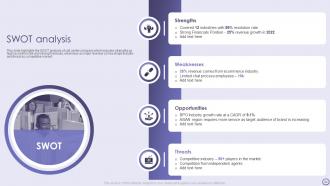
Slide 24: This slide highlights the SWOT analysis of call center company.
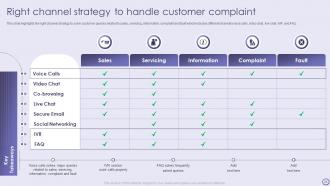
Slide 25: This slide showcases Right channel strategy to handle customer complaint.
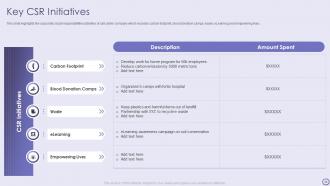
Slide 26: This slide shows corporate social responsibilities activities of call center company.
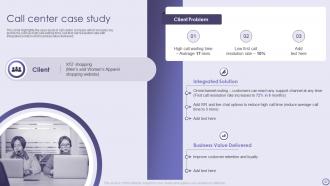
Slide 27: This slide presents case study of call center company.
Slide 28: This slide showcases Icons for inbound and outbound services company profile.
Slide 29: This slide is titled as Additional Slides for moving forward.
Slide 30: This is Our Mission slide with related imagery and text.
Slide 31: This is About Us slide to show company specifications etc.
Slide 32: This is Our Team slide with names and designation.
Slide 33: This is Our Goal slide. State your firm's goals here.
Slide 34: This slide shows Post It Notes. Post your important notes here.
Slide 35: This slide depicts Venn diagram with text boxes.
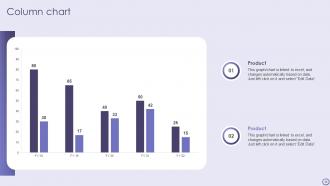
Slide 36: This slide displays Column chart with two products comparison.
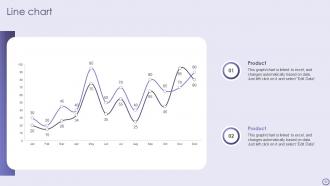
Slide 37: This slide describes Line chart with two products comparison.
Slide 38: This is a Timeline slide. Show data related to time intervals here.
Slide 39: This is a Thank You slide with address, contact numbers and email address.
Inbound And Outbound Services Company Profile Powerpoint Presentation Slides with all 44 slides:
Use our Inbound And Outbound Services Company Profile Powerpoint Presentation Slides to effectively help you save your valuable time. They are readymade to fit into any presentation structure.






FAQs for Inbound And Outbound Services Company Profile
Inbound service strategies focus on attracting customers through valuable content, SEO optimization, social media engagement, and educational resources that draw prospects naturally to the business. Outbound strategies actively reach customers through cold calling, direct mail, targeted advertising, and proactive sales outreach, with many organizations finding that combining both approaches delivers comprehensive market coverage, enhanced customer acquisition, and sustained competitive advantage.
Businesses can measure inbound service effectiveness through key performance indicators like customer satisfaction scores, first-call resolution rates, average response times, conversion rates, and customer retention metrics. These measurements enable organizations to optimize resource allocation, enhance customer experiences, and demonstrate ROI, with many companies finding that comprehensive analytics ultimately deliver improved operational efficiency and competitive advantage.
Technology revolutionizes inbound communication channels through AI-powered chatbots, omnichannel platforms, CRM integration, automated routing systems, and real-time analytics capabilities. These solutions streamline customer interactions by reducing response times, personalizing experiences, and optimizing resource allocation, with many service companies finding that strategic technology deployment ultimately delivers enhanced customer satisfaction and operational efficiency.
Outbound service approaches contribute to brand awareness by proactively reaching potential customers through targeted campaigns, cold calling, email marketing, social media outreach, and direct advertising initiatives. These strategies enable companies to control their messaging, expand market reach beyond existing networks, and generate qualified leads more predictably, with many organizations finding that strategic outbound efforts deliver measurable customer acquisition rates and accelerated business growth.
Essential training for inbound support employees includes product knowledge, communication skills, problem-solving techniques, customer relationship management systems, and conflict resolution strategies. These comprehensive programs enhance service quality by building technical expertise, improving response times, and developing emotional intelligence, with many organizations finding that well-trained support teams deliver significantly higher customer satisfaction rates and reduced operational costs.
Companies effectively integrate social media into outbound marketing by leveraging targeted advertising, influencer partnerships, cross-platform content distribution, and social listening tools for audience insights. These strategies enable businesses to reach specific demographics through Facebook and LinkedIn ads, amplify messaging through industry thought leaders, and synchronize campaigns across multiple channels, ultimately delivering higher engagement rates and measurable ROI while building authentic brand relationships in an increasingly connected marketplace.
Key performance metrics for outbound services include call conversion rates, average call duration, lead generation numbers, cost per acquisition, and customer satisfaction scores. These metrics enable companies to optimize their sales processes, improve agent productivity, and enhance customer engagement strategies, with many organizations finding that tracking these indicators delivers measurable improvements in revenue generation and operational efficiency.
Customer expectations for inbound services focus on immediate problem resolution, empathetic support, and comprehensive answers, while outbound services require relevance, timing, and clear value propositions. Inbound callers expect quick access to knowledgeable agents who can address their specific concerns, whereas outbound recipients increasingly demand personalized, non-intrusive communications that respect their time and deliver genuine benefits or solutions.
Best practices for managing customer feedback in inbound services include implementing multi-channel collection systems, real-time response protocols, sentiment analysis tools, feedback categorization processes, and closed-loop follow-up mechanisms. These approaches streamline customer insights by enabling faster issue resolution, identifying service improvement opportunities, and enhancing customer satisfaction scores, with many call centers finding that systematic feedback management ultimately delivers reduced churn rates and stronger customer loyalty.
Personalization enhances outbound marketing by leveraging customer data, behavioral insights, and segmentation strategies to create targeted messaging that resonates with specific audience needs and preferences. Through personalized email campaigns, customized direct mail, and tailored telemarketing approaches, companies achieve higher response rates, improved conversion metrics, and stronger customer engagement, ultimately delivering competitive advantage in increasingly crowded markets.
Companies face challenges including resource allocation conflicts, technology integration complexities, staff training demands, performance measurement inconsistencies, and maintaining service quality standards across both approaches. While inbound services require deep product knowledge and patience, outbound demands proactive sales skills and resilience, with many organizations finding that strategic workforce planning and unified CRM systems ultimately deliver operational efficiency and consistent customer experiences.
Data analytics informs strategy development by analyzing customer behavior patterns, service performance metrics, operational bottlenecks, and market trends to optimize both inbound and outbound approaches. Through predictive analytics and real-time dashboards, companies streamline resource allocation, enhance customer segmentation, and improve response times, with many service organizations finding that data-driven strategies deliver significantly higher conversion rates and customer satisfaction scores.
Key trends include AI-powered automation, omnichannel integration, predictive analytics, cloud-based infrastructure, and personalized customer experiences. These technologies streamline operations by reducing response times, enhancing agent productivity, and delivering seamless interactions across touchpoints, with many organizations finding that strategic adoption ultimately provides competitive advantage and significantly improved customer satisfaction in an increasingly digital marketplace.
Cultural differences significantly impact service perceptions through varying communication styles, relationship expectations, hierarchy preferences, and customer interaction norms across different regions. While Western markets often favor direct, efficiency-focused approaches, Asian cultures typically emphasize relationship-building and formal protocols, with many multinational companies finding that localized service strategies ultimately deliver higher satisfaction rates and stronger market penetration.
Several companies demonstrate successful integration, including Amazon's customer service combining inbound support with proactive outbound follow-ups, telecommunications providers like Verizon merging technical support with retention calls, and financial institutions integrating fraud alerts with customer inquiries. These strategic combinations streamline operations, reduce costs, and enhance customer experiences, with many organizations finding that unified service models deliver faster resolution times and improved satisfaction rates.
-
Making a presentation has never been this easy for me. Thank you SlideTeam for offering a splendid template library.
-
What a stunning collection of customizable templates! Really a time-saver..