

Inbound and outbound trade marketing practices powerpoint presentation slides




Try Before you Buy Download Free Sample Product
 Impress Your
 Audience
 100%
100% Editable
 Save Hours
 of Time


Our Inbound And Outbound Trade Marketing Practices Powerpoint Presentation Slides are topically designed to provide an attractive backdrop to any subject. Use them to look like a presentation pro.
People who downloaded this PowerPoint presentation also viewed the following :
Content of this Powerpoint Presentation
Slide 1: This slide displays title i.e. 'Inbound And Outbound Trade Marketing Practices' and your Company Name.
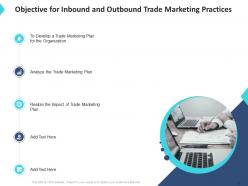
Slide 2: This slide presents objectives.
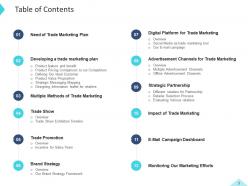
Slide 3: This slide exhibits table of contents.
Slide 4: This slide shows title for 'Need of Trade Marketing Plan'.
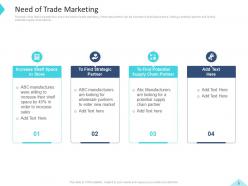
Slide 5: This slide show the need of trade marketing, these requirement can be increase in shelf space store, etc.
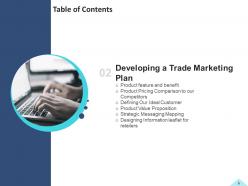
Slide 6: This slide depicts title for 'Developing a Trade Marketing Plan'.
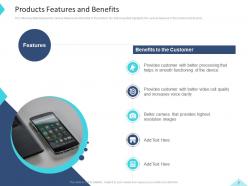
Slide 7: This slide displays the various features and benefits of the product.
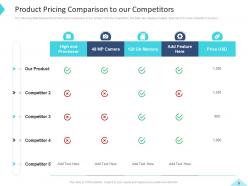
Slide 8: This slide displays the product price comparison of our product with the competitors.
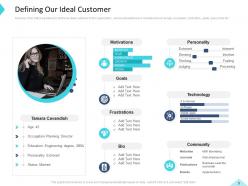
Slide 9: This slide define an ideal customer of the organization, various parameters are considered such as age, etc.
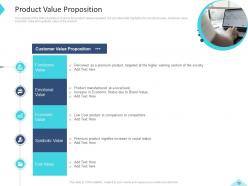
Slide 10: This slide show the product value proposition.
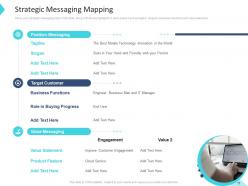
Slide 11: This slide show your strategic messaging map in this slide, along with its key highlights in each phase.
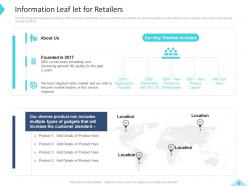
Slide 12: This slide displays the outline of the information leaflet that will be provided to the retailers.
Slide 13: This slide highlights title for 'Multiple Methods of Trade'.
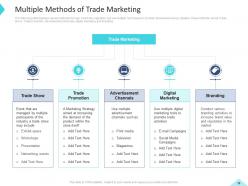
Slide 14: This slide displays various methods through which the origination can use multiple techniques.
Slide 15: This slide illustrates title for 'Trade Show'.
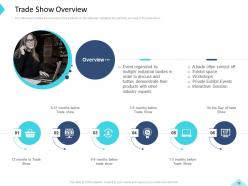
Slide 16: This slide provides the overview of the trade show.
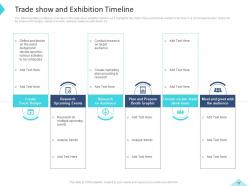
Slide 17: This slide provides an overview of the trade show exhibition timeline as it highlight's the chain of key events.
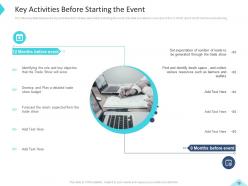
Slide 18: This slide displays the key activates that will take place before starting the event.
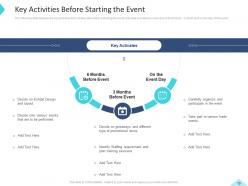
Slide 19: This slide displays the key activates that will take place before starting the event.
Slide 20: This slide presents title for 'Trade Promotion'.
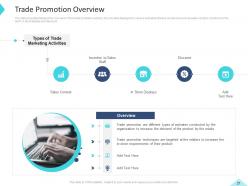
Slide 21: This slide displays the overview of the trade promotion activity.
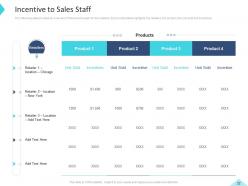
Slide 22: This slide provides an overview of the incentive plan for the retailers.
Slide 23: This slide exhibits title for 'Brand Strategy'.
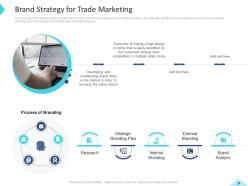
Slide 24: This slide provides the overview of the brand strategy as tool of trade marketing.
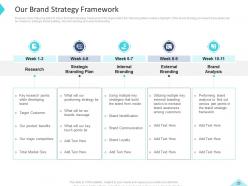
Slide 25: This slide show the brand strategy framework of the organization.
Slide 26: This slide depicts title for 'Digital Platform for Trade'.
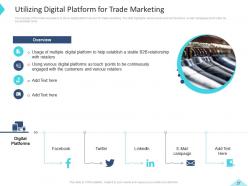
Slide 27: This slide show digital platform as tool for trade marketing.
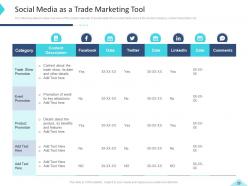
Slide 28: This slide provides overview of the content calendar of social media.
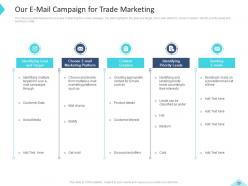
Slide 29: This slide displays the process of planning the e-mail campaign.
Slide 30: This slide presents title for 'Advertisement Channels for Trade Marketing'.
Slide 31: This slide provides overview of advertisement as a marketing tool for trade marketing.
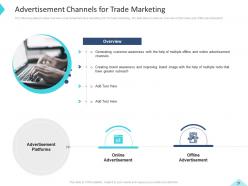
Slide 32: This slide provides overview of both online and offline platforms of promotion and advertisement.
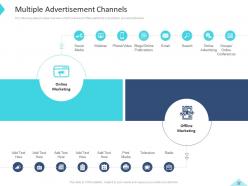
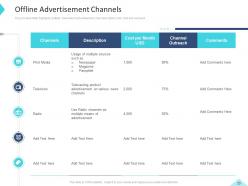
Slide 33: This slide highlights multiple channels of advertisement, their description, their cost and outreach.
Slide 34: This slide exhibits title for 'Strategic Partnership'.
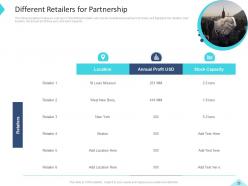
Slide 35: This slide provides an overview of the different retailer who can be considered as partners for trade.
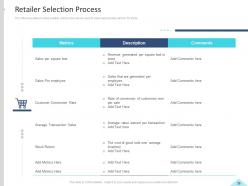
Slide 36: This slide provides multiple metrics that can be used to select appropriate partner for trade.
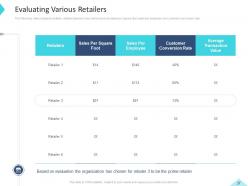
Slide 37: This slide compares multiple retailers based on key metrics such as sales per square feet, etc.
Slide 38: This slide depicts title for 'Impact of Trade Marketing'.
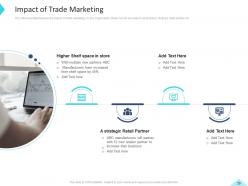
Slide 39: This slide displays the impact of trade marketing on the organization.
Slide 40: This slide presents title for 'E-Mail Campaign Dashboard'.
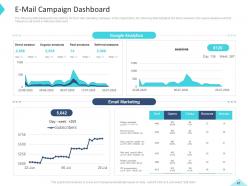
Slide 41: This slide displays the key metrics for the E-mail marketing campaign of the organization.
Slide 42: This slide exhibits title for 'Monitoring Our Marketing Efforts'.
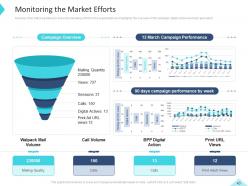
Slide 43: This slide show the marketing efforts of the organization as it highlights the overview of the campaign, etc.
Slide 44: This is the icons slide.
Slide 45: This slide presents title for additional slides.
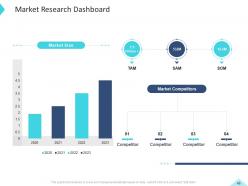
Slide 46: This slide displays 'Market Research Dashboard'.
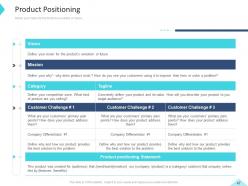
Slide 47: This slide exhibits 'Product Positioning'.
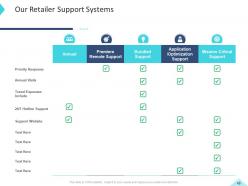
Slide 48: This slide depicts 'Our Retailer Support Systems'.
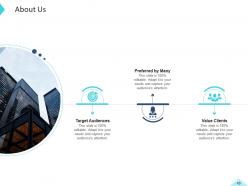
Slide 49: This slide shows about your company, target audience and its client's values.
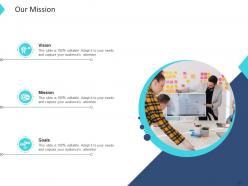
Slide 50: This slide presents your company's vision, mission and goals.
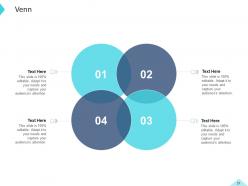
Slide 51: This slide displays Venn.
Slide 52: This slide shows targets.
Slide 53: This slide exhibits ideas generated.
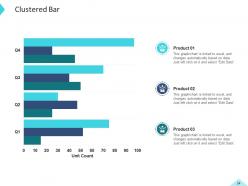
Slide 54: This slide exhibits quarterly clustered bar charts for different products. The charts are linked to Excel.
Slide 55: This slide displays circular diagram.
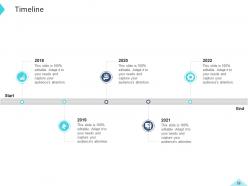
Slide 56: This slide exhibits yearly timeline.
Slide 57: This is thank you slide & contains contact details of company like office address, phone no., etc.
Inbound and outbound trade marketing practices powerpoint presentation slides with all 57 slides:
Use our Inbound And Outbound Trade Marketing Practices Powerpoint Presentation Slides to effectively help you save your valuable time. They are readymade to fit into any presentation structure.






FAQs for Inbound and outbound trade marketing practices
Inbound trade marketing focuses on attracting partners through valuable content, educational resources, and relationship-building initiatives, while outbound strategies involve direct outreach like trade shows, cold calling, and promotional campaigns. Inbound approaches build long-term partnerships by establishing trust and expertise, whereas outbound delivers immediate visibility and lead generation, with many organizations finding that combining both strategies creates comprehensive market coverage and sustainable competitive advantage.
Brands effectively integrate digital marketing into inbound trade marketing by leveraging content marketing, SEO optimization, social media engagement, marketing automation, and data analytics platforms. These techniques streamline lead generation, enhance retailer relationships, and deliver personalized experiences, with many consumer goods companies finding that strategic digital integration ultimately reduces acquisition costs while accelerating partner onboarding and improving trade collaboration.
Content marketing serves as the foundation of inbound trade marketing by creating valuable resources like case studies, industry insights, whitepapers, and educational materials that attract potential trade partners organically. Through strategic content distribution across digital channels, businesses establish thought leadership, build trust with distributors and retailers, and generate qualified leads, ultimately delivering higher engagement rates and stronger partner relationships than traditional outbound approaches.
Successful outbound trade marketing examples include Coca-Cola's comprehensive retailer support programs, Procter & Gamble's strategic promotional partnerships with major chains, Unilever's targeted trade incentives for distributors, and Nike's exclusive product launches through select retail partners. These companies enhance market penetration by providing sales training, promotional materials, and volume incentives, ultimately delivering stronger retailer relationships and increased shelf visibility across competitive markets.
Data analytics improves outbound trade marketing effectiveness by identifying optimal customer segments, predicting buying behaviors, and personalizing messaging based on historical purchase patterns and market trends. Through predictive modeling and real-time performance tracking, companies can optimize campaign timing, channel selection, and resource allocation, with many retail and manufacturing organizations finding significantly higher conversion rates and reduced acquisition costs.
Businesses measure inbound trade marketing ROI by tracking lead generation costs, conversion rates, customer acquisition expenses, lifetime value metrics, and sales attribution from specific campaigns. Through marketing automation platforms and CRM integration, retailers and manufacturers calculate cost-per-lead ratios, monitor buyer journey progression, and analyze revenue attribution, with many organizations finding 3:1 ROI benchmarks indicate successful inbound strategies.
Innovative tools for outbound trade marketing include AI-powered customer analytics, automated email marketing platforms, CRM integration systems, social media management tools, and predictive forecasting software. These technologies streamline operations by personalizing customer outreach, automating repetitive tasks, and optimizing inventory management, with many retail and manufacturing organizations finding that strategic automation ultimately delivers faster market penetration and enhanced distributor relationships.
Consumer behaviors significantly influence trade marketing efficacy by determining channel preferences, purchase timing, and information-seeking patterns that favor different approaches. Digitally-savvy consumers increasingly respond to inbound strategies like content marketing and social engagement, while traditional buyers in sectors like automotive and healthcare still value outbound approaches, with many retailers finding that hybrid strategies deliver optimal reach and conversion rates.
Social media platforms enable inbound trade marketing through content marketing, influencer partnerships, community building, targeted advertising, and social listening capabilities. These channels help businesses attract B2B buyers by sharing industry insights, showcasing product demonstrations, and facilitating direct engagement, with many manufacturing and retail companies finding that social platforms significantly enhance lead generation and relationship building efforts.
Volume-based incentives, early payment discounts, exclusive territory rights, co-op advertising support, and performance bonuses are among the most effective outbound trade marketing promotions. These strategies enhance distributor loyalty and market penetration by providing immediate financial benefits, reducing operational costs, and creating competitive advantages, with many retailers and wholesalers finding that structured incentive programs significantly boost their sales performance and profitability.
Businesses create seamless customer experiences through inbound trade marketing by delivering valuable content at each buyer journey stage, implementing personalized communication strategies, and integrating omnichannel touchpoints for consistent messaging. These approaches streamline customer interactions by addressing specific pain points, nurturing relationships through targeted education, and ultimately enabling faster decision-making while reducing friction across all engagement channels.
Relying solely on outbound trade marketing creates significant vulnerabilities including limited customer engagement, higher acquisition costs, reduced brand loyalty, and dependence on interruptive tactics that increasingly face consumer resistance. While outbound methods like direct sales and advertising deliver immediate reach, many organizations find that this approach struggles with sustainability and scalability, ultimately missing opportunities for deeper customer relationships and organic growth that competitive markets increasingly demand.
Collaboration with retailers enhances inbound trade marketing by improving product placement, optimizing inventory management, and creating targeted promotional campaigns that drive consumer demand. Through shared data insights and joint planning sessions, manufacturers and retailers streamline supply chain efficiency, reduce stockouts, and develop customized marketing strategies, ultimately delivering stronger sales performance and enhanced customer experiences across retail channels.
Businesses should track conversion rates, lead generation volume, customer acquisition costs, sales pipeline velocity, and return on marketing investment to evaluate outbound trade marketing success. These metrics enable organizations to assess campaign effectiveness, optimize resource allocation, and refine targeting strategies, with many companies finding that tracking engagement quality alongside quantity ultimately delivers better sales outcomes and competitive advantage.
Companies use storytelling in inbound trade marketing by creating compelling narratives around product origins, manufacturing processes, customer success stories, and brand values that resonate with target audiences. Through authentic content marketing, case studies, and experiential campaigns, businesses in sectors like food, fashion, and technology build emotional connections with customers, enhance brand loyalty, and differentiate themselves in competitive markets, ultimately driving engagement and conversion rates.
-
The content is very helpful from business point of view.
-
Really like the color and design of the presentation.