

Industry Laws And Regulations Licensing And Intellectual Shipping Industry Report Market Size IR SS





Try Before you Buy Download Free Sample Product
 Impress Your
 Audience
 100%
100% Editable
 Save Hours
 of Time


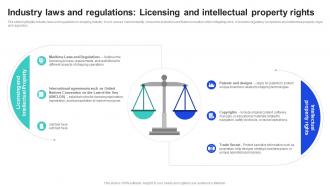
The slide highlights industry laws and regulations in shipping industry. It is to ensure market stability, consumer protection and foster innovation while mitigating risks. It includes regulatory compliance and intellectual property, legal and regulatory.
People who downloaded this PowerPoint presentation also viewed the following :
Industry Laws And Regulations Licensing And Intellectual Shipping Industry Report Market Size IR SS with all 9 slides:
Use our Industry Laws And Regulations Licensing And Intellectual Shipping Industry Report Market Size IR SS to effectively help you save your valuable time. They are readymade to fit into any presentation structure.








FAQs for Industry Laws And Regulations Licensing And Intellectual Shipping Industry Report Market
Key international shipping regulations include the International Maritime Organization's SOLAS (Safety of Life at Sea), MARPOL (Marine Pollution), STCW (Standards of Training), ISM Code (International Safety Management), and MLC (Maritime Labour Convention). These frameworks streamline global trade by establishing unified safety standards, environmental protections, and crew qualifications, with shipping companies finding that compliance ultimately delivers operational efficiency and competitive advantage in international markets.
IMO regulations significantly transform global shipping practices by establishing mandatory safety standards, environmental protocols, and operational frameworks that all member nations must enforce. These comprehensive standards streamline international trade by ensuring consistent vessel safety requirements, emissions controls, and crew certifications across ports worldwide, ultimately delivering reduced maritime accidents, cleaner ocean transport, and enhanced supply chain reliability for businesses dependent on global shipping networks.
The MARPOL Convention establishes comprehensive international standards for preventing marine pollution from ships, covering oil discharge, chemical waste, sewage, garbage disposal, air emissions, and ballast water management. Through mandatory compliance frameworks, shipping companies enhance environmental stewardship, reduce operational risks, and meet increasingly stringent regulatory requirements, ultimately delivering sustainable maritime operations and competitive advantage in environmentally-conscious markets.
Regulations vary significantly across vessel types, with bulk carriers focusing on cargo loading stability and hold ventilation, tankers requiring specialized safety systems for hazardous materials handling, and container ships emphasizing structural integrity and stack weight distribution. These specialized frameworks address each vessel's unique operational risks, with shipping companies finding that compliance ultimately delivers enhanced safety records, reduced insurance costs, and streamlined port operations.
The SOLAS Convention establishes mandatory international safety standards for construction, equipment, and operation of merchant ships, covering fire protection, life-saving appliances, radio communications, and navigation safety systems. Through these comprehensive regulations, shipping companies enhance operational safety, reduce accident risks, and ensure regulatory compliance across global routes, while maritime authorities streamline enforcement and ultimately deliver safer seas and protected cargo investments.
Compliance and enforcement mechanisms in shipping are managed through harmonized international frameworks like IMO conventions, regional port state control regimes, and bilateral agreements between flag and coastal states. These systems enable coordinated inspections, information sharing, and standardized penalties across jurisdictions, with many shipping companies finding that proactive compliance strategies ultimately deliver operational efficiency, reduced detention risks, and enhanced market access in an increasingly regulated global trade environment.
Shipping regulations are evolving through carbon pricing mechanisms, mandatory fuel efficiency standards, greenhouse gas reduction targets, and alternative fuel adoption requirements. The International Maritime Organization's revised strategies enable ports, shipping companies, and logistics providers to streamline operations while reducing emissions, with many maritime organizations finding that these regulatory frameworks ultimately deliver competitive advantages and enhanced operational sustainability.
COVID-19 has significantly transformed shipping regulations through enhanced health protocols, contactless documentation processes, and stricter crew safety requirements. The pandemic accelerated digital transformation initiatives, with ports implementing automated systems, remote inspections, and electronic cargo handling, while shipping companies adopted flexible scheduling and improved supply chain resilience, ultimately delivering more agile operations and better crisis preparedness.
The Ballast Water Management Convention requires shipping companies to install treatment systems, implement monitoring protocols, maintain detailed records, and ensure crew training on compliance procedures. These regulations streamline environmental protection while presenting operational challenges, with many maritime operators finding that strategic compliance delivers competitive advantages, reduced port delays, and enhanced reputation in an increasingly sustainability-focused shipping environment.
Customs regulations significantly impact international shipping logistics by requiring extensive documentation, compliance verification, and potential cargo inspections at border crossings. These requirements can create delays, increase costs, and complicate supply chain timing, with many shipping companies finding that strategic partnerships with customs brokers and advanced electronic filing systems help streamline processes, reduce clearance times, and ultimately enhance operational efficiency.
Shipping companies must ensure crew certification, provide adequate living conditions, maintain safety equipment, comply with working hour limits, and guarantee medical care access. These responsibilities, governed by international maritime conventions and flag state regulations, help companies avoid costly penalties, maintain operational licenses, and attract qualified seafarers in an increasingly competitive maritime labor market.
Autonomous ships are driving regulatory frameworks to evolve through enhanced safety protocols, updated maritime laws, and new certification standards for unmanned operations. These technological advancements enable shipping companies to improve operational efficiency, reduce human error risks, and optimize route planning, with maritime authorities increasingly developing comprehensive guidelines that balance innovation with safety requirements, ultimately delivering more streamlined regulatory compliance.
Enforcing regional shipping regulations in international waters faces jurisdictional complexities, limited monitoring capabilities, varying compliance standards across nations, and coordination difficulties between maritime authorities. These challenges create enforcement gaps, especially in remote oceanic areas, with many shipping companies finding inconsistent regulatory oversight can complicate compliance efforts, ultimately requiring enhanced international cooperation and standardized monitoring technologies to ensure effective maritime governance.
Trade agreements significantly impact shipping regulations by establishing standardized documentation requirements, harmonizing safety protocols, streamlining customs procedures, and creating unified environmental standards across member nations. These agreements enable shipping companies to reduce compliance costs, accelerate cargo processing times, and expand operational routes more efficiently, with many international carriers finding that standardized frameworks ultimately deliver enhanced operational flexibility and competitive advantages in global markets.
Organizations like BIMCO play a crucial advisory and advocacy role in shaping shipping industry regulations by developing standard contracts, providing legal guidance, and representing member interests in international regulatory discussions. Through their expertise in maritime law and industry practices, BIMCO influences policy development at the International Maritime Organization, creates widely-adopted contractual frameworks, and helps streamline regulatory compliance across global shipping operations, ultimately delivering greater legal certainty and operational efficiency for maritime stakeholders.
-
What a stunning collection of customizable templates! Really a time-saver..
-
Huge collection of high-quality templates. Worth each penny.