

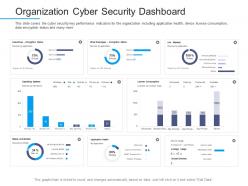
Information security awareness organization cyber security dashboard ppt templates





Try Before you Buy Download Free Sample Product
 Impress Your
Audience
 100%
Editable
 Save Hours
of Time


Our Information Security Awareness Organization Cyber Security Dashboard Ppt Templates are topically designed to provide an attractive backdrop to any subject. Use them to look like a presentation pro.
People who downloaded this PowerPoint presentation also viewed the following :
Information security awareness organization cyber security dashboard ppt templates with all 2 slides:
Use our Information Security Awareness Organization Cyber Security Dashboard Ppt Templates to effectively help you save your valuable time. They are readymade to fit into any presentation structure.

FAQs for Information security awareness organization cyber security
**INPUT**: What are the most common types of cyber threats individuals and organizations face today? **OUTPUT**: Common cyber threats include phishing attacks, ransomware, malware infections, data breaches, and social engineering tactics targeting both personal and corporate systems. These threats increasingly target financial services, healthcare institutions, and retail organizations through sophisticated methods, with many companies finding that comprehensive security awareness training and multi-layered defense strategies significantly reduce vulnerability while enhancing overall operational resilience. [Word count: 58 words]
Employees can be trained to recognize phishing attempts through simulated phishing exercises, regular security workshops, email authentication training, and threat recognition programs. These approaches enhance security awareness by teaching staff to identify suspicious links, verify sender authenticity, and report potential threats, ultimately strengthening organizational defenses while reducing successful cyber attacks across all departments.
Password management serves as a critical foundation for information security by enforcing strong, unique credentials, enabling multi-factor authentication, and reducing human error vulnerabilities. Through automated password generation and secure storage solutions, organizations streamline access controls while minimizing breach risks, with many financial institutions and healthcare providers finding that centralized password policies significantly enhance their overall security posture and regulatory compliance.
Organizations implement successful security awareness programs by establishing regular training schedules, creating role-specific content, conducting simulated phishing exercises, measuring engagement metrics, and fostering leadership support. These programs enhance security culture by delivering interactive workshops, personalized learning paths, and real-world scenarios, with many companies finding that consistent reinforcement and measurable outcomes significantly reduce security incidents while building organizational resilience.
Best practices for using personal devices in workplaces include implementing comprehensive security policies, requiring multi-factor authentication, installing approved security software, conducting regular device audits, and establishing clear data access boundaries. These measures streamline operational flexibility while minimizing security risks, with many organizations finding that structured BYOD programs enhance employee productivity and reduce IT costs, ultimately delivering competitive advantage through balanced security and accessibility.
Social engineering attacks compromise information security by exploiting human psychology rather than technical vulnerabilities, using deception, manipulation, and trust-building to bypass security controls. These attacks enable cybercriminals to gain unauthorized access to sensitive data, financial systems, and corporate networks through phishing emails, pretexting calls, and baiting schemes, ultimately delivering significant financial losses and reputational damage.
Cloud storage security requires encryption at rest and in transit, multi-factor authentication, regular access audits, data classification protocols, and backup redundancy measures. These safeguards streamline compliance while minimizing breach risks, with many financial institutions and healthcare organizations finding that strategic combinations of identity management and automated monitoring ultimately deliver enhanced operational security and regulatory confidence.
Organizations create security-aware cultures through comprehensive training programs, regular phishing simulations, clear security policies, leadership engagement, and continuous communication about emerging threats. These initiatives work by embedding security mindsets into daily operations, empowering employees to recognize risks, and fostering accountability, with many companies finding that employee-driven security practices significantly reduce breach incidents and enhance overall organizational resilience.
Data breaches create severe reputational damage through eroded customer trust, regulatory scrutiny, financial penalties, and competitive disadvantage for organizations, while exposing individuals to identity theft and privacy violations. These incidents increasingly trigger lasting consequences, with many companies experiencing reduced market valuation, customer defection, and rebuilding costs that far exceed initial breach remediation expenses.
The principle of least privilege enhances information security by restricting user access to only essential resources, reducing attack surfaces, and minimizing potential damage from breaches or insider threats. This approach enables organizations to maintain tighter control over sensitive data, prevent unauthorized lateral movement within networks, and ensure compliance with regulatory requirements, ultimately delivering stronger security postures and reduced risk exposure.
Information security awareness tools include learning management systems, phishing simulation platforms, interactive training modules, security awareness dashboards, and gamification software. These technologies enhance engagement by delivering personalized content, tracking progress, and simulating real-world threats, with many organizations finding that automated platforms streamline training delivery while significantly improving employee security behaviors and reducing incidents.
Organizations assess training effectiveness through pre and post-training assessments, simulated phishing campaigns, security incident tracking, and employee feedback surveys. Many companies combine behavioral analytics with knowledge retention testing, finding that regular simulated attacks and quarterly assessments significantly improve security posture while reducing breach incidents by up to 70%.
Regular software updates are crucial for preventing security vulnerabilities as they patch known exploits, fix coding flaws, enhance encryption protocols, and strengthen authentication mechanisms. These updates enable organizations to stay ahead of evolving cyber threats, with many financial institutions and healthcare providers finding that consistent patching schedules significantly reduce breach risks while maintaining operational continuity and customer trust.
Organizations should handle insider threats through comprehensive employee screening, continuous monitoring of access privileges, regular security training, and implementing zero-trust architecture principles. By combining behavioral analytics with role-based access controls and fostering a culture of security awareness, companies across sectors like banking and healthcare can detect suspicious activities early, minimize data breaches, and maintain operational integrity while preserving employee trust.
Legal and regulatory considerations include GDPR compliance requirements, HIPAA mandates for healthcare, SOX obligations for financial reporting, and industry-specific standards like PCI DSS for payment processing. These frameworks increasingly require documented security awareness programs, with organizations finding that comprehensive training streamlines regulatory audits while minimizing compliance risks and potential penalties.
-
Commendable slides with attractive designs. Extremely pleased with the fact that they are easy to modify. Great work!
-
Informative design.
-
Much better than the original! Thanks for the quick turnaround.
-
Excellent Designs.