


Interior Design Services Brochure Trifold




Try Before you Buy Download Free Sample Product
 Impress Your
 Audience
 100%
100% Editable
 Save Hours
 of Time


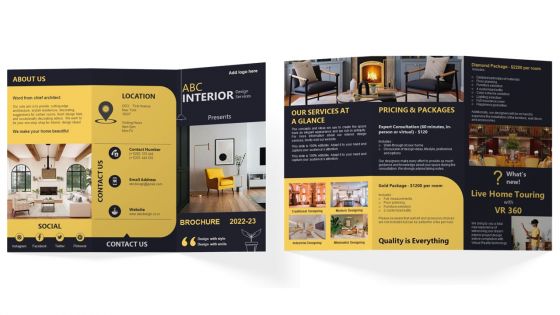
This Interior Design Services Brochure Template is an ideal way to showcase your latest facilities and offerings to target customers. Use this presentation to provide a detailed description about designing services such as traditional, modern, industrial and minimalist. This PPT catalogue is perfect to showcase the multiple pricing details of categories such as expert consultation, gold and diamond packages. Avail this professionally designed PPT booklet to highlight the unique facility rendered by your company which makes you an ideal choice for home decoration.
People who downloaded this PowerPoint presentation also viewed the following :
Interior Design Services Brochure Trifold with all 1 slides:
Use our Interior Design Services Brochure Trifold to effectively help you save your valuable time. They are readymade to fit into any presentation structure.
FAQs for Interior Design
Key elements for designing small living spaces include maximizing vertical storage, choosing multifunctional furniture, utilizing light colors and mirrors, implementing strategic lighting, and creating defined zones for different activities. These approaches enhance spatial perception by eliminating clutter, reflecting natural light, and establishing visual flow, with many interior designers finding that strategic furniture placement and color psychology ultimately deliver the illusion of expanded square footage while maintaining functionality.
Color psychology in interior design leverages specific hues to evoke desired emotional responses, with warm colors like reds and oranges energizing spaces, cool blues and greens promoting calm, and neutrals providing balance and sophistication. Many hospitality venues, healthcare facilities, and corporate offices strategically implement these principles to enhance customer experiences, reduce stress, and boost productivity, ultimately creating environments that align with their operational goals.
Popular interior design styles in 2023 include modern minimalism, warm maximalism, biophilic design, japandi aesthetics, and sustainable vintage elements. These trending approaches enhance residential and commercial spaces by incorporating natural materials, flexible functionality, and personalized character elements, with many homeowners and businesses finding that strategic style combinations ultimately deliver both aesthetic appeal and increased property value.
Lighting impacts design and functionality by defining mood, highlighting architectural features, creating visual depth, and supporting specific activities within each space. Through strategic layering of ambient, task, and accent lighting, interior designers enhance spatial perception, improve user comfort, and establish focal points, while ensuring adequate illumination for daily functions, ultimately transforming spaces into both beautiful and highly functional environments.
Sustainable materials in modern interior design include reclaimed wood, bamboo flooring, recycled glass surfaces, low-VOC paints, and cork wall coverings. These eco-friendly options streamline environmental compliance while enhancing aesthetic appeal, with many hospitality and corporate clients finding that sustainable choices reduce operational costs, improve indoor air quality, and deliver competitive advantage in increasingly environmentally-conscious markets.
Interior designers effectively integrate technology into smart home environments by collaborating with tech specialists, selecting aesthetically pleasing devices, and ensuring seamless connectivity throughout the space. Through strategic placement of smart lighting, automated climate systems, and integrated entertainment solutions, designers create functional yet beautiful environments that enhance daily living while maintaining design integrity, ultimately delivering homes that are both technologically advanced and visually stunning.
Space planning serves as the foundation for functional interior design by strategically organizing traffic flow, furniture placement, zone allocation, and spatial relationships to maximize efficiency and usability. Through careful analysis of client needs and space constraints, designers create layouts that enhance productivity, improve accessibility, and optimize square footage utilization, with many commercial and residential projects finding that thoughtful space planning ultimately delivers both aesthetic appeal and operational functionality.
Interior design services cater to clients with disabilities by implementing universal design principles, accessibility compliance standards, and personalized adaptive solutions. These approaches enhance living spaces through wider doorways, accessible bathroom fixtures, appropriate lighting levels, and ergonomic furniture placement, with many healthcare facilities and residential designers finding that thoughtful accessibility modifications ultimately deliver improved independence and quality of life.
**INPUT**: What are the best practices for mixing patterns and textures in home decor? **OUTPUT**: Best practices include establishing a cohesive color palette, varying scale proportions, balancing bold patterns with subtle textures, incorporating natural elements, and maintaining visual anchors throughout spaces. These approaches streamline design cohesion by creating depth, visual interest, and sophisticated layering, with many interior designers finding that strategic pattern mixing ultimately delivers personalized environments while enhancing overall aesthetic appeal.
Seasonal trends influence residential design through color palettes, textile choices, furniture styles, and decorative elements that reflect current market preferences and lifestyle shifts. These trends enable homeowners to refresh spaces cost-effectively while maintaining contemporary appeal, with many finding that strategic seasonal updates enhance property value and create more dynamic living environments.
Designers can balance aesthetics with practicality through functional zoning, multi-purpose furniture selection, durable material choices, strategic storage integration, and client lifestyle assessment. These approaches enable creating visually appealing spaces that enhance daily operations, with many residential and commercial projects finding that thoughtful design combinations ultimately deliver both beautiful environments and improved functionality.
Outdoor spaces can enhance indoor living through seamless transitions, natural light optimization, complementary design elements, and functional extensions of interior rooms. By creating cohesive color palettes, strategic plantings, and outdoor living areas, designers enable homes to feel more spacious and connected, with many homeowners finding that thoughtfully integrated landscapes significantly improve overall comfort and property value.
Professional interior designers deliver expertise in space planning, color theory, furniture selection, lighting design, and budget optimization, while DIY decorating offers creative control and cost savings. Through strategic combinations of aesthetics and functionality, designers help homeowners and businesses achieve cohesive environments that maximize space efficiency and property value, ultimately delivering polished results that many find difficult to replicate independently.
Interior design services enhance brand identity by strategically incorporating brand colors, logos, materials, and spatial layouts that reflect company values and culture. Through cohesive design elements, businesses create memorable customer experiences, reinforce brand messaging, and differentiate from competitors, with many retail stores, corporate offices, and hospitality venues finding that thoughtfully designed spaces significantly boost brand recognition and customer loyalty.
Scaling and proportion ensure visual harmony by creating balanced relationships between furniture, architectural elements, and spatial dimensions within interior environments. These fundamental principles enable designers to optimize room functionality, enhance visual flow, and deliver cohesive aesthetics, with residential and commercial projects finding that proper proportional relationships ultimately create more comfortable, purposeful spaces.
-
Extremely professional slides with attractive designs. I especially appreciate how easily they can be modified and come in different colors, shapes, and sizes!
-
Very unique, user-friendly presentation interface.