

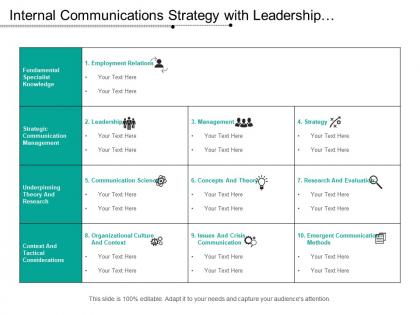
Internal communications strategy with leadership management concepts and theory




Try Before you Buy Download Free Sample Product
 Impress Your
 Audience
 100%
100% Editable
 Save Hours
 of Time


Increase the factors in your favor with our Internal Communications Strategy With Leadership Management Concepts And Theory. Add to the advantage you already have.
People who downloaded this PowerPoint presentation also viewed the following :
Internal communications strategy with leadership management concepts and theory with all 5 slides:
Our Internal Communications Strategy With Leadership Management Concepts And Theory get it across with clarity. They ensure there is no confusion.


FAQs for Internal communications strategy with leadership management
An effective internal communications strategy includes clear messaging frameworks, multi-channel delivery systems, employee feedback mechanisms, leadership communication protocols, and performance measurement tools. These components work together by ensuring consistent messaging across departments, facilitating two-way dialogue, and enabling real-time adjustments, with many organizations finding that strategic integration ultimately enhances employee engagement and operational alignment.
An internal communications strategy aligns with business objectives by ensuring messaging consistency, reinforcing corporate values, and communicating strategic priorities clearly across all organizational levels. Through targeted communication channels and feedback mechanisms, companies streamline decision-making processes, enhance employee engagement, and accelerate goal achievement, with many organizations finding that aligned internal communications deliver improved productivity and stronger competitive positioning.
Employee feedback serves as the foundation for effective internal communications strategy, identifying communication gaps, preferred channels, content relevance, and timing preferences across different departments and roles. This strategic input enables organizations to tailor their messaging approaches, enhance engagement levels, and streamline information flow, with many companies finding that feedback-driven communications deliver significantly higher employee satisfaction and organizational alignment.
Organizations measure internal communications effectiveness through employee engagement surveys, communication audits, feedback mechanisms, analytics from digital platforms, and participation rates in company initiatives. These assessment methods enable leaders to identify communication gaps, optimize messaging strategies, and enhance employee satisfaction, with many companies finding that regular measurement ultimately delivers improved productivity, stronger organizational alignment, and better employee retention rates.
Effective internal communication tools include collaboration platforms like Slack and Microsoft Teams, video conferencing solutions, intranet systems, mobile communication apps, and employee engagement platforms. These technologies streamline information sharing, enhance real-time collaboration, and improve transparency across organizational levels, with many companies finding that integrated communication ecosystems significantly boost productivity and employee satisfaction.
Storytelling enhances internal communications by making complex information more relatable, memorable, and emotionally engaging for employees across all organizational levels. Through narrative frameworks, companies can transform policy updates, change initiatives, and strategic announcements into compelling stories that resonate with teams, ultimately improving message retention and fostering stronger workplace culture and alignment.
**INPUT**: What are the best practices for creating an internal communications timeline? **OUTPUT**: Best practices for creating an internal communications timeline include mapping key milestones, identifying stakeholder groups, establishing communication frequencies, selecting appropriate channels, and building in feedback loops. These strategic approaches streamline organizational alignment by ensuring timely message delivery, reducing information gaps, and enhancing employee engagement, with many companies finding that structured timelines ultimately deliver improved project outcomes and stronger internal collaboration. [Word count: 60 words]
Ensuring consistency requires establishing centralized messaging guidelines, regular cross-departmental communication protocols, shared content repositories, standardized templates, and unified brand voice training for all teams. Through strategic alignment meetings and collaborative platforms, organizations streamline their internal communications, reduce conflicting information, and enhance operational efficiency, with many companies finding that consistent messaging significantly improves employee engagement and organizational cohesion.
Strategies include virtual town halls, interactive video messages, collaborative digital platforms, personalized communication channels, and gamified engagement tools. These approaches enhance remote employee connection by fostering two-way dialogue, creating virtual watercooler moments, and ensuring consistent information flow, with many organizations finding that regular pulse surveys and recognition programs ultimately deliver stronger team cohesion and productivity.
Cultural differences significantly impact internal communications strategy by influencing communication styles, hierarchy preferences, feedback mechanisms, and information processing approaches across diverse teams. Organizations must adapt their messaging formats, channel selection, and engagement methods to accommodate varying cultural expectations, with many multinational companies finding that localized communication approaches enhance employee engagement and reduce misunderstandings across global operations.
Common pitfalls include lack of leadership buy-in, inconsistent messaging across departments, overloading employees with information, neglecting feedback mechanisms, and failing to measure effectiveness. These challenges can significantly undermine organizational alignment and employee engagement, with many companies finding that strategic planning, clear governance structures, and regular assessment cycles ultimately deliver better transparency, reduced confusion, and stronger workplace culture.
Visual aids and presentation templates enhance internal messaging by standardizing communication formats, improving information retention, and ensuring consistent branding across departments. These tools streamline complex data presentation, reduce preparation time for meetings, and create more engaging employee experiences, with many organizations finding that visual consistency ultimately strengthens company culture and accelerates decision-making processes.
Leadership communication significantly influences employee morale and engagement by establishing transparency, providing clear direction, recognizing achievements, and fostering open dialogue. Through consistent messaging and authentic interactions, organizations create trust and alignment, with many companies finding that leaders who communicate regularly and meaningfully see improved retention, higher productivity, and enhanced workplace culture.
Internal communications success metrics include employee engagement scores, message reach and open rates, feedback response rates, knowledge retention assessments, and time-to-information distribution. These measurements enable organizations to streamline communication effectiveness, enhance workforce alignment, and ultimately deliver improved productivity and employee satisfaction, with many companies finding that strategic metric tracking reduces miscommunication costs while accelerating decision-making processes.
Internal communications frequency depends on organizational size, industry pace, and content urgency, with most successful companies adopting weekly updates for general news, monthly detailed reports, and immediate alerts for critical changes. This strategic combination enables leaders to maintain employee engagement while preventing information overload, with many organizations finding that consistent, predictable schedules enhance transparency and trust.
-
Excellent template with unique design.
-
Amazing product with appealing content and design.