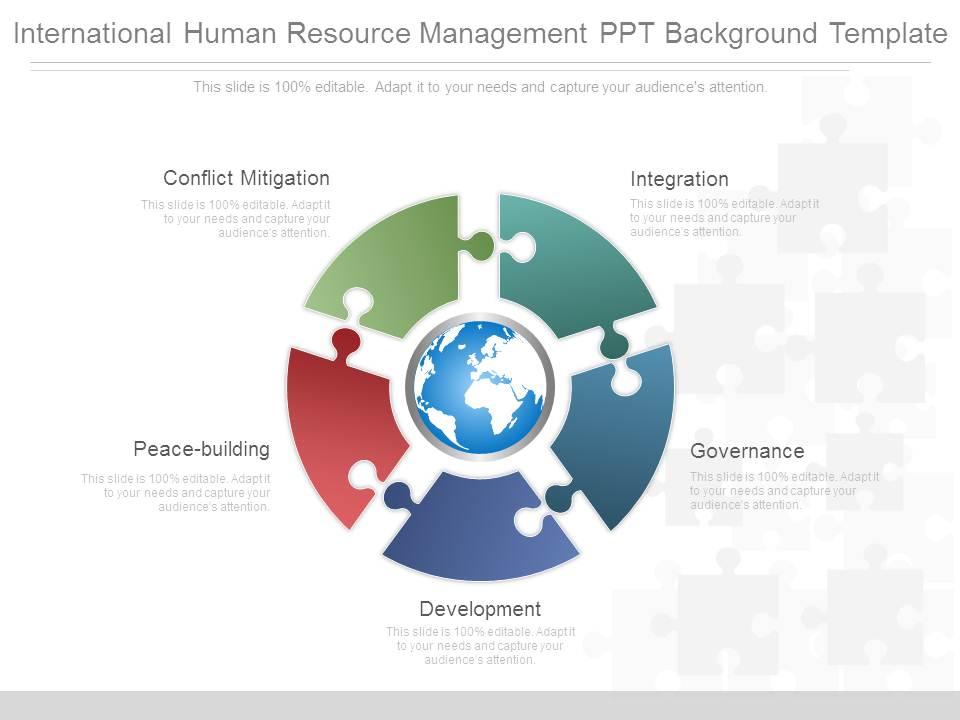
International human resource management ppt background template
Try Before you Buy Download Free Sample Product
Audience
Editable
of Time
Skillful design and an eye for presentation needs make our International Human Resource Management Ppt Background Template perfect for any presentation. Our collection are aimed to suit any presentation project.
People who downloaded this PowerPoint presentation also viewed the following :
International human resource management ppt background template with all 7 slides:
Our International Human Resource Management Ppt Background Template come handy everywhere. They are a functional asset.
FAQs for International human resource management
Managing human resources across multiple countries involves navigating complex labor laws, cultural differences, compensation variations, talent acquisition difficulties, and compliance requirements. These challenges can significantly impact operational efficiency, with many multinational organizations finding that strategic HR localization, standardized processes, and cultural sensitivity training help streamline international workforce management while maintaining competitive advantage.
Cultural diversity significantly impacts international HR practices by requiring localized recruitment strategies, culturally-sensitive training programs, flexible communication approaches, and region-specific performance management systems. While this complexity presents challenges, organizations leveraging diverse perspectives often experience enhanced innovation, broader market insights, and improved problem-solving capabilities, with many multinational companies finding that inclusive practices ultimately drive higher employee engagement and competitive advantage.
Organizations can implement cultural orientation programs, mentorship pairings with local employees, language training, cross-cultural team projects, and flexible adaptation periods to integrate expatriates successfully. These strategies streamline workforce cohesion by reducing cultural barriers, enhancing communication, and building collaborative relationships, with many multinational companies finding that structured integration ultimately delivers improved team performance and reduced expatriate turnover rates.
Labor laws vary significantly across countries in areas like employment contracts, working hours, termination procedures, benefits requirements, and collective bargaining rights, creating complex compliance challenges for multinational organizations. These differences require strategic HR policy adaptation, with companies increasingly developing region-specific frameworks while maintaining global standards, ultimately enabling consistent employee experiences and competitive advantage through enhanced regulatory compliance and streamlined international operations.
Technology streamlines international HR processes through cloud-based HRIS platforms, automated payroll systems, virtual recruitment tools, AI-powered talent analytics, and digital compliance management systems. These solutions enable multinational organizations to standardize policies across regions, reduce administrative costs, and enhance employee experiences globally, while ensuring regulatory compliance and delivering real-time workforce insights for strategic decision-making.
International HRM contributes to organizational goals by aligning global talent strategies, standardizing performance management across regions, facilitating cross-cultural communication, and ensuring consistent leadership development worldwide. Through strategic workforce planning and cultural integration initiatives, multinational organizations streamline operations, enhance employee engagement, and deliver competitive advantage, with many companies finding that coordinated HRM practices significantly improve their global market positioning.
**INPUT**: What are best practices for designing compensation packages for employees in different countries? **OUTPUT**: Best practices include conducting local market research, balancing global equity with regional competitiveness, incorporating statutory benefits, considering cost-of-living variations, and aligning with cultural expectations. These strategies enable multinational organizations to attract top talent while maintaining operational efficiency, with many companies finding that localized compensation frameworks ultimately deliver higher employee retention and stronger market positioning across diverse regions. **Word count: 60 words**
Organizations assess and mitigate international assignment risks through comprehensive pre-departure assessments, cultural training programs, security briefings, health screenings, and ongoing support systems. These strategic approaches enable companies to identify potential challenges early, provide targeted preparation for employees, and maintain continuous communication channels, ultimately reducing assignment failures while enhancing employee performance and organizational success globally.
Globalization creates both opportunities and challenges for talent acquisition, requiring region-specific compensation packages, cultural adaptation strategies, enhanced employer branding, and flexible remote work policies. Through strategic localization approaches, organizations streamline recruitment across diverse markets while addressing regional skill gaps, regulatory differences, and cultural expectations, ultimately delivering competitive advantage and improved retention rates in an increasingly interconnected global workforce landscape.
Cultural intelligence among HR professionals develops through cross-cultural training programs, international assignment experiences, mentorship with global colleagues, and regular exposure to diverse cultural perspectives through workshops and simulations. These approaches enhance communication skills, cultural empathy, and adaptive leadership capabilities, with many multinational organizations finding that culturally intelligent HR teams deliver stronger employee engagement, reduced cross-cultural conflicts, and ultimately improved performance across international operations.
Training and development programs create global leadership pipelines by building cross-cultural competencies, strategic thinking capabilities, and adaptive management skills across diverse markets. These initiatives enable organizations to cultivate leaders who understand local nuances while maintaining global consistency, with multinational corporations finding that structured leadership development reduces expatriate failure rates, accelerates succession planning, and ultimately delivers sustainable competitive advantage in international markets.
Varying job expectations across cultures significantly impact performance management systems by requiring localized evaluation criteria, culturally appropriate feedback methods, and region-specific goal-setting frameworks. Organizations operating internationally must balance standardized performance metrics with cultural nuances, adapting their systems to accommodate different work styles, communication preferences, and achievement definitions, ultimately delivering more effective employee development and organizational consistency.
Ethical considerations in international human resource management include fair compensation across regions, cultural sensitivity in policies, anti-discrimination practices, labor rights compliance, and transparent communication standards. These frameworks enhance organizational integrity by ensuring equitable treatment, respecting local customs, and maintaining consistent values globally, with many multinational corporations finding that ethical HR practices ultimately deliver stronger employee engagement and competitive advantage.
Organizations ensure international HR data compliance through comprehensive data mapping, robust privacy policies, cross-border transfer agreements, and regular compliance audits. These frameworks enable companies to navigate varying regulations like GDPR and local privacy laws by implementing standardized data handling protocols, employee consent mechanisms, and secure data storage solutions, ultimately delivering regulatory confidence while maintaining operational efficiency across global markets.
Employer branding significantly influences global talent acquisition by showcasing company culture, values, career opportunities, and employee experiences across diverse markets. Through strategic social media presence, authentic employee testimonials, competitive benefits packages, and consistent messaging across regions, organizations like Google, Unilever, and Microsoft effectively attract top international candidates, ultimately delivering enhanced talent pools and competitive advantage in increasingly global markets.
-
Best way of representation of the topic.
-
Attractive design and informative presentation.