

Internet based apps for technology flat powerpoint design





Try Before you Buy Download Free Sample Product
 Impress Your
 Audience
 100%
100% Editable
 Save Hours
 of Time


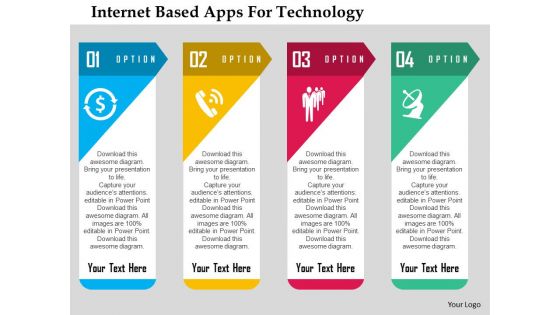
Beautifully designed, well conceptualized and professionally equipped is our provided presentation on internet based apps for technology flat PowerPoint design. This PowerPoint template diagram has been crafted with graphic of four text boxes and technology icons. These text boxes are used to show the concept of internet based apps for technical analysis. Use this PPT diagram for internet and technology related presentations. Now a day apps are the much needed tool for the success of any online market. Therefore constant research and programming is being done in the technical department of every organization to come out with the most friendly and easy to use apps for the target customers. The provided internet apps PowerPoint template has its usage in varied companies and sectors irrespective of any specific factor related to any industry. You simply need to click on the download link provided on the page, save the technology presentation model and customize it to your use for final presentation. You may incorporate it as part in your big presentation or use it solely.Handle any adversity with our Internet Based Apps For Technology Flat Powerpoint Design. They help you come up with the best answers.
People who downloaded this PowerPoint presentation also viewed the following :
Internet based apps for technology flat powerpoint design with all 5 slides:
Our Internet Based Apps For Technology Flat Powerpoint Design can be great demand drivers. Expose them to an array of better choices.
FAQs for Internet based apps for technology
Speed is everything - people bail if your app doesn't load in like 2 seconds. Make sure it works perfectly on mobile since that's where everyone lives now. Push notifications are great but don't be annoying about it (looking at you, every news app ever). Offline mode is clutch, and security better be bulletproof or you're toast. Social sharing features help tons with growth. AI personalization really makes apps stand out, though honestly half the time I can't tell if it's working or not lol. Just nail the basic user flow first before adding fancy stuff.
Honestly, UI and UX can totally make or break your app. If users can't figure out how to navigate it, they're gone in like 10 seconds. I've watched apps with killer features completely tank because the design was confusing as hell. Good UX keeps people engaged and actually wanting to come back. Your interface needs to be dead simple - users shouldn't have to think about where to click next. Test it with real people early on, trust me. Their feedback will save you so much pain later. Even small design tweaks can boost your conversion rates like crazy.
So basically cloud computing is what makes all your apps actually function. Your phone isn't doing the heavy work - remote servers are handling data storage, processing stuff, and keeping everything synced up. Like when you're watching Netflix or accessing files on Google Drive from anywhere. It's honestly pretty wild how smooth it all feels. The cloud also prevents apps from totally crashing when tons of people use them at once. I mean, imagine if Instagram had to run everything locally on your device... chaos. Most of what happens when you tap an app is actually occurring on servers somewhere else.
Honestly, you can't just rely on one thing - gotta stack multiple layers. HTTPS everywhere is non-negotiable, plus encrypt stuff when it's stored too. Multi-factor auth is your friend here. Input validation stops those nasty injection attacks (seriously, sanitize everything users send you). Regular security audits catch what you missed. Oh god, please hash your passwords - I'm tired of seeing plain text disasters in 2024. Keep dependencies updated, set proper access controls so people only see their own data. Start with the basics like HTTPS and input sanitization, then add more protection from there.
So first thing - run Lighthouse to see what's actually slowing you down. Bundle your JS and CSS files together, compress everything, and cache like crazy. Images should be WebP if possible. CDNs are clutch for serving static stuff from servers closer to your users. Lazy loading is a no-brainer too - why load images people won't even scroll to? Oh and your database queries probably suck (most do), so optimize those. Backend caching helps a ton if you're not doing it already.
Dude, web apps are so much better for this stuff. Updates happen instantly - no waiting around for people to actually install them (which half your users won't even bother doing anyway). Scaling's way easier too since you just add more servers when things get busy. With regular software, you're stuck with whatever crappy laptop someone's running. The best part? You control everything on your end, so you can actually optimize things and roll out fixes without crossing your fingers that users will cooperate. It's honestly a game-changer.
Honestly, subscription models are killing it right now - people would rather pay $10/month than $100 upfront. Freemium's your best bet to start. Everyone's throwing AI features into premium tiers because, well, that's what sells these days. Games still make bank on in-app purchases, but now even boring productivity apps are doing it for templates and stuff. Ad revenue's gotten messy with all the privacy updates (thanks Apple), so I wouldn't rely on that. Just launch free with some basic features and see what people actually want to pay for.
Set up different ways for users to reach you - app store reviews, in-app surveys, support tickets, social media stuff. But here's the thing: actually DO something with what they tell you. So many apps just collect feedback and ignore it, which honestly pisses people off more. Fix the bugs people keep complaining about first - that'll bump your ratings pretty quick. Then tackle the bigger feature requests. Oh, and circle back to let users know when you've fixed their issues. They love that. Start with whatever's easiest but stick with it consistently.
Honestly, these apps have changed everything about work and life. Real-time collaboration with people halfway across the world? Amazing. But here's the thing - you're basically always connected now, which is exhausting. I use Slack constantly for team stuff, though I'll admit I sometimes get sucked into Instagram during work (whoops). The trick is being smart about notifications. Turn off the random ones when you need to actually focus. Short bursts work better than trying to multitask all day. You'll get way more done if you're not constantly switching between apps and getting pinged every five minutes.
Dude, regulatory stuff is honestly such a pain but you can't ignore it. GDPR, content rules, app store policies - they'll all mess with how you build and launch. Different countries have totally different standards too, so something that works in the US might be completely banned elsewhere. And don't even get me started on how fast these rules change, especially anything AI-related. Here's the thing though - deal with compliance from the start of development. Trying to fix it after you've already built everything? That's just asking for a headache you really don't need.
Ugh, cross-platform development is such a headache. Browser inconsistencies are the worst - Safari does its own weird thing while Chrome behaves totally different. Then you've got screen sizes all over the place, plus some devices just can't handle heavy JavaScript without choking. Touch vs click interactions will mess you up too. Honestly, responsive design always breaks in the most random scenarios - like why does it look perfect on everything except that one Samsung tablet? Performance varies wildly between a new iPhone and some cheap Android. My advice? Test on real devices constantly, not just dev tools. API calls can be finicky across platforms too.
Honestly, social media stuff is a game changer for engagement. When people can share their wins or cool content straight to their feeds, you're basically getting free marketing from your own users. The viral potential is huge. Social login is clutch too - nobody wants to remember another damn password these days. Friend leaderboards and comparing progress with buddies? That's where things get sticky. People hang around way longer when their friends are involved. I'd start simple with sharing buttons and social login first. You'll probably see your numbers bump up pretty fast. The collaborative features can come later once you've got the basics down.
Dude, WebAssembly's getting crazy good for browser performance - almost native speed now. PWAs are everywhere too, basically turning websites into apps that feel mobile. Edge computing's moving stuff closer to users which is smart. Everyone's shoving AI into everything these days (some of it's actually useful though). WebRTC made real-time chat way less painful to build. Oh and 5G plus better CDNs mean you can finally do the rich stuff that used to be impossible. Honestly? Start messing around with PWAs if you haven't. Users expect that app-like experience now.
Honestly, analytics are a lifesaver because they show you what's actually going on instead of what you think is happening. Users drop off in weird places you'd never expect. Track the basics first - retention rates, how long people stick around, conversion funnels. That stuff reveals patterns pretty quickly. You can spot which features people actually use (spoiler: probably not your favorite one) and catch performance issues early. Way better than guessing what users want - we're all horrible at that anyway. The data just makes your decisions way less random when you're planning updates.
Look, PWAs are definitely the cheaper route - one app works everywhere and people don't have to mess with app stores. But they're kinda limited when it comes to device features, and tbh they still feel a bit clunky compared to real native apps. Native gives you way better performance and full access to everything (camera, GPS, all that stuff), but you're building twice - once for iOS, once for Android. That gets expensive fast. If you need heavy camera or location stuff, go native. Otherwise PWAs will get you launched way quicker and cheaper.
-
Great experience, I would definitely use your services further.
-
Content of slide is easy to understand and edit.