

Internet Of Things IoT Security Powerpoint Presentation Slides Cybersecurity CD





Try Before you Buy Download Free Sample Product
 Impress Your
Audience
 100%
Editable
 Save Hours
of Time


Internet of Everything security refers to measures and techniques to protect internet-connected devices, systems, and networks from cyber threats and unauthorized access. Grab our professionally designed Internet of Things IoT Security PowerPoint. Its purpose is to ensure the confidentiality, integrity, and availability of data transmission of IoT devices. IoT security market PPT offers slides to help users understand its workings, types, market size analysis, and companies currently using this technology. Moreover, this PowerPoint also covers in detail sample cybersecurity scenarios faced by companies, their root cause analysis, common threats, and gap analysis. Furthermore, these PPT Slides include the IoT security lifecycle, IoT security challenges, and helping deploy improvement strategies for solving problems. These strategies include device and system identity management, secure remote access IoT, network security, and continuous monitoring and update. Lastly, the Cybersecurity deck provides resources like a team and costs to implement these strategies and their impact.
People who downloaded this PowerPoint presentation also viewed the following :
Content of this Powerpoint Presentation
Slide 1: This slide showcase title Internet of Things (IoT) Security. State Your Company Name.
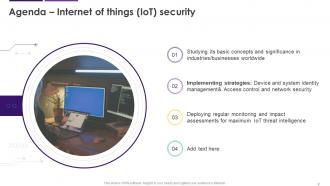
Slide 2: This slide showcase title Agenda – Internet of things (Iot) security.
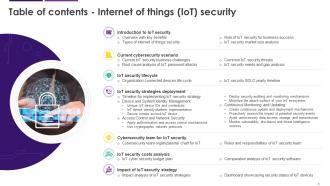
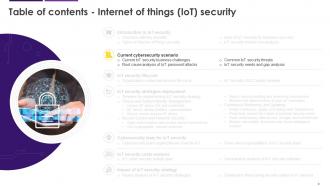
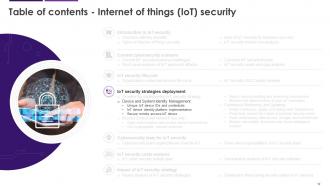
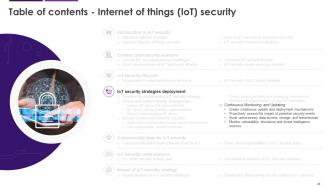
Slide 3: This slide exhibit Table of content.
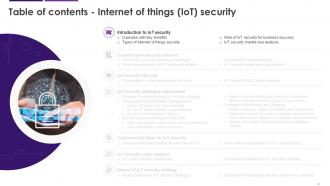
Slide 4: This slide exhibit Table of content: Introduction to IoT security.
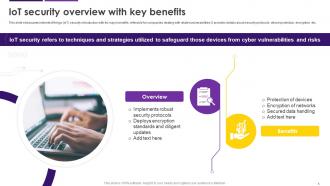
Slide 5: This slide showcases internet of things (IoT) security introduction with its major benefits, referable for companies dealing with related vulnerabilities.
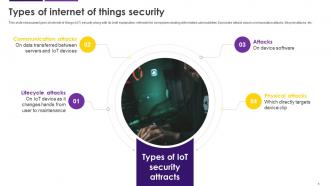
Slide 6: This slide showcases types of internet of things (IoT) security along with its brief explanation, referable for companies dealing with related vulnerabilities.
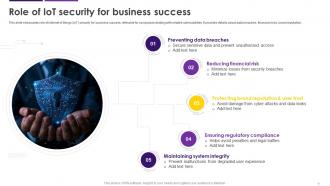
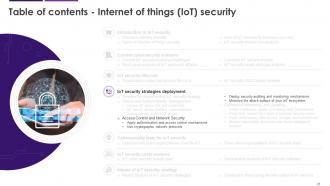
Slide 7: This slide showcases role of internet of things (IoT) security for business success, referable for companies dealing with related vulnerabilities.
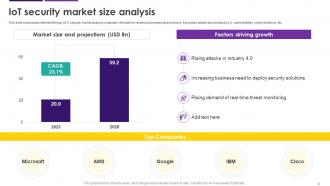
Slide 8: This slide showcases internet of things (IoT) security market analysis snapshot, referable for related businesses and investors.
Slide 9: This slide exhibit Table of content: Current IoT security business challenges.
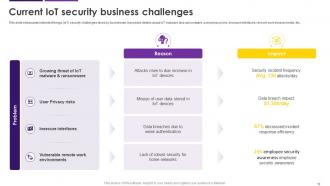
Slide 10: This slide showcases internet of things (IoT) security challenges faced by businesses.
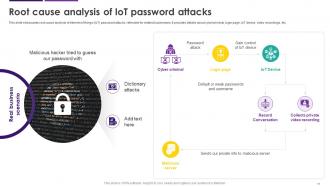
Slide 11: This slide showcases root cause analysis of internet of things (IoT) password attacks, referable for related businesses.
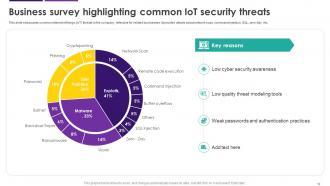
Slide 12: This slide showcases common internet of things (IoT) threats in the company, referable for related businesses.
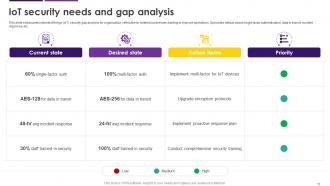
Slide 13: This slide showcases internet of things (IoT) security gap analysis for organization, referable for related businesses wanting to improve operations.
Slide 14: This slide exhibit Table of content: IoT security lifecycle
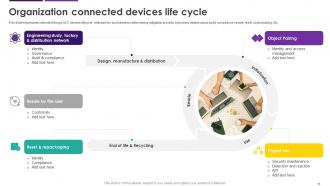
Slide 15: This slide showcases internet of things (IoT) devices lifecycle, referable for businesses in determining mitigation process.
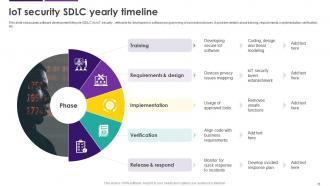
Slide 16: This slide showcases software development lifecycle (SDLC) in IoT security , referable for developers in software programming of connected devices.
Slide 17: This slide exhibit Table of content: IoT security strategies deployment
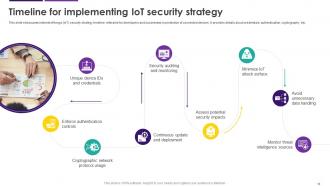
Slide 18: This slide showcases internet of things (IoT) security strategy timeline, referable for developers and businesses in protection of connected devices.
Slide 19: This slide exhibit Table of content: Device and System Identity Management
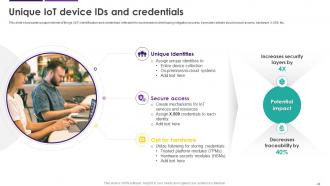
Slide 20: This slide showcases unique internet of things (IoT) identification and credentials, referable for businesses in developing mitigation process.
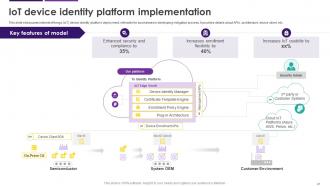
Slide 21: This slide showcases internet of things (IoT) device identity platform deployment, referable for businesses in developing mitigation process.
Slide 22: This slide showcases secure remote access for internet of things (IoT) devices, referable for businesses in developing mitigation process.
Slide 23: This slide exhibit Table of content: Access Control and Network Security
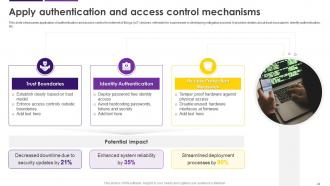
Slide 24: This slide showcases application of authentication and access control for internet of things (IoT) devices, referable for businesses in developing mitigation process.
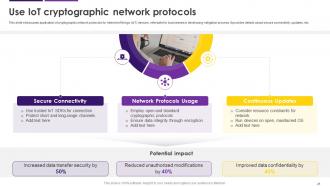
Slide 25: This slide showcases application of cryptographic network protocols for internet of things (IoT) devices, referable for businesses in developing mitigation process.
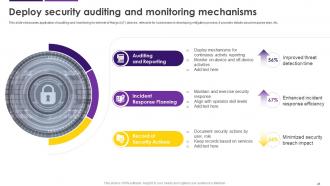
Slide 26: This slide showcases application of auditing and monitoring for internet of things (IoT) devices, referable for businesses in developing mitigation process.
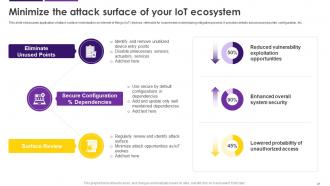
Slide 27: This slide showcases application of attack surface minimization on internet of things (IoT) devices, referable for businesses in developing mitigation process.
Slide 28: This slide exhibit Table of content: Continuous Monitoring and Updating
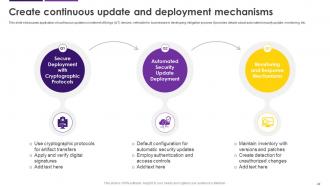
Slide 29: This slide showcases application of continuous updates on internet of things (IoT) devices, referable for businesses in developing mitigation process.
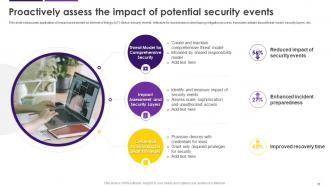
Slide 30: This slide showcases application of impact assessment on internet of things (IoT) device security events, referable for businesses in developing mitigation process.
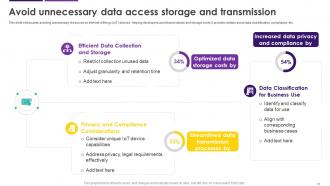
Slide 31: This slide showcases avoiding unnecessary resources on internet of things (IoT) devices, helping developers avoid transmission and storage costs.
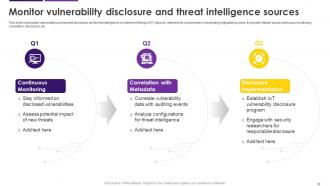
Slide 32: This slide showcases vulnerability assessment disclosure and threat intelligence on internet of things (IoT) devices.
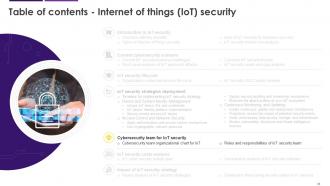
Slide 33: This slide exhibit Table of content: Cybersecurity team for IoT security
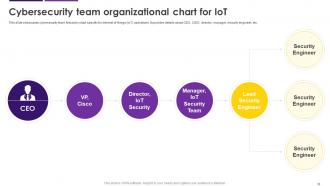
Slide 34: This slide showcases cybersecurity team hierarchy chart specific for internet of things (IoT) operations.
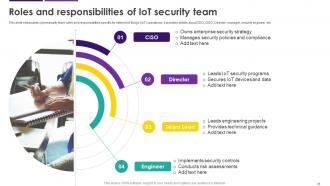
Slide 35: This slide showcases cybersecurity team roles and responsibilities specific for internet of things (IoT) operations.
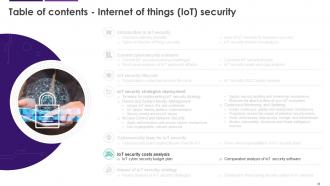
Slide 36: This slide exhibit Table of content: IoT security costs analysis
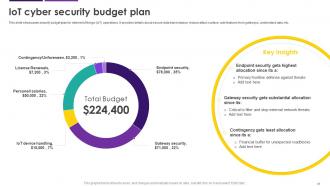
Slide 37: This slide showcases security budget plan for internet of things (IoT) operations.
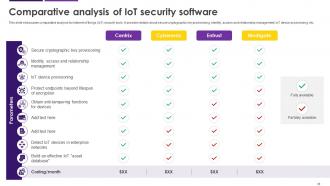
Slide 38: This slide showcases comparative analysis for internet of things (IoT) security tools.
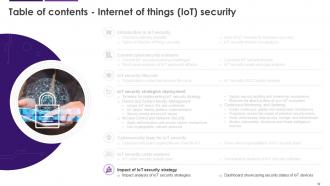
Slide 39: This slide exhibit Table of content: Impact of IoT security strategy
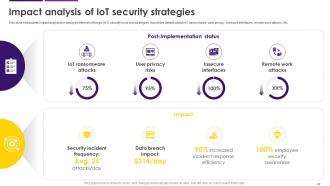
Slide 40: This slide showcases impact analysis for deployed internet of things (IoT) security tools and strategies.
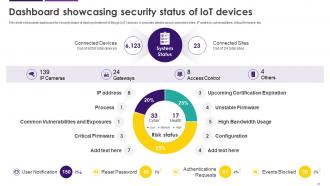
Slide 41: This slide showcases dashboard for security status of deployed internet of things (IoT) devices.
Slide 42: This slide shows all the icons included in the presentation.
Slide 43: This slide is titled as Additional Slides for moving forward.
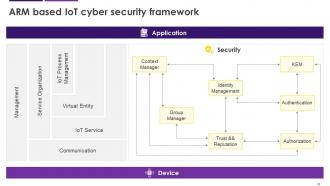
Slide 44: This slide showcase title ARM based IoT cyber security framework.
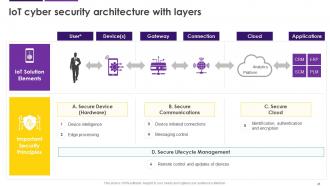
Slide 45: This slide showcase title IoT cyber security architecture with layers.
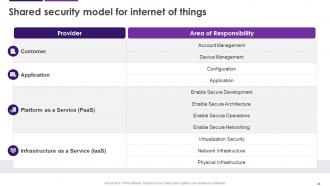
Slide 46: This slide showcase title Shared security model for internet of things.
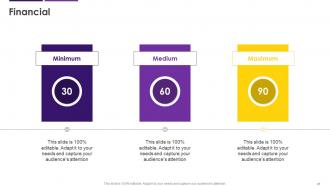
Slide 47: This is a financial slide. Show your finance related stuff here.
Slide 48: This slide showcase title Weekly timeline with task name.
Slide 49: This slide showcase title Roadmap for process flow.
Slide 50: This slide showcase Funnel.
Slide 51: This slide showcase Matrix.
Slide 52: This is a Timeline slide. Show data related to time intervals here.
Slide 53: This is Our Goal slide. State your firm's goals here.
Slide 54: This slide showcase Lego.
Slide 55: This slide showcase title Silhouettes.
Slide 56: This slide showcase title Hierarchy.
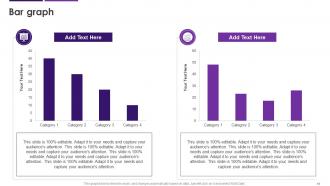
Slide 57: This slide showcase Bar graph for different products.
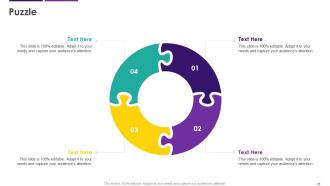
Slide 58: This slide contains Puzzle with related icons and text.
Slide 59: This is a Thank You slide with address, contact numbers and email address.
Internet Of Things IoT Security Powerpoint Presentation Slides Cybersecurity CD with all 67 slides:
Use our Internet Of Things IoT Security Powerpoint Presentation Slides Cybersecurity CD to effectively help you save your valuable time. They are readymade to fit into any presentation structure.













FAQs for Internet Of Things IoT Security Powerpoint Presentation
Dude, IoT security is honestly a mess right now. Most devices still ship with "admin/admin" passwords - like, come on manufacturers, it's 2024! Your data's flying around unencrypted, plus half these things never get security updates once they're sold. Authentication is usually garbage too. When you set up IoT stuff, first thing - change those default passwords. Put devices on their own network segment if you can. Oh, and buy from companies that actually patch their products later. I learned this the hard way when my smart doorbell got hacked last year. Trust me, you don't want random people accessing your network.
Okay so first thing - segment your network and keep IoT devices away from your important stuff. Default passwords are such a pain but change them all (I swear half the breaches I read about start there). You'll want encryption on everything and set up alerts for weird network activity. Firmware updates are boring but do them regularly. Also monitor your traffic patterns - automated alerts help catch stuff early. Oh and don't just set this up once and forget about it. Run security checks every few months because new vulnerabilities pop up constantly.
So encryption is basically what keeps creeps from spying on your smart home stuff. Your data gets scrambled when it travels between devices and servers - even if someone intercepts it, they can't read anything. It's like having a secret code only you and the company understand. Look for devices that use strong protocols like TLS 1.3 or AES-256 (I know, the names are annoying). Most important thing though? Make sure it's turned on automatically, not buried in some settings menu you'll never find.
Dude, you really need to update your IoT stuff. Hackers literally keep lists of known vulnerabilities they can exploit - it's like leaving your front door unlocked. Smart cameras, thermostats, those fancy bulbs... they all become weak spots in your network. The annoying thing is most don't auto-update like phones do, so those security holes just sit there forever. I learned this the hard way when my neighbor's camera got hacked last year. Check monthly for updates or turn on automatic ones if you can. Takes like 5 minutes but saves you major headaches.
Give each device its own digital certificate and use mutual TLS - that's your foundation. Role-based access is crucial too, so devices can't touch stuff they don't need. I'd start by making a list of what you've got running right now and what each thing actually needs access to. Rotate those credentials regularly (we got burned when certificates expired and took down a bunch of sensors). Oh, and definitely set up centralized identity management. Makes it way easier to cut off compromised devices fast. The audit part's boring but you gotta know what's out there first.
First, figure out what rules actually apply to you - GDPR, CCPA, HIPAA if you're in healthcare, whatever. Most companies have zero clue what's even connected to their network (which is terrifying tbh). Do an audit of your IoT stuff to spot vulnerabilities. Encrypt everything, keep firmware updated, and document it all because auditors are obsessed with paperwork. Oh, and this isn't a one-and-done thing. Set quarterly check-ins for new devices and changing regulations. Trust me, you don't want to be scrambling when compliance deadlines hit.
Zero-trust networking is pretty solid right now - basically treats every device like it could be sketchy until proven otherwise. There's also AI detection stuff that'll flag weird behavior, like if your thermostat starts going crazy at 3am or whatever. Hardware security modules are becoming more common too, which is nice since they're harder to mess with. Oh and blockchain for device authentication, though that's still kinda new. When you're shopping around, definitely prioritize the zero-trust features. Honestly makes a huge difference in keeping everything locked down properly.
Dude, AI and machine learning are game-changers for IoT security. They spot weird behavior patterns across all your connected stuff in real-time - like if your smart fridge suddenly starts sending massive data packets at 3am (which actually happened to my neighbor, no joke). The AI learns what's normal first, then flags anything sketchy. You can automate vulnerability patches too. Plus it handles authentication for thousands of devices without you babysitting everything. Just make sure you're collecting clean baseline data from day one - your future security models will thank you for it.
Dude, IoT breaches are seriously scary stuff. Hackers can take over your whole network just by getting into one smart device - then they're stealing data, spying through your cameras, or even causing physical damage to infrastructure. I read about this wild case where attackers shut down an entire factory by hacking through a connected thermostat of all things. The fallout hits everywhere: financial losses, privacy gets trashed, safety risks pile up. Honestly, most of this could be avoided if people just changed their default passwords and updated firmware regularly. Basic stuff, but it works.
Make security invisible to users but rock-solid on the back end. Automate everything you can - firmware updates, certificates, threat detection. That way people don't have to think about it. MFA sucks, but biometrics or device-based stuff makes it way smoother. Here's something I wish I'd known earlier: build your network segmentation and access controls from day one instead of trying to add them later (total nightmare). Zero-trust is the way to go, just make sure the actual experience feels effortless for everyone using it.
Oh man, you're in for it. Legacy systems are your worst enemy - half these devices are running firmware from like 2015 that never gets updated. I swear some factories are held together with digital duct tape. Then there's the monitoring nightmare since everything's connected and chattering constantly, creating attack vectors everywhere. Most don't even have proper encryption or authentication (shocking, I know). The real pain though? You can't just shut things down to patch them - downtime costs millions. My advice: figure out what you actually have connected first before you do anything else.
Look, everyone's gotta stop working in silos - manufacturers, regulators, security folks, all of us. Right now it's a total shitshow with every vendor doing whatever they want. We need shared vulnerability databases and actual certification programs that mean something. Push your company to be transparent about IoT buying decisions. Don't purchase anything unless vendors meet real security standards first. Industry-wide baseline requirements would help too, plus sharing threat intelligence as it happens. Oh, and clear accountability when things go wrong - because they will. The fragmented mess we have now just isn't cutting it anymore.
Honestly, the biggest myth is thinking IoT devices are just harmless gadgets. They're basically mini computers on your network! Changing default passwords helps, but it's not nearly enough. Cheap smart doorbells and stuff? They can literally become part of botnets - I've seen it happen. Plus encryption doesn't just magically turn on by itself. You've got to actually dig into what data these things are collecting and how they're sending it out. Also check if you can even update the firmware when (not if) security holes get found.
Honestly, you need a solid incident response plan before things go sideways with your IoT stuff. Have clear steps ready: isolate compromised devices, figure out the damage, get everything back online fast. Nobody wants to wing it during an actual breach - been there, it sucks. Make sure everyone knows their role and which devices matter most. Oh, and don't forget IoT quirks like keeping device inventories updated and having proper network segmentation. Run practice drills regularly so your team isn't fumbling around when it's go time.
Trust me, people are scared of getting their smart homes hacked and it's totally tanking sales. Data breaches make headlines and suddenly nobody wants to buy this stuff. Smart speakers do okay because they feel harmless, but smart locks and security cameras? Forget it. People think security cameras aren't even secure anymore - which is kinda wild when you think about it. Research keeps showing security fears are the biggest reason people avoid IoT devices. So if you're building products in this space, you've gotta shout about your security features upfront, not bury them in fine print.
-
Nothing beats the well-formatted and professionally designed templates offered. Kudos to SlideTeam for their amazing collection of PPT slides.
-
Excellent work done on template design and graphics.