


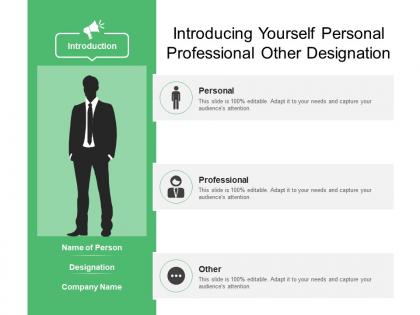
Introducing yourself personal professional other designation




Try Before you Buy Download Free Sample Product
 Impress Your
 Audience
 100%
100% Editable
 Save Hours
 of Time


Our Introducing Yourself Personal Professional Other Designation generate continuous cash flow. They guarantee good business.
People who downloaded this PowerPoint presentation also viewed the following :
Introducing yourself personal professional other designation with all 5 slides:
Demonstrate academic brilliance with our Introducing Yourself Personal Professional Other Designation. Give folks an example of your erudition.

FAQs for Introducing yourself personal
A compelling self-introduction presentation should include your professional background, key achievements, relevant skills, unique value proposition, and clear objectives for the audience connection. These elements work together by establishing credibility, demonstrating expertise, and creating memorable impressions, with many professionals finding that strategic storytelling, quantifiable accomplishments, and authentic personality ultimately deliver stronger networking outcomes and career opportunities.
Effective self-introduction tailoring involves adjusting your professional focus, communication style, relevant experience highlights, and value proposition based on your audience's interests, industry, and context. By researching your audience beforehand, emphasizing relevant achievements, adapting your language tone, and connecting your background to their specific needs, you create meaningful connections that resonate with different stakeholders, ultimately enhancing networking effectiveness and professional opportunities.
Effective audience engagement strategies include asking rhetorical questions, sharing relatable anecdotes, using interactive polls, incorporating humor appropriately, and establishing eye contact with different sections. These approaches enhance connection by creating dialogue opportunities, building rapport through shared experiences, and maintaining attention through varied delivery techniques, ultimately delivering memorable first impressions and stronger professional relationships.
Visuals enhance self-introduction presentations by creating memorable impressions, illustrating achievements through charts and infographics, showcasing work samples or portfolio pieces, and reinforcing personal branding through consistent design elements. These visual components help presenters communicate their value proposition more effectively, with many professionals finding that strategic imagery and data visualization significantly improve audience engagement and retention of key qualifications.
Common self-introduction slide mistakes include overcrowding with excessive text, using unprofessional photos, focusing solely on personal details without professional relevance, poor design consistency, and weak value propositions. These missteps undermine credibility and audience engagement, with successful professionals finding that clean layouts, strategic content selection, and clear professional messaging deliver stronger first impressions and enhanced networking outcomes.
Technology enhances self-introductions through interactive presentation tools, augmented reality business cards, QR code portfolios, digital storytelling platforms, and real-time polling systems. These solutions streamline networking by enabling multimedia showcases, instant contact sharing, and audience engagement features, with many professionals finding that interactive introductions create memorable connections and competitive advantage in business environments.
Body language significantly impacts self-introductions through confident posture, appropriate eye contact, firm handshakes, and open gestures that convey professionalism and authenticity. These nonverbal cues often communicate more than words themselves, with many professionals finding that aligned body language enhances credibility, builds immediate rapport, and ultimately delivers stronger first impressions in networking and business environments.
Storytelling techniques enhance self-introductions through compelling narratives, emotional connections, relatable challenges, and memorable outcomes that showcase professional growth. By structuring introductions with clear beginnings, transformative moments, and measurable results, professionals create lasting impressions with potential employers, clients, and networking contacts, ultimately delivering stronger personal branding and increased career opportunities.
Cultural considerations for global self-introductions include understanding formality levels, appropriate greeting styles, business card etiquette, personal space boundaries, and hierarchy respect protocols. These practices vary significantly across regions, with Asian cultures emphasizing formal titles and respectful bowing, while Western environments often favor direct handshakes and casual conversation, ultimately enabling stronger international relationships and successful cross-cultural business engagements.
Balancing professionalism and personality involves sharing relevant credentials alongside personal interests, communication style, and authentic enthusiasm for your work. Strategic professionals weave in unique perspectives, hobbies that demonstrate transferable skills, or genuine passion for industry challenges, with many organizations finding that authentic self-expression enhances team dynamics and collaborative effectiveness.
Creative self-introduction formats include interactive storytelling, visual timelines, live demonstration videos, gamified presentations, and immersive digital portfolios. These approaches enhance audience engagement by incorporating multimedia elements, interactive components, and personalized narratives, with many professionals finding that creative formats deliver stronger personal branding, improved memorability, and more meaningful connections than traditional slide-based introductions.
Peer feedback enhances self-introduction effectiveness by identifying unclear messaging, highlighting missed opportunities for connection, and revealing how others perceive your professional brand. Through constructive input from colleagues, professionals can refine their delivery, strengthen key value propositions, and ensure their introduction resonates with target audiences, ultimately delivering more compelling first impressions and stronger networking outcomes.
Self-introduction length significantly impacts audience engagement, with optimal durations varying by context, audience expectations, and presentation format. Shorter introductions maintain attention and create intrigue, while longer ones allow deeper connection building, with many speakers finding that 30-90 seconds strikes the right balance between providing credibility and preserving momentum for their main content.
Personal branding reflects in self-introductions through consistent visual identity, compelling personal narrative, clear value proposition, and authentic personality showcase. Strategic combinations of professional storytelling, signature achievements, and unique expertise create memorable impressions, with many professionals finding that aligning presentation style with brand values enhances credibility and delivers lasting competitive advantage.
Impactful self-introduction information includes your current role, specific expertise area, unique value proposition, recent achievements, and strategic interests or goals. These elements enable meaningful connections by clearly communicating your professional identity, expertise depth, and collaboration potential, with many networking participants finding that mentioning specific industry challenges you solve or innovative approaches you've developed creates immediate conversation opportunities and memorable impressions.
-
Designs have enough space to add content.
-
Unique design & color.